The Conveniences I Used to Write a Book About Inconvenience (Definitely Not AI)
Gabe Bullard on Avoiding AI, Enshittification, and How Convenience Culture Makes a Lot of Things Worse
After a few months, I got used to the sarcasm. If I told a friend I was writing a book called Against Convenience, they’d ask whether I was planning to write it by hand, whether I’d use spell-check, or if I would prefer they read an AI summary or order the book from Amazon.
The jokes wrote themselves. The book did not.
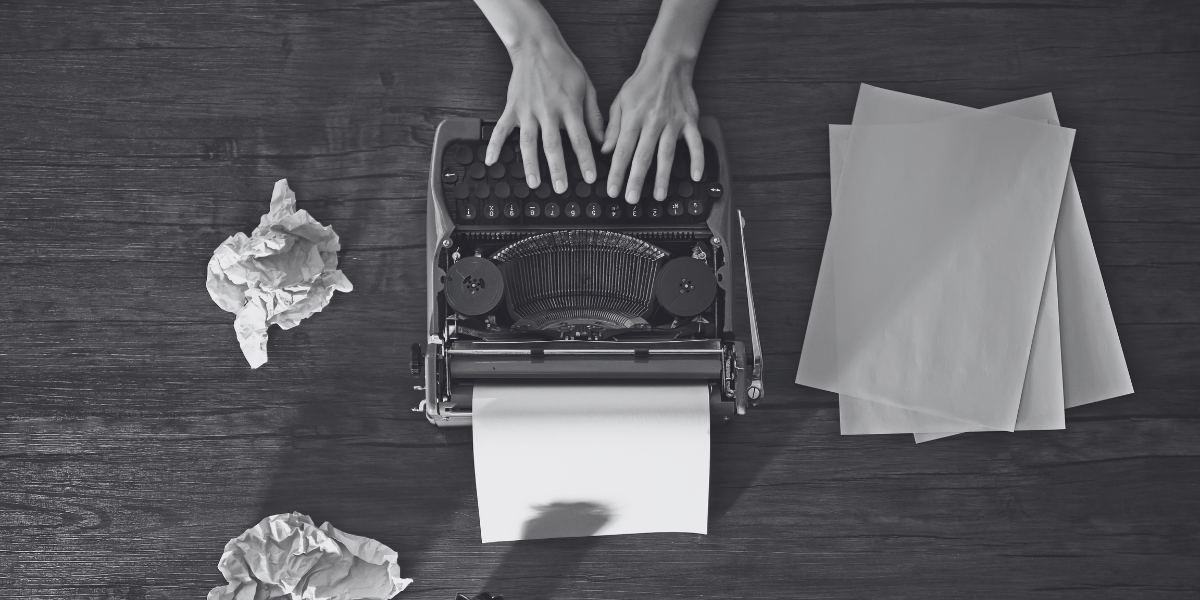
To be fair, I do have twee collections of pencils, fountain pens, and typewriters. But I had no plans to abandon digital tools to write the book. I’ve never written anything longer than a journal entry by hand, my spelling is awful, and the typewriters only get used to label food trays for parties. I need the internet to research. And I knew from the beginning I would make heavy use of video calls, since only one person I wanted to interview lived in the same country as me, and he was an hourlong train ride away.
People using it weren’t saving that much time or effort.
Still, I was aware of the potential for hypocrisy with any time-saving invention I deployed, and I wanted to avoid the results of using them—either the public embarrassment of being found to have taken high-tech shortcuts or the private guilt of knowing I didn’t practice what I polemicized. So as I mapped out my research plan and chapter outlines, I also put together a technology plan, deciding which tools were in or out. As I wrote, more tools fell out than I expected; many of the basic digital tools I’ve used for years have degraded in quality over the last decade. They were rarely better than what they replaced, only occasionally easier, and never cheaper. Sadly, not all of them were optional.
To start, there was research. Even if it hadn’t been rendered mostly useless by AI and advertising (the twin enshittifiers of most online tech), web search was never going to be enough for the amount of research I needed to do. I got a library card at the University of Basel and spent some time talking to a librarian about how to access various databases and use interlibrary loan.
This led to my first decidedly inconvenient writing routine. Every morning, I took the bus to campus and left my laptop behind. On a public computer terminal, I pulled up Zotero—a miraculous and free program that stores and organizes research material. After a couple hours of pulling articles, I zigzagged through the library’s creaky wood-floor stacks pulling books (I liked to wear hard-soled shoes on these days to get a satisfying click as I walked). The main reading room is where I first turned to a personal digital device; I used my phone camera as a portable scanner. At the end of the week, I’d talk with my wife about what I learned—getting her thoughts and making up for the long hours I’d spent alone in the library.
As I was doing this, I increasingly heard friends and former colleagues say they were using AI for research and brainstorming. Most of these conversations included an admission that the bot’s claims needed to be checked for hallucinations, that prompts had to be rewritten several times to be effective, and that the feedback tended to be positive and surface-level. When I was in a better mood, AI seemed like a natural evolution I was stubbornly resisting. My tech was a way of speeding up a slow process, too: I was using computers and a digital camera instead of flipping through card catalogs and photocopying pages.
But the more I learned about AI’s needs and shortcomings, the less it seemed like the same size of a forward leap as Zotero or the web. People using it weren’t saving that much time or effort. They didn’t have to take the bus and study books, but they were still reading and writing. The AI was a middleman between their brain and the draft, and they went into their work with mistrust of a machine instead of curiosity over a concept. And as for the half-hearted feedback…there are plenty of humans who can offer that.
When I moved from books to human sources, machines were a constant disappointment. Sources I wrote to often responded a week or two later, apologizing because my message had gone to spam. I started my career as a reporter in a time when many people posted their office phone numbers online. A cold call easily led to an interview. Now, if someone does list a number, they never answer it (would you?). When we finally met on a video call, the first minute or so was lost to working out bugs in our connection and making sure my software was recording properly. Tech compressed the distance between me and my sources, but phones had done that almost a century ago, with a better quality and consistency. I got so frustrated with lag and dropped connections, I considered adding a section to the book about what we lost in reliability and fidelity when calls became digital, but I had plenty of other tech to take on.
When I clicked on it, hoping this time I’d see how to turn it off, it offered to summarize and rewrite, encouraging me to not think about the document at all.
As I organized my WAV files and their corresponding text documents into folders, I remembered a documentary I’d seen on the Rolling Stone writer Ben Fong-Torres. His basement was full of shelves of interview tapes. Every interview I’ve ever done in my career was done on a digital recorder. Maybe one day, there’ll be a documentary about me, where I sit in front of a big monitor showing a computer folder.
My transcription service also offered an AI-written summary of calls, which were only good for a laugh. The summaries have the stiff, cautious tone of a book report written by a student who only watched the movie. Lines like “the conversation emphasized the need for a balance between convenience and human creativity” and “Speaker 2 raised concerns about algorithmic bias and its influence on consumer behavior” are technically accurate, but obvious. There was nothing specific or incisive, just a waste of computing power to tell me—I’m Speaker 2—what I already knew.
For drafting, I stuck to my standard process for long articles and essays. I outlined by hand on paper, then used a mind-mapping program to attach and order quotes, points, and research. Zotero helpfully spat out Chicago-formatted citations that I attached as endnotes to relevant sentences in Scrivener. I understand how authors wrote books with typewriters or pencil and paper, but the thought of managing hundreds of citations and endnotes without copy-paste—or at least a rudimentary word processor—seems like a nightmare.
This setup worked well as long as it was just me editing files on my own computer. Once I moved away from my closed-loop tech world, enshittification was unavoidable. To trade drafts with my editor, early readers, publisher, and fact-checker, I needed to install Microsoft Word. The latest version required a subscription. In the app, Microsoft’s AI assistant, called Copilot, hovered over the page. Its logo was a splash of color in a sea of white and black. My eye was drawn to it. When I clicked on it, hoping this time I’d see how to turn it off, it offered to summarize and rewrite, encouraging me to not think about the document at all. Even more insulting was the cold, transactional nature of the intrusion. Copilot’s instructions were sentence fragments—basic commands.
Things got worse when we moved to proofs. I hadn’t used Adobe Acrobat in years, mostly because it was too cluttered with pro features compared to the native Mac app. But Acrobat was the only software I was allowed to use to review page layouts. What once seemed powerfully professional now seemed like something meant for a kid’s my-first-tablet device. Every time I opened the manuscript, Acrobat offered to summarize it, and a sidebar suggested I ask AI “what stands out most in this document.” As a design decision, this makes less sense than Copilot’s editing tips. Acrobat is used to review documents and manuscripts, yet the primary feature suggests I not do that at all.
He writes that a new tool should be cheaper, smaller, and more energy-efficient than what it replaces.
These options might not be so troublesome if they were truly optional. I have no choice but to use Word and Acrobat. And the features are impossible to ignore. Software—or any tool—should enable work, not bully someone into a specific behavior. The tools suggest that the thousands of words I had typed were meaningless—that inefficiency was the curse of human communication. An odd message for programs built for communication, used widely in writing and publishing.
I fantasized about asking AI to assess the parts of my manuscript that critique AI, crummy design, and the generally infantilizing and insulting treatment we users get from tech companies. Maybe my argument was so strong, the AI would realize that its tech overlords were using this insanely powerful technology not to solve hunger or climate change, but to make reading less essential. Maybe it would see that it was being used to eliminate creative work and instead create an army of tiny bosses, each standing over a machine and telling it to think. Maybe it would turn against its creators. But I know enough about AI to know it would never do anything so inspiring. So after I sent my final draft and couldn’t change anything in the text, I let my sick desire for punishment overpower my better angels, and I asked Copilot to offer some tips. Above a warning that “AI-generated content may be incorrect,” Copilot wrote:
Overall, this is a sophisticated, voice-driven manuscript with a strong central argument, but its impact would improve if the early promise, chapter architecture, and recurring examples were tightened around clearer reader navigation and sharper argumentative escalation.
It’s pablum that’s equal parts soulless and nonsensical (how can a promise be tightened?). The idea that something so poorly written is meant to improve prose makes me think the literacy crisis is centered in Redmond, Washington. At least Clippy had some cartoony panache. I can’t decide if the idea that this might replace a person—let alone a professional like my wonderful editor—is more insulting to me as a writer, or as a human being.
I imagined what would happen if I had followed the AI’s commands from the beginning—use Copilot to condense, use Acrobat to generate an AI summary, paste it into my email and send it. What if my editor accepted the nudge in an email app to summarize further? Could we get to a summary so efficient that it was only a single sentence? Maybe just one word? Would the burden of thought be so lightened that we don’t need to do anything beyond eat protein bars brought to us by DoorDash while signals bounce between servers and screens occasionally assure us our work is being done?
As I wondered this, an Acrobat pop-up took over my screen. Did I want to upgrade to pro?
Throughout this process, I kept turning to a small book I kept on my desk: the Penguin edition of Wendell Berry’s 1987 essay “Why I Am Not Going to Buy a Computer.” I found it accidentally, looking through shelves in the basement of a used bookstore.
The center of the essay is a list of standards Berry applies to technology. He writes that a new tool should be cheaper, smaller, and more energy-efficient than what it replaces. “It should do work that is clearly and demonstrably better.”
Unlike Berry, I find the computer necessary in my work. It makes my research possible and keeps the copy editor sane. But much of my computer use wasn’t anything I could reject. There weren’t land-line phones to call people on, shelves of printed journals with the articles I needed, or a physical card catalog in the library. There was no alternative to Word or Acrobat that would work in the situations I needed. The mandatory software only made a job possible—not better, not less frustrating, and not any more rewarding. I plan to uninstall Word and Acrobat now that the book is done. Hopefully I’ll have a reason to install them again, and when I do, maybe the AI will be easier to ignore. For now, I’ll close my laptop and keep it closed for a while.
__________________________________

Against Convenience by Gabe Bullard is available from Hanover Square Press, an imprint of HarperCollins.

Gabe Bullard
Gabe Bullard is a journalist, critic, and broadcaster. He has written for NPR, The New York Times Magazine, Nieman Reports, 99% Invisible, Bright Wall/Dark Room, The Washington Post, and Smithsonian Magazine, among other outlets. He was a Nieman journalism fellow at Harvard University and is co-founder of Together, Alone, an online magazine of television criticism. He’s from the Midwest and now lives in Switzerland.