The Annotated Nightstand: What Aimee Nezhukumatathil is Reading Now, And Next
Featuring Asa Drake, Eve L. Ewing, Isaac Fitzgerald, and More
Aimee Nezhukumatathil’s new poetry collection, Night Owl, extends her project of meditating on the remarkable facets of nature. Over four sections (“crepuscule,” “sunset,” “midnight,” “the darkest hour is just before the dawn”), she employs a range of forms to attend to these topics, including nocturnes (of course), abecedarians, zuihitsus, and concrete/collage poems in a series of shapes. In one concrete piece that coils like a spiral, Nezhukumatathil writes, “The Greek goddess of the night, Nyx, existed long before the Olympians. They say she simply emerged, draped in dark robes, adorned with stars.”
Fireflies, male seahorses, dark chocolate, cenotes, hummingbirds, coral, all make appearances—or are recurring characters—in these poems. Nothing is too small to escape Nezhukumatathil’s sharp gaze, as in the “tiny pupfish found nowhere / else in the world, wriggling out of the creek beds with eyes the size / of this lowercase o.” (I loved the jolt this line gave me, how it conjured the fish’s body right there on the page—I mean just look at this little guy.)
While Nezhukumatathil attends to the non-human natural world in her lines, she also considers motherhood, travel, childhood memories—whatever provokes feelings of wonder and/or complication. Pointedly, this billet-doux to the world is marked with reminders of human-triggered injuries and climate collapse. A loving description of summer in Iceland includes the impact of ice melt; snorkeling to see giant clams leads to descriptions the effects of poaching.
Night Owl was one of our “Most Anticipated Books of 2026,” where Jessie Gaynor wrote, “Aimee Nezhukumatathil is one of our great nature poets, and reading her work always makes me feel more connected to the outside world in all its textures. (Crucially, she’s also very funny.) Night Owl is a collection of nocturnes that ‘plumb the depths of nighttime.’ I have no doubt that it will be a beacon in the dark.”
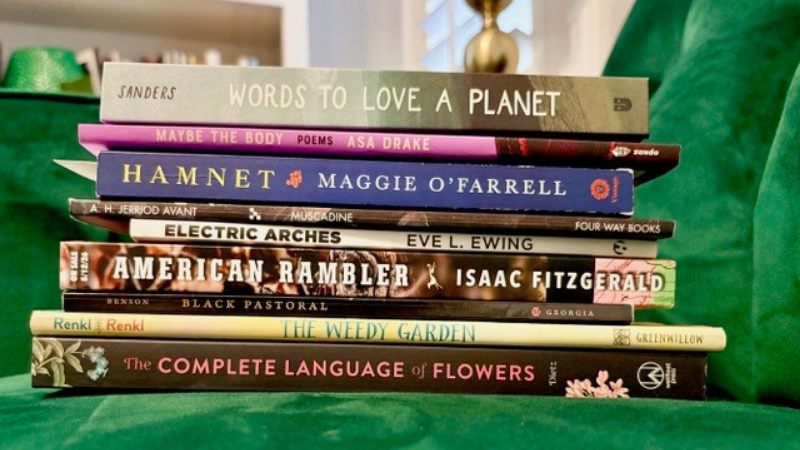
Nezkukumatathil tells us of her to-read pile: “Lately the small piles and stacks of books beside my bed are starting to look like a small downtown of highrises—which usually means I’m in the swell of teaching and gearing up for the release of a new book, in this case—Night Owl. I’ve been dipping into poems from these books which remind me how the body and landscape are always speaking to each other. On the prose side, Hamnet took my breath away when I read it earlier this year and can’t bear to move it from this pile quite yet. I’ve especially loved paging through Words to Love a Planet, because it teaches me new words for the outdoors from languages all around the world. These books keep my senses awake—to colors, to tenderness, to the outdoors—even as I’m getting ready to send my own nocturnal poems out into the world.”
*
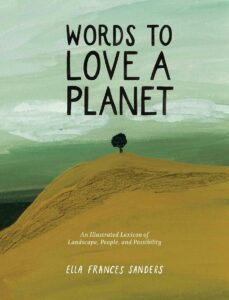
Ella Frances Saunders, Words to Love a Planet: An Illustrated Lexicon of Landscape, People and Possibility
The jacket copy of this hot-off-the-press lexicon states, “Across seven themes there are over 200 words detailing feelings, concepts, physical facts of landscape, weather, or time, and ways of thinking that leave readers with a greater sense of connection to, and care for, the planet…Each word is accompanied by a translation, a pronunciation, and a short description with either etymological detail or notes on the language or landscape of origin.”
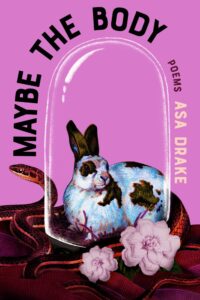
Asa Drake, Maybe the Body
Nanya Jhingran and Cindy Ok write at Poetry Northwest that Maybe the Body “is whole with the reconciliation of the titular ‘maybe,’ its hopes of wonder leading the way. The speaker finds surprising the smallest acts of others, marveling at the daily colonialisms of names and silences, the changing systems of debt. One poem takes place in a river below an interstate, and other such efficiently strange meetings populate the sage collection.”
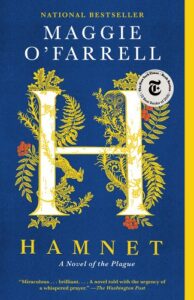
Maggie O’Farrell, Hamnet
Stephanie Merritt writes at The Guardian about the novel (that inspired the recent film), “In 1596, William Shakespeare’s 11-year-old son Hamnet died… Four or so years later, Shakespeare wrote the play considered by many to be his greatest work, giving its tragic hero a variation of his dead son’s name. Almost four centuries later still, Maggie O’Farrell was studying Hamlet at school and learned of the boy Hamnet, whose life has been little more than a footnote in his father’s biography. The seed of curiosity planted 30 years ago has grown into her finest novel yet; a reimagining of Hamnet’s death and the long-lasting ripples it sent through his family.”
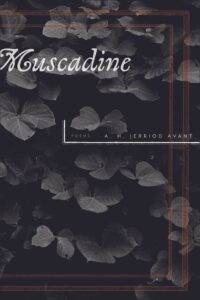
A.H. Jerriod Avant, Muscadine
“The muscadine is an unusual fruit. Native to the Southeastern United States, it was the first grape to be cultivated in North America,” writes Dan DeVaughn at The Literary Review. “[T]he muscadine is musky, sweet, Southern with a capital S, and singularly American. That Avant has chosen it to title this intimate and muscular collection shows the degree to which he and his speakers are invested in the natural world as a site of stability and deep identity in a country and culture which often seem to have forgotten the meaning of such words.”
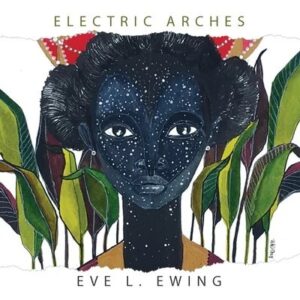
Eve L. Ewing, Electric Arches
Barbara Hoffert writes in her starred review at Library Journal, “Blending poetry, prose, and illustration, this ambitious and inventive debut collection from University of Chicago sociologist Ewing offers the coming-of-age story of a young African American woman told with raw indignation…close observation…and triumph.” The verdict? “Smart and widely appealing.”
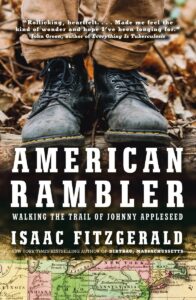
Isaac Fitzgerald, American Rambler: Walking the Trail of Johnny Appleseed
Kirkus’s starred review states, “The supposed Johnny Appleseed Trail is really just a placard on a northern Massachusetts highway, as a spokesperson tells [Fitzgerald]: ‘It’s to encourage tourism in the area… for motorists.’ Searching out the path of John Chapman, aka Johnny Appleseed, puts plenty of wear and tear on his legs, but it also gives him the vantage point of seeing small-town America up close. And although that America is sad and frayed, it’s also full of interesting and well-meaning people.”
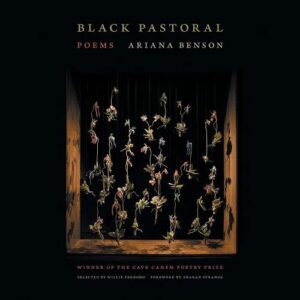
Ariana Benson, Black Pastoral: Poems
Willie Perdomo, in his judge’s citation for this Cave Canem Prize winner, writes, “If poetry is a form of prayer, then Black Pastoral is church, pew, pastor, baptismal site, hymn, and a symphonic archive of our historical silences. This collection of poems is a transcendent appraisal of the blood that was extracted from Black bodies. In the tradition of Richard Mayhew, Ariana Benson challenges and forces us to de-romanticize the American landscape.”
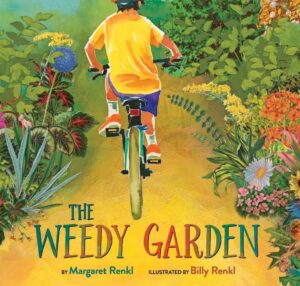
Margaret Renkl & Billy Renkle, The Weedy Garden: A Happy Habitat for Wild Friends
Wildly I think this is the first children’s book in a stack! Publishers Weekly makes it seem like a fun one: “A bumblebee, snake, squirrel, speckled toad, and more take up space in the ‘weedy garden’ celebrated in this elegant picture book from sibling team the Renkls…Immersive full-bleed spreads lend a diorama-like feel to jam-packed mixed-media scenes that display vintage species cut-outs and emphasize fauna’s natural camouflage.”
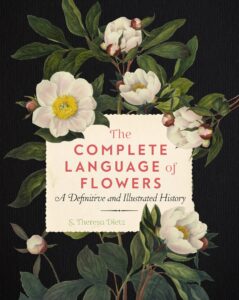
S. Theresa Dielz, The Complete Language of Flowers: A Definitive and Illustrated History
Dielz’s encyclopedia of flowers contains illustrations of and factoids, poems, and myths about flowers. These tidbits (aka floriographies) flourished notably during the Victorian Era. One fun element is the inclusion of the implied meaning of certain flowers from that time (ie. if you gift it, draw it, press it, etc., this is the secret message carried in its petals). If you get a clutch of purple tulips, that relays eternal love. A sunflower may be about adoration, a striped carnation a refusal.
Diana Arterian
Diana Arterian is the author of the recent poetry collection Agrippina the Younger (Northwestern UP, 2025) and editor and co-translator of Smoke Drifts (World Poetry Books, 2025), a collection of Nadia Anjuman's poetry. A Poetry Editor at Noemi Press, Diana has received fellowships from the Banff Centre, Millay Arts, and Yaddo. She writes “The Annotated Nightstand” column at Lit Hub and lives in Los Angeles.