“Regular, rigorous, and Reliable.” How to Keep Fighting for a Better World
Chris Dixon on the Urgency of Organizing in the 21st Century
We can cultivate qualities that help us to stick around in struggle. This is something that came up when I spoke in 2023 with Philadelphia activist Suzy Subways about her decades of movement experience. “Don’t compare yourself to others in terms of how much work you can get done,” she advised, pointing to the damaging culture of competition that can develop in movements. “You’re never gonna win. There’s always going to be someone who can do more work than you in a given day or seemingly forever.” And even those who move at a fast clip usually can’t do so indefinitely. “I’ve often watched people who were dynamos for years just suddenly hit a wall,” Subways shared. “So, slow and steady wins the race, even though it’s not a race.”
Coming from a children’s fable, this “slow and steady” formulation perhaps seems like common sense. But what exactly does it mean for political activity? Steadiness is about putting a lot of care and thought into our efforts, and dependably showing up and following through. The main way I understand steadiness is with a trio of terms I encountered through the Center for Political Education (CPE), a long-running left institution in San Francisco that provides learning spaces and resources for movements.
Reliability, finally, is about realistically determining what we can do and then meeting our commitments.
In a report on their activities in 2019, CPE highlighted the importance of striving to be “regular, rigorous, and reliable.” I don’t believe they intended this as a prescription. Nevertheless, this trio of terms—which, for shorthand, I think of as “the three R’s”—offers us a valuable set of guideposts.
Regularity, the first, is about consistency. It means moving in a deliberate and sustained manner. We bring steadiness to our political work when we make and follow plans and, as much as possible, are intentional about how and when we do things. The second, rigor, is about the standards of quality we set for ourselves. Not to be confused with fulfilling the standards of ruling institutions, this involves us taking ourselves very seriously. We foster steadiness when we craft high expectations for our initiatives, carefully determine what we will need (such as resources and timelines) in order to meet those expectations, and hold ourselves to them. Reliability, finally, is about realistically determining what we can do and then meeting our commitments. It also means accountably telling others when we cannot follow through. We generate steadiness when we dependably fulfill our responsibilities and when we work to create the collective conditions (such as systems for tracking tasks and supporting one another) that enable others to meet their commitments as well.
To win in significant ways, we will have to build and sustain movements, propelled by urgency, that move at a pace that we can maintain, collectively, for years to come.
Steadiness, in all of these ways, has implications for how fast we choose to move. Sometimes sprinting is necessary; there are definitely circumstances that warrant rapid responses. But moving in perpetual crisis-mode takes an enormous toll while crowding out other possibilities for planning and action. Much of the time, we’ll do better by moving more slowly. I still think about how Helen Hudson, a long-time anti-prison activist in Montreal, put this to me: “I do want to be ready to give it my all, to give up things that I value, to take risks when it’s clear that it’s the moment to do so. But I also think it’s really important to organize sustainably and view this as something I’m going to be doing for the rest of my life.” What does it look like to move at a pace we can imagine sustaining for a lifetime? This is question to which we can return regularly. We might be surprised by the answers.
Steadiness also has implications for how we understand urgency. I think about this with an insight from Pat Hussain, one of the people who started the organization Southerners On New Ground (SONG), a multiracial, multigenerational queer liberation organization fighting for racial and economic justice across the US South: “some things we need to do so urgently that we need to slow down.” Hussain said this in a 2014 interview with scholar Lisa Beard while describing SONG’s founding. She explained, “You can’t have a first meeting again. Once you’ve had that first meeting, and everyone in the room is white, and/or male . . . there’s no backing up from that. The table has been set, and everyone else is a guest. Not an author. Not a founder. A guest.”
Hussain describes here a sadly common dynamic in the history of the left: small, relatively homogenous groups establishing organizations and campaigns without meaningfully including, in formative decision-making, people directly impacted by domination. This dynamic, often propelled by urgency, frequently reproduces damaging social hierarchies and undercuts possibilities for coalition across differences. For SONG, slowing down helped them to avoid this dynamic.
Hussain’s insight has broader ramifications as well. The urgency so many of us feel in the face of domination and destruction is warranted; creating a just and habitable future requires dramatic social transformation on a massive scale. But no matter how fiercely we throw down, we can’t make this happen instantaneously. It will require long-haul struggles that involve large numbers of ordinary people moving into action, bringing more and more people along with them and constellating powerful new collectivities.
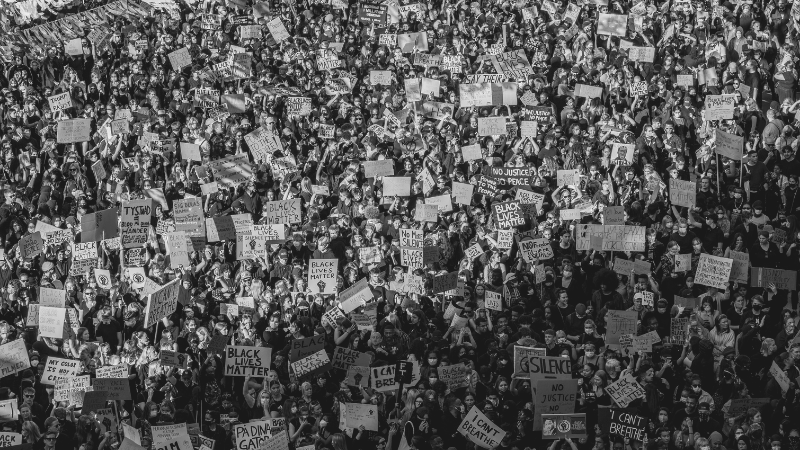
While episodic mobilizations can contribute to this, they won’t be sufficient on their own. To win in significant ways, we will have to build and sustain movements, propelled by urgency, that move at a pace that we can maintain, collectively, for years to come. We will have to hold an unresolvable tension: on one end, a deeply-felt sense that current social arrangements are utterly unbearable and, on the other end, a committed understanding that undoing them requires moving in deliberate, often slow, ways.
__________________________________

Excerpt from For the Long Haul: How to Stay in the Fight for a Better World by Chris Dixon (AK Press/Between the Lines, 2026).

Chris Dixon
Chris Dixon is an activist, writer, and educator with more than twenty-five years of experience in social movements in the US and Canada. Originally from Alaska, he now lives in Ottawa, on unceded Algonquin territory. Dixon is a member of Punch Up Collective and serves on the advisory board for the activist journal Upping the Anti. Formally trained as a scholar of social movements, he writes and speaks regularly about radical organizing, left history, and movement-based research. His first book was Another Politics: Talking Across Today’s Transformative Movements. Find him at writingwithmovements.com.