One great poem to read today: Ada Limón’s “The Noisiness of Sleep”
This April marks the 30th iteration of National Poetry Month, which was launched by the Academy of American Poets in April 1996. To celebrate, the Literary Hub staff will be recommending one great poem to read every (work) day of the month. We make no claim (except when we do) that these poems are the “best” poems in any category; they are simply poems we love. The only other thing they all have in common is that they are available to read for free online, so you can enjoy them along with us. The internet is still good for some things, after all. Today we recommend:
Ada Limón’s “The Noisiness of Sleep”
John Berger described poems as “tending the wounded” through “recognition and the promise that what has been experienced cannot disappear as if it had never been.” Ada Limón’s Bright Dead Things is just such a collection of writing, tender as both an adjective and as a noun. Her poems are soft and caring, but are also unafraid to step into directness. It’s a mode of decisiveness that I recognize in those who remain by your side during a hard moment. These are poems for the caretaker, in moments of transition and loss and love.
Tender, if you look back far enough, comes from the Proto-Indo-European for “to stretch.”
I love how the sentence fragments that open and close “The Noisiness of Sleep” stand on their own, framing an attraction and wariness to longing. “Careful of what I carry,” she begins, “in my head and in my hollow.” Be wary, be prudent. But “hollow” always makes me thinks of an animal curled warmly and sheltering away from the elements, contrasting with the intellectual “in my head” that needs to rationalize and understand the burdens. The wild animal desire to be small and to be held is mirrored later in the beautiful, “Let me slip into a life less messy./Let me slip into your sleeve.”
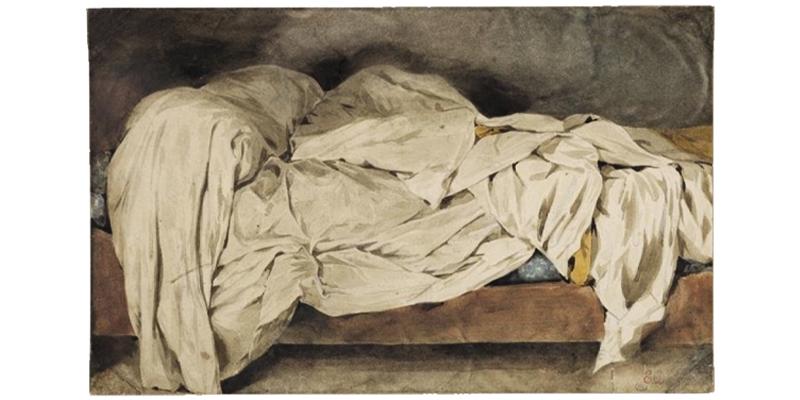
This poem feels unresolved to me, and all of its turning towards and turning away is a stretching, of sorts. I love Limón’s closing line, “I want to be the rough clothes/you can’t sleep in” and its selfish desire to impact another’s life, to remain on their mind. Don’t forget me. But if you parse the enjambed final phrase on its own, “you can’t sleep in” becomes a command against delusion, too. Wake up and get to it.

James Folta
James Folta is a writer and the managing editor of Points in Case. He co-writes the weekly Newsletter of Humorous Writing. More at www.jamesfolta.com or jfolta@lithub.com.