May’s Best Sci-Fi and Fantasy Books
Speculative Adventures from Fonda Lee, Ada Hoffman, Veronica Roth, and more
Bro! May has all the sci-fi, fantasy, and speculative fiction we didn’t know we needed. Older female protagonists (more than one!) chase samurai contracts in space and play body host to ghosts’ unfinished business. Two totally platonic best bros set off on a quest of the heart, while rival soldiers compete over a world-altering prophecy. And if you really want to immerse yourself in mindbending fictional worlds, there’s an Arabfuturist city-ship or an entire fantasy realm recreated like the best (or worst, depending who you ask) reality TV show.
Plus, a bunch of exciting books from our 2026 SFF preview: Portia Elan’s Homebound, Ann Leckie’s Radiant Star, Sarah Gailey’s Make Me Better, and S.A. Chakraborty’s The Tapestry of Fate. Bro. It’s gonna be a good month for SFF.
*

Fonda Lee, The Last Contract of Isako
(Orbit Books, May 5)
A fiftysomething corporate samurai prepares to retire via ice-planet deathwalk, only to be reeled back into corporate espionage with a contract she can’t resist, in this standalone space opera from the author of The Green Bone Saga. Before Isthmus Isako can cement her legendary status and set up her family’s financial future, she must once again follow the money—even as it uncovers skeletons and leads back to her former apprentice Martim, who has clawed his way to the top. I don’t know about you, but I would follow Isako to the edges of the universe.

Sunyi Dean, The Girl with a Thousand Faces
(Tor Books, May 5)
Another older woman leads Sunyi Dean’s (The Book Eaters) latest standalone novel set in a ghost-infested version of Hong Kong’s Kowloon Walled City. When amnesiac Mercy Chan washes ashore in 1942 during the Japanese occupation, she manages to gain protection from one of the city’s three major triads through her affinity for ghost-talking. But as the decades pass, Mercy discovers an especially bitter spirit who is wreaking violent revenge upon the living—and when the spirit claims to know something of her past, Mercy must decide if her loyalties are to the living or the dead.
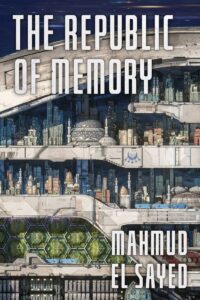
Mahmud El Sayed, The Republic of Memory
(Saga Press, May 5)
Mahmud El Sayed’s Arabfuturist generation ship novel draws inspiration from the Arab Spring to explore unrest and resistance on a 400-year voyage. Halfway through its journey, the Safina begins experiencing dangerous blackouts that threaten to cause carbon dioxide poisoning—but that also accidentally wake up some of Earth’s ancestors in cryostasis. Upon thawing out, they discover not only that what they knew as the Network Empire is a distant memory, but that early into the Safina’s voyage their descendants overthrew the AI Network in order to forge a new society stratified by language. Told in a myriad of voices and tongues, El Sayed’s gripping debut questions who deserves a new start, whether onboard or on land.
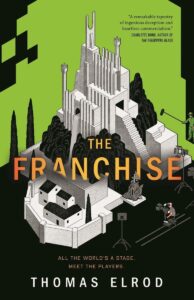
Thomas Elrod, The Franchise
(Tor Books, May 12)
Imagine if Game of Thrones utilized the mind-altering technology of Westworld to extend the world of your favorite fantasy franchise beyond books, beyond television, into immersive theater-slash-amusement-park entertainment. That is the unhinged (complimentary) premise of Thomas Elrod’s debut, in which the fictional cult-classic epic fantasy Malicarn series is staged on an island with unwitting actors temporarily imprinted with the characters’ backstories. But even when one of the stars has his own reality-shattering Truman Show moment, the show must go on. And for those readers missing the heightened behind-the-scenes Hollywood drama of AppleTV’s The Studio and HBO’s The Franchise (no relation), there’s a parallel plotline following the megalomaniac suits and poor PAs tasked with keeping the wheels of Malicarn turning and the ratings soaring, lest it all get cancelled.
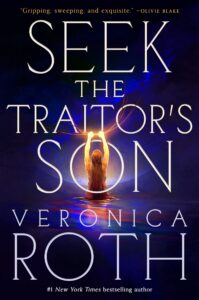
Veronica Roth, Seek the Traitor’s Son
(Tor Books, May 12)
Veronica Roth certainly knows her audience. The Divergent author pitched her new dystopian space fantasy duology for readers who like Rogue One, send kudos to hurt/comfort AO3 fics, and ship Link/Zelda. Even without those comps, it sounds compelling: Elegy Ahn, spare child and anonymous soldier, discovers that she is at the heart of a prophecy. Or rather, she and a general from the rival nation of Talusar, whose inhabitants worship the deadly Fever; half of its victims come back to life with special powers. Elegy and Rava Vidar hear the same prophecy, that one of them will lead their people to victory—but they don’t know which. Linking their destinities is a man—presumably the traitor’s son of the title—with the extra wrinkle that Elegy is fated to fall in love with him.
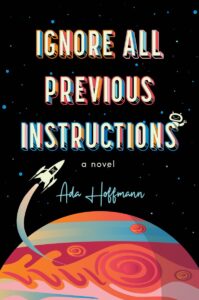
Ada Hoffman, Ignore All Previous Instructions
(Tachyon Publications, May 12)
In the future of Ada Hoffman’s terrifyingly prescient sci-fi heist novel, humanity has settled Jupiter and AI owns all forms of storytelling, from information to entertainment. Kelli Reynolds is a script supervisor for Inspiration, the language learning model that has copyrighted not just archetypal characters, but all tropes and plot beats, so that no human can access or create new stories. That also means that Inspiration’s stories are all sanitized stereotypes, with no queer or neurodivergent role models for autistic Kelli or her peers. Of course, the bots need a human to polish their work, and Kelli is happy enough to oversee the tales of Orlando, the space pirate she created through adolescent stories with her secret girlfriend. But when Kelli’s ex, trans man Rowan, reaches out for help clearing black market debts, she can’t help but get drawn back into his life. Even when she discovers that Rowan, the inspiration for Orlando, is a different sort of space pirate—ferrying illegal stories to the kids who need to see themselves reflected back. That this book was written by someone with a PhD in computer science who teaches critical AI literacy makes it even more necessary.
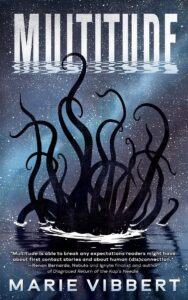
Marie Vibbert, Multitude
(Apex Book Company, May 12)
An alien hivemind invasion story told through kaleidoscopic point-of-view, Marie Vibbert’s novella arose from frustration with humanity, as she related in a recent interview: “How did we get here? How can we stop the waste and start caring for ourselves? How can we turn ‘us and them’ into ‘us’?” The fact that she wrote the novella in perspective-hopping chunks translates into a gripping first-contact tale experienced through the eyes of everyone from a SETI scientist to a street vendor ignoring the world-changing event to the alien collective itself.
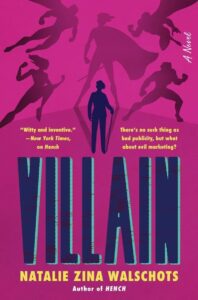
Natalie Zina Walschots, Villain
(William Morrow, May 19)
Natalie Zina Walschots’ Hench reenvisioned the stereotypical supervillain hench(wo)man as a data-crunching temp trying to take down the “superheroes” and all their do-gooder collateral damage. More Millennial office politics abound in this equally dark and witty sequel, as Anna Tromedlov has become the fearsome Auditor, enjoying all the corporate perks of working for the bad guys while making the caped crusaders cower that she’ll audit them next. But as she sets her sights on taking down The Draft—the organization training and packaging the most powerful superheroes—she finds her match in their Chief Marketing Officer, who can match her powers of weaponizing data and controlling ad campaigns.
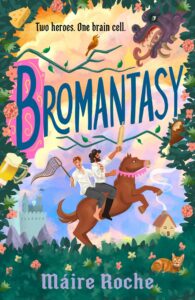
Máire Roche, Bromantasy
(Putnam, May 26)
Two heroes. One brain cell. Chefs kiss tagline right there. Platonic best friends Juniper and Mo could be perfectly happy tending to their cottage, ignoring the call for adventure that has Mo restless every winter and Juniper worried about losing his handsome soulmate roommate. But it’s hapless Juniper who accidentally signs them up for a quest to track down a dragon. Imagine if David Rose and Patrick Brewer went gallivanting off on a cozy fantasy adventure, only to discover a shape-shifting girl and humans who are the real monsters. And all those long days on the road and close nights under the stars mean Mo and his “Junebug” will finally confront the depth of their feelings for each other.
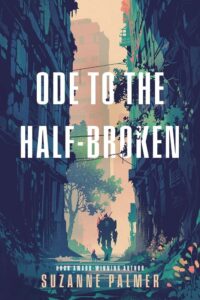
Suzanne Palmer, Ode to the Half-Broken
(DAW, May 26)
Forty years after the world ended, a former military mecha named Be comes out of self-imposed isolation in the ruins of New York City’s Botanical Garden when one of their legs is stolen. Despite Be’s reluctance to engage with this post-apocalyptic world—due to their part in causing it—they set out with a cyborg pup named Atticus and a human mechanic for company. Over the course of this cozy post-apocalyptic adventure they will encounter a bevy of bots, from mecha siblings to smart toasters to drones to a train mind transplanted into a Volkswagon. All the while, Be discovers shadowy forces who want to finish what the bots started—but this time, Be wants to be proud of how they change the world.

Natalie Zutter
Natalie Zutter is a New York-based writer and pop culture critic whose work has appeared on Reactor, Lit Hub, NPR Books, and elsewhere. Her SFF short fiction has been published at PodCastle, Adventitious, and The Icarus Writing Collective. Find her on Bluesky @zutsuit.