Lit Hub’s Most Anticipated Books of 2026
314 Books To Read in the New Year
APRIL
***
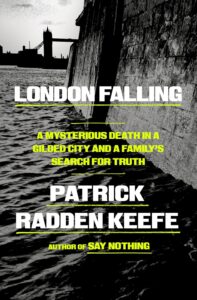 Patrick Radden Keefe, London Falling: A Mysterious Death in a Gilded City and a Family’s Search for Truth
Doubleday, April 7
Patrick Radden Keefe specializes in deeply investigative work on the subterranean aspects of society: on crime, on murder, on spies, on drugs. It is as though he has laced narcotics themselves into the pages of his books, they are so delicious and addictive, no matter the horrors depicted. London Falling is no different. It’s not the genre I would have predicted to be able to accomplish this (densely packed nonfiction) but his books have managed to recreate the feeling I used to have reading as a child. They completely immerse me. While in the midst of one of his books, I feel like I am living more in the pages than in the world I reside in.
This work revolves around the death of a boy named Zac Brettler, who appeared to have thrown himself from the balcony of a luxury building in London. The truth is (of course, it’s a PRK book) far more complicated than it appears. The story zooms in, and telescopes out magnificently, revealing nuanced and precise character studies of the boy and his family, as well as revealing the vast network of history, culture, and individuals that led to this tragic moment. Bright and spellbinding, glittering and dangerous, London Falling scratches every itch while unwinding this morbid mystery. –JH
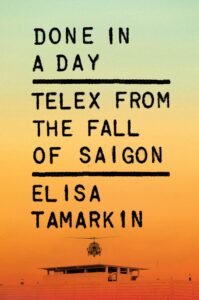 Elisa Tamarkin, Done in a Day: Telex from the Fall of Saigon
University of Chicago Press, April 7
On April 30, 1975, Bob Tamarkin, the Saigon burau chief for the Chicago Daily News, took the last helicopter from the rooftop of the US embassy of Saigon, making him the last American correspondent to leave. He filed his report from a naval ship on the South China Sea, when no other telexes were going through. Elisa Tamarkin explores this moment in history alongside the imminent disappearance of war coverage in city newspapers—telling “the paired stories of Saigon’s liberation and the demise of the news… what it means to recognize and to write about endings even as we live through them.” –EF
 Beverly Gage, This Land is Your Land
Simon & Schuster, April 7
I’ve loved Beverly Gage’s previous books The Day Wall Street Exploded and G-Man, which won the Pulitzer. Her history is critical and unsparing, but she always reserves enough hope in the decency and dedication of Americans to see a way forward. Pegged to America’s 250th anniversary, Gage’s new book is a tour of U.S. history as seen through historic sites and museums where our history is preserved and litigated. In another author’s hands, I would worry that this road trip through our national legacy might be too schmaltzy and saccharine, but Gage has always been honest about America’s legacy, so I trust her hand at the wheel. –JF
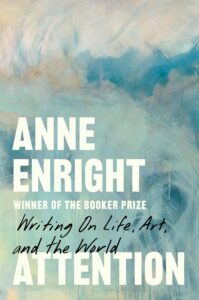 Anne Enright, Attention: Writing on Life, Art, and the World
W.W. Norton, April 7
Enright is one of my favorite novelists, so a collection of her nonfiction essays—even if most have been published in the New York Review of Books, the London Review of Books, and the Guardian—will be one of my most anticipated books of the year. Enright explores Irish culture—from writers like Edna O’Brien and John McGahern to cultural touchstones like the Catholic Church, the graves at Tuam, and the 2018 Irish abortion referendum—with incredible thoughtfulness and care. She truly always is paying attention, and providing us with new and better ways to understand the world. –EF
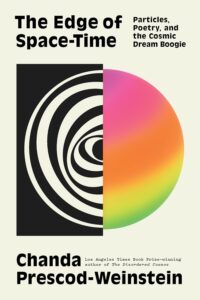 Chanda Prescod-Weinstein, The Edge of Space-Time: Particles, Poetry, and the Cosmic Dream Boogie
Pantheon, April 7
The universe is a weird, weird place filled with unseen (unseeable?) energies and exquisite inconsistencies—insofar as we can even observe any of it, our cosmos is as beautiful as it is vast and unknowable. Nonetheless it is worth trying to take it all in, and if you’re game, there’s probably no more compelling guide than Dr. Chanda Prescod-Weinstein. A cosmologist and particle physicist who also happens to be a great writer with wonderful cross-cultural fluencies, Prescod-Weinstein seems possessed of an off-kilter and roving curiosity ideally suited to answering all the bigger questions about where we are, why we’re here, and where, exactly, are we going. –JD
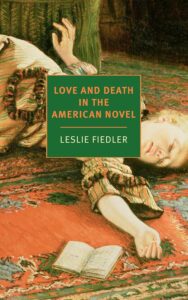 Leslie Fiedler, Love and Death in the American Novel
NYRB, April 7
First published in 1960, this reissue from NYRB examines the works of writers like Cooper, Poe, Twain, Melville, Hawthorne, and Faulkner. In it, “Fiedler makes the audacious—and compelling—argument that the American novel differs from its European counterpart in its inability to deal with sexuality between men and women, and its obsession instead with violence, escape, and death.” Fiedler was one of the most influence critics of the 20th century and this book is an education for anyone who cares about the American novel. –EF
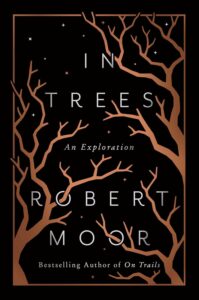 Robert Moor, In Trees
Simon & Schuster, April 7
Robert Moor is an erudite and delightfully meandering writer (see his On Trails for what I mean) who invariably chooses the more interesting of two possible narrative paths. A contributor to this website (this is one of my favorite essays) I am of course very excited to get my hands on In Trees, his expansive treatise on the underexamined phenomenon of… climbing a tree. Having set out to do just that a decade ago, Moor unknowingly began a long journey into the nature of the arboreal world, and our complicated relationship to it. From giant sequoias to the tree-houses of Papuan tribesmen to an actual chimpanzee nest, Moor makes his way to the tops of trees everywhere, the better to find some perspective. –JD
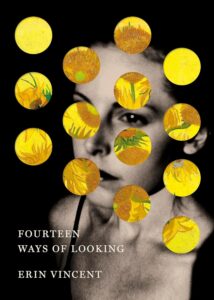 Erin Vincent, Fourteen Ways of Looking
A Strange Object, April 7
Some publishers, you just know you’re gonna give a shot to everything they put out. So it is with A Strange Object, the form-busting arm of Deep Vellum—and Fourteen Ways of Looking promises a blend of memoir, history, and poetry as Erin Vincent unpacks the uncanny repetitions of the number 14 in her life that have popped up ever since her parents were killed in a car crash when she was 14. –DB
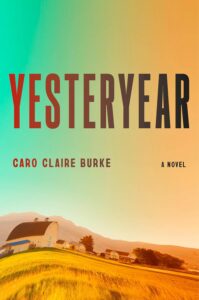 Caro Claire Burke, Yesteryear
Knopf, April 7
Natalie sells her followers a pioneer lifestyle in a rustic farmhouse, a handsome cowboy husband, and six delightful children. Of course, there are nannies, producers, her husband’s political dynasty, and an industrial-grade fridge and oven behind the scenes. One morning Natalie wakes up but things are different; it’s actually 1855! This debut promises to be both darkly funny, a brilliant satire, and a look at tradition, fame, and the “grand performance of womanhood.” –EF
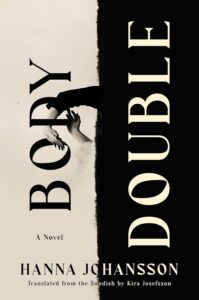 Hanna Johansson, tr. Kira Josefsson, Body Double
Catapult, April 7
Okay Persona… okay Ingmar Bergman… okay Scandinavian literature about lesbians who start turning into each other…. Body Double is a novel with two narratives: one about a woman whose girlfriend begins stealing her life, and another about a transcriptionist who becomes convinced she’s disappearing. In the grand tradition of All About Eve and Mulholland Drive and 3 Women, Johansson’s novel is a strange, twisty story about obsession and identity and how easy it can be to lose yourself completely. –MC
 Nancy Lemann, The Oyster Diaries
NYRB, April 7
Lives of the Saints is one of those “writer’s writer” novels; literary friends like to gift it back and forth like secret treasure (it’s also being reissued by NYRB this month, but let’s assume you’ve read it). That’s because the New Orleans saint behind that book, Nancy Lemann, possesses a singularly fabulous voice. Droll, hectic, humane, hilarious. I’d follow that tune anywhere, but I’m especially excited to follow Delery Anhalt, the vexed hero of The Oyster Diaries, through a midlife crisis. –BA
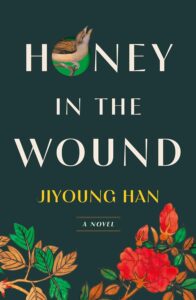 Jiyoung Han, Honey in the Wound
Avid Reader Press, April 7
Jiyoung Han’s sprawling, magical family novel follows generations of supernaturally-gifted Korean women as they grapple with the legacy of the Japanese occupation. With stunning, lyrical prose, Han follows these powerful women from ancient forests to modern-day Seoul. Honey in the Wound is a spellbinding debut about survival, family, magic, and the meaning of home. –MC
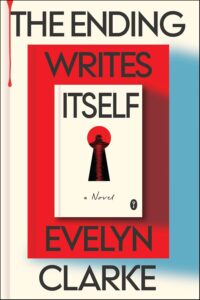 Evelyn Clarke, The Ending Writes Itself
Harper, April 7
Six writers are brought to a remote Scottish island to finish a beloved mystery novelist’s final book—but not all is what it seems! And there’s a ticking clock! The premise alone sounds delightful but when you learn that Evelyn Clarke is the pen-name for the duo of V.E. Schwab and Cat Clarke, you’re more or less guaranteed a page-turning treat. –DB
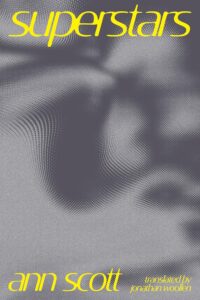 Ann Scott, tr. Jonathan Woollen, Superstars
Astra House, April 7
Reading cult literature you haven’t encountered before feels like joining a secret club or something. And Superstars centers on an early-30s identity crisis set between French techno and rock scenes in the 90s. I’ve said it already, but I love being dropped in a time and place that is so specific to itself. –OS
 Rachel Khong, My Dear You: Stories
Knopf, April 7
Rachel Khong is two-for-two with her novels Goodbye Vitamin and Real Americans, and I’m excited to see what she’s like in shorter form. These stories also look like they’re going to blur the lines of genre in the vein of Marie-Helene Bertino and Kevin Wilson, with ghost-conjuring cats and strange government technology alongside the deeply human questions of what it means to be alive in a world that might not love you back. –DB
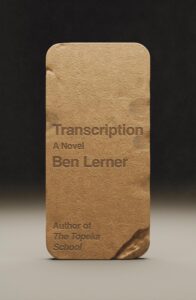 Ben Lerner, Transcription
FSG, April 7
At 144 pages, you can read Lerner’s latest novel in an afternoon, and you should: it’s a deeply pleasurable, absorbing book, a metafictional meditation on memory and influence, and the way technology has changed our relationship to both, but also a series of moving portraits: the anxious interviewer, the aging genius, the reflective son. Reading it, I had the experience that I so often do with Lerner’s books, this sense that what he’s doing really shouldn’t work, and that it wouldn’t, if it were in anyone else’s hands. But it’s not, and so it does. Thank goodness. –ET
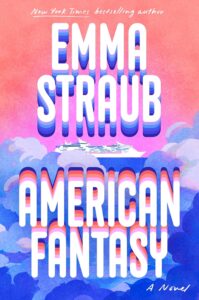 Emma Straub, American Fantasy
Riverhead, April 7
You can always count on Emma Straub for a big-hearted, yummy book, and this one sounds no different: the titular American Fantasy is a cruise ship, where a fifty-year-old woman sort of accidentally finds herself, along with her favorite boy band from the nineties (and a bunch of other women, of course). What will she find there? I must find out—Straub is one of those authors that it is a special joy to be aging alongside, and I want to hear all her thoughts. –ET
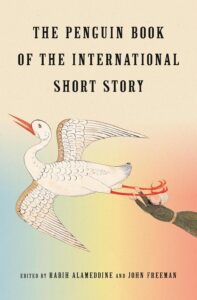 Rabih Alameddine and John Freeman, eds., The Penguin Book of the International Short Story
Penguin Press, April 7
Some of the best short fiction from around the world, as selected by an acclaimed anthologist and a newly minted National Book Award winner. Haruki Murakami, Salman Rushdie, Han Kang, Ted Chiang, Colm Tóibín, and Ted Chiang are just some of the superstar names to be found within the pages of this stacked anthology, which aims “to provide a tour of modern fiction beyond the Western canon,” and promises to transport us far from the United States. If wishing made it so… –DS
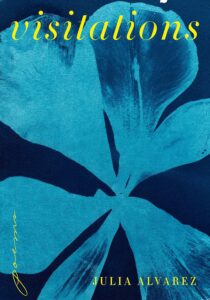 Julia Alvarez, Visitations
Knopf, April 7
There is something beautiful, I imagine, in having a record of one’s emotional life recorded in poetry written across decades. What a gift it must be to be able to go back, as Julia Alvarez does in Visitations, and trace those moments, both epic and intimate, that comprise a single life. We are lucky, then, to have one such document from a novelist and poet like Alvarez, who has said herself of the collection: As I approach the closing stanzas of a long life practicing my craft, I feel the need to collect the many loose poems I’ve been writing into a book that follows the many incarnations and voices of my writing selves over the years. –JD
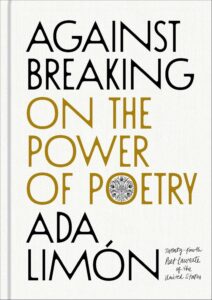 Ada Limón, Against Breaking: On the Power of Poetry
Scribner, April 7
Long a fan of her intimately observed poems—which unerringly capture those small moments in life that seem lit from within—I was thrilled when Ada Limon became the 24th Poet Laureate of these United States. Now, using the full power of her office, Limon is here to remind us (or convince us) of the importance of poetry. And while I, personally, need no such reminders, I am very much looking forward to Limon’s case for why poetry matters, and how it can heal us and connect us, and enrich our lives in ways we didn’t even think possible. –JD
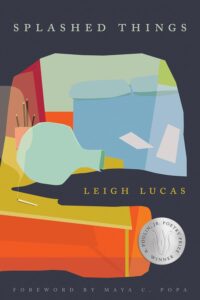 Leigh Lucas, Splashed Things
BOA Editions, April 7
Splashed Things is a searing, rambling, sprawling, at times even funny, collection of grief poems about how to come to terms with that which is impossible to understand. How to look forward instead of looking back. Or at the very least, in addition to looking back. How to keep living when a part of you has died. Leigh Lucas’ book of poetry reckons with the death of a lover. The suicide of a lover, specifically: having to reckon with the fact of his absence, as well as the fact that he chose it. He threw himself from a bridge into water. She can’t talk about it. She has to talk about it. She talks around it. Instead of the wound itself, the great gaping hole that he left in her heart, the hole he made in the water, she talks about the “splashed things”. She wasn’t there, but she got all wet anyway. Irrevocably changed from the experience, from knowing him, loving him, and losing him, Splashed Things doesn’t obey linearity or resolution, just a steady circling, honoring: a grand testament of love, and to the desire to keep on living. –JH
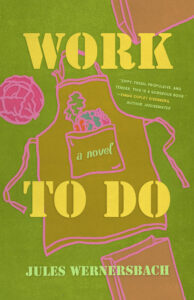 Jules Wernersbach, Work to Do
University of Iowa Press, April 7
I’m stoked for this novel by one of the best booksellers in the nation: Jules Wernersbach, who I had the pleasure of working with back in my BookPeople days. The novel merges their long experience working crushing hours for local businesses on the cusp of unionization with the real-life saga of grocery cooperative workers fighting to earn a living wage. There’s a special kind of hell that comes from being exploited at a Cool Job—especially, in Austin, at a Cool Local Job. Much of the prestige of the position comes in the form of outside admiration, so to damage that admiration is to get rid of one of the few perks of the job.
And yet, there’s no better way to aura-farm than to have a unionized workplace, so I’m hoping the scrappy grocery workers at the heart of the novel achieve all their collective bargaining dreams! For those who can’t wait for the April publication date, check out Hive Mind Bookstore, a queer bookstore in Brooklyn, founded by Wernersbach and home to a curated collection and lively event schedule :). –Molly Odintz, CrimeReads Managing Editor
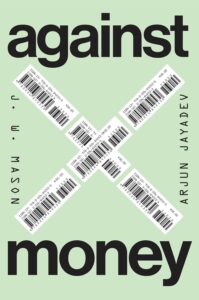 J.W. Mason and Arjun Jayadev, Against Money
University of Chicago Press, April 13
The credit score was invented in 1989. One of the hottest political issues at the turn of the 20th century was whether the gold standard should give way to bimetallism; it didn’t, but the U.S. abandoned the gold standard entirely in the 1970s. All of which is to say that while cash might rule everything, major economic realities are much more mutable than they appear. So I’m prepared to dig into “a radically different way of thinking about money—imagining a hopeful future in which it no longer dictates the possibilities of our collective existence.” I never wanted a credit score in the first place. –CK
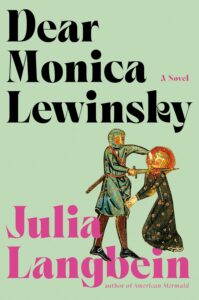 Julia Langbein, Dear Monica Lewinsky
Doubleday, April 14
If anybody from the 90s is due for canonization, Monica Lewinsky sure is up there. Langbein’s second novel sounds absolutely bonkers [positive] as a woman reflecting on her own late-90s power-imbalanced love affair suddenly summons Saint Monica and the two set off on a memory journey back to 1998. –DB
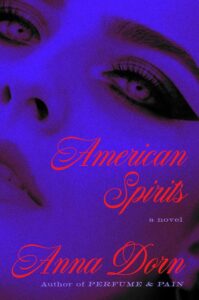 Anna Dorn, American Spirits
Simon & Schuster, April 14
Satirical novels about contemporary culture can age into awkwardness quickly. Commentary and humor are by definition responsive, and it’s difficult for a writer to pin something down when the cultural rate of churn moves at a rapid clip. But Anna Dorn has a knack for finding characters and relationships that offer a path through these strange and ephemeral moments, in particular in her 2022 novel Exalted, a very funny examination of astrology and social media. Her new book American Spirits turns to the world of music, and promises to be as funny and edgy as her previous work. A pop star, her producer, and a superfan turned assistant hide away to record an album during the pandemic lockdown. The overlapping relationships between the three, heightened by external narratives in the press and online, fester in isolation, eventually exploding into tragedy. –JF
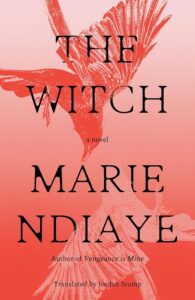 Marie NDiaye, tr. Jordan Stump, The Witch
Vintage, April 14
This new novel from the award-winning French novelist is described as “a William Faulkner novel set in modern France.” The novel follows “a mediocre witch” stuck in a bad marriage who passes her gifts to twin daughters. The matrilineal passage of power—made known by crying tears of blood—has been smothered and controlled by men, but thanks to their new abilities, the twins escape their mother and her malicious husband. It’s a story of inheritance and liberation centered around a very NDiaye protagonist: someone holding it together in situations teetering on chaos. –JF
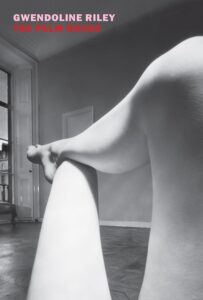 Gwendoline Riley, The Palm House
NYRB, April 14
Like many others, I was recently blown away by First Love, so I’ll follow Gwendoline Riley anywhere. Her seventh novel follows longtime friends Laura Miller and Edmund Putnam, both languishing in personal and professional troughs. Riley’s unsparing eye for the light tragedy and dark comedy of relationships will, I’m sure be on full display here, and I can’t wait for this one to break my heart. –JG
 Violaine Huisman, The Monuments of Paris
Penguin Press, April 14
In this autofictional novel, Huisman describes growing up in Paris with her beautiful, bipolar mother and iconoclastic, flamboyant father. Her father grew up in Vichy France and was obsessed with her long-dead grandfather, Georges, a Belgian Jew with a heroic and tragic life that became a family myth. “Violaine” returns to France after her father’s death, and, with the help of a local historian, seeks out the truth about her family. A story about exile and belonging also becomes a story about the lies and truths that hold a family together. –EF
 Solvej Balle, tr. Sophia Hersi Smith & Jennifer Russell, On the Calculation of Volume (Book IV)
New Directions, April 14
The saga continues! The world of November 18th has expanded in each previous book, from a personal loop to including more loopers—but now, the genre-pushing edges of the story blow outwards as Tara and the other loopers end up creating a headquarters of sorts in Bremen. Publicity copy promises a proper cliffhanger, with three more (literary) Nov 18ths to go… –DB
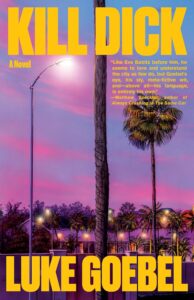 Luke Goebel, Kill Dick
Red Hen Press, April 14
Goebel’s LA thriller comes packaged with not only an insane blurb from his wife, Ottessa Moshfegh (“If this book were any better, I’d cut my own head off.”) but also an apparently earnest one from none other than Anna Delvey, who says, “It’s like if Joan Didion and Hunter S. Thompson had a love child raised on Oxy and existential dread—impossible to look away from. The prose moves like stolen cash, the world is decadent and rotting at the edges. Honestly, if you’re not reading this book, what are you doing? Probably something dull and unpaid. Consider this your invitation to the party–just don’t expect to leave unscathed.” Ok, I’m intrigued. –ET
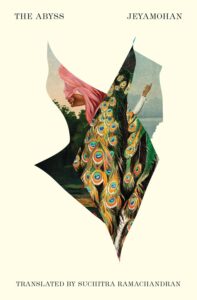 Jeyamohan, tr. Suchitra Ramachandran, The Abyss
Transit Books, April 14
The giant of Tamil literature broke into the English-speaking world with last year’s Stories of the True; in this latest translation, of a novel billed as his masterpiece, a successful middle-class man funds his lifestyle by exploiting a group of physically deformed beggars. But, funny. Anything with this kind of Geek Love energy is always going to pique my interest. –ET
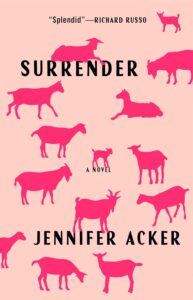 Jennifer Acker, Surrender
Delphinium, April 14
I love a leaving New York book (not to be confused with a leaving New York essay), so Jennifer Acker’s second novel, about a New York PR flack who moves to rural Massachusetts to save her father’s goat farm sounds right up my alley. In addition to learning the ropes of running a farm Lucy Richard, 47, is contending with a crumbling marriage, health and financial woes, and an unexpected newfound intimacy with her childhood friend, Sandy. Richard Russo writes that the novel “provides what I crave from all stories: vividly drawn characters worth spending time with and a richly rendered place for them to inhabit.” Good enough for me! –JG
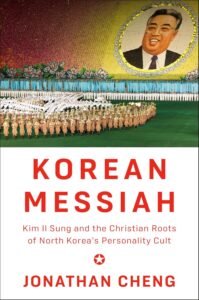 Jonathan Cheng, Korean Messiah: Kim Il Sung and the Christian Roots of North Korea’s Personality Cult
Knopf, April 14
The insulated and seemingly impenetrable world of North Korea’s ruling Kim dynasty has surprising roots in American Christianity, according to this new book by The Wall Street Journal’s China bureau chief. Korean Messiah follows not only the family that rose to absolute power in Pyongyang, but also an American Presbyterian missionary who built a fervent following in the early 19th century. Two of his followers were the parents of Kim Il Sung, and Cheng tracks how a family’s faith and American proselytizing became the roots of Kimilsungism, the ideology elevating the rulers of North Korea to a nearly deified state of veneration. Cheng draws on new research for this book and promises to cut through the propaganda, innuendo, and mystery surrounding the Kims and North Korea.
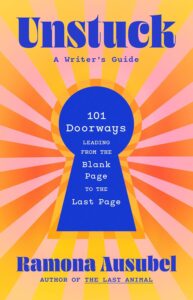 Ramona Ausubel, Unstuck: A Writer’s Guide
Tin House/Zando, April 14
I’ve been a fan of Ausubel’s since the early days, and as someone who is often stuck, I am very much looking forward to reading her craft book, which Karen Russell recently described as “a beautiful garden of forking paths and a great practical aid to anyone feeling blocked or lost.” That would be all of us, at least sometimes. –ET
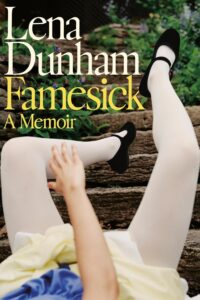 Lena Dunham, Famesick
Random House, April 14
Lena Dunham was a north star in my teens and twenties: Girls was a masterpiece, and Not That Kind of Girl, her memoir, was its own guide for me at the time. They were stories of coming up and into yourself, letting yourself be used and manipulated, stories of friendship, of breakups, of understanding the world a little more. Dunham is a master of narrative, of dialogue, of giving a peek into her intense and specific mind: always funny, always in your face, always demanding to be heard. A lot has changed since Girls and Not That Kind of Girl. Some successes, and many hardships. Heartbreak, loss, and chronic pain have been major themes in Dunham’s past decade, as well as new love, new stories, new homes. Famesick promises to be the kind of book we expect from Dunham: familiar yet surprising, funny yet bittersweet, vulnerable yet brave. For me at least, Dunham has always been the kind of girl who makes me sit up and pay attention, no matter what it is she wants to say. –JH
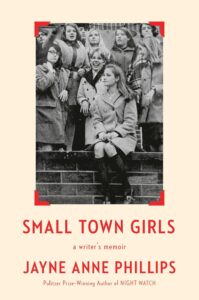 Jayne Anne Phillips, Small Town Girls: A Writer’s Memoir
Knopf, April 21
I have long tried to avoid the faint praise of labeling someone a “writer’s writer” but based on the number of wonderful writers who’ve “confessed” to me their love of her short stories (and novels), I’d have to give that title to Jayne Anne Phillips (with the very best of intentions, of course). And now we are blessed with her memoir, which follows her journey from a childhood in rural West Virginia to her discovery of writing and the eventual life in letters it gave her (with a cameo by another “writer’s writer,” fellow West Virginian Breece D’J Pancake). As in her fiction, one can expect closely observed revelation, both intimate and expansive, delivered in that wry and open-hearted voice so beloved of so many. –JD
 Xochitl Gonzalez, Last Night in Brooklyn
Flatiron, April 21
Xochitl Gonzalez really knows how to render time and place, and this novel takes you back to Brooklyn in 2007 on the verge of massive change. It promises a story of class and gentrification and imagining different lives, and also a story about being a person who knows people in a way that feels valuable. –OS
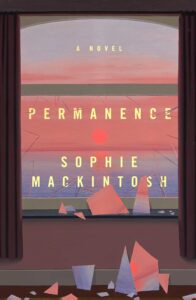 Sophie Mackintosh, Permanence
Avid Reader Press, April 21
I adore Sophie Mackintosh’s eerie, ethereal fictions. Gorgeous, psychologically fraught fever dreams that linger in the mind for days after reading. Her new novel, Permanence, is the story of Clara and Francis, a pair of clandestine lovers who one day wake up in an apartment they don’t recognize, with no memory of how they arrived there. It turns out that they’ve been transported to an unnamed sanctuary city where adulterous couples can live out in the open, devoting themselves to one another 24/7. A paradise…right? –DS
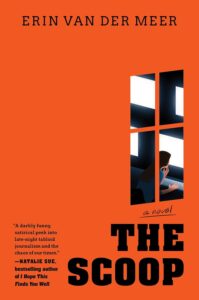 Erin Van Der Meer, The Scoop
Grand Central Publishing, April 21
I’m excited for this debut, in which a journalist falls from grace (a glossy magazine job) to squalor (the clickbait mines at a tabloid), and tries not to lose herself in the process. (All of New York media is about to shiver in fear/recognition.) If it’s as funny as this promo suggests, we’re all in for a very good time. –ET
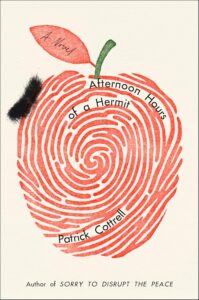 Patrick Cottrell, Afternoon Hours of a Hermit
Ecco, April 21
A second novel that directly references, in a direct and meta way, the publication of an author’s first book is always going to thrill me (hello 10:04) but Patrick Cottrell delivers in spades with this ‘existential noir’ that follows the author of Sorry to Disrupt the Peace (here named Dan Moran) as he comes home to his estranged family on the eve of his late brother’s memorial and sets out to solve… some kind of mystery, even if it’s just the mystery of himself. –DB
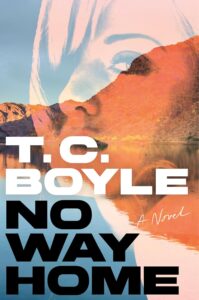 T.C. Boyle, No Way Home
Liveright, April 21
The latest novel from the uber-prolific short fiction maestro is a dark, surreal tale of sexual jealousy in the desert. It’s the story of an LA medical resident who travels to the depressed Nevada town where his mother has recently died, only to find himself drawn into a love triangle involving a “margarita-swilling receptionist” and a “vengeful middle-school teacher cocksure about his sexual prowess.” I love a good psychosexual descent into Lynchian madness in a desiccated American town (who doesn’t?), so I’ll be paying this one a visit in the Spring. –DS
 Fernando Pessoa, tr. Margaret Jull Costa, The Complete Works of Ricardo Reis
New Directions, April 21
I’m a big fan of writing that is formally and conceptually adventurous, and among writers of ambitiously experimental work, Fernando Pessoa is one of the greats. Throughout his career, Pessoa created a number of alter egos, other writers who he would embody and imbue with their own unique style and personality. This new collection gathers together the writing of one of Pessoa’s most notable creations, Ricardo Reis, a Portuguese doctor and Neoclassical poet obsessed with Latin and Greek, but who fled to Brazil after his participation in a failed monarchist revolt against the Portuguese Republic. New Directions has compiled “Reis’s” poems and prose in the original Portuguese alongside English translations and a new introduction about Pessoa and his work. –JF
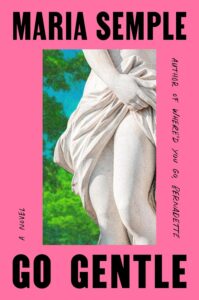 Maria Semple, Go Gentle
Putnam, April 21
I loved Where’d You Go, Bernadette, so I’m very excited for Maria Semple’s new novel, Go Gently. The story follows a divorced philosopher who lives by the principle that she can only want what she already has. Her guiding rule has given her a good life with her teenaged daughter, a job as a philosophy tutor, and a coven of friends. But when she finds herself wanting something—or in this case, someone—that she can’t have, her world is upended. Semple is great at writing women on the edge, characters with seemingly perfect lives who are secretly about to crack, so I can’t wait to see what she does with this one. –MC
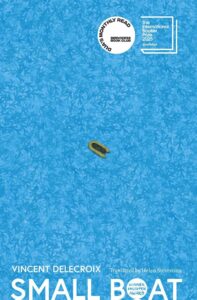 Vincent Delecroix, tr. Helen Stevenson, Small Boat
Mariner, April 21
This searing, first-person novel is an imagined account from a French naval officer struggling to defend her abdication of responsibility, after she wrongly tells migrants clinging to a capsized boat that they are on the British side of the English Channel. The ensuing delay in rescuaing the stranded people leads to the death of 27. Are the accusations that the officer failed to help correct? Or is she justified in refusing to take more blame than war, governments, or the ocean itself? Vincent Delecroix’s fictionalization of a horrible, all too real event was longlisted for the 2025 International Booker Prize, described as a “philosophical ghost story” imagining “ethics at crisis point.” It’s a difficult novel for a difficult world. –JF
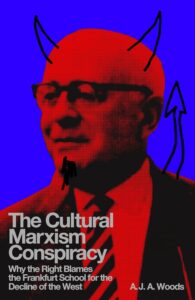 A.J.A. Woods, The Cultural Marxism Conspiracy: Why the Right Blames the Frankfurt School for the Decline of the West
Verso, April 21
I can’t remember exactly when I first encountered “cultural Marxist” in the wild as a term of abuse but oh boy was I ever confused. It must have been somewhere toward the end of George W. Bush’s first term and I do remember being struck by the un-meaning of it, by its emptiness… And then very quickly realizing that the emptiness of the term is the point, the better to fill it with whatever brand of far right paranoia is best suited to panic the masses at any given point. So who came up with this slur and how the hell did they attach it to the Frankfurt School? A.J.A. Woods has your answers… and much more. (I do love the idea of some suburban survivalist freaking out about Max Horkheimer while sat upon a pallet of end-times MREs.) –JD
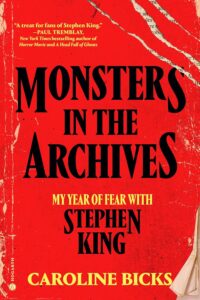 Caroline Bicks, Monsters in the Archives: My Year of Fear with Stephen King
Hogarth, April 21
Bicks is the inaugural Stephen E. King Chair at the University of Maine and the first scholar to have extended access to King’s papers, in his personal archive in Bangor. With King’s blessing, she dove into his early work and, with a playful eye that befits her history as a Shakespeare scholar, shows us how the king of horror built his crown. –DB
 Quinn Slobodian and Ben Tarnoff, Muskism: A Guide for the Perplexed
Harper, April 21
Slobodian is an academic historian and public intellectual. I look to him for accessible but probing takes on Cold War neoliberals, the failings of globalism, and–you guessed it, a certain world-cratering slimeball in Silicon Valley. Ben Tarnoff is a leading tech writer, known for his clarion call to deprivatize the internet. So these two feel like the perfect guides to help a layman understand the Musk phenomenon. –BA
 Yongyu Chen, Perennial Counterpart
Nightboat, April 21
Tracy K. Williams writes of Yongyu Chen’s debut collection, “I am astonished by the lyric conviction animating this poet’s work, and the ongoing dialogue—across time, lives, temperaments and texts—that gently yet adamantly stitches us to one another. A generous, exquisite debut.” I’m excited to get my hands on this one, and dare I say: It’s looking like 2026 will be a great year for poetry. So that’s something! –JG
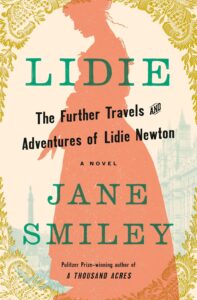 Jane Smiley, Lidie: The Further Travels and Adventures of Lidie Newton
Knopf, April 21
Lidie Newton is utterly alone in 1855 Illinois. Until, that is, she agrees to escort her actress niece abroad. The two women travel to England, where they take on new personas as a professional actress and her ladies’ maid. But will their new lives give them everything they hoped for? Pulitzer Prize-winning author Jane Smiley paints a vivid portrait of two complex, ambitious women trying to find their place in an uncertain time. –MC
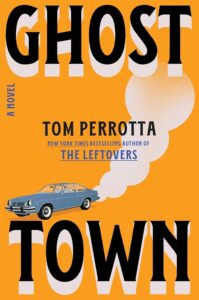 Tom Perrotta, Ghost Town
Scribner, April 28
A middle-aged writer looks back at One Fateful Summer—a summer of grief, Ouija, and heading into high school. It probably won’t crush you like The Leftovers, but it’ll definitely be a bit more melancholic than Election. –DB
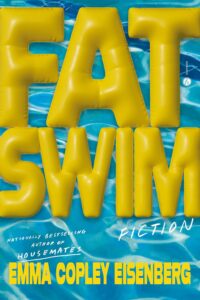 Emma Copley Eisenberg, Fat Swim
Random House, April 28
I love when stories in a collection share a universe: how do characters and events affect the reality from one story to another? How do they inform each other? And I so appreciate writing about the complex relationships we have with our own bodies and how we navigate them, particularly in a cultural moment when the rising aesthetics of fascism further attempt to dictate the ways we engage with ourselves. –OS
 Karen Tei Yamashita, Questions 27 & 28
Graywolf, April 28
This title comes from two questions on the “loyalty questionnaire” Japanese Americans were required to fill out to be considered for release from America’s WWII-era internment camps: Would they be willing to join the U.S. military? And would they renounce allegiance to the Japanese emperor? A new novel from the prolific Karen Tei Yamashita follows the surprisingly long-lasting repercussions to answering these questions. Through a mix of fiction and nonfiction, Questions 27 & 28 introduces us to three generations of characters who were all impacted by FDR’s internment, a novelistic investigation of a shameful American chapter. –JF
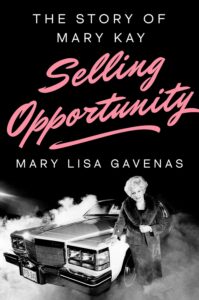 Mary Lisa Gavenas, Selling Opportunity: The Story of Mary Kay
Viking, April 28
“Mary Kay” is a name that many readers will know: perhaps mainly those who were born, say, pre-1980, who had a mother or aunt who partook in a specific sort of beauty peddling. For the rest of us, it may still be familiar due to its sheer ubiquitousness in media set in that time. The brand Mary Kay is often used as a representation of a feminine quest for financial independence, in a time of domestic strappings: the American Dream for a certain kind of woman, in a certain kind of era. For the first time, there’s a biography of the woman behind the marketing juggernaut. Mary Lisa Gavenas has been working on this totemic character portrait for years: excavating the woman behind all the branding, behind the pink Cadillacs and many shades of lipstick, to reveal the true, rags-to-riches story. Ever gripping, wry, and immersive, this biography is for the many readers who love the specific cultural histories that reveal the grander truths of our time. –JH
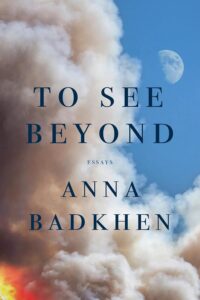 Anna Badkhen, To See Beyond: Essays
Bellevue Literary Press, April 28
Full disclosure: one of the essays in this sure-to-be wonderful collection first appeared here at Lit Hub. And you know why? Because Anna Badkhen is a wonderful essayist. In her forthcoming collection, To See Beyond, Badkhen employs her customary insight and empathy to investigate how it is we (you, me, the great us) navigate the near-ubiquitous calamity of modern existence, served as it is to each of us every day, on our tiny death screens. And if many of us don’t quite have the language to describe this endless scroll of despair, Badkhen does; and in giving name to what we face, she creates space for something we might call hope. –JD