Inside the Inferno: Revisiting Southern California’s First Wildfire of 2025
Jacob Soboroff Chronicles the Destruction Wrought by the Eaton Canyon and Palisades Fires
Around 6:10 PM, as blasting winds rushed down the southern slopes of the San Gabriel Mountains, power flickered in homes near Eaton Canyon Park, a gateway into the rugged foothills of the Angeles National Forest. Eaton Canyon is an easily accessible respite above Altadena and the other suburban communities that sit on the far-northern end of the San Gabriel Valley. In Eaton Canyon, gently sloping trails lead to a waterfall tucked away in the forest.
For hikers and residents, the steel lattice towers rising from the horizon carrying high-voltage transmission lines up and over the mountains are as recognizable as the bucolic dirt paths, scraggly chapparal, and, at slightly higher elevations, old oaks.
One such power line, the century-old Mesa-Sylmar, owned by SoCal Edison, had been idle for some fifty years. But, as one leading theory under investigation would have it, as seventy-mile-per-hour gusts whipped neighboring active lines, a powerful magnetic current transferred electricity to the dormant line, inducing a spark that set vegetation at the bottom of the tower in Eaton Canyon aflame.
What at first appeared to some Altadenans as merely a campfire-sized flame spread quickly, consuming the base of the tower and then everything around it.
Up on the hill they could see the header—the smoke plume coming from Eaton Canyon—and they knew it was going to be a big one.
Altadena resident Cate Heneghan, who lived on McNally Avenue, located about two miles west of the ignition, lost power in her home. But there was no visible sign of flames or smoke. Only word of what was happening across the county, in the Palisades. Heneghan, a senior engineer for more than three decades at NASA’s Jet Propulsion Laboratory, fired up her small back-up battery to power her laptop and cell phone without realizing the Eaton Fire had begun.
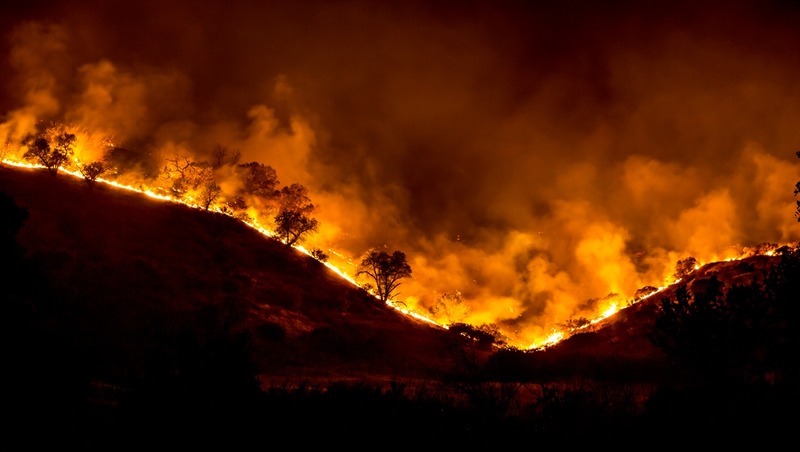
With darkness having fallen, the slopes of Eaton Canyon would rapidly ignite, winds spreading the bright-orange flames, smoke, and embers across the hills and into the neighborhood below.
Robert Garcia, a thirty-year veteran of the US Forest Service and now fire chief for the Angeles National Forest, was sitting in his situation room in Arcadia, a city in the San Gabriel Valley in the shadow of the sprawling forest. He had sent resources and assets to the Palisades to assist in the mutual-aid effort underway to save life and property as the predicted mountain-wave winds cascaded down the Santa Monica Mountains and into the beach-adjacent enclave. On three flat-screens backlit by giant windows, he monitored local news coverage of the Palisades Fire on the left, a network of woodland cameras that are part of the ALERT-California network run by the University of California San Diego, on the center monitor, and on the right, a map of Angeles National Forest.
Wrapping up a coordination call with other agencies, he was discussing what conditions would trigger a total recall of personnel—a balance of bringing on additional staffing but also maintaining a marathon pace, as he calls it, if word came through that fire had broken out in his jurisdiction. Shortly after six o’clock, the first calls rolled in, followed quickly thereafter by many more.
Minutes away from his position in Arcadia, reports indicated a fire had started in approximately the same place where, in 1993, another fire had brought about catastrophic consequences. The Kinneloa Fire began as an out-of-control campfire that feasted on perilously dry brush and ended up destroying nearly two hundred homes—making it one of the worst fires in California history at the time. The damage was largely contained to what firefighters call a wildland-urban interface fire, not a larger conflagration like the one developing in the Palisades. But Garcia knew—and he and his counterparts had been discussing—what an ignition in that part of Los Angeles County would mean under the particularly dangerous situation warning twenty-eight years after the Kinneloa Fire.
“This is what we are going to see more and more frequently,” Karen Terrill, a former spokeswoman for the California Department of Forestry and Fire Protection, said to The New York Times in 1993.
In the years since, Mother Nature had done anything but settle down. The Kinneloa Fire dropped off the list of California’s most destructive fires entirely, as larger and more ferocious blazes consumed the state year after year. And that’s why the area remained a major concern for Garcia.
Now it was happening again. Based purely on the location of the reports coming in, the fire chief knew he had a problem.
“Oh, man,” he said.
Immediately, he got on the phone with his counterparts from other local fire agencies: Chad Augustin, chief of the Pasadena Fire Department; Brent Bartlett, chief of the Sierra Madre Fire Department; and Anthony Marrone of the LA County Fire Department. Marrone was already at the command post in the Palisades, which was now threatening entire neighborhoods and the largest protected landscape in the Los Angeles region.
Do we have enough personnel to make an effective attack? Garcia pondered.
At 6:26 p.m., in a post on X, Los Angeles City Fire Chief Kristin Crowley recalled all available members to return to duty to a fire that was now consuming more than 2,900 acres:
All #LAFD members currently off-duty are to call the DOC 213-576-8962 with their availability for recall. #palisadesfire
In Arcadia, Garcia got in his vehicle and raced through the darkness to a command post being established near Eaton Canyon even as firefighters faced a frontal assault of wildfire coming at them. Garcia would reflect later that upon assessing the situation, he realized immediately, “This was one of those worst-case scenarios, for sure.”
Also dispatched to the Eaton Fire were Los Angeles County’s Nineteens, with Jake Torres driving the engine, and Twelves, with Captain Joshua Swaney. Twelves was on a tree-down call: A massive oak around Lincoln Avenue had crumpled a home when the call for a brush fire in Sixty-Sixes’s first-in came through. With no lives in immediate danger and other personnel on the scene, within a minute they were driving, firefighter Gunner Alves in the back seat as they started rolling. Up on the hill they could see the header—the smoke plume coming from Eaton Canyon—and they knew it was going to be a big one.
“Wow, this is a real fire,” Alves remarked.
Twelves went to the left flank of the fire, which was encroaching on homes off Altadena Drive alongside Eaton Canyon. Nineteens went to the right flank, near where the Kinneloa Fire had ravaged that neighborhood in 1993. Twelves hooked up to a hydrant, and Alves grabbed a chainsaw off the rig to trim some of the trees along the houses as the fire backed down the hill toward them.
And then it hit, setting off a game of Whack-A-Mole, with little fires becoming bigger fires becoming structure fires all around them.
For Nineteens, instead of the normal staging process for engines to report to the incident commander, they dove right in, adhering to an acronym they learned as probationary firefighters: TIER—take initiative, engage, and report. Houses were burning, and with the power out across so much of Altadena, fire was the only source of light.
Meanwhile, in the Palisades, the scene was downright apocalyptic. The fire had grown with such force, and the winds were so strong, it was hard to make sense of the chaos. Palm trees kept incinerating, and the fire seemed to be falling like rain.
At the command post along Will Rogers Beach, it was impossible to fix a map of the firefight area to the side of one of the vehicles stationed there. The Los Angeles Fire Department made the decision to physically move the command post down Pacific Coast Highway and away from the Palisades because the inferno threatened to overtake their location. Captain Erik Scott, the department spokesman, couldn’t stop coughing from the whirling sand, smoke, and ash as he tried to give a public update.
“This is one of the worst wind-driven fires I’ve had the privilege of being on,” he said during a live interview with KNBC, “and I’m even on a type 1 federal incident management team that goes all over the place.”
In terms of resources, Scott issued a dire warning about other areas at risk:
“I’ll be candid. Your Los Angeles City Fire Department needs more firefighters. We recently did an independent study called the standards of cover, and the statistics showed that due to how fast Los Angeles is expanding that we absolutely do need additional boots on the ground.” The captain then called for additional funding, even in the midst of the ongoing emergency, saying, “We’re doing the best with what we’ve got.”
“We’re dealing with new normals. These wildfires are increasing in severity and duration. We say we’re no longer dealing with a fire season. It’s year round. And if anybody is in these areas, you don’t have to wait until we tell you to go to go.”
The fire had grown with such force, and the winds were so strong, it was hard to make sense of the chaos. Palm trees kept incinerating, and the fire seemed to be falling like rain.
McNally Avenue in Altadena is one of the namesakes of Rand McNally & Company cofounder Andrew McNally, the Northern Ireland native who had owned much of the land in modern-day Altadena, which he purchased in 1888, according to the Long Beach Press-Telegram. The paper reported that before his move to Los Angeles, McNally had settled in Chicago in the mid 1800s and entered the printing business.
Eventually McNally and his partners bought the Chicago Tribune print shop and, during the Great Chicago Fire of 1871, one of the largest urban conflagrations in American history, they managed to save two of their printing presses by burying them in sand. (The Great Chicago Fire occurred on the same day as another historic blaze, the Peshtigo Fire in northwest Wisconsin, the deadliest fire in US history, which killed between 1,500 and 2,000.)
McNally’s Los Angeles home was at the corner of modern-day Mariposa Street and Santa Rosa Avenue. More than a hundred years later, the Andrew McNally House was added to the National Register of Historic Places on my birthday, March 27, in 2007. The State of California’s brief history of the house told the story of its importance to the community:
The Andrew McNally House is a two-story house designed in the Queen Ann, Shingle style by master architect Frederick L. Roehrig. The house was constructed in 1888, and in 1894 the one-and-a-half-story Smoking Room was added to the southeast corner of the house….The property was listed at the local level of significance in the area of settlement between the years 1888 and 1904, for its association with Andrew McNally. McNally was an early promoter of residential growth in Altadena. His house was the first substantial home built along “Millionaire’s Row.” McNally’s enthusiastic endorsement of Altadena and its agrarian and esthetic charms led wealthy families from the Midwest and East to [build] their winter homes in Altadena.
McNally Avenue was about a mile from the McNally House. And beginning in “the wee hours of Tuesday morning,” January 7, Cate Heneghan heard the winds howling, she told me. She hadn’t slept well the night before in her small Spanish-style home, an orange front door flanked by windows on both sides and two awnings hanging overhead. Terra-cotta tiles lined the home’s roof perimeter, the house set back from the street, separated by native vegetation and a thin concrete walking path to her front door.
As most in Los Angeles County focused their attention on what was happening in the Palisades, over forty miles away, Heneghan had charged her camping lantern, headlamps, phones, and computers, all of which came in handy after McNally Avenue lost power. At 6:56 PM, from a camera perched atop Mount Wilson, nearly six thousand feet above the Los Angeles Basin, itself tilting side to side in the gusts, a flash was visible adjacent to the orange smoke plume rising from the depths of Eaton Canyon.
Heneghan’s text messages soon started to light up with neighbors confirming the worst: A massive fire had broken out in Eaton Canyon. The Los Angeles County Fire Department estimated the fire initially at twenty acres—with the ability to grow to five hundred acres “quickly.” Its public information officer, Captain Sheila Kelliher, who was positioned at the Palisades Fire, summed it up succinctly:
“This is the perfect storm, right? We haven’t had rain, significant rain, in the last three years—last eight months for sure. These are the most extreme wind conditions we’ve seen in a decade. And you combine that with low relative humidity…and our low fuel moisture, and you put it in somewhere like Eaton Canyon, where the topography just breeds more wind and more weather, it’s just the worst-case scenario, to be honest.”
__________________________________
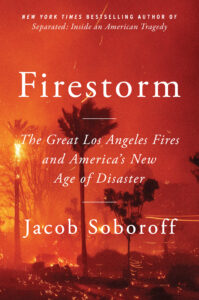
Excerpted from Firestorm: The Great Los Angeles Fires and America’s New Age of Disaster by Jacob Soboroff. Copyright © 2026 by Jacob Soboroff. Available from Mariner Books, an imprint of HarperCollins Publishers. Reprinted by permission.
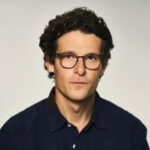
Jacob Soboroff
Jacob Soboroff is an MS NOW Senior Political and National Correspondent. His first book, Separated: Inside an American Tragedy, was a New York Times bestseller, and it was a Los Angeles Times Book Prize Finalist and an American Bar Association's Silver Gavel Award Finalist. Separated was adapted into an acclaimed film by Academy Award-winner Errol Morris. For his reporting on the child-separation policy, Soboroff received the Walter Cronkite Award for Individual Achievement by a National Journalist and the Hillman Prize for Broadcast Journalism. He lives in Los Angeles.