In Writing About Cults (and Religion) Telling is Better than Showing
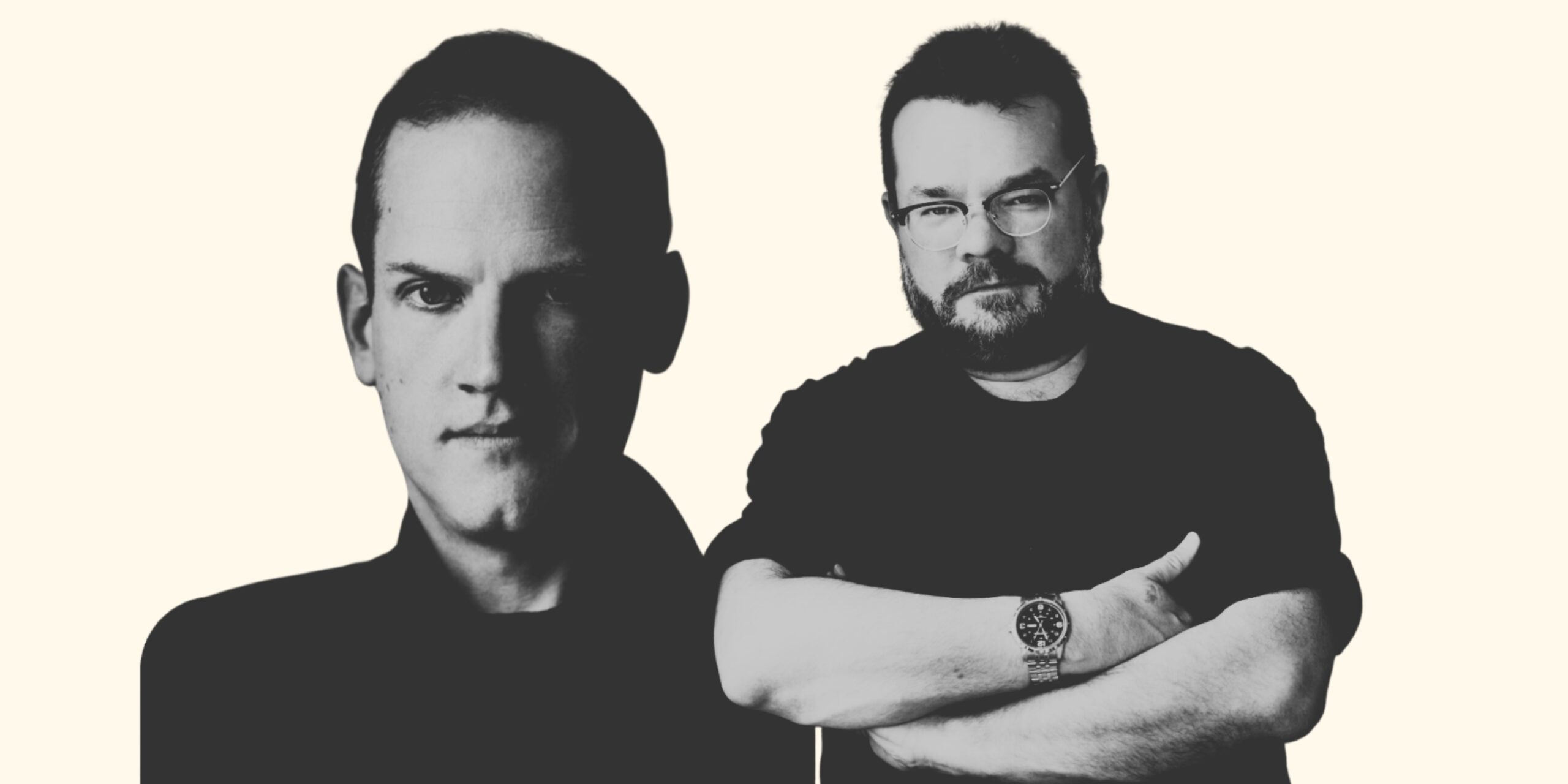
Harrison Hill in Conversation with Benjamin Hale
When I finished work on my new book, The Oracle’s Daughter: The Rise and Fall of an American Cult, I assumed I wouldn’t read anything more about cults for a good long while to come. I’d loved writing about the group in my book, the Aggressive Christianity Missions Training Corps, but five years in the weeds with their particular brand of extremism was enough for me, thank you very much.
And yet when I read Benjamin Hale’s latest book, Cave Mountain: A Disappearance and a Reckoning in the Ozarks, I found my appetite for the subject matter renewed. Cave Mountain is, in part, about a bizarre Missouri cult responsible for the murder of a three-year-old girl in 1978; and as I immersed myself in Ben’s propulsive, vivid writing, I felt the familiar pull of the themes that drew me to The Oracle’s Daughter in the first place.
Last week Ben and I exchanged email correspondence about our respective books, and how we approached the shared subject matter.
*
Harrison Hill: Ben, both of our books began as magazine pieces, yours in Harper’s, mine in The Cut. I think I went into the book-length version of The Oracle’s Daughter with the idea that it would essentially be an act of expansion. Now, on the other side of the reporting and writing, I see it more as an act of reinvention, largely because it required me to become a different kind of writer: the kind of writer who could write 90,000 words rather than just 7,000. I’m curious to hear about your thoughts on writing Cave Mountain the book vs. Cave Mountain the article. I’m struck by how much more present you are in the book.
Benjamin Hale: In a way it was actually harder to write the article than the book, because I had so much material. It was more difficult to choose which things to pare down and omit from the article. I’ve told people the difference is like a fish swimming in an aquarium versus swimming in the sea: I had a lot more room to move around in the book. But the main difference was that I had done a lot more research by the time I was writing the book.
There were a few key pieces of information I uncovered after writing the article, and several important people I was only able to track down after that Harper’s issue was published, most significantly Mark Harris, who was the teenage “prophet” of the cult and one of the people convicted of the murder at the heart of the story. Meeting him changed many aspects of the story. And as for putting more of myself into the book than the article, I kind of had to, because by pursuing the story and being the one to come along and stitch all the threads together, I became a character in it.
Something about seeing faith at its most extreme and uncompromising allowed me to make room for a faith that was more welcoming, a faith that had room for doubt.
There is an overlap of subject matter in these two books—cults, obviously, but also both involve thinking about why there seemed to be such a proliferation of them in the 1970s. I think we agree that a lot of it had to do with destabilizing, rapid cultural change: “So much of society was up for grabs, falling apart, or being considered from new and different perspectives. Amid this mayhem, this frenzy of freedom, cults offered something different. They offered clarity, security, order. They offered a home.” A period of “destabilizing, rapid cultural change” could also be a description of the past twenty or so years we’ve been living through. Someone at a reading recently asked me if I thought the ’70s or now was the more “fucked up” time, and I honestly think the answer is probably now. What do you think?
HH: Yes, now, absolutely! I was talking about Watergate with a friend recently, and we both laughed at what a big scandal it was at the time. It all sounds kind of quaint today! Anyway, by the logic I give in the passage you just cited, our current era, so rife with instability, should be producing an especially high volume of cults. It’s certainly producing widespread extremism.
And yet I also wonder if the cult in my book could ever be created today, or have operated for as long as it did if it were founded now. The husband and wife couple that founded the group, called the Aggressive Christianity Missions Training Corps, were hippies who met in 1971 at a back-to-the-land commune outside Sacramento. After becoming Christians they created a new, more radical ministry where they isolated their followers, physically and mentally. That kind of trajectory feels harder to pull off in a world as ultra-connected as our own: It’s just more difficult to cut people off from all external perspectives.
And yet, of course, these groups do continue to proliferate! Relatedly, I sometimes wonder if it’s time for us to expand our definition of the word “cult” to include something more diffuse, less about physical isolation than a shared bond of extremism.
In your book, you write that you “went on something like a spiritual journey while writing [Cave Mountain]: reading and rereading the Bible, reading C.S. Lewis, reading John Wesley, reading Martin Luther and John Calvin, reading Reinhold Niebuhr, trying to think seriously about Christianity in a sympathetic way for the first time in my life, even going to church voluntarily (and not for a wedding or a funeral) for the first time ever.”
This resonated deeply with me. I grew up in the Episcopal church and went to an evangelical high school, but as an adult attended church with far less frequency. It’s not that I rebelled against the church; it just wasn’t a meaningful part of my life. Then, midway through the book, I started going to church again. It was all kind of random, and it’s hard for me to explain why I started going even now: one day I just felt it, and I haven’t stopped since. Something about seeing faith at its most extreme and uncompromising allowed me to make room for a faith that was more welcoming, a faith that had room for doubt, which you so beautifully describe as “the essence of faith,” rather than its opposite.
But tell me more. What was it about the Church of God in Christ through the Holy Spirit, Inc. (that name!) that prompted the spiritual journey you write about?
BH: I hadn’t planned to go on a spiritual journey, but the book led me on one. My mother came from a family of very devout Southern Baptists, and my father’s family were half-ass Methodists; my mother took me and my brother to church growing up, usually Baptist, although she experimented with other Protestant denominations (I remember we went to a Presbyterian church for a while). The churchgoing petered out by the time I was a teenager, which is when I read Carl Sagan’s The Demon-Haunted World: Science as a Candle in the Dark and Bertrand Russell’s Why I Am Not a Christian—I would go on to read all the classic atheism-lit (Hume, Nietzsche, Spinoza), but those two were the most influential on me and the earliest.
My atheism was at its most fervent in my early-to-mid-twenties, which coincided with a wave of anti-religion books by the “new atheists” in the mid-aughts—Sam Harris, Richard Dawkins, and (especially, for me) Christopher Hitchens —which I eagerly devoured; reading books because they reinforce opinions you already have is like the intellectual equivalent of eating childhood comfort food as an adult. It was something I thought about a great deal—so much so that my first book, the novel The Evolution of Bruno Littlemore, is in large part about it. For a long time the war that raged inside my soul was all of my intellectual hatred of religion versus the religious art that deeply moved me, especially music.
Humor is the natural greatest enemy of delusion.
In Simon Critchley’s book about Christian mysticism, he writes (I’m paraphrasing) that no one can be an atheist while listening to the music one loves; this is like a positive reversal of “There are no atheists in foxholes.” And the music that comes from religious experience: the sublime beauty of Handel’s Messiah, Bach’s Mass in B Minor, or Sister Rosetta Tharpe or Revered Gary Davis—yes, all that was enough to balance the scales, with that giant stack of books sitting on the other plate.
My attitude toward religion had been softening considerably for years before I started researching Cave Mountain; the most profound influence on my thinking was discovering the work of John Gray (his 2018 book Seven Types of Atheism I would highly recommend to any young man who indulged in the mental sugar-rush of reading the New Atheists in the mid-’00s), and some of the other thinkers I discovered through him, particularly Giacomo Leopardi, which nudged me in the direction of a much smarter (I think) kind of atheism that is not nearly so hostile to and contemptuous of faith—rather one that respects it and seeks to understand it.
And then I started working on this book, which forced me to think seriously about Christianity because I had so many conversations with people who were pivotal to the book who are very serious Christians, whose Christianity is (this can’t be overemphasized) central to their lives. And in order to better understand Christians, one should better understand Christianity. So I read a lot of books by Christian thinkers, and yes, went to church: for example, I attended services at a Pentecostal church just because I wanted to see and hear people speaking in tongues for myself.
And the final leg of the spiritual journey was meeting Mark Harris, who had been the teenage prophet of the Church of God in Christ through the Holy Spirit, Inc. who heard the command from God to commit the murder that the book’s story revolves around—after forty years in prison and a great deal of serious reading and thinking, Mark is, I would say, a very non-religious agnostic, which I suppose is pretty much where I’m at too these days, but the road he took to that place was much longer and much, much harder than mine.
One sentence in your book I underlined, in a chapter about Sarah Green’s shaky entry into the secular world in the first months after leaving the cult (which in her case, as was also the case for Mark Harris, who was forced to leave it by incarceration, was not only leaving the cult but also her family and the only social universe she’d known), is this: “Ex-cult members may also have to learn how to tell (and understand) a joke: Cult expert Margaret Thaler Singer writes, ‘lack of humor is almost universal’ among people who have recently left cults.” That’s a very telling fact, I think. Humor is the natural greatest enemy of delusion. Watching George Carlin’s standup about religion instantly puts my mind right back where it was in about 2007.
I often tell my students that the only trick to good writing is to write to the reader; i.e., write as if you’re writing directly to a good friend.
At the beginning of the Acknowledgements, you write that you met Sarah Green because she was a neighbor of your brother and his wife in Brooklyn who helped them deal with a flooded basement in 2018. So you met her the year of the trial about Trinity’s abuse (sub-question: did you meet her before or after the trial? And if before, did you attend it?) —ACMTC’s story was mostly over, but not quite; there’s still a lot of drama that happens between that moment and the present day, which you cover in the last chapter.
Can you describe the process of how you began this project? I’m especially curious about the period when there was a lot of legal wrangling going on—resulting in Deborah’s incredible release and disappearance into the mist before she was supposed to go back to prison—which all surely must have been happening while you were really descending into the research rabbit-hole.
Also, did you go to the places you write about? The remains of the compound in New Mexico? That town in Oregon where they had the restaurant? The first compound in Sacramento? And if so, did having seen these places affect the way you wrote the book?
HH: This must be the question nonfiction writers as asked most frequently, right? “How did you come to this story”? I actually met Sarah in November 2019, maybe a year after the instigating basement flood. By that point the trial you mention had ended, so I was unfortunately unable to attend. (I did, however, get the transcripts, which proved extraordinarily helpful.) Sarah and I met several times before the pandemic, then took a pause, and started back up in the summer of 2020. I pitched an article about her to The Cut in August 2020; that piece came out in June 2021. I sold a proposal in June 2022—and now, four years later, it’s out! Work like this takes a tremendous amount of time, as you well know.
Yes, the legal part of the narrative was very much still active in the midst of my reporting. Mostly I dealt with this by trying to metabolize as many of the documents as was realistically feasible, and to get the help of lawyers in my life (the fact pattern is almost mind-bogglingly complicated, though hopefully it doesn’t feel that way to the reader). It was slightly unsettling, not knowing how things were going to turn out—and in some ways I still don’t have a final answer, given that Deborah is still on the run.
You asked about travel. I visited almost all the relevant locations in the story in California and New Mexico. Because the book opens with Sarah Green escaping the cult’s compound in the middle of the night in September 1999, I decided to go camping very close to the cult’s then-abandoned (I think!) compound, also in September. I’ve done a lot of solo hiking and camping in my life, and have never really felt scared, but this was definitely freaky: Just after sunset I heard the sounds of people coming from somewhere I couldn’t place, along with what I think were gunshots. Still, I’m glad I did it, because I was able to really, truly feel and smell and see what it would’ve felt like to escape that area in the middle of the night. I can point to specific sentences that are a direct product of that slightly harrowing excursion.
I’d love to take off my journalist hat for a book, though I do think people who primarily write fiction are better at wearing both hats than nonfiction writers. Would be fun to try, though.
You obviously did a ton of travel for this book, and narrate some of it for the reader, to really productive effect. One of my favorite episodes in the book involves you getting a Jeep Wrangler stuck on a wet remote road, only getting it out “after about a nine-hundred-point turn.” Why did it feel important to you both to do this kind of in-person reporting, and to include it in the book? That particular anecdote serves a kind of double purpose, in that it connects us to a U-Haul that got stuck at that exact location decades prior—which in turn connects to the murder of a child at the center of the book.
BH: I’m not really sure why I did it, it just felt right in the moment as I was writing it. I often tell my students that the only trick to good writing is to write to the reader; i.e., write as if you’re writing directly to a good friend. If you do that, you’ll write in order to communicate meaning and entertain at the same time.
HH: I love that—“write to the reader.” Not incidentally, I absolutely felt like you were writing to me as I read Cave Mountain. There’s this wonderful sense of a yarn being spun, of a story maestro saying, here, follow me. This often manifests as these wonderful moments of what I’ll call narrative pointing—to cite one of many examples, at one point you say, “Edith Harris was sick, and that is important.” On its face this doesn’t seem like a particularly noteworthy sentence. But I think it is sentences like these—when you the writer step in and circle something—that give the book the yarn-like voice I mentioned earlier.
I hate the adage “show, don’t tell,” and I think a sentence like yours shows just how misguided a sentiment it can be. The sentence is all tell: Edith Harris was sick, and that is important. In those moments I feel as if I’m nodding along—oh, okay, this is important—which makes me feel invested in, and almost a participant in, the telling of the tale. It reminds me of what it was like to sit around a campfire back at summer camp, listening to counselors tell ghost stories. Philip Lopate has a wonderful book called To Show and to Tell, which argues quite successfully that good writing makes use of both. I for one love essays and books that begin with “telling” rather than “showing.” It instantly gives the author a “listen to me” authority. Dickens, for example, at the beginning of A Tale of Two Cities: “It was the best of times, it was the worst of times…”—this opener is all telling and no showing, and all the stronger for it.
But to start wrapping things up, Ben, your two previous books were both fiction—a novel and a short story collection. Has Cave Mountain given you the desire to spend more time on the nonfiction side of the fence, or are you eager to get back to the realm of pure invention? I’d love to take off my journalist hat for a book, though I do think people who primarily write fiction are better at wearing both hats than nonfiction writers. Would be fun to try, though.
BH: I’ve written nonfiction before, but never a whole book, and I loved doing the research for it. In a way, it is so much more fun to write nonfiction than fiction, because it’s fun to travel to new places and it’s fun to track people down, try to win their trust and get them to talk. Writing fiction is a much lonelier process. I had a blast writing this book, and I hope to write another nonfiction book sometime soon. But I’m not sure what I’ll do next. I’ve been tinkering around with a few short stories, and that’s probably what I’ll get back to when I next have some real time to write. How about you? I know your pub date was this week, but do you have a next project on the horizon?
HH: I’m not quite sure about what’s next in my writing life, though I absolutely want to write more books. Writing articles and essays is great, but there’s something about the totalizing comprehensiveness that I honestly loved. There are a few ideas knocking around in my mind, though nothing that feels ready to go (and I should note that I’m always open to tips). There’s one thing I know for certain, however: No more cults!
__________________________________
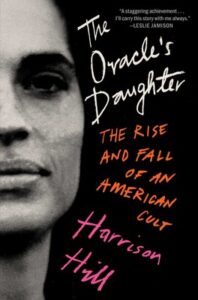
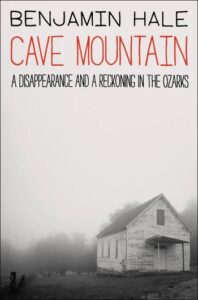
The Oracle’s Daughter by Harrison Hill is available from Scribner. Cave Mountain by Benjamin Hale is available from Harper.