Fellow Travelers: On Reimagining Chaucer in Post-Soviet Ukraine
Irene Zabytko Recounts the Process of Creating Her Own Version on The Canterbury Tales
I’m not a medievalist but fell in love with one because he seduced me by quoting lines—in Middle English—from Chaucer’s Canterbury Tales.
And of course, in my besotted state of lust, I studied that book in earnest. However, as it turned out, I discovered I loved the Canterbury Tales far more than the medievalist guy. After we broke up, I still read and re-read Chaucer’s book mostly because I was enamored by the story structure: a group of pilgrims traveling together and sharing stories—and comments about the stories—with one another.
I thought it was genius and wanted to do something similar when I began writing fiction. At first, I tried to imitate Chaucer very closely by writing characters from England (too many Masterpiece Theater influences) but at least I updated the era to the 1980s instead of the 1300s, and instead of traveling by horseback, they would ride a hippie Volkswagen-inspired tour bus on their merry way to Canterbury (where I’ve never been to before and, outside of Chaucer, knew nothing about.)
Stuck within the confines of the marshrutka, I was experiencing a microcosm of a societal transformation.
My characters then were not hippies—although maybe that would’ve been better. Instead, they were also named by profession, taking more than a few of the travelers’ identities directly from Chaucer. My version also included a Nun, a Wife of Bath, a Physician.
After several attempts, I failed. I was able to get these characters on a bus, but their stories were immobile. They had no personalities, nothing interesting to say, and they might as well have been real life strangers sitting in silence and boredom on a bus going nowhere special.
I gave up.
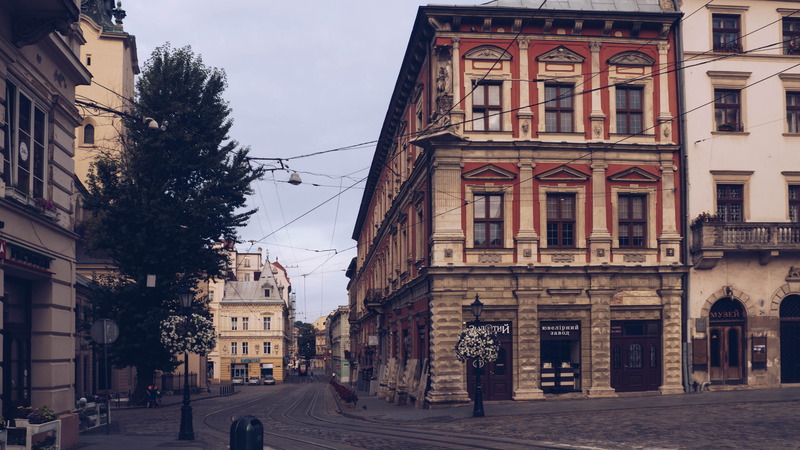
And then in 1992, I went to Ukraine and rode a bus (actually, lots of buses.) Not just any type of bus, but a marshrutka—a crowded, rumbling, claustrophobic Soviet holdover minibus, solidly built with steel girding and equally lacking in shock absorbers and seat padding.
After Ukraine left the Soviet Union the previous year, I was among several American volunteers headed for the newly liberated country to teach adults English in Kyiv, a progressive move by the fledgling government. Not only did it allow Americans to teach English but to openly live among and fraternize with Ukraine’s citizens, something not remotely imaginable when I first visited Ukraine in the suffocating era of 1970s when spies were our tour guides and our hotel rooms were bugged.
For my students, I was their very first up-close, living American, there to teach them conversational English. But there were other changes. In Kyiv many American and British businesses were establishing new branches of their corporations, and the once red banners of Soviet slogans on busy streets were rapidly being overtaken by adverts for Coca Cola and McDonalds.
When I wasn’t teaching, I rode marshrutki (plural marshrutka) to travel to the village homes of the many relatives I was obligated to visit.
The rides were uncomfortable and seemingly endless, but what was intriguing was how vocal the passengers were. They weren’t quietly talking to their seatmates, but participating in an all-out group discussion. It often started with one passenger (usually in the back) complaining to the bus driver about how much cheaper the rides were back in Soviet days. The likely-surliness of the driver’s response would cause a chain reaction of passengers speaking out until the conversation turned into a weighty political debate on whether things were better in Soviet times, spanning the the cost of bread to how much better foreign television shows were when dubbed in Ukrainian and not in Russian.
This was fascinating! Stuck within the confines of the marshrutka, I was experiencing a microcosm of a societal transformation—away from one in which people would never have openly complained or expressed personal opinions for fear of retribution and even prison. And it struck me how congenial the passengers were no matter their differences in opinion. Once a passenger left the bus for their stop, everyone collectively echoed a hearty goodbye and wished them well.
Sometimes—and this was the most exciting—an especially passionate passenger would start with a particular grievance and end up sharing their life story.
I am especially grateful for all the long, bumpy rides I took in the early days of the new Ukraine when liberated people wanted to talk.
The stories were often tragic. They were once married and alcoholism was the culprit for the breakup. Or they had recently returned from fighting in Afghanistan and could not understand why. Or they had lost their once secure government job and were forced to sell garden vegetables at the bazaar for the devalued kuponi, the Ukrainian currency at the time that was nearly worthless.
I found these spontaneous stories far more interesting than the passing sites that were usually hidden behind stiff curtains or mud-blotched windows.
And then it came to me—travelers going somewhere, expressing their views, sharing their stories! After years of searching, here it was. My own Canterbury Tales.
The myriad people I saw and heard and sometimes spoke to directly became the blueprint and inspiration for creating my characters and stories, and while in Ukraine that year, I resurrected my failed version. But the difference came out in the writing: my characters would be Ukrainian with their own insights, histories, and experiences, and not Chaucer’s people or landscape.
It took many years, and many false starts but at last I managed to finally get my characters onboard and riding together on a bus in my upcoming book, The Days of Miracle and Wonder.
I still love Chaucer. I am even grateful to that two-timing medievalist who introduced me to him. But I am especially grateful for all the long, bumpy rides I took in the early days of the new Ukraine when liberated people wanted to talk, and after years of repressed silence, had so much to say.
__________________________________
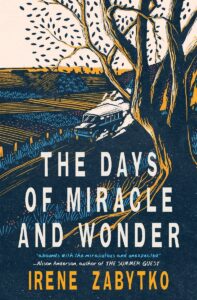
The Days of Miracle and Wonder by Irene Zabytko is available from Galiot Press.

Irene Zabytko
Irene Zabytko is the Ukrainian-American author of The Sky Unwashed, a novel set against the backdrop of the Chornobyl explosion, and When Luba Leaves Home: Stories, a set of interrelated short stories based on a Ukrainian neighborhood in Chicago. Her short stories have appeared in numerous journals and anthologies and her nonfiction has appeared in the New York Times Book Review, the Chicago Tribune Sunday Magazine, and elsewhere. She received a Fulbright U.S. Scholar award in Ukraine for an upcoming novel based on the life of Nikolai Gogol. She holds a BA and an MFA in Creative Writing from Vermont College.