Authoring Fame: A Reading List of Celebrity Narratives
Candice Wuehle Recommends Edith Wharton, Joyce Carol Oates, Bret Easton Ellis and More
On a February morning in 1910, silent film actress Florence Lawrence awoke to discover she was dead—according to the newspapers, anyhow. “I…was startled to see several likenesses of myself staring me in the face,” Lawrence wrote in a 1914 article for Photoplay “topped by a flamboyant headline announcing my tragic end beneath the wheels of a speeding motor car.”
Lawrence’s “death” was one of the earliest publicity stunts in Hollywood history. Just as Independent Motion Picture Company (the studio Lawrence as contracted to) hoped it would, the story spread quickly. Fans mourned. If you hadn’t known who the living actress was in life, you knew her now that she was dead. Then, just as abruptly as she’d died in the public’s eye, Lawrence resurrected. IMP announced not just that their starlet was alive, but that the entire story had been a rumor planted by rival studios. For what reason? That’s not certain, although it’s entirely clear that the denial of the rumor created yet another press cycle that decisively benefited IMP.
Lawrence is often called the first movie star, but what fascinates me most about her career is how explicitly it reveals the machinery behind celebrity. Her fame was not simply the product of talent or charisma. It was a narrative—authored, circulated, and manipulated by studios eager to transform a performer into a myth.
For as long as I can remember, I’ve been obsessed with that process: the way celebrity lives are written.
I learned all this about Lawrence in the early 2000s as I wrote my undergraduate thesis, Edith Wharton and the Cult of Celebrity. By day I was reading Richard Dyer’s work on star theory, learning how film studios manufactured personalities and circulated them through publicity campaigns and gossip columns. By night I was watching The Simple Life or tracking the lives of modern celebrities in Us Weekly and on E!’s nightly “news” show.
At the time, it felt as though the old Whartonian model of the socialite—someone whose social visibility itself functioned as a form of power—was returning in a new form. Be it Tom Cruise’s seemingly arranged marriage to Katie Holmes (tabloids claimed she had “auditioned” for the role of wife) or the sex tape that would make Kim K. a household name (we often forget this tape surfaced years after it was filmed, mere months before E! debuted Keeping Up With the Kardashians) it was occurring to me that modern celebs knew the same thing the first woman to win a Pulitzer Prize did about narrative: who controls the story controls the life.
Storytelling, in this environment, becomes a form of labor: part mythmaking, part damage control, part self-defense in a culture of constant surveillance.
My favorite of Wharton’s New York Trilogy is the one where a girl from the Midwest turns herself into a socialite and makes it big. In The Custom of the Country, Undine Spragg approaches society a lot like a modern influencer approaches a platform. She innately gets it that it isn’t wealth or even marriage to royalty that will secure her, but the story she spins from those things. Undine studies the society pages obsessively, reading about other people’s weddings, travels, and scandals the way a strategist studies a playbook. When a rival appears in print, she takes note. When Mrs. Heeny—her masseuse and unofficial gossip broker, who circulates through elite households collecting rumors and newspaper clippings—arrives with society news, Undine treats it like market research.
What she’s learning about public life is something that Hollywood would later formalize: reputation can be curated, and society itself is a kind of media.
Early Hollywood expanded that system through tight control of the messaging the public received about their favorite celebrities. Stars like Florence Lawrence did not simply appear on screen—rather, their romances, scandals, and personal tragedies were shaped into serialized publicity, their lives turned into ongoing narratives designed to sustain public attention. It fascinates me that, in this sense, the construction of celebrity has always been collaborative: a script written by producers, journalists, and audiences alike.
By the early 2000s, I had a sense that this system had begun to morph into something new. Reality television stars and Disney kids turned fucked up young adults alike seemed to be authoring their own lives in real time. Shows like The Simple Life blurred the boundary between persona and performance, transforming everyday life into a narrative medium.
Even the paparazzi economy began to reveal a strange new negotiation between celebrity and surveillance: Lindsay Lohan reportedly learned she could trade access for privacy, allowing photographers to capture certain staged images so they would leave her alone the rest of the time, as detailed in the excellent 2013 Vanity Fair piece, “In Lindsay’s Stardust Orbit.” The celebrity seemed to have gained a new purchase on power now that they were not simply the material of publicity but increasingly, its architect.
Two decades later, that transformation has only accelerated. Contemporary celebrities are now deeply involved in narrating, curating, and mythologizing their own lives through documentaries, social media feeds, and highly choreographed cultural events. Projects like Miss Americana and Taylor Swift: The Eras Tour don’t simply document Swift’s career; they actively shape the story that future audiences will inherit about it. Swift chooses which conflicts to foreground, which triumphs to monumentalize, and which past selves to revisit and revise. There is, frankly, a distinctly propagandistic feel to Ms. Swift’s most recent six-hour effort at shaping her legacy through documentary footage.
Charli XCX, whose lines “Internationally recognized/ I set the tone, it’s my design/ legacy is undebated,” loop in my brain unbidden, is doing something similar with The Moment. The A24 mockumentary reveals a pop star well aware that every aesthetic decision—from sound to visual style to narrative framing—will become part of the historical record of her career. If in earlier eras, studios and publicists largely controlled the mythology of celebrity, then today, stars themselves participate directly in the authorship of their legacy.
Storytelling, in this environment, becomes a form of labor: part mythmaking, part damage control, part self-defense in a culture of constant surveillance.
The books on this list explore the machinery behind that process. Some examine the social worlds that produced early celebrity culture. Others imagine the interior lives of famous figures or capture the strange psychological landscape created by internet fame. Taken together, they suggest that celebrity has always been less about visibility and more about narrative control.
This idea first occurred to me when I learned of Florence Lawrence’s staged death, which seems to have lived dormant in my imagination for nearly two decades, only to resurface in my forthcoming novel, Ultranatural, which imagines the interior life of a pop star who knew fame was a gun way before the TikTok star did.
*
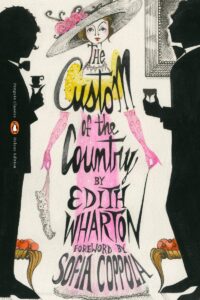
Edith Wharton, The Custom of the Country
Long before Hollywood perfected the publicity machine, Edith Wharton understood how reputation could function as a form of social currency. Undine Spragg treats marriage, gossip, and public perception as tools for constructing a persona, reinventing herself with the adeptness of a ‘90s era Madonna on her climb up the social ladder. The novel reads today almost like a blueprint for influencer culture: a portrait of someone who understands instinctively that life itself can become a kind of performance.
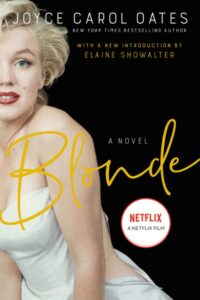
Joyce Carol Oates, Blonde
Joyce Carol Oates’s monumental reimagining of Marilyn Monroe’s life remains one of the grittiest and most disturbing novels ever written about celebrity. I’ve read Blonde three times: once when it came out, again in my twenties, and then years later while I was working out the structure of Ultranatural. Each time hit different, although this last time the machinery of celebrity production Oates highlights stood out. Rather than reproducing Monroe’s public mythology, Oates invents a fictional interior life for Norma Jeane Baker, exploring the psychological cost of becoming a cultural icon. One scene has stayed with me across all three readings: the moment when nude photos are taken for what will later become Monroe’s infamous Playboy spread.
In Oates’s telling, Norma Jeane isn’t thinking about scandal or fame. She is preoccupied with something much smaller—she hopes the bottoms of her feet won’t show in the photographs. That tiny anxiety becomes a devastating microcosm of celebrity itself: the star worries about one vulnerable detail while the image is destined to circulate far beyond her control. When the photographs resurface later and ignite a scandal, the studio forces Monroe into a carefully staged public apology. Reading it now, the scene feels eerily familiar—a rehearsal for the ritual that would play out decades later when Britney Spears was likewise pushed to apologize to the paparazzi and the public for the spectacle built around her own image. In Oates’s hands, the novel exposes the brutal asymmetry at the heart of celebrity culture: the world consumes the image, while the person behind it struggles to survive the narrative imposed upon them.
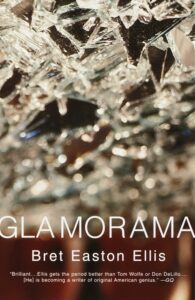
Bret Easton Ellis, Glamorama
Bret Easton Ellis’s hallucinatory satire of the 1990s fashion world imagines celebrity culture metastasizing into something far darker. Models, actors, and socialites drift through a world of cameras, parties, and manufactured identities until the line between publicity and conspiracy collapses entirely. As the narrator Victor Ward moves through Manhattan, he registers the world primarily through who is seen and photographed—“the better you looked, the more you were seen”—a logic that turns visibility itself into a form of capital. Glamorama anticipates a future in which fame becomes a spectacle economy, where visibility is both currency and trap. Ellis himself was hardly outside the system he was diagnosing. By the 1990s he had become a literary celebrity in his own right, his novels debated on television, his nightlife chronicled alongside the very models and socialites he fictionalized. The novel reads, in retrospect, less like exaggeration than reportage from inside a culture already learning to treat life as publicity.
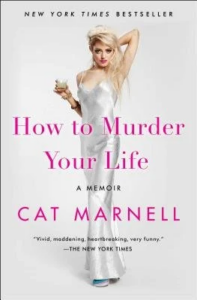
Cat Marnell, How to Murder Your Life
How to Murder Your Life is the only memoir on this list, but it feels significant to me because up to this point, the novels here imagine the machinery of celebrity from the outside: Wharton studies society gossip, Oates reconstructs the interior life of a movie star, Ellis exaggerates the spectacle of fashion-world fame. Marnell, by contrast, writes from inside the system. As a beauty editor at Lucky and later xoJane, she became infamous for partying in tabloids like TMZ and blogs like Perez Hilton. How to Murder Your Life functions as a kind of counter-narrative. Through memoir, she rewrites the story that had previously circulated about her, reclaiming authorship of a reputation that had been assembled piecemeal through gossip sites, screenshots, and headlines. If earlier forms of celebrity culture depended on journalists and studios to produce the story of a life, Marnell demonstrates a new stage of the phenomenon: the subject seizing the narrative back and reshaping it herself through the craft of the memoir.

Caroline Calloway, Scammer
“I’m not ashamed of being a scammer,” Caroline Calloway writes. “I’m ashamed of letting other people tell that story before I could.” Calloway became internet-famous for her Instagram captions, elaborate personal storytelling, and a series of public controversies that blurred the boundary between confession and performance. Her self-published Scammer continues that project, retelling the scandals that made her infamous while openly acknowledging the ways she manipulated her own narrative. In the influencer era, the celebrity memoir arrives almost simultaneously with the scandal itself. The story no longer waits for a journalist, a studio, or even a publisher. It appears directly from the subject, often while the drama is still unfolding.
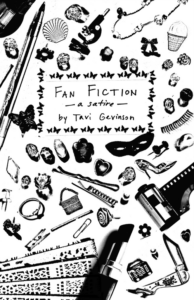
Tavi Gevinson, Fan Fiction
Tavi Gevinson grew up online, first as the teenage fashion blogger behind Style Rookie and later as the founder of Rookie. In Fan Fiction, she returns to the strange experience of becoming famous while still a teenager on the internet. The book (novella? zine?) blurs memoir, essay, and autofiction, exploring what it means to grow up while thousands of strangers are watching and interpreting your life. If Wharton’s Undine studied the society pages to understand how public life was narrated, Gevinson belongs to a generation that learned to narrate itself directly.
The book ends with a series of messages between Gevinson and Taylor Swift, the major subject of the zine. In the exchange, Gevinson sends Swift a manuscript detailing their friendship before publication, inviting her to read the section about her. Swift responds politely but cautiously, asking questions about how she is portrayed and flagging moments where the framing might shape readers’ interpretation of her intentions. The correspondence reveals a pop star acutely attentive to the management of her own narrative.
Whether this exchange actually occurred is deliberately unclear. The book’s hybrid form leaves the moment suspended in a gray area between documentation and invention. But that ambiguity only sharpens the point. By ending the book with a possibly fictional negotiation over Swift’s portrayal, Gevinson foregrounds the central question of contemporary celebrity culture: who ultimately gets to author the story of a famous life—the subject, the observer, or the audience interpreting both.
__________________________________
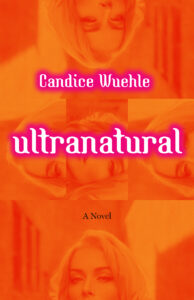
Ultranatural by Candice Wuehle is available from University of Iowa Press.

Candice Wuehle
Candice Wuehle is author of Monarch, Fidelitoria: Fixed or Fluxed, Death Industrial Complex, and BOUND. She lives in Iowa City, Iowa.