Alice and Me: How My Struggle With Cancer Mirrored My Protagonist’s
Caitlin Shetterly on Grappling With the Uncanny Parallels Between Real Life and Fiction
I was supposed to have my mammogram months before. But I was writing a new novel—and so deeply steeped in it, gunning for my deadline, that I felt I couldn’t take the time for a routine screening. Then, in February, I got a call from the hospital’s radiology department. The nurse told me that the mammogram I’d had that previous Saturday had shown “an area of concern” in my left breast and that I needed to come back into the hospital for further imaging. The first words out of my mouth were, “Are you sure you’ve called the right person?” I was thinking: “You meant to call Alice, not me. There’s been a mistake.”
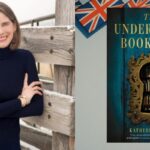
I had just sent my new novel, The Gulf of Lions, off to my publisher. In that book, my main character, Alice, has, at the start of the book, just recovered from her husband’s betrayal and breast cancer in her left breast; in the aftermath, she takes her two daughters on a camping trip across France. While there, she starts to come back from the precipice of fear, rediscovering her sensuality and joy. Though, like all survivors, she hovers in the liminal space of never knowing if and when the cancer could come back, she forges ahead, determined to try to find some joie de vivre in her life.
I remember thinking that Alice was braver than I was; I felt that maybe I was a charlatan who could make my character do something I was too lily-livered to do myself.
For the next eleven weeks, I had countless tests—the technicians lost the “area of concern” and then found it again (“Is it at 7 o’clock?” they asked each other, the ultrasound goo slipping all over, “Or is it at 2?”) Each time I got imaged, the radiologist would send word that we needed more, she was not satisfied. I felt a bit like Henry II when he says of the archbishop of Canterbury, Thomas Becket, “Will no one rid me of this meddlesome priest?” God, would no one rid me of this meddlesome radiologist? But the radiologist stood firm: A biopsy needed to happen.
And then, on a cold April morning the phone rang. It was a nurse. She told me I had the exact same kind of cancer, in the exact same breast, as my character Alice. This was a cancer I had researched thoroughly—reading scientific reports, breast cancer web pages, Reddit conversations. I hadn’t asked anyone I knew who had gone through cancer—I felt weird saying, “hey I am writing this character, and…” I had done my own investigation and fact checking, even rereading Jane Kenyon, who died of leukemia, and my friend Susan Conley’s memoir about her cancer, The Foremost Good Fortune.
But now I felt like I was falling down, down, down into a mirror—this was an existential crisis, if there ever was one. My fourth wall was broken—the division between myself and my character had shattered. During writing, I had listened to Ian McKellen reading The Odyssey as I walked or drove. I had been interested, for a long time, in the idea of “well, what if women were the ones in this story? How would it go?” I was thinking about hard journeys and what is required from all of us during tumultuous or terrifying times? Silently listening to the nurse explain what was going to happen now, I remembered hearing Ian McKellen’s voice: “Be still, my heart; thou has known worse than this.”
In my novel, Alice ends up having a mastectomy. Or, rather, I gave Alice a mastectomy. She has small breasts and her cancer is located in such a position that her breast cannot be saved. This is a terrible thing for her, and when she is tasked with deciding if she should have reconstructive surgery, she decides not to. She tells herself she’ll deal with it later, she can’t weigh out the pros and cons in the state she’s in.
My cancer, on the other hand, was small and my breasts are not. So, I was given the option of ether a mastectomy or breast conserving surgery. With either one, I’d also still have a lymphadenectomy, where they take out what is called your “sentinel” lymph gland to see if the cancer has traveled through your blood stream. “Sentinel.” I love the word. A messenger, or watchman, like in a Shakespeare play. Like Alice, I was anguished. But unlike Alice, I could not remove my breast. I just couldn’t do it! The idea of losing my left breast absolutely undid me. I remember thinking that Alice was braver than I was; I felt that maybe I was a charlatan who could make my character do something I was too lily-livered to do myself.
Because my fictional friend, Alice, had already been through much of what I was going through, and she was already rising like a phoenix and seizing her life, she, eventually, became someone I wanted to emulate.
A year earlier, I wrote that Alice watches light travel across her bedroom, stunned by circumstance. Now, I knew just how she felt. There’s an empty place inside you when you go through something like this—no one else can truly understand; and they certainly can’t take the psychic and physical pain away. That’s one of the great cruelties of the world. But for me, there was a very odd thing that happened, a kind of balm: In some way, because my fictional friend, Alice, had already been through much of what I was going through, and she was already rising like a phoenix and seizing her life, she, eventually, became someone I wanted to emulate. If Alice could do this, I told myself, so could I.
For years and years and years, as I read out loud to my sons, I was always shocked by how many books had a dead or dying mother in them. We used to joke about it. I’d say, “Oh gosh, here’s another dead mother!” and my boys would laugh. They’d tease me, “No one needs the mother,” they’d say. And though we were laughing, I think it made us all uncomfortable—losing a mother, after all, is life changing. In The Gulf of Lions I wanted to write a middle-aged woman who endures and survives—who, eventually, thrives Now, like Alice, I wanted to get through this, to thrive, to keep loving my sons, whom I adore.
I’ve always believed that you can find your best friends in books and that novels can be such eerily close approximations to life—yours or someone else’s. Though I wasn’t prepared for my own character to become my best friend, maybe that’s how it should be, in the end. Perhaps it makes sense that the character I wrote with so much tenderness, forgiveness, understanding and love should be the one person who truly got me when I needed someone to understand. My hope, now, is that she goes out in the world and can do for other women what she did for me.
____________________________
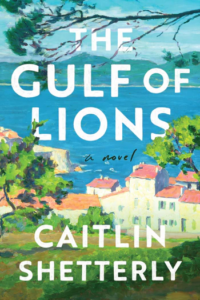
The Gulf of Lions by Caitlin Shetterly is available from Harper, an imprint of HarperCollins Publishers.
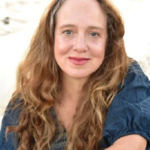
Caitlin Shetterly
Caitlin Shetterly is the author of Modified, Made for You and Me, and Pete and Alice in Maine. She the editor of the bestselling Fault Lines: Stories of Divorce. She won the Maine Literary Award for Modified in 2017. Her work has been featured in the New York Times, the New York Times Magazine, Orion, Elle, Self, the Boston Globe, Medium, LitHub, Romper, and on Oprah.com, as well as on This American Life, Hidden Brain, Studio 360, Weekend Edition and various other public radio shows. She an editor-at-large for Frenchly<.em>, a French arts and culture online news magazine. A Maine native, she graduated with honors from Brown University and now lives with her two sons and husband in her home state. Caitlin is passionately committed to helping preserve, in every way she can, the peace of wild things.