A (Miserable) Day in the Life of an Unwilling Homeschooler
Stefan Merrill Block on Coping With Social Isolation at the Hands of a Controlling Mother
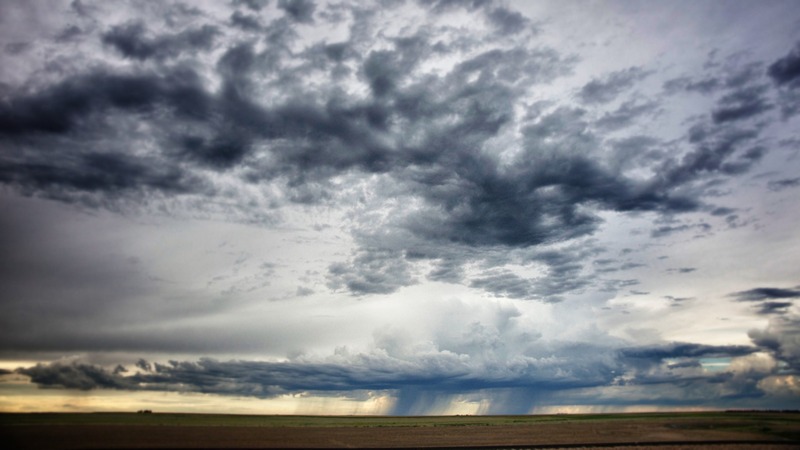
You can feel it in the air, an exhilarated humidity. The sky, the next morning, is still blue, but already going fuzzy, the sun hazed down to a pale circle you can look at without even squinting. Around lunchtime, a wind kicks up the live oaks and cedar elms, sends up huge clouds of dust and grass clippings over the subdivision. The thunder rattles the windows, and then it’s time to go outside to gape at the awful scale of it. A storm in tornado season is just like the entire history of this state. No slow changes for us Texans. First it’s one thing, and then all at once it’s something else completely. An evil black lid has formed on the horizon and is already closing over us, the sky stitching itself shut in blue-white bolts.
A storm front’s leading edge, Dad says, that’s where you need to watch close. At the place where blue sky meets the scary Mordor black, the clouds twist around in a way that looks painful, and sometimes a funnel drops, almost-tornadoes that usually lose their nerve just shy of certifiable touchdown.
I wonder now if the struggle of school was in fact something important for my health, like vegetables but for my brain.
On the TV broadcasts, Doppler radar has begun to interrupt regularly scheduled programming. The warning sirens begin to wail. At school, they’ll be moving away from the windows, gathering in the gym. At work, Dad and his colleagues might be huddling in the restrooms. At home, it’s time for us to go into the back of Mom’s closet, a comfortingly cramped space under the staircase that both shelters us in weather emergencies and serves as the sanctuary for Mom’s boxes of our toddler memorabilia—drawings, worksheets, cards my brother and I made—and rubber-banded piles of letters from her own younger years. There is an untouchable feeling of age and security back there, even as thunder booms through the Sheetrock, as wind chews at the vinyl siding. The lights flash out, and Mom flips on a lantern. By now, our second spring in Texas, this is all fairly routine. But tornado season means that it’s almost May, and so the spring semester is nearly over.
“This just isn’t working,” Mom says.
“What’s that?”
“Come here.” She holds the lantern up to my hair. I angle my head and feel her sifting around like the mama gorilla we once saw at the zoo. “Nope, I think we can call this project a failure. All that sun you’ve been getting, and I honestly don’t think the color has budged one bit.”
“It just wants to stay brown,” I say. “I don’t know why.” “You were my blond angel. My god, Stef, you should have seen it. You should have seen the way the other moms looked at you. Where did my blond baby even go?”
I turn away from the lantern so that Mom can’t see my face. Even if my memories of my first years in Indianapolis aren’t super clear, I can still taste the sweet flavor of that time, like some cherry Popsicle residue still on my lips. Shrieking in the sunlight, hands sticky with stone fruit, laughter trailing us through the rooms of the ranch house. Mom and her best friend, Rachel, cheering as Aaron and I ran naked with Rachel’s two boys, Caleb and Benny. The game of school that the four of us all played in the buff, right on the front lawn. I get why Mom might want to do what she can to bring back those years via sun exposure and water buoyancy, and the thought that I might give her back a version of that lost boy is like one of those cigarettes I’ve seen my Auntie Ella smoke in New Hampshire, an awful kind of comfort that kills me a little even as it fills me up.
“I’m still me,” I tell her, like a question, and flinch at a terrible whacking sound. Outside, some loose object must have smacked against our living room windows. But Mom doesn’t seem to hear as she pulls out a Tupperware bin with my name written on it. The lid opens with a burp, and she rifles around until she finds what she is looking for. A lumpy envelope labeled Stefan, First Haircut.
I gasp. In her hand is a bright blond lock of my well-remembered hair, tied in a black Goody ribbon. She makes a fist around the hair, holds it tight against her chest, this final piece that remains of her greatest happiness.
“Do you see?” She thrusts my old hair at me. “Do you see now?”
*
“It’s hair lightener,” she tells me at the pharmacy the next day. “You just spritz your hair with this stuff before you go outside, and it helps the sun do its work.” I take a look at the blonde on the box, a well-tanned bikini girl like someone from a Beach Boys song. “When we get up to the lake this summer, my sisters will be stunned.” Mom kisses my forehead. “You’re going to be my blond angel again.”
According to Mom, the hair lightener requires hours of heat and sunshine to properly work, and so, in the days that follow, I spend a good part of each school day in her arms in the pool, as she quizzes me or just sings to me, my scalp tingling with the extracts and chemical agents. Mom seems so happy out there, humming “Proud Mary,” holding my body against her, presenting my curls to the early May sunlight.
“What are you missing by being at home?” Mom asks. “I don’t mean that rhetorically. Tell me.”
“Nothing,” I say, because I wouldn’t even know how to ex-plain it, this lightheaded, malnourished sensation I’ve been getting from time to time. It isn’t just Noah, or Tiffany, or even Clayton Howley I’m missing in particular. What I miss most is just the mysterious complexity that is Other Kids. I wasn’t always happy at Brinker—often I was unhappy—but I wonder now if the struggle of school was in fact something important for my health, like vegetables but for my brain.
“What would I even do if you went back to school?” she asks. “What would I even do with myself?”
“You’re going to finish your Lore book,” I say, but I’m worried by the way her verb tenses seem to have shifted on this topic—the way she’s started saying would, not will—and I’m worried also by the way she’s begun to scoff at mentions of Princess Lore, which she seems to have abandoned after a couple distracted afternoons with a rhyming dictionary. “You’re going to become a famous writer,” I add, like I really mean it, like I really do believe that next year, when I’m gone, she’ll be so busy in her new career as a celebrated children’s author she won’t even miss me.
And I have to go back, I’m set on it still, because no matter how long I stay at home, it will be agony for Mom when I leave, and isn’t it better just to get the awful part over with now, to put a pin in the boil, instead of letting it grow and fester for another year? Summer is only a few weeks off, and I’ve decided that when we are up at the lake in New Hampshire, when she is at her very happiest, that is when I will do it. That is when I will tell her I need to go back.
By the last days of the spring semester, my hair still hasn’t regained its lost blondness. It has turned a bright, surreal orange, a hue that falls somewhere between a freshly shined penny and the cheese dust on a Dorito. Even still, Mom won’t admit defeat. The active ingredient of the hair lightener, Mom says, is hydrogen peroxide. It’s the same stuff that she keeps in a large brown bottle under the sink, a clear fluid that fizzes and makes me holler when she pours it over my cuts, and it’s Mom’s theory that the formula’s other ingredients are interfering with the effects of this critical agent. “It’s all these so-called natural extracts that are turning it this crazy color,” she explains. She pulls out the dreaded brown bottle and begins to apply hydrogen peroxide directly to my head.
By the third application, I’m whimpering at the chemical burn on my raw scalp, which has begun to flake off in clouds of dandruff, the itch driving me half mad. The color effect, however, is dramatic. My hair is now a fluorescent yellow, so bright you could use it to light a dim room, and it’s frayed and sticking out in all directions from the chemical damage.
“Bart Simpson,” Noah Polk calls me the next week as we toss around a baseball, but I’m only Bart-like from the hairline up. All the time in the sun has given my skin the same deep tan as the lady on the box of hair lightener. Mom pulls from the envelope the ultra-blond clippings of my toddler hair, compares them to my present-day color, says she thinks I’m only one or two treatments away from a perfect match.
“Okay,” I say, and swallow. “But how about we wait ’til tomorrow to do it again?”
I spend that whole afternoon and night in dread of the hydrogen peroxide bottle, which is like a liquid scream poured all over my head, and when Mom brings it out from the cabinet the next morning, I start back in with my tears. “I can’t,” I say to my feet. “It just hurts too much.”
She sighs and marches me outside.
“Well, it’s not perfect,” she says, making me take a spin for her in the sunshine, “but I guess that might be as close as we’re going to get for now.”
My relief is powerful enough to unhitch something in my gut, and I have to run off for the toilet. But afterward, behind the toothpaste smears and finger smudges of my bathroom mirror, I see the truth. My hair has returned to its baby color to the extent that—in the pictures Mom has shown me in People magazine—Elizabeth Taylor looks like a young woman again after one hundred plastic surgeries. It’s just a bad costume of my former self, and I can’t help growing older. Down at the roots, I can see that the brown is already visible again, and I know that this return to my toddlerhood is almost at its end, even if I haven’t yet spoken about my plans for fifth grade with Mom.
I have other secrets too. A couple times a week, I’ve been adding a paragraph or two to the story I hide between the paperbacks on my shelf, the story I’ve been trying to write about the boy from Nowheresville. But my best or else worst secret is the one I keep hidden beneath my underwear. A few months ago, during our school supply shopping spree, I grabbed a metal compass off the racks at Office Max. When we got home, I was delighted by the perfect circles it could produce, the way you could jab its needle in a page, and with a couple turns of the little pencil in its clip, you could add an oversized alien sun to the back of any drawing.
But recently I’ve been putting that compass to a different purpose. From time to time, I’ll press the needle against the thin skin at my hip and see how far I can make myself push. Today, I hold my jaw tight as I add another little hole to the small trail of scabs I’ve left there. I make it nearly as far as the metal shaft this time, pressing until blood drips into my palm. I cry out, giddy over this evidence of courage or pain that is for me alone, these marks on my body even Mom doesn’t know about, this other story about myself that Mom wouldn’t even believe.
*
Once upon a time, there was a boy. The boy used to have friends, like any other kid. He went to school in the mornings. He lived in a place that was not exactly like any other place. But now the boy is no one, and he lives in a town called Nowheresville.
I know that this return to my toddlerhood is almost at its end, even if I haven’t yet spoken about my plans for fifth grade with Mom.
The shops and restaurants of Nowheresville are the same you’d find in any town, and the boy passes through them like a stranger. It doesn’t matter how often the people of Nowheresville see him. No one can remember his face. The boy understands. When he looks in the mirror, he sees how completely ordinary he is, how he might be anyone at all. The boy’s house on Anywhere Lane is like that too. It looks just like every other house on this block, and the next block over. At night, the boy likes to spy on his neighbors, watching them eat or fight or sit on the sofa together, the light of the television filling their windows. The boy would give anything to be any one of them. He can’t know that he was raised exactly for this, to disappear completely.
It’s only the boy’s mother who lets him know he still exists. Sometimes they sit together, the boy and his mom, watching kids toss their balls on Anywhere Lane, and the boy asks why he is so alone. His mother kisses him. “Because you are so very special,” she says.
The boy’s tenth birthday is coming, and on that day a big storm is supposed to arrive. They’ve been talking about it for days, boarding up the windows of Anywhere Lane. On the last night the boy is nine, he spots a storm far off, a dark line at the edge of the sky.
When he wakes up in the morning, the whole sky is a terrible black, and his mother has disappeared.
“Mom?” he says.
He can hear voices whispering. He goes outside and stares at the storm cloud, the lightning pulsing through it. It looks like a brain in thought, the boy thinks, and really, aren’t thoughts also just electricity at a lower voltage? The storm is thinking. The boy feels it now. It is thinking many things. With the snap of each new bolt, he hears not thunder but voices.
“What?” the boy asks the sky. “What did you say?”
The voices don’t answer, but when the boy’s hair begins to stand on end, the feeling is like just before falling asleep, and suddenly Anywhere Lane and the storm clouds above it have disappeared into a bright blue light. When the boy reaches for the light, sparks shoot from his fingertips. Lightning bolt, the boy thinks. This is how I die. But then a dark shape appears. A black rhombus. It seems to be a doorway or portal, and there is brightness on the other side. Not just light. Trees, birds, people, buildings.
A whole other world on the other side of that door.
For a second, the boy doesn’t move. Beyond the lightning, he can barely see Anywhere Lane and the house that is no longer his home, the people of Nowheresville all hidden now, tucked away in their safe rooms. Maybe, the boy is thinking, all those people had to forget him completely so that he could be free to disappear into another life, so that he could come into his true power. But of course he can’t really know. He can’t see if what he’s stepping into is a kind of gift or the worst place of all, even as he walks through that door.
__________________________________
Excerpted from Homeschooled: A Memoir by Stefan Merrill Block. Copyright © 2026 by Stefan Merrill Block. Used with permission by Hanover Square Press, an imprint of HarperCollins Publishers.

Stefan Merrill Block
Stefan Merrill Block grew up in Plano, Texas. His first book, The Story of Forgetting, was an international bestseller and the winner of Best First Fiction at the Rome International Festival of Literature, The Ovid Prize from the Romanian Writer''s Union, the 2008 Merck Serono Literature Prize and the 2009 Fiction Award from The Writers’ League of Texas. The Story of Forgetting was also a finalist for the debut fiction awards from IndieBound, Salon du Livre and The Center for Fiction. Stefan''s novels have been translated into ten languages, and his stories and essays have appeared in The New York Times, The New Yorker Page-Turner, The Guardian, NPR’s Radiolab, Granta, The Los Angeles Times, and many other publications. He lives in upstate New York.