A Linguistic and Philosophical Tapestry: Suchitra Ramachandran on Jeyamohan’s The Abyss
“Jeyamohan stages his fundamental inquiry into the nature of existence and the meaning of values that runs through all his novels.”
India has twenty-two official languages, in addition to numerous other languages and spoken dialects. All of these languages have a modern literary tradition, and as with modern Tamil literature, those traditions only go back two hundred years at the most. For the seasoned Indian reader of literature, English is one of those twenty-two languages: Indian writing in English, as it is called, is also of the same vintage as modern writing in the other Indian languages.
India also has robust, sometimes living, classical, and medieval traditions in many of its languages. As with Tamil, the development of modern literary traditions in these languages involved intense negotiations between their classical pasts and modernity. The best literature produced in India—the Great Indian Novels, if you will—tend to be those that evolve styles and dictions that are as much influenced by their classical roots as they are by the Western tradition and modes of expression; that experiment with contemporary narrative styles and depict contemporary life while retaining a uniquely Indian idiom; that reassess and discover anew the symbols, archetypes, and images embedded in their tradition; and that earnestly examine the values of their classical and medieval pasts against the humanistic, pluralistic values of modernity.
Some of the writers who engaged with these problems and produced remarkable aesthetic solutions include Rabindranath Tagore (Bangla), Qurratulain Hyder (Urdu), Shivarama Karanth (Kannada), V. S. Khandekar (Marathi), S. L. Bhyrappa (Kannada), U. R. Ananthamurthy (Kannada), H. S. Shivaprakash (Kannada), Pudhumaipithan (Tamil), and Jayakanthan (Tamil), among others.
The best literature produced in India…tend to be those that evolve styles and dictions that are as much influenced by their classical roots as they are by the Western tradition and modes of expression.
English is the only Indian language that does not trace back to an Indian classical tradition, and by and large, writers writing in English have historically not had deep grounding in any Indian language tradition—its literature, classics, local myths, performing arts, or its contemporary anxieties and questions—to work with the material with quite the same kind of rigor and verve. Writers writing in Indian languages, on the other hand, have this grounding, and additionally are familiar with works in other Indian languages and their literary and cultural roots, through a long tradition of translation between Indian languages.
This was why U.R. Ananthamurthy and Girish Karnad both began their careers attempting to write in English but switched to Kannada almost immediately. The strain of genuine inquiry in their work and their appeal to readers all over India could not have been achieved without a solid grounding in the Kannada literary tradition. The truth is, Indian writing in English holds an outsized place in the West when considering its meager influence on the vast majority of Indian readers.
It is against this background that we can begin to assess Jeyamohan’s place as a Tamil and Indian writer. Jeyamohan’s principal literary preoccupation has been an aesthetic and critical reexamination of the values of the classical and folk traditions of Indian thought, as well as those of modern ideologies. His first major novel, Vishnupuram (1997), a mythical fantasy moving between the ninth, fifth, and thirteenth centuries of classical and medieval India in that order, traces the flux of ideas through time and characters who, as Tom Stoppard put it, “shed as they pick up” and “die on the march,” but whose thought is picked up by those who come after them and reshaped in bewildering, at times comic ways.
Through this structure, it raises questions about the nature of history, the impermanence of human knowledge, the limitations of religious institutionalism, and the eternity of wisdom. His second novel, Pin thodarum nizhalin kural (Voice of the Shadowing Specter, 1999), is a postmodern attempt to examine the values of Marxist ideology and intellectualism in light of Nikolai Bukharin’s trial. More recently, he completed Venmurasu (The White Drum, 2014–2020), a novel series in twenty-six volumes—each novel in the series rendered in a different form and language that pushes the boundaries of modern Tamil prose—that reinterprets the images, archetypes, and values of the epic Mahabharata for the modern reader.
At over 25,000 pages, it is one of the longest literary novels in the world. His novel Kadal (The Sea, 2023) is a Dostoyevskian examination of goodness, with the hyper-Christian world of coastal Tamil Nadu providing its scene and imagery. His most recent grand novel, Kaviyam (The Epic, 2024), reinterprets Gunadhya’s Brihatkatha, a mostly lost classical work dating to the first century CE, as a Dalit epic. It narrates an alternative history of subaltern India within the frame-tale of a contemporary, Dalit-born protagonist who is locked in his own head. These works are in addition to fifteen other novels, twenty-eight collections of short stories, and over ninety volumes of nonfiction centered on literature, art and aesthetics, philosophy, religion, culture, travel, politics, and environmentalism.
Formally, his early work has postmodern influences, but over the last twenty years, his writing has moved toward the search for a central value that unites an existence that is manifold and variegated in its expression—a metamodern quest for a “new sincerity,” to borrow David Foster Wallace’s term. By all measures, Jeyamohan occupies a unique place in the world of Tamil, Indian, and world letters.
*
The Abyss came out of Jeyamohan’s experiences during his itinerant years. However, unlike Purappadu, a set of personal essays filled with anecdotes and tales of fellow travelers and outsiders from that period, The Abyss is entirely fictional. It comes out of a premise Jeyamohan laid out for me during an interview—if you subject human beings to an acid test, what remains?
In The Abyss, Jeyamohan sets up this test in one of the most hostile sets of conditions imaginable. Taken from life and depicted with a raw, gritty realism, the beggars of The Abyss cannot even be called marginalized, for they seem to exist in a space beyond human margins. Others around them, “above” them, regard them as subhuman. In this world, Jeyamohan continues his critical line of inquiry into the cherished values of traditional Indian thought and modern political ideologies. What becomes of religion, philosophy, and politics in this world? The life-affirming values of the handsome warrior-god Murugan, in whose shadow they live—what do they mean to these people? Goodness, compassion, justice—do they have a place in this world?
The characters who people the novel rise to speak for themselves. They respond to the extraordinarily inhuman circumstances of their existence with bitingly funny black humor, their sharp, all-seeing eye subjecting the holy idols of religion, caste, society, scholarship, capitalism, and communist progressive politics to a complementary acid test that succinctly reveals the foibles and limitations of those ideas and institutions. Their existence is bleak, hovering on the edge of humiliation, pain, and death. But when they live, they create their own meanings, as when they band together to get Kuyyan his promised feast. “I discovered what remained was a humanism,” said Jeyamohan. “Not a liberal or democratic humanism, imposed from outside, not an idea. It was the natural humanism of those human beings.”
In The Abyss, Jeyamohan stages his fundamental inquiry into the nature of existence and the meaning of values that runs through all his novels, within the aesthetics of a vivid, gritty realism that he has chosen as his canvas. This juxtaposition creates a sublime effect. There are novels from the so-called third world that seek to sensationalize and create shock value by depicting poverty porn in the garb of realism. The Abyss is not one of them. Here, the realism performs the function of grounding the reader solidly within a world that is, at first sight, remarkably grotesque, alien, even inhuman, as removed from us as possible.
But slowly, like a miniature camera obscura image being inverted, the inner reality of this otherworld, this underworld, is revealed, and then we begin to see ourselves in it. We realize we identify with the beggars of the novel, for in our existential aloneness and helplessness, as in the meanings we create and the values we hold, we are no different from them. While we might discover our cultivated human selves in the beggars, the greater discovery is when we discover the beggar in ourselves. This strange twist dissolves the differences between us and them and gives the novel its distinctive humanistic insight.
We realize we identify with the beggars of the novel, for in our existential aloneness and helplessness, as in the meanings we create and the values we hold, we are no different from them.
Through the manifold insults and indigences the various “beggar” characters in the novel (and even their “owner,” Pothivelu Pandaram) suffer, they find a strange succor and momentary liberation in the haunting songs of Mangandi Samy, who represents a central value in the novel that the characters, through all their suffering, keep coming back to. The utter despair and pessimism of existence that the novel alludes to—a Schopenhauerian bleakness represented by Muthammai’s fate—is counterbalanced by the value of Mangandi Samy’s lofty silence and song. The Abyss stands as a great work of art and an exemplary world novel because of this balance.
*
In translating this novel, I have attempted to render the text in the form of a self-contained English novel, eschewing footnotes and folding the context and meaning of cultural terms organically into the text. Most of the novel culture-specific words the reader may encounter in the book—words like samiyar, pandaram, kavadi, etc.—are used as loanwords and glossed in passing when they first occur in the text.
I have chosen to italicize certain words and phrases for emphasis. In the original Tamil, The Abyss is a novel with a remarkable degree of polyphony. While the novel itself was written in a register that straddled Tamil and Malayalam, it uses other languages, registers, and dialects to differentiate between various characters. For example, Ahmedkutty speaks a Tamil-Malayalam peculiar to Muslims. A minor character speaks only Kannada. Many of the characters lapse into English when they become class conscious.
The characters liberally use puns, proverbs, and film songs to communicate their thoughts and feelings, and sometimes switch between languages to make a point. For example, Ramappan, a Kannadiga who speaks good Tamil, sings a Malayalam song when he remembers an old flame he met in Kerala. While it was impossible to bring out all these linguistic nuances in the English translation, I have tried to preserve most of it, and I have used italics in some places to indicate when the speech switches from one language or register to another.
Regarding naming conventions in the translation, Tamil names typically end with the suffix –n—as in Murugan, Nayakkan. When addressing someone respectfully, the suffix –r is used—as in Nayakkar. The Dravidian languages all vary slightly in how they render names, and the novel uses these microdifferences for effect. For example, the caste called Nayakkar in Tamil Nadu is called Nayakka or Nayak in Kannada; this difference shows up in Ramappan’s speech. Ramappan himself is called Ramappan in Tamil; in Kannada he becomes Ramappa. I have tried to preserve some of these polyphonic effects in translation.
Tamil also uses vocative case endings for names when people are addressed or being summoned. So, Kuyyan is sometimes called Kuyya. Honorific suffixes like anna (elder brother), akka (elder sister), aachi (grandmother) or chetta (elder brother) are used at the end of a name, or instead of the name. So, Ramappan is sometimes called Ramappanna. Diminutives are used for some names, particularly for the names of women. Ekkiyammai is also called Ekki; Subbammai, Subbu; and Vadivammai, Vadivu.
__________________________________
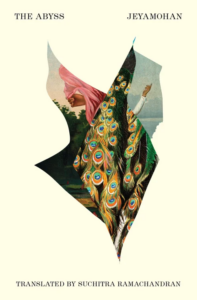
From The Abyss by Jeyamohan, translated by Suchitra Ramachandran. Introduction copyright © 2026 by Suchitra Ramachandran. Available from Transit Books.

Suchitra Ramachandran
Suchitra Ramachandran writes fiction in Tamil and translates between Tamil and English. Her work has appeared in literary magazines including Asymptote and Narrative Magazine. She won the Asymptote Close Approximations Prize for Fiction Translation in 2017. The Abyss is her first full-length translated work. Suchitra lives in Bengaluru, India.