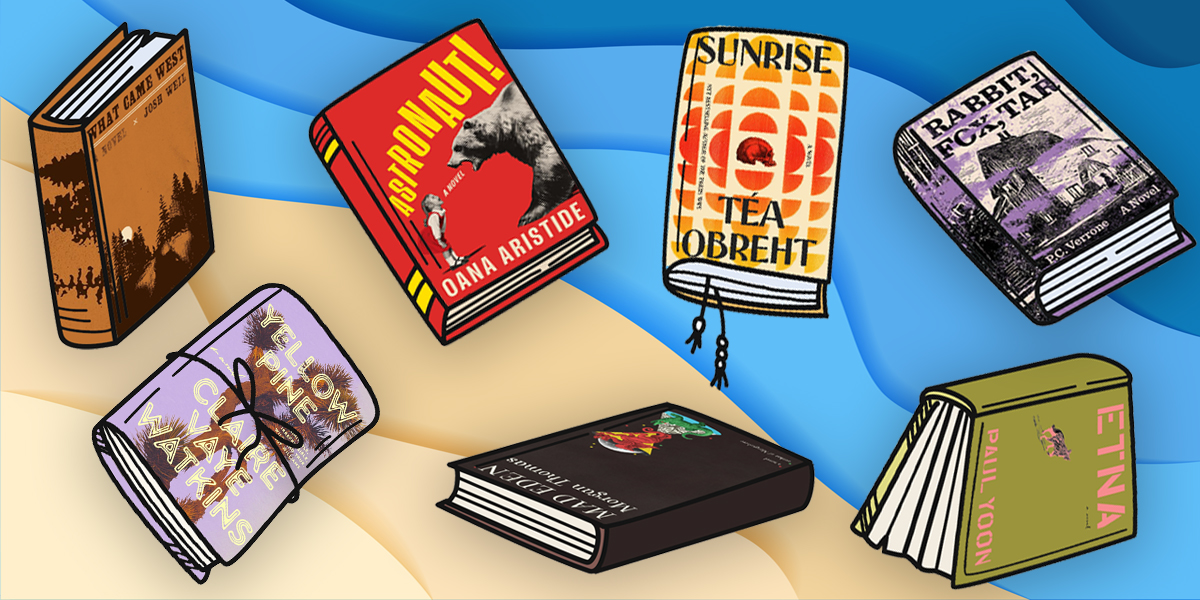
19 Novels You Need to Read This Summer
Had Me a Blast
The days are getting longer. The weather is—well, unpredictable, but trending warm. The children are becoming restless. Summer is nearly upon us, and you probably need something to read. (You signed those children up for camp in time, right? Right?) To that end, here are a few the novels coming out this summer we on the Literary Hub staff have read and loved, and would like to recommend to you. NB: this is by no means an exhaustive list of all the great books coming out this season—just the personal favorites of a few human readers, as always. Have fun—and let us know what you’re reading and loving in the comments.
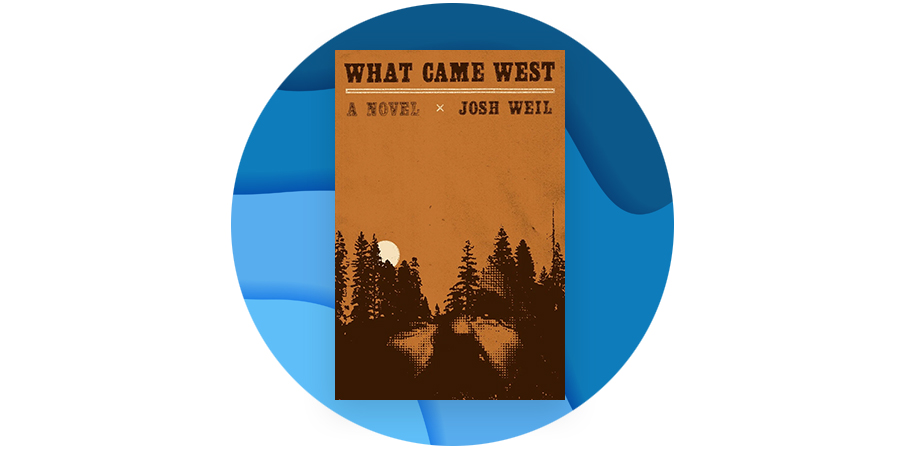 Josh Weil, What Came West
Doubleday, June 2
What Came West opens with two murders, one of a young boy, amid the Gold Rush in the Sierra Nevadas. It is a great feat that the novel, told between third-person chapters depicting the nail-biting aftermath of the violence and epistolary confessions from the perpetrator, Silas, to his estranged son, manages to reckon with the brutality and still allow Silas his full, heartbreaking humanity. Silas writes to his son of his life before the murders, his upbringing as a boy whose traits baffle and terrify his family (but which read fairly clearly to contemporary readers as characteristics of autism). Other people are a constant source of fear and confusion for Silas, but he finds solace and wonder in the natural world.
Silas journeys into the Western wilderness after the birth of his son, where he meets few white people until the Gold Rush crashes down upon him, the Indigenous people already living there, and, of course, the land itself. Silas is one of the most compelling narrators I’ve read in quite some time, and Weil balances the melancholy meditative with propulsive chase with a miraculous dexterity. –Jessie Gaynor, Senior Editor
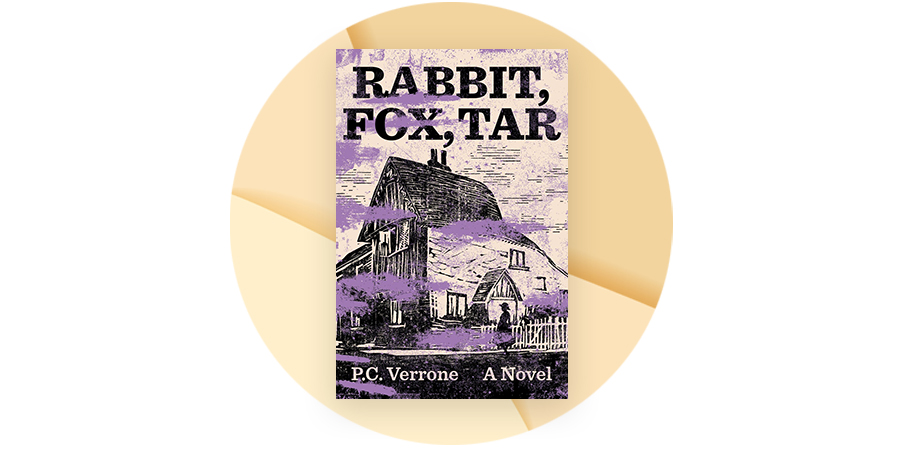 P.C. Verrone, Rabbit, Fox, Tar
Catapult, June 2
A modern fable in the style of Catherine Lacey’s Pew, a coming-of-age story in the style of Octavia Butler’s Fledgling, a gothic novel in the style of Helen Oyeyemi’s White is for Witching—Rabbit, Fox, Tar by P.C. Verrone is a novel that does it all. I need to confess that I didn’t expect it to all work as well as it did. The entire time I was reading the book, I was waiting for Verrone to drop one of the (many) plates he’s spinning, for the story to fall apart under the weight of its influences. But the novel is even more miraculous because it simply works. It works on a sentence level and a structural level and a political level. It works as a fable and as a grounded, human story. I like a book that forces me to trust that the author knows what they’re doing, and Rabbit, Fox, Tar asks for—and earns—a lot of trust. It’s a story that starts in one place and ends somewhere very different, a story that unravels in a way that feels both messy and purposeful at once.
Verrone’s debut novel is about a wealthy, white suburban neighborhood on the verge of change. It’s about two local politicians—one a young, Black man, the other an old white man—fighting for the “soul” of the neighborhood. It’s about a mysterious young Black woman who shows up in the neighborhood one day and casts a spell over the entire street. It’s about the successful Black communities that have been destroyed by highways and state violence. It’s about reparations and generational wounds and magic and trauma and the power of creation. It’s an outstanding, singular novel that kept me under its spell until the very end. –McKayla Coyle, Publishing Coordinator
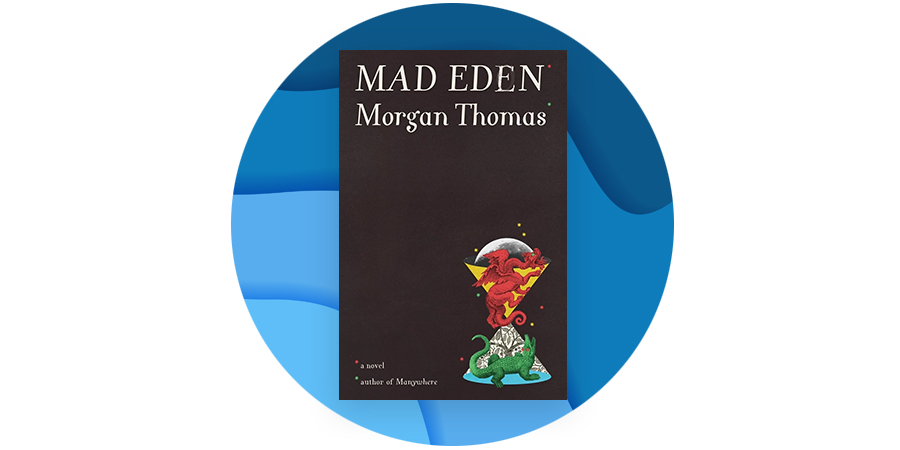 Morgan Thomas, Mad Eden
MCD, June 2
Mad Eden begins simply enough: Ro and Liam are a queer couple living in Florida, where Ro (who is trans and has recently received an autism diagnosis) works as a patient-navigator for folks across the country seeking gender-affirming care. But three things happen that threaten their tenuous existence: their found-family son Quentin plans to start testosterone, Ro becomes increasingly obsessed with a found-text online fic called Mad Eden that on the surface seems like dragon smut but is far more interesting than that, and then Ro unwittingly gets caught up in a right-wing scheme to shut down the care organization they work for. I don’t know what it’s like to be queer, trans, autistic, living in Florida—but I think I understand all of it better now than I did before. This is why I read, for books like this, books that change my life by showing me more of the world than I might’ve otherwise experienced. It has been a long time since a piece of literary fiction has grabbed me like this, and I’m going to be forever grateful for it.
Also, a word about the political in our fiction. Too often, I still see folks who ought to know better writing off the ‘red states’ as though there aren’t millions of people living under various forms of oppression in said states. Every time somebody says that to me now, I’m going to give them a copy of Mad Eden in the hopes that it might—as, again, we’re told good literature can do—change their minds, or at least make them realize just how perilous life can be for queer folk, people of color, the neurodivergent, women, and really anybody who doesn’t fit the patriarchal orthodoxy of the modern authoritarian GOP. Don’t get me wrong, this is a great read even outside of the political aspects—but if you’re still one of those people who thinks that entertainment and political activism can’t or shouldn’t co-exist in the same body of work, well, I hope your delusions keep you warm at night. The rest of us will be reading spectacular novels like this one. –Drew Broussard, Podcasts Editor
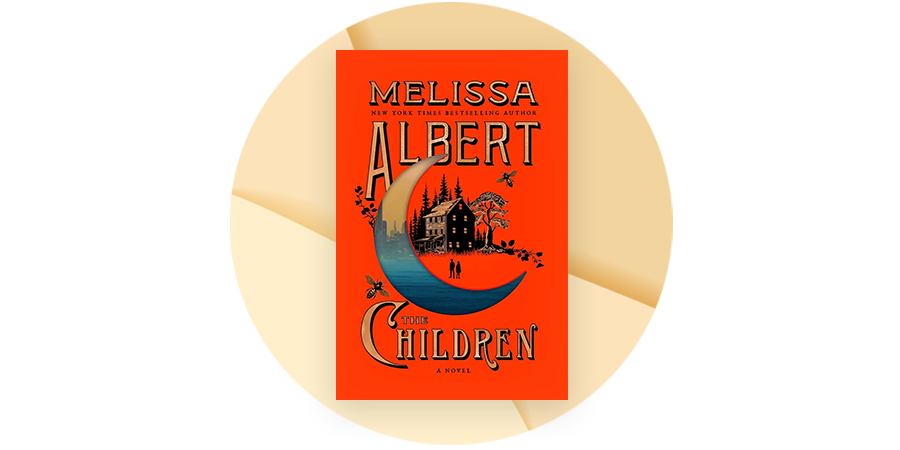 Melissa Albert, The Children
William Morrow, June 2
If you are the kind of person who grew up reading late into the night, flashlight under the covers, wishing that the worlds in your books were real, you are very likely to fall under the spell of The Children, the first adult novel from Melissa Albert.
It is, of course, a book about books: in this case, Edith Sharpe’s famous and beloved Ninth City series, in which two children, Guinevere and Ennis, explore a magical, sinister world beyond our reckoning and return unscathed. For the real Guinevere and Ennis, the children of the novelist, things aren’t so simple. Now adults, after a childhood marred with tragedy, Guin flogs a memoir only tangentially related to the truth, and Ennis stages a new art exhibit, despite what happened at the last one. They don’t speak, but Guin needs to talk to him, to understand the truth. Even if that truth is somewhat misty in the end, it is a delicious ride. –Emily Temple, Managing Editor
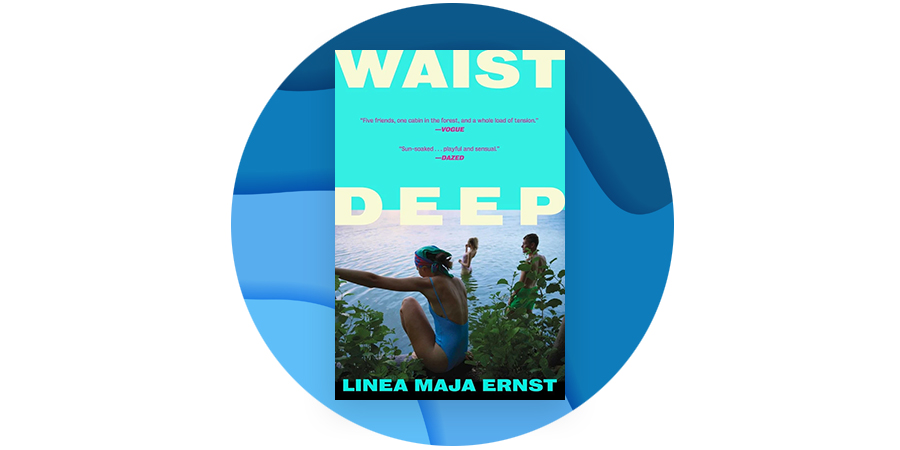 Linea Maja Ernst,Waist Deep
Summit Books, June 9
Waist Deep is a gorgeous Big Chill novel, centered around a group of thirtysomething uni buddies who reconvene at a Danish lake house for—spoiler alert—a surprise wedding. Currently a bestseller in Scandinavia, this fresh spin on a familiar story sails along at a luxurious pace, bouncing between the brains of the five core friends. I’m a sucker for this structure, admittedly. But what I love best about this novel is the attention Ernst pays to the unique social predicament of the “Millennial bourgeousie.” The anchor of this anxiety is Sylvia, the last bohemian holdout in this class-ascending friend group. Also the most aimless of the bunch, Sylvia keeps throwing wrenches in the wedding plans with her allergy to inherited stations of the heteronormative-adulthood-cross. In lesser hands, such a hero could be an insufferable scold, or alienating chaos agent. But I had a soft spot for her utopia-minded meddling. And I especially loved how Ernst’s characters ponder gender roles and constructs from their beachy perches.
This book contains contempo insights any Rooney fan should appreciate. Slurp it down easy, as I did, then chase with a book club. Ideally one composed of your old, gold, merrily-we-roll-along friends. –Brittany Allen, Staff Writer
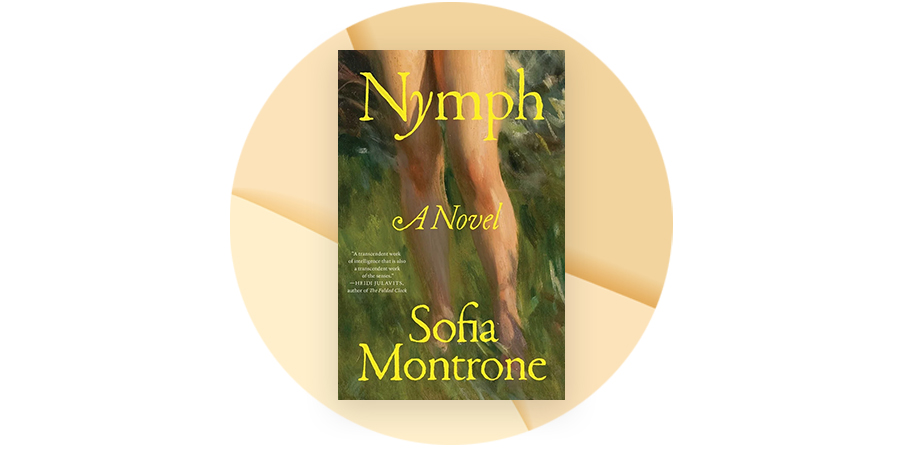 Sofia Montrone, Nymph
Avid Reader Press, June 9
When I see a book described as a “sapphic Call Me By Your Name” you can assume I am already obsessed with it and recommending it to everyone I know. Nymph is that, but it’s also completely its own thing. Following a young woman, Leo, who lives with her family in a derelict hotel in the Italian countryside, the book moves through two distinct phases of coming-of-age: childhood and the loss of innocence, and adulthood and the journey of self-discovery. The first part of the novel is about Leo at age ten, as she discovers that her beloved father isn’t quite who she thought. The second part follows Leo at age eighteen as she falls in love with a beautiful butch woman who works at the hotel for a summer.
The novel is an exploration of vulnerability and a meditation on pleasure. Nymph is soft and sweet and hot and pungent and textured and strange and lovely. It’s both a perfect summer read and a genuinely beautiful book. I’ll be thinking about it for a very long time. –MC
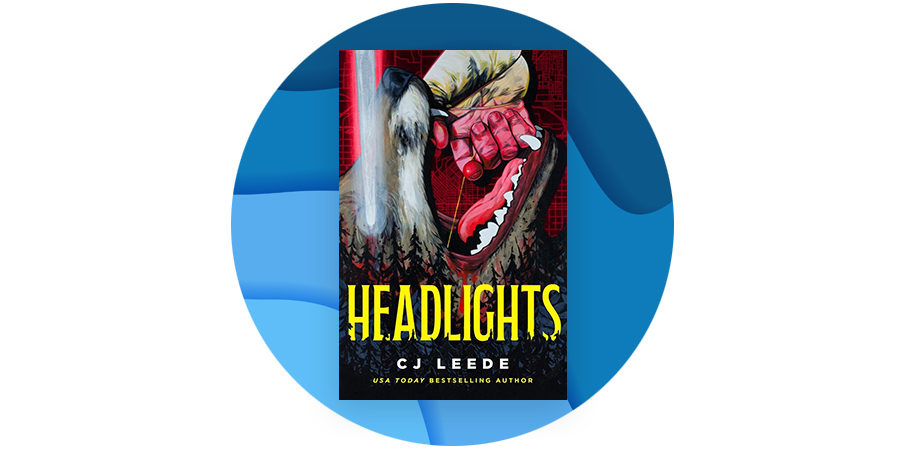 CJ Leede, Headlights
Tor Nightfire, June 9
The suggestion of the “next Stephen King” gets thrown around a lot in horror circles and, in many respects, that comparison is a fool’s errand: no one will ever have the same clout that King does, because the whole landscape of literature has changed since he came onto the scene. But when I tell you that CJ Leede is a next Stephen King, I mean that while I was reading Headlights, I found myself spiritually transported to when I first read The Shining 25 years ago and the sheer joy of reading—of being thrilled and chilled and shocked and hungry for more. There are nods to King’s third novel here (the Colorado setting is a big one, and it’s not lost on me that this is also Leede’s third novel) but Leede strikes out for her own territories while paying homage to the stories that have come before, including Uncle Stevie’s work as well as other great horror-thrillers of literature and film like The Silence of the Lambs and Longlegs. The novel moves in mysterious ways, often shocking, sometimes even downright startling. It is a big book, with hauntings and serial murders as well as working through childhood trauma and the struggle to maintain adult friendships, but it never feels overstuffed. I cannot wait for some kid 25 years from now to pick up Headlights and not only love the read but discover an author who, gods willing, will have an incredible oeuvre for them to dive into just as I did with King. I thought American Rapture was a masterpiece, but now I believe CJ Leede can write just about anything. I’m in, for life. –DB
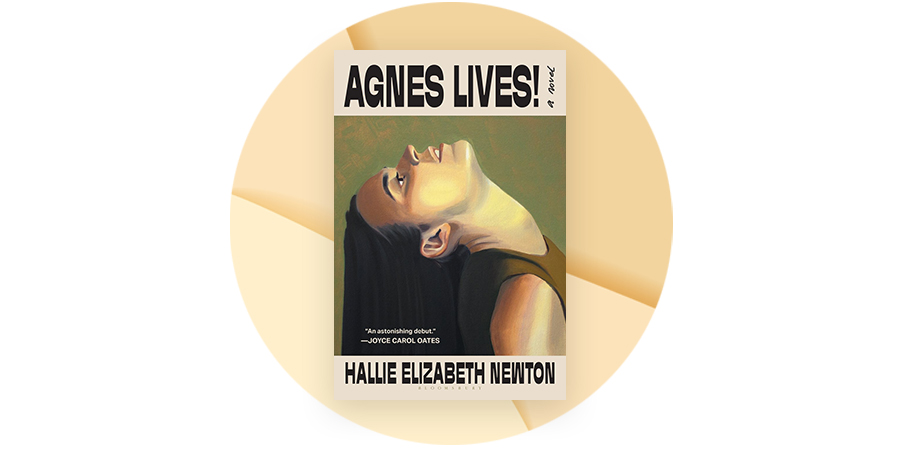 Hallie Elizabeth Newton, Agnes Lives!!
Bloomsbury, June 23
This debut novel piqued my interest for making another entry into the Obama-era New York nostalgia canon, a genre of some personal interest. And to be sure, there’s plenty of reference catnip for a niche reader in this hip, propulsive tale. (Max Fish, Madame Matovu…) Our hook is Agnes, the clever, spiraling protagonist who spends a day in 2014 Manhattan trying to, um, get killed. Her madcap, occasionally ultra-violent quest leads us down dark alleys in Chinatown and into chic midtown hotel bars.
At times this novel reminded me of Sophie Kemp’s Paradise Logic, because Newton is similarly interested in the more deranging aspects of heterosexual coupling, and a certain kind of femme passivity. But her style is electrically distinctive. In pyrotechnic passages, she recreates the vibe and tenor of an internet that’s just on the edge of turning sour. Sentences that fizzle and scorch will also appeal to fans of Jade Sharma and Mary Robison, other bards of women on the absolute verge.
Agnes is emphatically not for everyone, but I was thrilled by to encounter this voice. –BA
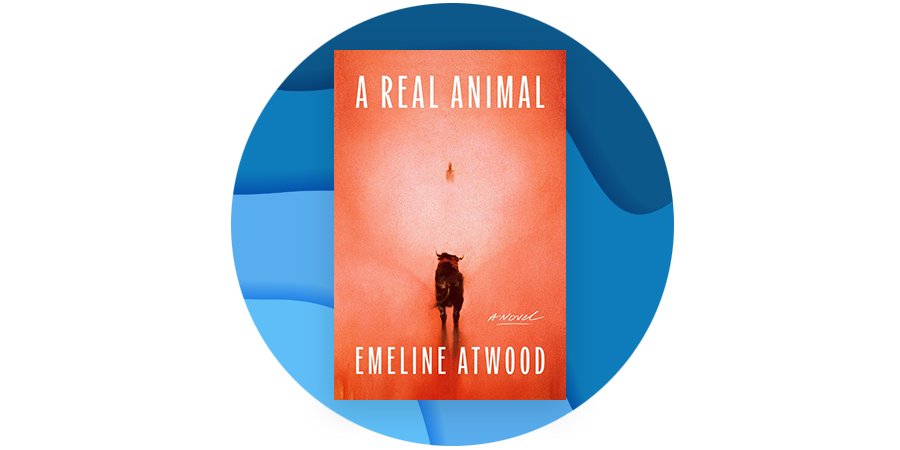 Emeline Atwood, A Real Animal
Catapult, July 7
I’d been hearing about this book through the grapevine for a long time before I got my hands on it, and once I did, I understood perfectly. This is a book that is a caliber above and beyond what we have come to expect from the young-twenties-girl-bildungsroman. There’s men, yes, and sex, a lot of it, and yearning to be understood, and for power and a place in the world, but A Real Animal is about the wild, deep, feral core of those themes. It’s about something subterranean, underneath one’s lived experience, underneath, even, one’s trauma. The book follows the protagonist from college, when she experiences a horrible sexual assault, through the next decade, as she builds and breaks relationships, as she builds and breaks a life. There is no straight line. There is no healing. But the book has this feeling about it, like there’s so much within the pages that’s just bursting to get out: a violent and powerful urge for something, for more survival, for more agency, to express one’s pain, to feel better. A Real Animal is as raw and visceral as an open-mouthed scream: you hear it in your bones. You can see its teeth. As recommended in Lit Hub’s Most Anticipated Books of 2026 list. –Julia Hass, Book Marks Associate Editor
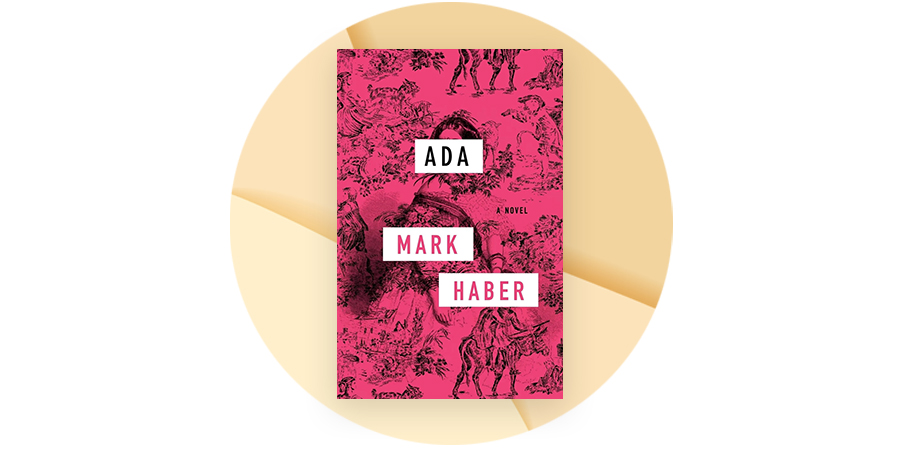 Mark Haber, Ada
Coffee House Press, July 14
In Haber’s breathless, painfully funny latest, the beleaguered ruler of an obscure realm, whose assassination-minded citizens are either Bavarians or Saxons, awaits the arrival of the eponymous Ada, a woman with whom he spent a single night several years before. Happily, after said night, he fell madly in love with her. Unhappily, she is now married, and approaches his castle (and its safe and useful Sword Closet), with her annoyingly rich husband, if indeed she approaches at all.
Because, after all, as in all of Haber’s novels, the point is not really what is happening in the world but what is happening in the mind—in this case the mind of the pettiest of tyrants. There we find an ecstatic, recursive whir of self-recrimination and stalwart pride, desire and disgust, nascent hope and extreme vexation, and not a few concerns about poisoning. At a mere 90 pages, you can read it in one sitting, and should, for the full effect. Though probably, like me, you will have no choice. –ET
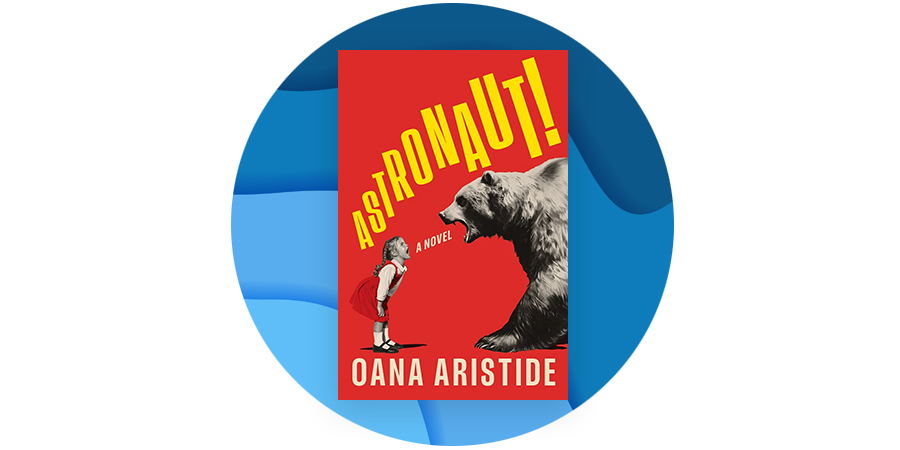 Oana Aristide, Astronaut!
W.W. Norton, July 14
Set in 1989, in the months leading up to the fall of Nicolae Ceaușescu’s decades-long authoritarian grip over Romania, Aristide’s (almost-)comic novel about a series of brutal deaths (which may or may not be attributable to a bear) and how they intersect with the lives of everyday Romanians trying to survive the cruel absurdities of life in a fully metastasized dictatorship, is both cautionary tale and historical fever dream.
Told through the storylines of two principal characters—one, a world-weary detective who can’t help but follow the clues all the way to the top; the other, an imaginative little girl who gets tangled up in an improbable plot—Aristide’s expert conjuring of the atmospherics of totalitarianism calls to mind the absurdist brilliance and wry humor of dissident Czech writers like Hrabal and Klima. The final year of Ceaușescu’s regime cast an oppressive and paranoid shadow over the people of Romania: neighbors informed on neighbors, the state had total control over the flow of information, and Ceaușescu’s cult of personality was deeply embedded at every level of society. Importantly, what Aristide’s wonderful novel illustrates is that even in the darkest of timelines it is possible to find shelter—and something like freedom—within the vast spaces of the imagination; no matter how bad things get the mind finds a way of surviving what seems like an inevitable (and eternal) state of subjugation.
Astronaut! also reminds us that in all fascist systems of control there is a point when the grip gets so tight the mechanisms shatter and everything changes all at once. Something worth remembering in this long summer of 2026. –Jonny Diamond, Editor in Chief
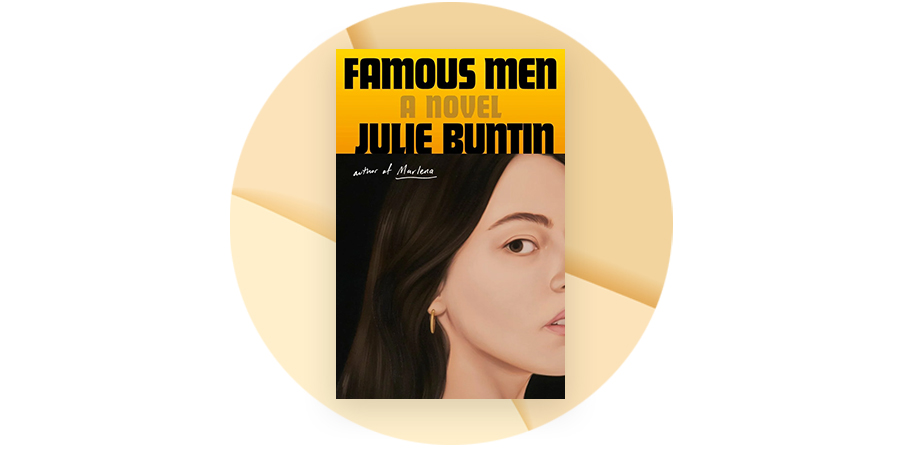 Julie Buntin, Famous Men
Random House, July 14
It’s possible to feel a certain fatigue at the idea of another age-gap novel. I think the exhaustion I’ve felt is due to the often one-note, hit-you-over-the-head-with-a-hammer vibe of some of these books: older men bad. Young women good. (Which, while I’m here, I obviously usually agree.) But the thing one craves in good fiction is the eye-widening prompt to see things differently. Famous Men is such a book: it’s about an age-gap relationship, yes, and it is simultaneously one of the most subtle, nuanced, and realistic depictions of love, reliance, and power that I have ever read.
The protagonist, Will, is in college when she moves to New York and sets about forming a relationship with a famous poet, Nathaniel Fellow, a man forty years her senior. He is the reason she moved to New York in the first place: he’s one of the few successful writers to emerge from her small midwest hometown, and she also happens to suspect he may be her father. He’s not, thank God, but that suspicion hovers over the romantic relationship that ensues between them: she came to New York looking for a father. She didn’t get that, but what she did get both resembles and bastardizes the pure intent she had in that original urge. Her relationship with Nathaniel begins when she is 20 and he is 60, but it is long, and thus it is many things: she feels real care for and intimacy with him, she wants to protect him, love him, feed him. In fact, she often feels undeniably special for being chosen by the male genius, and yet throughout it all, there is a quiet, bone-deep rage for what he has done to her. Never will she be able to see something without looking at it through his eyes. Never will she be able to be just herself, without the shadow of his person lingering over her. The book beautifully captures the delicate line between love and hate, between victimhood and complicity. Life is never just one thing. Complex, intricate, and at all times realistic and humane, Famous Men is the pinnacle of the attempt to capture this specific and yet, all too universal, formative experience of enmeshment, devotion, and ego-death. –JH
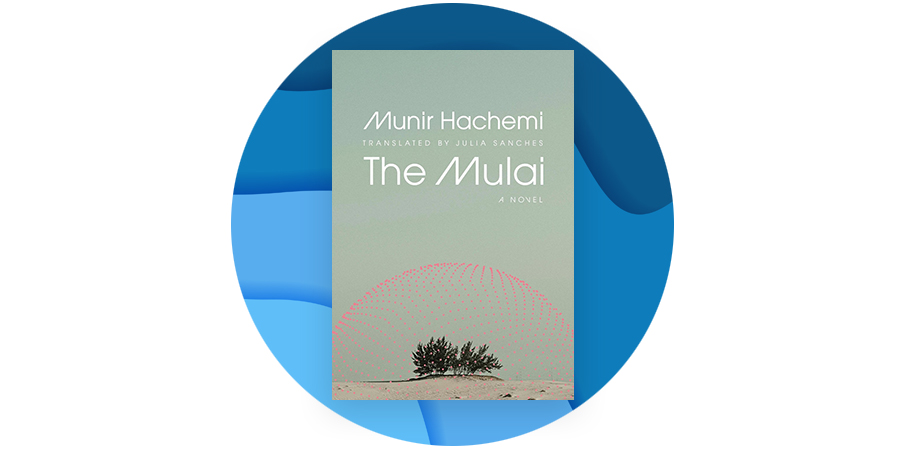 Munir Hachemi, tr. Julia Sanches, The Mulai
Coach House Books, July 14
I have to be honest with you: I still don’t think I’ve entirely wrapped my head around this book. I don’t know if I ever will? The jacket copy promises “echoes… of Borges, Le Guin, and Calvino” and while those are some lofty comparisons… by god, they’re accurate. If Borges wrote hard science-fiction, it might well look like this; it also bears comparing to some of the lesser-known Le Guin works like Always Coming Home. I confess that I’m a sucker for an anthropological look at fictional civilizations and that’s what The Mulai does: builds and describes an entire civilization, one that left and then lost touch with Earth centuries prior. Some of this is told through the diary entries of the anthropologist sent to restart a connection with the society, but there are also pieces of folklore and interviews and even (quite wonderfully) an exploration of the translation of Calvino’s Invisible Cities (itself a book that I’ll likely never fully wrap my head around, by design) into the language of the Mulai. If this all feels high-flying, well, it often is—but Hachemi (in a lovely and undoubtedly exhausting translation by Julia Sanches) never loses sight of the play that is so important in writing good science-fiction. You can almost feel the author grinning at you as you read, and I daresay you’ll end up grinning back by the end. –DB
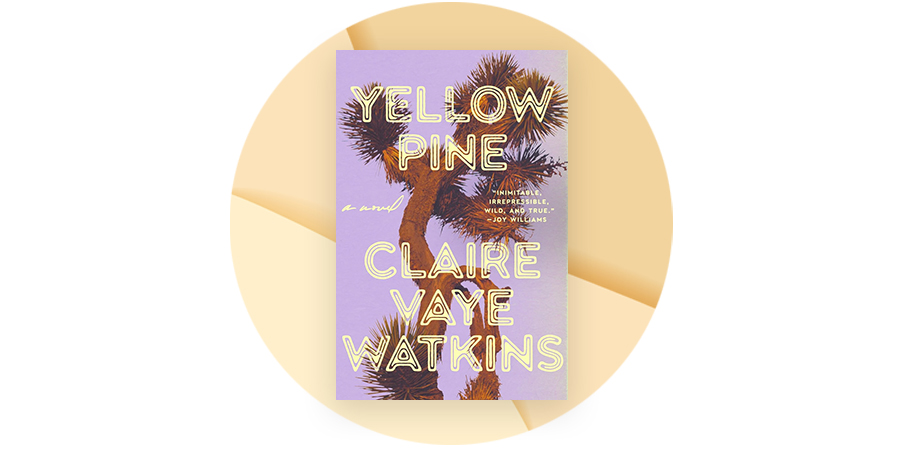 Claire Vaye Watkins, Yellow Pine
Riverhead, July 21
Nobody writes about the Mojave like Claire Vaye Watkins. The author of Battleborn and I Love You But I’ve Chosen Darkness returns to the cosmic high desert with a story about a Sierra Club fundraiser and aspiring activist—on the cusp of her fortieth birthday—who decides that she wants another child. With a young daughter at school back East, a motley crew of eco warrior pals in her corner, and a long-lost love returned but not ready for fatherhood, Rose embarks upon a novel (and liberating) conception quest while contemplating the doomed majesty of her desert home. A wild, lush, lyrical, torrent of novel—both ode and elegy—that left me reeling. –Dan Sheehan, Book Marks Editor in Chief
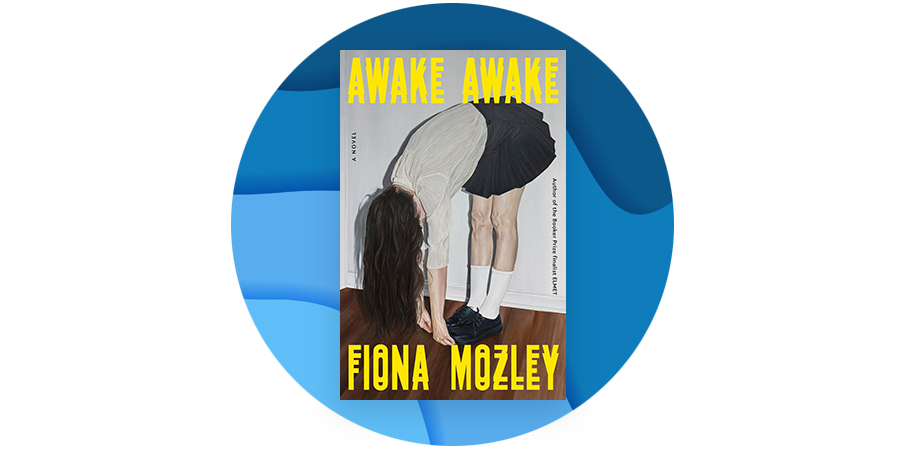 Fiona Mozley, Awake Awake
Algonquin, August 4
There’s something pleasantly old-fashioned (i.e., assured) about Mozley’s third book. I experienced this story as a systems novel crouching in a memory play. Mary, our thirtysomething narrator, has recently boomeranged back to her hometown (York) after experiencing a break with reality that may or may not be psychotic. She’s come to believe that her grandfather murdered Hitler, contrary to all available evidence. In rhapsodic reflections, she reconstructs key moments of her adolescence in attempt to locate the origin of this possi-delusion. The result is a carefully observed coming-of-age chronicle set in the early aughts, in and among Mary’s cohort of three ride-or-dies.
The careful toggling act Mozley does in this book between a troubled interior world and a troubling wider one sometimes brought Sigrid Nunez and Deborah Levy to mind, in the best ways. Like the latter, Mozley’s interested in the slippery sides of our shared delusions: memory, and history. This makes for a fascinating structure, but I especially adored the way this book captured a generation whose personal and political consciousness was shaped in part by 9/11 and the war in Iraq. A deep, uncanny, surprising read. –BA
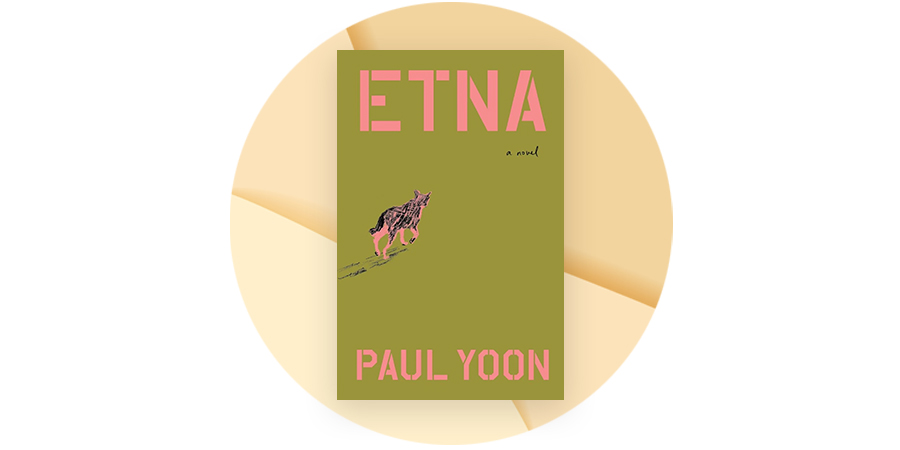 Paul Yoon, Etna
Scribner, Aug 4
A spare, aching, beautifully rendered parable about an ex-military dog who sets off on a perilous voyage home through a war-ravaged landscape. Etna, a battle-scarred but kindhearted shepherd mix who was plucked from his home on the eve of an unspecified conflict in an unnamed country, has grown weary of war’s brutalities and longs to return to the coastal farm of his puppyhood. Yoon, the Story Prize-winning author of The Hive and the Honey, brings an exquisite tenderness to his depiction of this wounded canine Odysseus and the relationships he forms with survivors—both human and animal—along the way. –DS
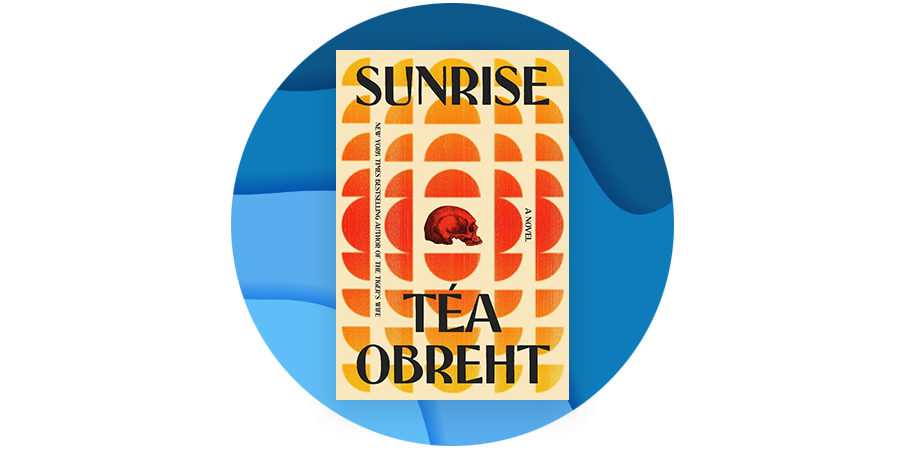 Téa Obreht, Sunrise
Random House, August 11
Obreht’s latest novel is an unputdownable, metafictional, and nimble page-turner, which begins when a young woman named Nina falls from a plane into a lake in the middle of the Wyoming mountains. Miraculously, she survives, and manages to make her way to a town, only to find it utterly uninhabited, a ghost town in the wilderness. These scattered buildings will become the linchpin of the novel, which moves from Nina’s gripping story into another, almost as tantalizing, set over a hundred years in the past, when the town was still inhabited, and then still another, more recent, which begins to explain some of the mysteries Nina has encountered, before we head back in time yet again.
The book’s structure is part of its pleasure, as is Obreht’s uncanny ability to write convincingly, it seems, about everything and everywhere and everyone, her precise, generous prose like being dunked into a new reality; with every section I found myself both anxious to get to the next, to find out what happened, and equally reluctant to leave. But when we finally get back to Nina, her ending is worth the wait. The result of all this is an adventure novel about what we remember and why, a three-pronged fable about the myths we hold dear, both about ourselves and about men and women we’ve never met. –ET
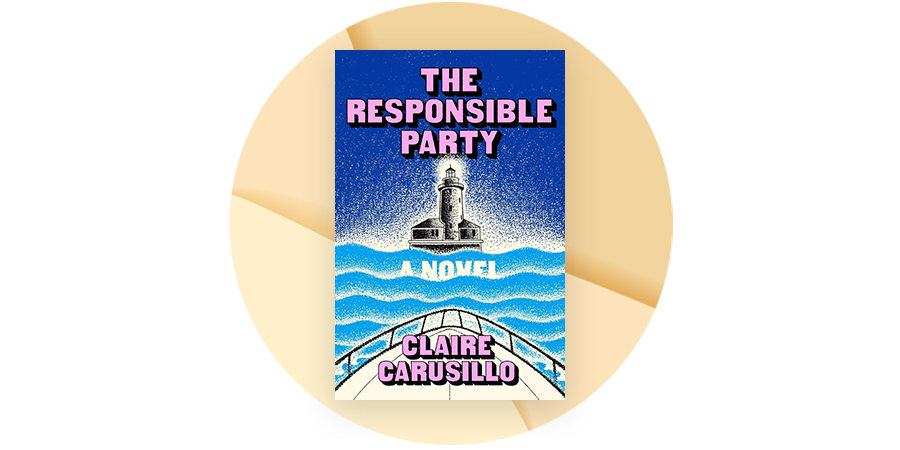 Claire Carusillo, The Responsible Party
Holt, August 11
I’ve been a fan of Claire Carusillo since her Gawker days (RIP), and knew that it was only a matter of time before her debut landed on the scene. No more 300-word articles. We needed this girl to be unfettered. And unfettered she is, in The Responsible Party: it’s a complete unleashing of her mental acumen, and a totally off-the-wall addictive story that will have you shocked and guffawing.
The narrator of The Responsible Party, an ex-journalist with the perhaps now recognizable name of Claire Carusillo, is back home living with her parents, a bland father who matters not at all to this story, and a terrifying and powerful mother who is central to it. Carusillo just experienced a media cancellation of sorts, a consequence of blithely recommending a beauty treatment in one of her articles that ended up putting influencers in the hospital. C’est la vie. She’s home, and she’s bored, and one day two detectives come by the house. They say they’ve found a long-decayed body in the forest nearby, and there was DNA on his corpse that is associated with the Carusillo family, a connection discovered through Claire’s, again blithe, use of a mail-in DNA service. Her aforementioned mother, Kath, is furious with her. Unsurprisingly, Carusillo’s curiosity is piqued by the detective’s story, and by her mother’s rageful reaction.
What follows is a book-length story-telling by her mother: we flip back in time to accompany a young Kath on a rollercoaster chapter in her life, wherein she lived with her great-grandmother and great-aunt, two zany women whose main personality trains were that they each survived separate ship-capsizing disasters. Hijinks ensue. In fact, murder ensues. The book is bonkers, wild and hilarious and careening and absorbing, ridiculous and real, maximalist to the extreme. Every single sentence is one that, had I written it, I would beam at with pride and call it a day. But it’s 300-some-pages of stunning, shocking, swirling, and always hilarious words, countless comedic phrases coined by Carusillo that have, I’m sure, never been uttered or thought by anyone. Claire Carusillo is a clear force, a real, true talent that is surely here to stay: The Responsible Party is just the first stop on her epic writer’s journey. Everyone just needs to hop on board. –JH
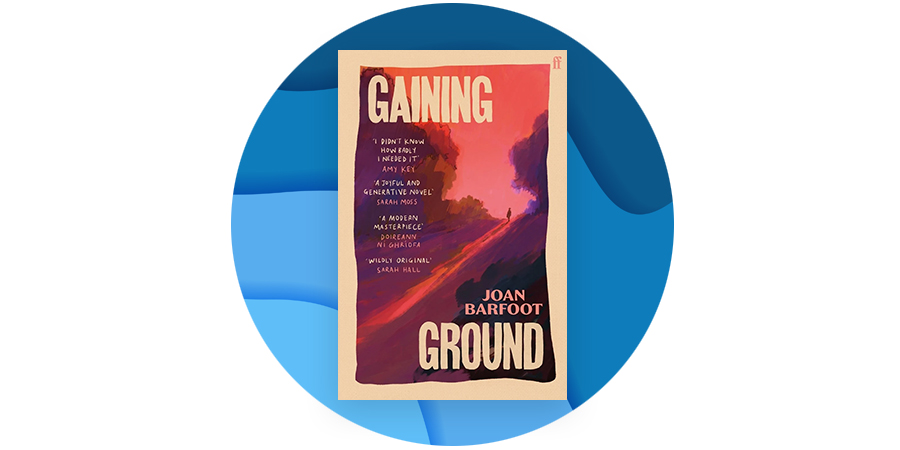 Joan Barfoot, Gaining Ground
Faber US, August 25
Barfoot’s novel, reissued nearly 50 years after its initial publication, concerns a woman named Abra, who feels indescribably ill at ease in her comfortable, conventional life, and then, one day, leaves it. She abandons her family and absconds to a cabin in the woods, where she finally feels that she understands what it means to be herself, with no interference, no self-consciousness, and eventually no memories. When her daughter appears, having tracked her down after many years, Abra barely recognizes her, but is reluctantly forced to confront her own perceptions—is she mad? is everyone else mad? are such distinctions even relevant?—and choices.
I’d wager that the novel is not quite as shocking to read in 2026 as it might have been in 1978, but the shock of it really isn’t the point. This is a propulsive meditation on what we want and why we want it (or think we do), that wonders what might happen to the human mind when left entirely to its own devices, with no input from society. There is also plenty of beautiful writing about the natural world, and despite how little actually happens in the present action of the story, I felt I couldn’t put it down. –ET

Emily Temple
Emily Temple is the managing editor at Lit Hub. Her first novel, The Lightness, was published by William Morrow/HarperCollins in June 2020. You can buy it here.