11 Books About Women Who Rewrote Life and Art
Anne E. Fernald Recommends Tove Jansson, Katie Kitamura, Ntozake Shange, and More
I’ve been on the hunt for books by women for as long as I can remember. My favorite stories are usually not romances, but stories of women trying to make sense of how they can be the main characters in their own lives, even when people around them keep relegating them to supporting roles. In high school in Seattle, I would get off the bus a few stops early to comb the shelves of B. Bailey Books. I was on the hunt for new books with that distinctive dark green Virago spine, ravenous for stories of women’s lives. I devoured Antonia White’s Frost in May, a spectacular story about an unhappy schoolgirl, and was undone by Radclyffe Hall’s The Unlit Lamp—a devastatingly intense story of having a crush on a teacher.
As I worked on my book, Her Own Voice: Eight Women Who Rewrote Life and Art (Beacon 2026), I kept track of books that echoed my book’s themes and resonated with the ideas and preoccupations of the women I was focusing on. My eight women are divided into wanderers, rebels, explorers, and mentors. These broad themes stretch us outside the confines of looking for an appropriate spouse. The books below expand our ideas of what a woman’s life can be and narratives can do. Here, then, are some books that help continue these themes in a different voice.
WANDERERS
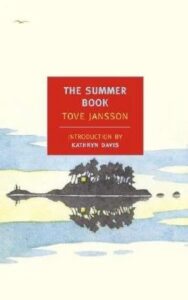
Tove Jansson, The Summer Book
The children’s book author Margaret Wise Brown, one of the women I write about, divided her life between New York City and an island in Maine. Brown loved her summers on an island off the coast of Maine nearly as much as the Finnish-Swedish Tove Jannson, creator of the Moomin stories, loved her time in the islands off the Swedish coast. It’s lovely to spend some time in Jansson’s imagination, swimming in the cold water, enjoying long summer days, watching for the mail boat to come. This book is a northern island vacation between two covers.

Jenny Erpenbeck, Kairos
Born and raised in the former East Germany, Erpenbeck writes beautifully of the strangeness of living in the before and after of a divided Germany. This novel tells the story of an age-gap relationship from the perspective of the young woman who embarks on an affair with a married man with open eyes and a clear sense of why this is what she wants. In this, Erpenbeck’s heroine’s desire—for sex and experience—resonates with another of my subjects, Eileen Chang, whose stories of love affairs conducted during the Chinese Civil War are similarly unembarrassed to depict what it is to be a woman with desire. Both Chang and Erpenbeck are unflinching in chronicling the specific, mundane precautions necessary to lovers under surveillance.
REBELS
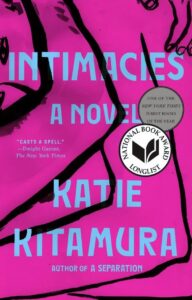
Katie Kitamura, Intimacies
Vera Brittain’s Testament of Youth comes to the admission of the many traumas she suffered as a nurse in World War One only gradually. She recounts her bravery and her determination and only after the war can she admit how grief stricken, tired, and disheartened she has become. Similarly, Kitamura’s unnamed protagonist only gradually shares the traumas she suffers as a translator at the International Court of Justice in the Hague. Her job is to translate, not to think, edit, or opine. Thus, every workday she sits and speaks the words of a notorious and evil ex-president, a man who has committed horrific war crimes. Having those atrocities, and his denials, spoken into her headphones, has a powerful effect. These are women who put themselves in danger, live in denial, and only belatedly reckon with the cost of their choices. The elegance and restraint of Brittain and Kitamura’s narratives intensify the unfolding impact.
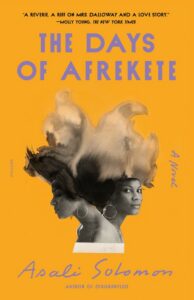
Asali Solomon, Days of Afrekete
Asali Solomon’s novel spends much of its narrative looking back to the protagonist Liselle’s long-ago relationship with her ex-girlfriend. It’s a surprising and defensive act as Liselle, who is Black, is giving a dinner party on the eve of her white husband’s political downfall. The tension, the uncertainty, the hovering between bravery and cowardice captures some of what fascinated me in Muriel Rukeyser’s novel Savage Coast. Usually, Rukeyser is utterly fearless, but I find it so heartening to read about the moments of hesitation right before being brave, something both Solomon and Rukeyser beautifully convey. Days of Afrekete is also a riff on Virginia Woolf’s Mrs. Dalloway—another single day novel about a rich woman throwing a dinner party. Rukeyser admired Woolf and mentored young Black writers, including Alice Walker, so the connections between Rukeyser, Woolf, and Solomon are rich.
EXPLORERS
Mercè Rodoreda, The Time of the Doves (La plaça del Diamant)
A clear-eyed, unsentimental realist in her life, Sylvia Townsend Warner excelled at depicting people helplessly caught in the larger forces of history. The great Catalan writer Mercè Rodoreda was forced into exile during the Spanish Civil War. Living in France as a refugee, she was so poor so busy with menial work that she could not write for years. When she returned to writing, she told this story of a young shop girl whose husband decides, as the Civil War breaks out, to keep pigeons on the roof of their cramped apartment. Plagued by pigeon droppings and unclear why her husband has left (to fight with the Republicans in the mountains outside Barcelona), Colometa has to feed her children without money and figure out her life and her place in it with little help from anyone.
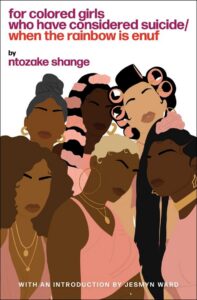
Ntozake Shange, for colored girls who have considered suicide when the rainbow is enuf
The Jamaican poet, playwright, editor, journalist, and broadcaster Una Marson would have delighted in the abundance of Shange’s classic play. This set of interlocking monologues of Black womanhood speaks vividly and fully the the richness of Black women’s experience. When I was growing up, this was constantly performed in repertory theaters, at colleges, and high schools. I’ve started teaching it again, and my students find it revelatory. In her poems, Marson gives voice to many moods of the Jamaican diaspora. Shange’s multivocal choreopoem is a fitting successor to that voice.
MENTORS
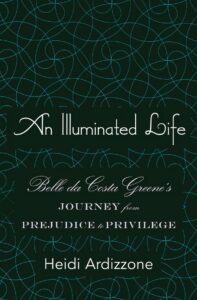
Heidi Ardizzione, An Illuminated Life
Jessie Redmon Fauset could not have passed for white, nor did she want to, but in her novels, she often reflected on the cruel asymmetries of the color line. In Plum Bun, Angela changes her name to Angèle and moves to New York to take the painting classes she is barred from attending in Philadelphia. The opportunities for a white woman were slender in the early 20th century, but those for a Black woman were vanishingly small. Belle Da Costa Greene, the daughter of Richard T. Greener, one of the first Black graduates of Harvard, considered her options and chose to live as white. As Belle Greene (no longer Greener), she became J. P. Morgan’s librarian and one of the world’s experts in rare books, especially medieval manuscripts and early printed materials. Greene balanced her career with loyalty to her family and love affairs. Heidi Ardizzione’s biography is a dishy story of a life richly lived.
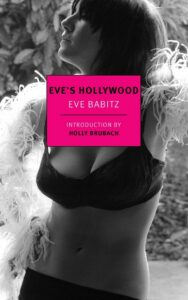
Eve Babitz, Eve’s Hollywood
Hollywood adores a cool surface, but it attracts messy larger-than-life charismatic characters, people who constantly exceed the bounds of the screen with their drama. Lili Anolik is on to something in contrasting messy, warm Eve Babitz with the forever cool Joan Didion as she does in Didion and Babitz. Director Dorothy Arzner would seem to be a Didion, with her hair as thick and controlled as a Fuller brush and her tailored skirt suits. But that misses the delight Arzner took in her stars and in the backlot drama of the studios. Eve’s Hollywood, gossipy and full of anecdote captures a more recent version of the conversations Arzner used to overhear at her father’s Hollywood restaurant.
BONUS TRACK
Virginia Woolf, Moments of Being
Woolf died with this autobiography incomplete, but it is a treasure and a delight. A collection of essays written at several stages of her life, the longest piece, “A Sketch of the Past,” blends real-time reports on the unfolding of the Blitzkrieg in London with her memories of childhood. It’s one of the most intimate and moving ways to get a sense of Woolf the person. Her memories are sharp and rich in detail and she does not shy away from the many losses of her childhood. (Her mother died when she was thirteen.) Nor does she omit the abuse she suffered at the hands of her half-brothers. This is a survivor’s story and a meditation on memory.
__________________________________
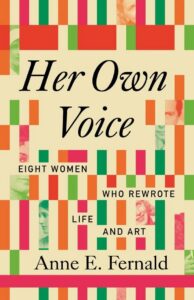
Her Own Voice: Eight Women Who Rewrote Life and Art by Anne E. Fernald is available from Beacon Press.
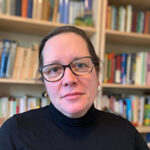
Anne E. Fernald
Anne E. Fernald is a professor of English at Fordham University. She is a scholar of British and global modernism with a specialty in twentieth-century women artists and is one of the world’s best-known experts on Virginia Woolf. She lives in New York City with her family.