







Why Writers Should Have Sympathy for Ghosts
“There’s a pathetic doggedness to both ghosts and writers.”
I believe in ghosts. I have tried to stop believing in them, but I have failed. Believing in ghosts has caused me to have some very embarrassing conversations with serious people, but there’s no help for it. It was my upbringing; I was raised on ghost stories. My mother was a great one for tales of deaths foretold by shadowy apparitions and strange creakings of furniture on the anniversary of an untimely demise, but the real ghost aficionado in my family was my aunt Mary Ann (with whom I later co-authored The Guernsey Literary and Potato Peel Pie Society). Strange creakings were just the tip of the iceberg for her. My earliest childhood memories of Mary Ann include her seated at a table with a cup of coffee on one side and an ashtray on the other, regaling my cousins and me with eerie tales of murderers identified by the ghosts of their victims and tvs that spontaneously flickered on with messages from the dead. There were heiress ghosts and cat ghosts and soldier ghosts charging through forests.
But all of this was mere frivolity in comparison to The House. When I was about eight, Mary Ann and her family moved into the only indubitably haunted house I’ve ever been in. It stood high and lonely at the top of a hill, up a long and frightening driveway. There was only one neighbor (who later tried to found a kingdom and murdered one or two people) and the house itself was surrounded by dark trees. It couldn’t have been more haunted-looking, and it couldn’t have been more haunted. I only saw a pair of disembodied shoes climbing up the stairs before me one day as I snuck up to a dusty closet to get a gander at Mary Ann’s wedding dress, which I wasn’t supposed to play with, so I could never admit to it, but I heard plenty of doleful whistling that my cousin and I tried to tell ourselves was coming from the mailman, plus assorted unlikely sounds emanating from empty rooms. And Mary Ann—specter detector that she was—repeatedly saw the ghost in all his glory, stretched out on the living room rug in a suit. If his intent was to disturb, he was a successful ghost. I was disturbed, and so were my cousins, and the cat, and several sensitive guests who walked into the house and ran out of it again, never to return. Characteristically, my aunt held seances to demand of this ghost what he wanted, which usually ended with the electricity suddenly cutting out, plunging the entire neighborhood into darkness. It was an unnerving house. I’ve always been a bit of a loner by nature, but if I happened to find myself alone in that house, I bolted outdoors at once. Sitting in the middle of the driveway seemed safer than sitting in the house.
I feel quite certain that all ghosts are struggling under the burden of an unfulfilled duty—why would they bother to loiter about, otherwise? They must want something desperately.
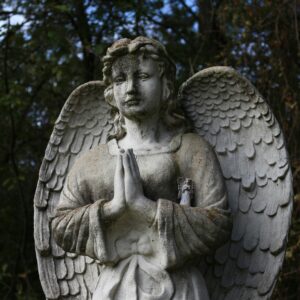
You would think that this experience would make me ghost-averse, but you would be wrong. I like ghosts. I feel quite certain that all ghosts are struggling under the burden of an unfulfilled duty—why would they bother to loiter about, otherwise? They must want something desperately. Once they attain their desire or fulfill their obligation, they will surely subside gratefully away, pleased to have effected what they could not complete in mortal life. But they constantly thwarted in achieving their goals, for in my cosmology, ghosts have no ability to move or touch things in the mortal realm, so they’re limited to strategic appearances and talking. Endlessly, they try to communicate. Endlessly, their audience runs away in horror. All they want is to deliver their message, and they face tragic limitations on their ability to do so.
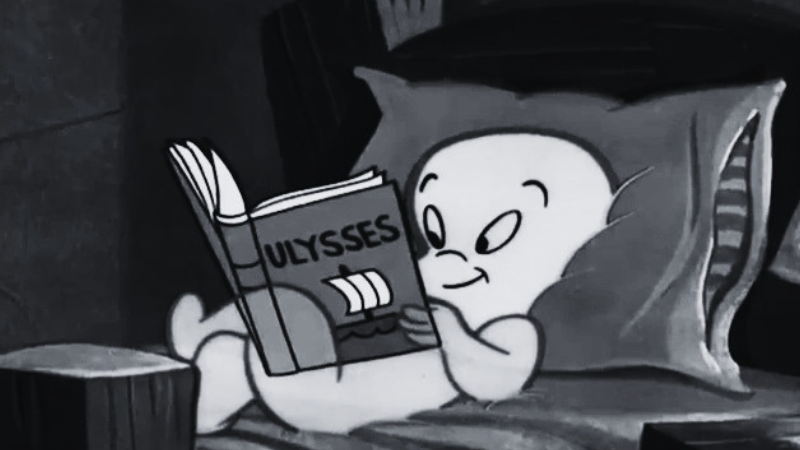
Hence my sympathy for ghosts, for to me this unhappy state has a painful familiarity. It reminds me of being a writer. The parallels are striking: Both of us are trying to communicate; both of us are forced to rely on proxy-selves to present our urgent messages; and mostly, no one wants to hear anything we have to say. There’s a pathetic doggedness to both of us—we could just shut up and relax, but we don’t. Poor ghosts. Poor writers (sometimes).
Because I commiserate with the ghostly plight, I have a problem with most ghost stories. In your garden-variety ghost story, the protagonist is generally the haunted, not the haunt, and the tales themselves are generally about how unhappy the protagonist is to find he or she is haunted. The narrative arc usually involves some form of ghost-riddance, whether by removal of protagonist or ghost. The happy ending is that the protagonist is free of the ghost.
Bah!
I’m much more interested in how the ghost feels. I want to know why they returned and what they think they’re supposed to achieve. I want to know how they feel and what they look forward to. What is it like to be disencumbered of that lumpy old body mortals are obliged to drag around? Do they feel human or not? Do they understand animals better than mortals do? I can’t believe in any protagonist who isn’t interested in these questions. I can’t believe in any ghost story that expends its energy on a scared mortal when there’s a conduit to the afterlife to be explored.
Accordingly, one day when I was supposed to be doing something grownup and boring, I started to write the kind of ghost story I wanted to read. In Ghost Guild: The Lost Three, my three siblings heroes are dead by the end of the first chapter and proceed upon their afterlife with exactly the same questions I’ve always had about ghosthood. Of course, there is also a plucky orphan—I adore plucky orphans—and a diabolical telepathic villain, because I am, after all, a storyteller, but my ghosts are the heroes, and theirs is the world readers live in.
The only sad part is that I had to make it up. Unfortunately, the disembodied feet on my aunt’s staircase were my last spectral sighting and the mournful whistling was my last haunting. Every once in a while, I go stand at the bottom of the long and frightening driveway that leads to my aunt’s house. I know he’s still up there. I could simply climb up to the house and ask him all the questions I have. But he’s the hero of his own story, and I know for sure I don’t want to be the villain.
____________________________________
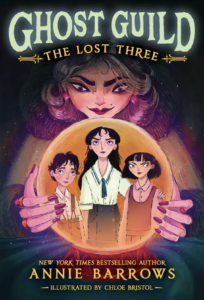
Ghost Guild: The Lost Three by Annie Barrows is available via Little, Brown Books for Young Readers.

Annie Barrows
Annie Barrows has written scads of books for children, including the New York Times bestselling chapter book series Ivy + Bean (now a series of Netflix films), as well as the Iggy series, the YA novel Nothing and the bestselling novel The Guernsey Literary and Potato Peel Society which was also made into a Netflix movie. She lives in Northern California.