Why We All Make Sacrifices to the Human-Created God Called “The Economy”
Sven Beckert on the Rise of Capitalism As Both an Economic System and a Way of Life
We live in a world created by capitalism. The ceaseless accumulation of capital forges the cities we inhabit, determines the way we work, allows an extraordinarily large number of people to engage in unprecedented levels of consumption, influences our politics, and shapes the landscapes around us. It is impossible to look at Earth and miss the world‑historical force of capitalism.
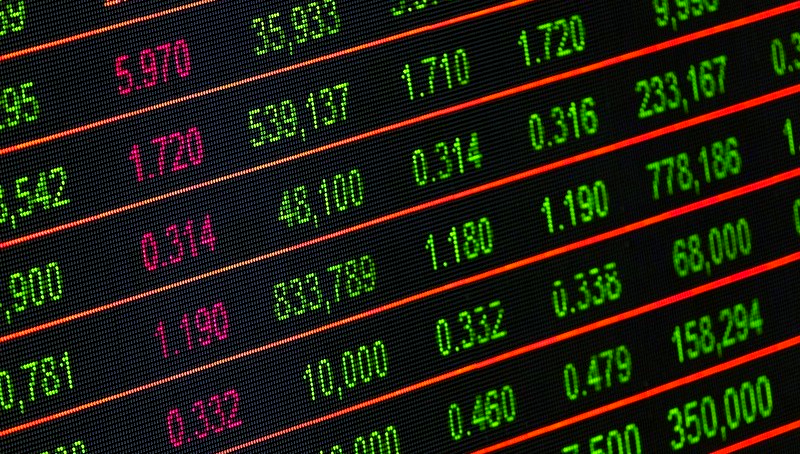
This is true as much for the greatest structures we inhabit as for the most intimate parts of our lives, as much for the world’s geology as for the ways we think about ourselves. To start, we acquire almost all goods and services we consume through markets, something that would have been unimaginable for most of human history. We sell our labor through markets—again, unimaginable for most of human history. Some of us might trade in stocks, either as a full‑time vocation or to safeguard something called retirement; most people at most times would have considered this trading deeply sacrilegious, more like sorcery than a legitimate way to gain wealth.
New technologies and economic growth are mundane certainties, and we know that our children will live in a world quite different from the one we ourselves were born into—a novelty. Our consumption connects us to people in far‑flung corners of the world—again, unimaginable for most of human history. The T‑shirt you may be wearing right now might have been stitched in Cambodia, the steaming cup of coffee before you grown in Brazil, the TV you have switched off to read this book assembled in South Korea, and the iPhone that lies temptingly next to you designed in California and assembled by women laboring in massive sweatshops in the southern Chinese city of Shenzhen. While trade is much older than capitalism—indeed, ancient—what is new is the intensity of global connections that capitalism has given rise to, a world economy.
No matter your beliefs, you probably agree that there is no escaping capitalism—neither the debate on it nor its impact on our lives.
The capitalist revolution has imprinted itself on your way of thinking about the world too: When you hear or read about economic affairs in the news, you learn about “the economy” as an active subject that did something or needs us to do something. Most people throughout human history considered questions of production, consumption, and trade, just as we do now, but they would have found it strange to make sacrifices to a human‑created god called “the economy.” Along the same lines, you might speak to friends about how you “spend” your time, talk about what someone is “worth,” and recall the last time you enjoyed some leisure—again, concepts alien to most humans of the past. Or you might passionately debate capitalism in a university seminar: You might listen to extolments of the enormous increase in human productivity that it has made possible, to sum‑ups of the technical progress it has generated, and to assertions that it has enabled many of us to live longer, healthier, more satisfying lives.
On the flip side, you might listen to equally fervent accounts of exploitation, of environmental destruction, of society‑structuring inequities, and of grave imbalances between the parts of the world that are fabulously rich and those that are shockingly poor. You might celebrate capitalism as the best of all possible worlds or blame it for the devastations it has wrought and envision its end.
No matter your beliefs, you probably agree that there is no escaping capitalism—neither the debate on it nor its impact on our lives. Capitalism is what one scholar—in a different context—has called a “hyperobject,” referring “to entities of such vast temporal and spatial dimensions that they defeat traditional ideas about what a thing is in the first place.” It is thus unsurprising that almost everyone has thought about capitalism in some way or that people have strong opinions about it.
Despite, or perhaps because of, capitalism’s ubiquitous presence, many take it for granted; it seems unremarkable, even natural. It has imprinted our world so deeply that it is even possible not to notice it. But what seems natural is very recent and wholly human‑made. If you live in Cairo, Guangzhou, or Florence, you live in a place where the sprouts of capitalism stretch back a long time, perhaps a millennium. But such places are truly exceptional.
Almost everywhere else, the capitalist revolution is, at most, a few centuries old, often much less. From a global perspective, even as recently as 1800, much of capitalism was confined to just a few islands in a vast sea of economic life organized around other principles—subsistence production, tributary rule, and almost no economic growth. If you live outside the capitalist heartlands, especially in the world’s countryside, the capitalist revolution may be as recent as the millennium we are living in right now. Capitalism is very new, and even after it emerged, it was spread thinly across the world for most of its life.
Sometimes the most difficult things to grasp are the most familiar. Capitalism is one of them.
Perhaps more surprisingly, the capitalist revolution is recent in terms of not just its spatial spread but its expansion into many spheres of our lives. Even in the world’s most capitalist societies, our grandparents, and perhaps our parents, probably grew some of the food they consumed. They almost certainly did all the cooking and might have produced some of the clothing they wore. They found love at the village dance, not on a subscription dating app. These examples remind us that in addition to being newly arrived, the capitalist revolution was, for a very long time, fairly weak and left large swaths of life, even economic life, unaffected.
Yet what is common and seemingly natural—the way things are—has a history. We can ask how and why such a radically new way of economic life evolved. How did we get from a world in which the logic of capital was limited to only a few spaces to one in which it determines almost everything? How did we ever give such superpowers to something created by but also external to us? Even if we take it for granted, see it as natural, this explosion of capitalism is one of the greatest puzzles in human history. And we need to grapple with it, not just to satisfy our curiosity about how we got to where we are but to gain a better foothold in the present and think creatively about our future. As a Chinese proverb puts it, we need to “learn truth from facts.”
Yet sometimes the most difficult things to grasp are the most familiar. Capitalism is one of them. To find ourselves now, we need to journey through one thousand years of capitalism’s history. The road—full of twists, turns, and dead ends—will circle the world to explain how we got here and to perhaps suggest the levers by which we might plot out a course for our future.
__________________________________
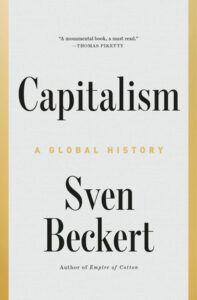
From Capitalism: A Global History by Sven Beckert. Copyright © 2025. Available from Penguin Press, an imprint of Penguin Publishing Group, a division of Penguin Random House, LLC.

Sven Beckert
Sven Beckert is the Laird Bell Professor of History at Harvard University. Holding a PhD from Columbia University, he has written widely on the economic, social, and political history of capitalism. His book Empire of Cotton won the Bancroft Prize, was a finalist for the Pulitzer Prize, and was named one of the ten best books of the year by the New York Times. He has been the recipient of numerous awards and fellowships, including from Harvard Business School, the Dorothy and Lewis B. Cullman Center for Scholars and Writers at the New York Public Library, and the John Simon Guggenheim Memorial Foundation, and is an elected member of the American Academy of Arts and Sciences. He lives in Cambridge, Massachusetts.