Why Jane Austen Adaptations Just Keep Coming—And We Keep Watching
Lauren W. Westerfield on Privilege and Money in Austen’s Works
It is a truth universally acknowledged, that every generation must be in want of a fresh Jane Austen adaptation (or several). However differently the youth of each generation may be characterized, this truth is so well fixed in the minds of production companies and trend-watchers alike, that the arrival of a new Austen film or miniseries or spinoff every five to ten years is a relative certainty, as predictable as the paraphrase used to open this essay.
But why? What is it about Austen, about her beloved but (surely) anachronistic money and marriage plots, social satire, and genius for observation, that still captivates audiences—and significantly, new and younger audiences—250 years after her birth?
Take Pride and Prejudice as a case study: Austen’s purported favorite among her six finished novels, and a film industry darling (IMDB lists sixteen “adaptations” since 1940, including everything from faithful tellings to Bollywood riffs, Bridget Jones’ Diary, murder mystery and zombie-filled versions, and even one set at a New York dog show), now making its way to the screen once again in Netflix’s upcoming six-part miniseries, slated for release later this year. Why are producers and audiences alike so certain that Austen and her beloved proto-feminist heroine, Lizzy Bennet—lively, astute, sometimes cutting, not always virtuous—still have more to say beyond the page? And what might a 2026 interpretation draw our attention to this time?
Young Jane fictionalized her adventurous (or desperate) aunt’s experience in early juvenilia, suggesting a precocious interest in the plight of the unmarried woman.
One possible answer: if, as contemporary scholars and close readers alike will attest, Austen was more interested in the precarious circumstances of single women in Regency society than she was in the romances that ultimately rescued them from impoverished spinsterhood, then a narrative like Pride and Prejudice isn’t as far removed from 2025 dating trends as we might like to think.
Paula Byrne’s 2014 The Real Jane Austen: A Life in Small Things foregrounds Austen’s career with the story of her aunt Philadelphia, an impoverished orphan apprenticed to a milliner in London in the mid-1700s. Desperate for greater social and financial security (milliners, as Byrne points out, lived hard lives, and the line between a woman working for a dressmaker in Covent Garden and a woman working the streets nearby was too fine for comfort), Philadelphia opted to make the life-threatening journey to India in search of a husband.
Her plan worked quickly—perhaps too quickly, as she seems to have accepted the first offer of marriage she received—and soon she was married to a man twenty years her senior. In securing her social position and material comfort, Byrne suggests, Philadelphia took on high risk and emotional cost. Hers was an extreme decision, based on a calculating cost/benefit analysis—one that we see reprised, to varying degrees, in Austen’s literary work.
Young Jane fictionalized her adventurous (or desperate) aunt’s experience in early juvenilia, suggesting a precocious interest in the plight of the unmarried woman. In the mature novels, as historian Lucy Worsley points out, Austen often spares minimal detail for the actual proposals and marriages that conclude each narrative, focusing instead on the necessity, on her heroines’ parts, of securing them. Worsley argues that Austen’s perfunctory treatment of her romantic endings hint that the men themselves, no matter how charming, are insufficient to guarantee marital bliss. It is financial security, coupled with a respectable and compatible match, that leaves our heroines truly happy in the end.
If we look around at today’s dating scene, perhaps Austen’s interests, and her sense of the stakes facing single women, remain more relevant than we’d prefer to imagine. Pop culture and data-driven evidence alike reveal increasing cynicism among heterosexual women sick of “transactional” dating apps, hookup culture, educational and political incompatibility, and the enduring burden of motherhood and gendered labor division within the home after marriage. Then again, given the affordability crisis and impossible home prices for first-time buyers, it’s no wonder that the fantasy of marrying well enough to avoid domestic labor all together has reemerged in the zeitgeist.
In Austen’s novels, the main female characters always get to have their cake and eat it, too: love without security is simply not good enough.
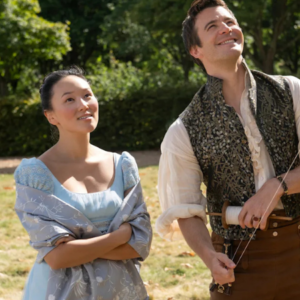
Enter Celine Song’s 2025 film Materialists, featuring Dakota Johnson as Lucy, a kind of Charlotte Lucas/Emma Woodhouse amalgam in Austenian terms. Lucy works as a high-end matchmaker for New York’s elite while cooly observing that only a very wealthy husband will ever (to paraphrase Elizabeth Bennet) induce her into matrimony. Her attitude is as timely as it is depressing. It is also, as an NPR reviewer pointed out, like something straight out of an Austen novel.
Like Lucy, Pride and Prejudice’s alarmingly dispassionate Charlotte Lucas insists that marriage was a business arrangement, the “market” for which was as competitive and fraught as in Song’s film. There are two big differences, however. First, whereas Lucy could have easily skipped marriage all together and chosen a single, gainfully employed existence, Charlotte and Elizabeth (and their sisters, and most of their female acquaintances) face grim options if they fail to marry well. Second (spoiler alert), unlike Lucy, none of Austen’s heroines ever end up choosing love instead of money and marrying penniless suitors in acts of reckless, romantic abandon.
If Song’s film seems to say that love can and should conquer all, and that Lucy’s “math” for successful marriages is too superficial to work, Austen is arguably in the opposite camp. In Austen’s novels, the main female characters always get to have their cake and eat it, too: love without security is simply not good enough. A “good match,” as Pedro Pascal’s millionaire Harry says to Lucy, needs to make both parties’ lives better.
Lucy’s decision at the end of Materialists privileges female agency as much as it does financial recklessness. Ultimately, we are to understand, the choice of how to live, and with whom, is hers alone. But for women of Austen’s circumstances, living genteel lives without actual land or ample income, employment would have been inappropriate, even scandalous (recall Philadelphia’s slippery slope scenario), and therefore unthinkable. Because her heroines often share this same pseudo-gentry status, usually through the vanity or misfortune of one or both of their parents, they find themselves scrimping to get by while keeping up appearances. Time and again, the only real solution is to marry well. And to do so without compromising one’s values and intellectual or emotional capacities, Austen suggests, is—for single women and, in some cases, for single men—a real and persistent struggle.
In Pride and Prejudice, we see this scenario played out repeatedly: in Mr. and Mrs. Bennet’s ill-matched personalities, the apparent result of a marriage inspired by physical attraction rather than mutual respect, genuine compatibility, or even financial security; in Elizabeth’s horror at Mr. Collins’ proposal (generated not only by his ignorance and absurdity, but by the fact that in turning him down—a clear emotional and psychological necessity—she is also abandoning the family’s hope of retaining the rights to their entailed-away estate); and perhaps most poignantly, in Charlotte’s own swift acceptance of the romantically resilient Collins’ next-day proposal to her instead, spurred by her fear of permanent spinsterhood trapped at home as the burdensome daughter forever dependent upon her parents. Lizzy’s disbelief and judgement, upon hearing of Charlotte’s engagement, is relatable—but so too is Charlotte’s rebuttal.
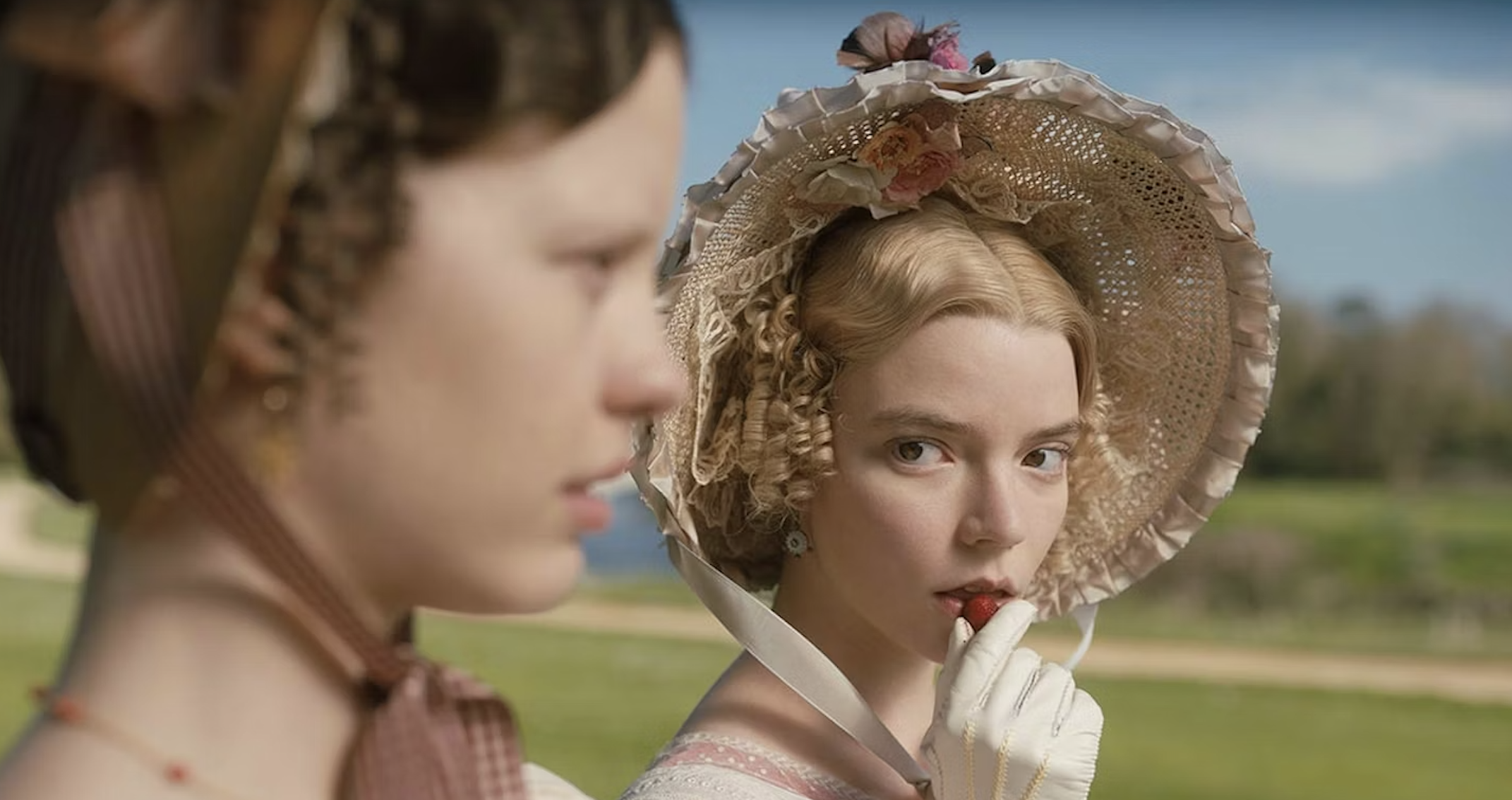
The 1995 film version of this exchange between Charlotte and Lizzy, in which the former is portrayed cooly by the unflappable Lucy Scott, challenges the audience’s ability to empathize with Charlotte’s pragmatism, and seems to encourage us to side with Elizabeth’s dismay. But the 2005 rendition by Claudie Blakley is heart wrenching, and serves to chasten Kiera Knightly’s Lizzy into deeper reflection, perhaps even reconsideration, of her knee-jerk reactions and sky-high romantic standards for matrimony.
Both Charlotte and Mrs. Bennet (famously absurd according to Austen’s characterization and brilliantly rendered as such in the 1995 miniseries) receive gentler, more nuanced depictions in the 2005 film, with the latter’s concern for her unmarried daughters’ futures delivered, at least on occasion, with the seriousness that the entailment system warrants. If Mrs. Bennet is as silly as her husband and her creator believe her to be, she is also right to be worried—maybe even justified in those bouts of “nerves” which antagonize Mr. Bennet and the rest of the family. Considering these notable changes in characterization between the 1995 and 2005 films alongside the abovementioned scholarship and sociocultural changes over the ensuing twenty years, it stands to reason that the forthcoming Pride and Prejudice, which promises “fresh insights” together with a faithful adaptation, will continue to unpack Austen’s intentions for new audiences of the Materialists generation.
But in a truly faithful adaptation, perhaps the ending that would most satisfy the author’s intentions would depict what happiness truly looked like for women in Regency England.
It is impossible to guess what director Dolly Alderton might have up her sleeve. However, one might put a fair amount of faith in her casting decisions, including Olivia Coleman (no stranger to the vicissitudes of a multifaceted mother character) as Mrs. Bennet, the imposing, razor-sharp Fiona Shaw as Lady Catherine De Bourgh, and Emma Corrin—a refreshing alternative to the “It Girl” casting of Knightly in the wake of her splashy Pirates of the Caribbean box office success—as Elizabeth Bennet.
There is always, too, the opportunity for directors to tease out rarely filmed allusions and details from the text of the novel. Consider Mr. Bingley, whose character is more fully articulated on the page than in most screen adaptations, and whose wealth (not to mention that of his patronizing, elitist sisters) comes from his father’s success in trade rather than any land or preexisting title. Might Alderton draw us a more complex portrait of the man who sets not only the famed opening lines of Pride and Prejudice, but all the ensuing events of the novel into motion? What about our lesser-seen Bennet sisters, Kitty and Mary? By the end of the novel, both are granted a life of increased privilege and reduced pressure to marry, thanks to their elder sisters’ advantageous unions. Might we, this time, be granted an on-screen peek into their altered circumstances?
In the novel itself, Austen does give readers a glimpse into the future (and, notably, the financial realities of that future and how they impact each character’s trajectory). It is no surprise that film versions of Austen’s so-called “original rom-coms” would end with weddings. But in a truly faithful adaptation, perhaps the ending that would most satisfy the author’s intentions would depict what happiness truly looked like for women in Regency England: life after the kiss scene, depicting improved social and financial positions, homes of their own over which they can preside without the constant presence of their parents, the gift of being able to support their younger sisters and exert more agency over their social circles…and, to top it all off, an affectionate partnership based on admiration and respect.
The ending of Materialists, if sweet, is also unrealistic and abrupt, perhaps in part because the film failed to plumb those nuances and complexities of modern dating that don’t fit the “love conquers all” trope. In Austen, we have an author willing to engage those complexities with rigor as well as romance, vulnerability as well as humor. Contemporary romantic comedies undoubtedly reflect our times back to us, and can do so with greater inclusivity and intersectional awareness than a historically accurate Austen adaptation ever could, to be sure.
But in a story like Pride and Prejudice, we also get more than the rom-com marketing machine touts on the surface: of Western social and political roots, the economic and gendered dynamics informing much of modern dating as we know it, and how we might continue to learn from and feel seen by an author who was wise and worldly well beyond her lived experience.
__________________________________
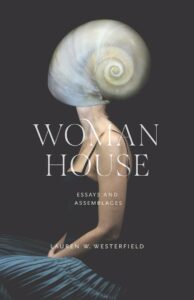
Woman House by Lauren Westerfield is available from the University of Massachusetts Press.

Lauren W. Westerfield
Lauren W. Westerfield is the author of Woman House and Depth Control. Her essays and poetry have been published in FENCE, Seneca Review, Willow Springs, Denver Quarterly, Indiana Review, Ninth Letter, and elsewhere. Westerfield is a 2022 Idaho Commission on the Arts Literary Fellow. She teaches at Washington State University, where she serves as the editor-in-chief of Blood Orange Review.