Why I Don’t Regret the “Pornographic” Scene That Got My Book Banned
Julia Scheeres on the American Right’s Unslakable Desire to Censor Things
Perhaps I should have borrowed a euphemism from a 1970s bodice-ripper and called it a “manroot.” Or resorted to child-friendly British slang and called it a “willy.” Euphemisms, after all, have long been used to temper sensitive subject matter and reduce the risk of extreme reactions.
Instead, I called it by its anatomical name: penis. And because I wrote a frank scene where a teenage boy forces a teenage girl to perform oral sex on his, well, penis, my book, Jesus Land, has been banned or challenged by school boards in at least 11 states.
The scene is graphic and uncomfortable to read. It’s meant to be—it describes rape.
But the passage is also a mere page in a 350-page book—a passage that is being stripped of context and used by conservatives to weaponize my book against itself.
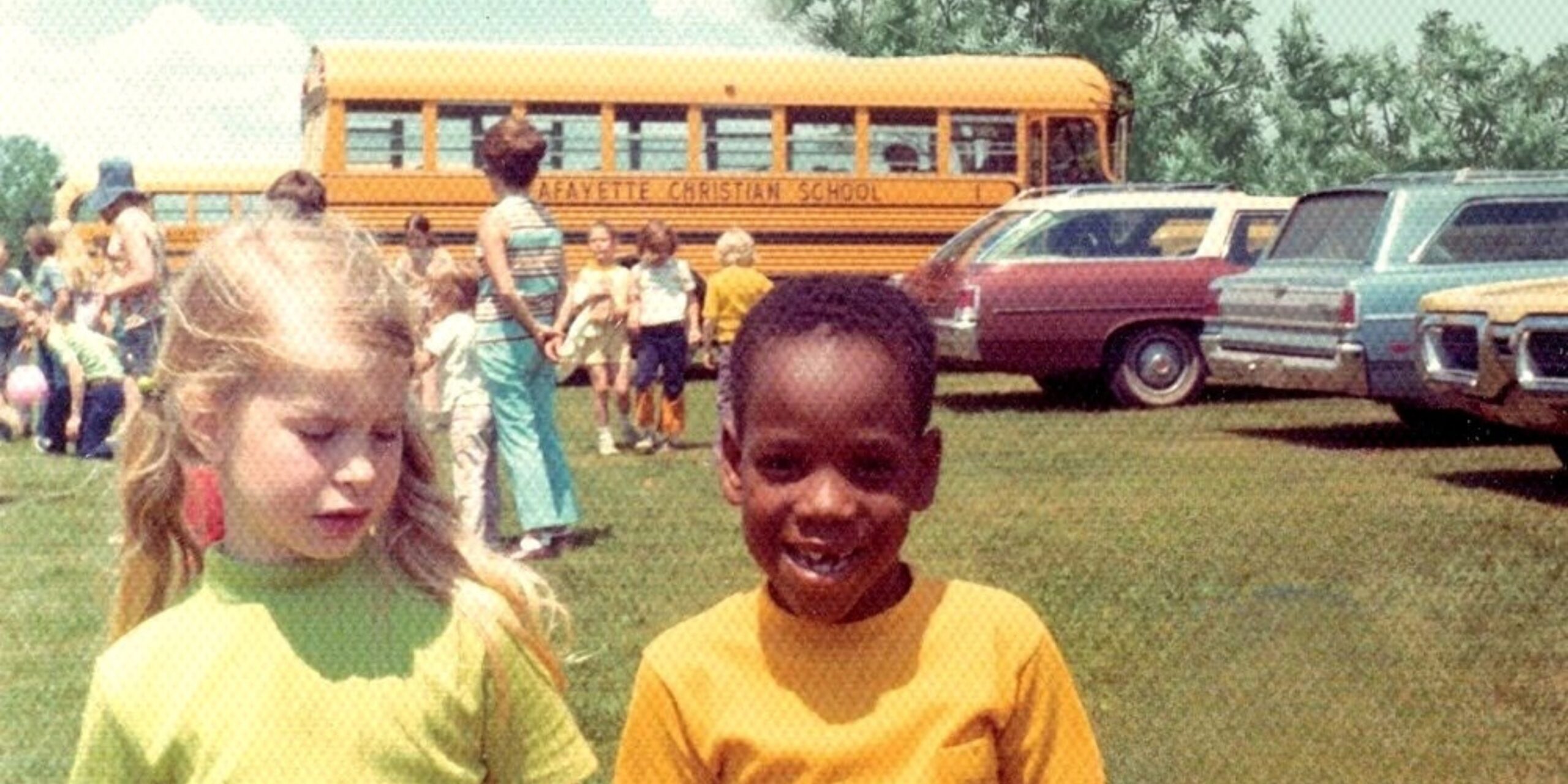
When Jesus Land was published, in 2005, the American Library Association gave it an “Alex Award,” recognizing it as an adult book that “held special appeal for young readers” (ages 12 to 18). “Scheeres’ unflinching memoir chronicles life in rural Indiana with her disciplinarian father, fundamentalist mother, and adopted African American brothers,” reads the association’s summary. “Each child finds a way to survive, with very different endings.”
The distinction, awarded to ten books annually, helped Jesus Land find its way into public school libraries across the country. But in the past four years, Jesus Land has been caught up in the nationwide wave of book bans fueled by “parents’ rights” groups such as “Moms for Liberty” and new state laws targeting titles deemed “inappropriate” for minors.
I’ve watched with dismay as the sexual violence I experienced as a child has been labeled pornography, dismissed as fiction, called part of a “pedophile agenda.”
Here’s the thing about my book; it’s not a novel, it’s a memoir—a distinction that many people don’t seem to understand. The events I wrote about—including incest and sexual assault—happened to me.
I now have the distinction of being in the four percent of banned titles that are memoir, according to PEN America. I’ve watched with dismay as the sexual violence I experienced as a child has been labeled pornography, dismissed as fiction, called part of a “pedophile agenda.” Strangers have sent me hate mail calling me a “nasty woman.”
(Here’s another crucial distinction: pornography is material “intended to cause sexual excitement”—which was certainly not what I intended when I wrote about my sexual assault.)
But I’ve struggled with how to respond to the bans. The offending scene is a relatively minor one. My book is no more about teen sex than the Bible is about Lot having sex with his daughters in a cave. I’ve considered asking my publisher to delete the passage. Or to water it down by using a euphemism, perhaps a prim “He had his way with me.” (But what does that even mean?)
Normally I don’t hear about a Jesus Land ban until much later. So when a high school librarian in Gardner, Kansas, emailed me earlier Monday to give me the “sad news” that her school board had voted to pull my book the night before, I decided to take a closer look.
I learned that a single parent, Carrie Schmidt, has challenged more than 70 objections to books at Gardner Edgerton High School, using a database of titles affiliated with “Moms for Liberty”—many featuring characters that are LGBTQ or people of color. She has said she’s merely complying with President Trump’s executive order to “end radical indoctrination in K-12 schooling.”
The problem with euphemisms is that they shift blame away from the perpetrator and imply that the victim is overreacting.
Taking a page from the group’s playbook, Schmidt uses the public comment period of school board meetings to read sexually explicit, out-of-context passages from her targeted book list, ignoring requests to stop. Police escorted her from a school board meeting in neighboring Lawrence, Kansas, and in Gardner, her microphone has been turned off. (She’s suing both school districts for violating her free speech).
Last year, Schmidt began her crusade against Jesus Land. In response to her challenge, the school superintendent read it and decided to retain it. But this past September, Schmidt read my rape scene at the Gardener school board meeting before accusing board members of “enabling and supporting the grooming and exposure of pornography to minors.”
That was enough, apparently, to make the board reconsider my book last week, in a heated debate which I later watched online. The opportunity offered me a window onto how these decisions are made—and into the culture wars dividing the country.
It was odd to hear board president Tom Reddin denounce my memoir as “sexual obscenity from front to back” and a book with “no redeemable qualities.”
Board member Katie Williams grew emotional as she defended it. “When I was a kid growing up, I wasn’t allowed to go to the public library because there was content there that my parents did not approve of and did not want me to read. They believed they were protecting me and sheltering me,” she said. “As someone who experienced very similar situations as Julia in this book, I was not sheltered from experiencing that type of abuse. I was sheltered from the language and the knowledge that I was being harmed and to know that I could ask for help and I was sheltered from knowing that it was not my fault. And that’s why I think this book is important.”
Board vice president Greg Chapman’s response was unsympathetic. “So, I appreciate the mind games that you’re trying to play and politics that you’re trying to play with that,” he said testily before the vote to ban it.
But here’s what blew my mind: I’d just witnessed a mini version of what I’ve been experiencing for the past four years—the angry dismissal of a woman revealing an inconvenient truth.
The problem with euphemisms is that they shift blame away from the perpetrator and imply that the victim is overreacting. Euphemisms diminish meaning, allowing room for doubt. What happened to me—and to board member Katie Williams, it turns out—is not uncommon. One in 16 women report that their first sexual encounter was rape. More than 50 percent of women will be sexually assaulted in their lifetimes. And teen girls face the highest risk, with 66 percent of sex abuse victims younger than 18.
Protecting girls is especially crucial now with a president who brags about sexually assaulting women and has been accused of doing so by at least 18.
Instead of banning my book, parents and teachers could use it as a cautionary tale, prompting necessary conversations about consent, respect, and safety.
Over the years, I’ve received many emails from readers who see their reflection in my story, such as this one from a 16-year-old girl. “Your memoir Jesus Land has affected me in ways I wasn’t sure books could…. the mixture of religious hypocrisy, prejudice and abuse you’ve faced mirror instances I’d rather forget. however, if you were able to push through all the bullshit people put in your way, I think I’ll be able to as well.”
I’ve decided: I’m not going to change a word of my memoir. We should not come at the truth sideways, with mealy-mouthed euphemisms, but face it head-on, even when that truth is ugly and difficult to hear.
Sometimes it’s important to call a penis a penis—and rape, rape.

Julia Scheeres
Julia Scheeres is the author of New York Times bestselling memoir Jesus Land. She lives in Berkeley, California with her husband and two daughters.