When the Fountain Runs Dry: On Aging, Immortality and the Illusion of Everlasting Youth
Casey Scieszka Shares the Sources of Inspiration Behind Her Debut Novel
I am 11 years old in Brooklyn, sitting in my classroom—the dark one on the first floor—with a group of classmates who have clashed all year long. Friendships fraying, puberty unevenly invading our bodies in ways both private and horrifically public. Nothing is sweet or fun or easy like it was just last year now that this is happening to us and we’re in a building with the “big kids” all the way through 12th grade, and I’m having my first glimpse at the thought: Maybe growing up isn’t so great after all.
It’s against this backdrop that I first read Tuck Everlasting which follows a 10 year old girl named Winnie who stumbles upon a magical spring of eternal life and is kidnapped by the immortal family who guards it because they don’t know what else to do with her while a mysterious man in a suit hunts them all down so he can bottle up their secret source for his own profit.
A tall boy in my class who will grow up to be a conservative podcaster declares obviously he would drink from the spring, obviously he would sell it and become a gagillionaire. Anyone who says anything else is stupid or lying.
She knows, in a way that none of us can from the outside, that what she is looking at ahead of her is not a life.
A shy girl who will grow up be a high school science teacher explains she would want to know more about what this not-aging looks like. Can you still get injured? What if you’re terribly maimed in a car accident and have to spend eternity in awful pain?
When I read the last chapter at home later that week, alone in my room, tucked into the chair by the window that looks out on the sycamores and the streetlights, I am completely stunned and moved to find that—spoiler alert!—Winnie chooses to grow up and old and not drink from the spring. To live a life and to, inevitably, die.
How noble! I think. How wise and adult and tragic! And: how badly I want to grow up into someone like Winnie. Someone capable of making that kind of choice. I experience this gap between who I am and who I want to be like a physical ache, and I understand for not the first or last time in my life that hard decisions will be, well, even after very careful consideration, still really hard.
*
Twenty-something years later, over a span of six years, my children grow from babies to kids and I watch one of my best friends die of a rare cancer during a pandemic then my mother from a rare brain disease.
In the middle of it all, I write a novel about a woman who cannot age or die.
Where do you get your ideas? people ask writers all the time. And some of us—most of us?—genuinely don’t know as it is happening. Things are simply appearing, as questions and characters and situations, and we follow them into the dark because we believe that this will ultimately lead us into the light. To some new and meaningful understanding.
It’s often only in retrospect when these connections become clear to you, the writer. When you can finally spot the thread that pulls all the way back to a 5th grade classroom, that winds around your friend’s dark hair and your mother’s dainty wrist, through your body and brain and onto a page.
*
Tuck Everlasting turned 50 last year, which means if it were a woman with its own social media account it would be fed a constant barrage of agist, misogynistic, fear-mongering nonsense dressed up as “wellness” products that ultimately further line the pockets of the already-rich. The anti-aging and longevity sectors are an estimated $85 billion to one trillion dollar industry and are growing steadily, nearly exponentially. Major investors include familiar characters such as Jeff Bezos and Peter Thiel.
Since Tuck Everlasting was first published in 1975, the average American’s lifespan has increased from 72 to 80. Of course that number gets a big fat asterisk next to it once you start looking more closely at factors like gender and race, the details of the reporting and the math. On “average”, women outlive men by about 5 years in America, though in an irony of ironies, female doctors don’t. Black female physicians have the highest mortality rate among doctors. Burn out, home responsibilities, sexual harassment, racism, less pay, you know the list. And scientists are finally starting to agree and document on a cellular level that social and psychological trauma, even that experienced by your relatives before you were born, can express itself physically as various illnesses throughout a body for years and yes, even across generations.
All this said, we have done very well for our longevity as a society over the past century—certainly since the main character of my novel was born in 1800—by investing in certain technologies like sewers, the pasteurization of milk, seatbelts, and vaccines to name a few. (Even if certain people will argue with certain parts of this in certain corners of the Internet and the White House.) And we have made truly stunning progress in protecting the most vulnerable part of the population: young children. In 1900, nearly thirty percent of all children in the US died before turning five. Today that number is less than five percent and declining.
I learn all of this and much more while doing research for my novel. I read peer reviewed medical journals, scientific articles, and famous anti-aging self-help books. I speak with my cousin, a longevity scientist who recently completed his PhD, and I am able to follow much of his jargon because, like many authors, I have occasionally procrastinated the actual writing of the thing with research. Senolytic this, Hayflick limit that, telomeres and in vivo trials with mus muculus mice. I run fictitious experiments a fictitious longevity scientist might conduct in my book by this cousin and he is able to weigh in with deeply satisfying and practical precision. He tells me that mechanical organ replacement is going to be what bumps our lives to 125. That soon, replacing a heart will be as straightforward as replacing a knee. He says the engineers will save us, so try to hold on. In the meantime, he wants to send me some custom vitamins.
*
My friend was told she had a zero percent chance of living past a certain amount of months given all of the available data. She was not daunted by this fact. Was determined to be the statistically impossible outlier, and much to the doctor’s surprise (but not her friends’ or spouse’s who knew her determination all too well) she was. She lived almost an entire year past that initial date.
Sitting outside on our separate blankets, well more than six feet apart, she and I laugh darkly about this accomplishment after one of her appointments, despite knowing the inevitable is still surely coming.
*
Pop quiz: Is this real or science fiction? A man pays many hundreds of thousands of dollars a year to, upon his death, have his body flown to a facility in Arizona where it will be frozen until the science is available to reanimate him so he can then continue to live for centuries more.
It is real life, of course. It’s a company called Alcor Life Extension Foundation in Arizona where the weather is the most statistically reliable for smooth airplane travel, because for this to work one cannot be braindead for more than a few hours maximum. In an ideal world, an Alcor member would spend their final years very close to the facility, if not onsite. But what kind of life would that be?
Bryon Johnson, the 48 year old extreme longevity biohacker and founder of Project Blueprint whose tagline is “Don’t Die” eats strictly vegan, is in bed by nine and tracks his REM sleep cycles, works out for several hours each morning, measures certain biomarkers multiple times a day with his doctors, does daily red light and oxygen therapy as well as twenty minutes in a sauna during which he ices his testicles to prevent infertility. He has experimented with plasma infusions from his teenaged son. He says living this way is its own full-time job.
What kind of life would that be?
To be fair, his main piece of advice is to get good sleep. That is something I can get behind.
There are two hundred and fifty two people currently suspended in cryopreservation at the Alcor facility with more than fifteen hundred people signed up for the future. Famous members supposedly include billionaire Peter Thiel, TV personality Simon Cowell, as well as the famous-to-baseball-fans Red Sox player Ted Williams who is currently already frozen.
One of the website homepage’s main tabs is “Pets.”
*
Two months after her terminal diagnosis, my mother starts talking about dying. Not from this disease we finally have a name for after several years of mysterious symptoms, false leads, and misdiagnoses.
I want to kill myself, she says, and I resist the millennial urge to correct her and tell her: We say die by suicide now.
It’s the kind of death so many people say they’d want “if they had to choose.” As if death itself were just an option for them. As fictitious as living forever.
We are told by medical professionals that this is an inevitable stage in the process of accepting her diagnosis. That she might get angry, too. But for the most part my mother stays eerily calm and I am surprised to find that I am the one who is occasionally, suddenly mad. Indignant even. That she would rather die than squeeze every possible moment she could possibly have out of her life.
But she knows, in a way that none of us can from the outside, that what she is looking at ahead of her is not a life.
*
Five months after her terminal diagnosis, I am living in a hotel in Portland, Oregon for the month with my dad and my mother so she can partake in their Medical Aid in Dying program. I am answering an email from my publishing team about possibly changing the title of my novel. The Fountain might not be great for Google-abilty, I’m told, being such a common word and all. I am confirming a wheelchair delivery via text with our newly assigned hospice nurse. My dad is sorting dinner and my mother is with him in the adjoining room next door. She has one week to live until her chosen death day. I do the mental math and realize that by this time next year my book will be out, that she will have been gone for a whole year and both things feel impossible to me right now. Unreal.
We decide to keep the title.
My mother decides to keep her death date. A Winnie-esque choice.
On the only sunny afternoon in Portland we experience that whole month, we pull up to the house of a friend of a friend who has saved us in the eleventh hour when our other arrangements have fallen through. She is a doctor and lost her own mother unexpectedly to suicide a year ago. She has told me that offering her home to us feels full circle and healing for her and I am dumbstruck with gratitude in my anticipatory grief.
An hour later, I hand my mother a napkin with which she dabs the corners of her mouth after she chases her doctor-prescribed life ending medication with raspberry sorbet to counter the bitter taste of morphine the chemists haven’t figured out how to mask yet. Her eyes flutter and she leans back slowly. She sleeps.
Three hours after that, she dies peacefully, surrounded by the love and laugher of six people who adore her. It’s the kind of death so many people say they’d want “if they had to choose.”
As if death itself were just an option for them.
As fictitious as living forever.
__________________________________
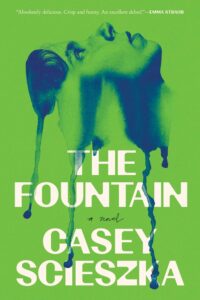
The Fountain by Casey Scieszka is available from Harper, an imprint of HarperCollins Publishers.
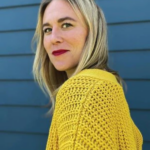
Casey Scieszka
Casey Scieszka is a born and raised Brooklynite who has lived in Beijing, San Francisco, Fez, and Timbuktu where she was a Fulbright Scholar. In 2013 she and her husband, artist Steven Weinberg, moved to the Catskill Mountains and opened the Spruceton Inn: a Catskills Bed & Bar, which runs an annual Artist Residency hosting world-renowned painters, bestselling authors, and Pulitzer Prize and National Book Award finalists.