When Presidents Slowly Fall: What Fiction Gets Right About the 25th Amendment
How to Depose a Mad King (According to the Constitution)
American political fiction has always been fascinated by loud endings. Assassinations. Coups. Riots in the streets. Helicopters lifting off from rooftops. The drama of collapse tends to arrive with spectacle.
Reality, however, prefers paperwork.
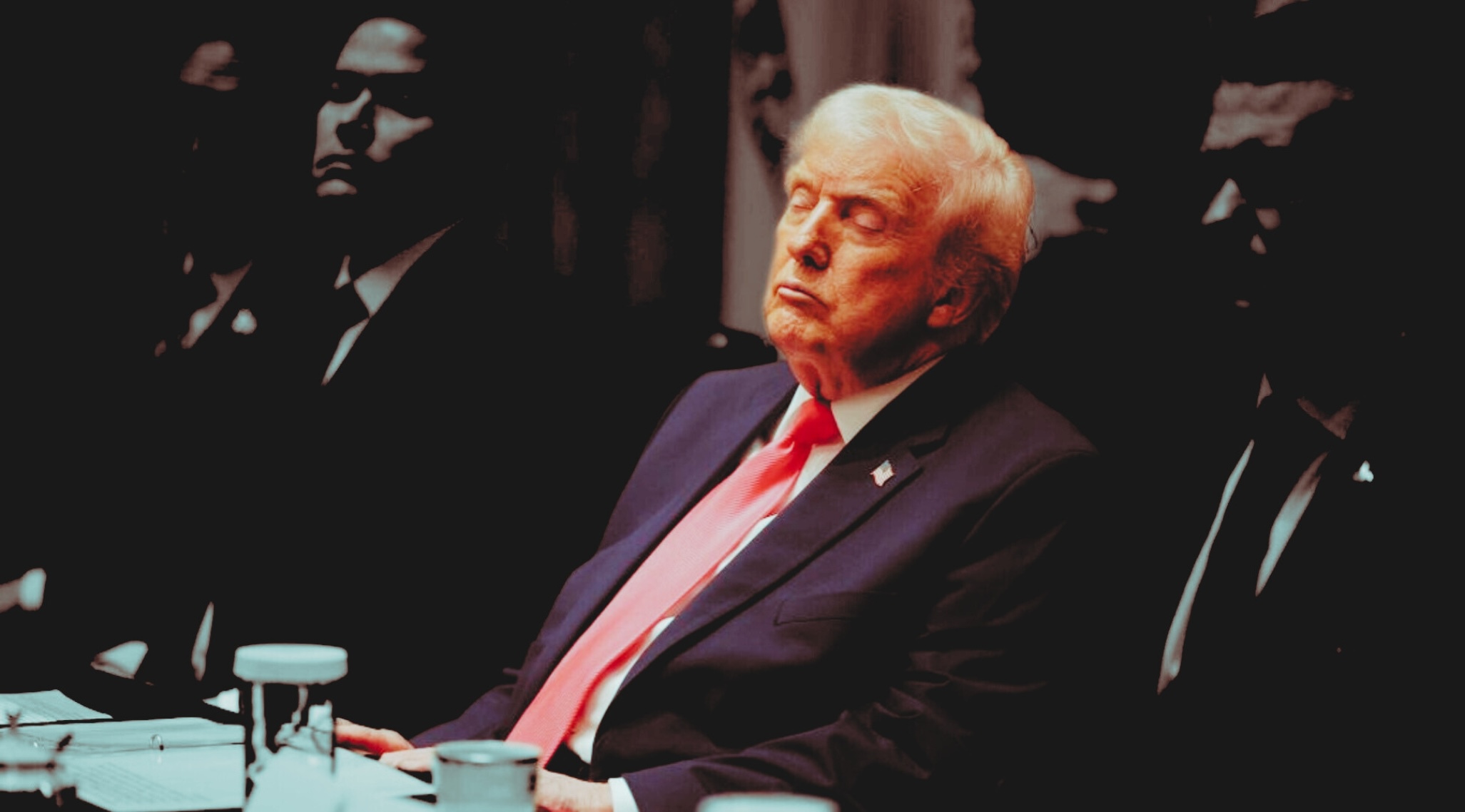
The 25th Amendment is procedural and antiseptic, conducted through letters and cabinet votes rather than crowds. In recent weeks, pundits and armchair constitutionalists alike have revived an old question: what would it look like if a sitting president’s tenure ended not with resignation or impeachment but through invocation of that clause, designed for incapacity rather than criminality, illness rather than scandal, erosion rather than explosion.
Whether current speculation about President Trump ever proves prophetic is almost beside the point. What matters, now and for some time to come, is how alien such a mechanism feels to the public imagination. Novelists, however, have been rehearsing this kind of ending for decades.
One of the most chilling examples appears in Fletcher Knebel’s 1965 political thriller Night of Camp David, a bestseller in its day that slid into cult status and then resurfaced years later whenever anxieties about presidential fitness returned to public life. The novel follows a sitting president whose behavior grows erratic and conspiratorial after a mysterious retreat at the presidential compound. His speeches become incoherent. His suspicions metastasize. Advisors whisper. Doctors worry. Aides debate whether loyalty to the man has curdled into danger to the office.
What made the book so unsettling, and why it is primetime for its rediscovery, is not its sensationalism but its restraint. Knebel does not stage a coup. He stages a process. Cabinet members are canvassed. Legal authority is debated. Political self-preservation clouds moral clarity. The presidency does not collapse in public. It slides sideways into uncertainty while the original occupant remains very much alive, very much defiant, and increasingly isolated.
The tension comes not from mobs but from doubt.
Literature thrives in precisely this space. Novelists understand that the most frightening breakdowns are not theatrical but bureaucratic. A coup announces itself. Incapacity creeps.
The 25th Amendment exists for emergencies that do not arrive with sirens but rather emergencies that manifest as confusion, silence, or (…cough) slow cognitive drift.
In Night of Camp David and similar Cold War-era thrillers, the drama unfolds in conference rooms and medical suites. The president insists on another briefing while physicians exchange glances. Schedules are quietly shortened. Memos circulate with new urgency. The machinery of government keeps running, which only sharpens the horror. The world is still turning, and yet the person at its center may no longer be fully steering.
Public conversation about modern politics tends to skip straight to the/some/any apocalypse. Streaming news imagines chaos in the streets (well, okay, we’ll concede that one). Social media predicts constitutional collapse (erm…). But the Twenty-Fifth Amendment was designed to prevent precisely that kind of rupture. Ratified after the shock of Kennedy’s assassination, it exists for emergencies that do not arrive with sirens but rather emergencies that manifest as confusion, silence, or (…cough) slow cognitive drift. Political fiction understands this almost instinctively.
It also grasps something punditry often misses: the moral ambiguity of the people forced to act. In Knebel’s novel, the figures around the president are not eager executioners. They hesitate. They worry about precedent, about legitimacy, about how history will remember the moment when they signed their names to a document that could unseat the most powerful person in the world. Delay becomes its own danger. Loyalty begins to look like negligence.
This is where literature becomes more useful than prediction markets.
Speculation about contemporary politics flattens individuals into archetypes—strongman, traitor, savior. Fiction complicates them. The cabinet secretary who finally moves forward is exhausted rather than ideological. The chief of staff is torn between devotion to a person and duty to an institution. The vice president rereads constitutional clauses at night, trying to decide whether restraint has turned into cowardice.
These novels remind us that constitutional mechanisms are operated by humans first and institutions second. They also highlight how much presidential authority is performative. In fiction, power begins draining long before any letter is drafted. Advisors stop asking open-ended questions. Briefings become scripted. Decisions are quietly rerouted. When we stop to really think about it, the 25th Amendment merely formalizes a loss of faith that has already occurred.
If a presidency were ever to conclude through such means in the real world, the ending would almost certainly feel anticlimactic to outsiders. No dramatic arrest. No prime-time confession. Just statements about continuity of government, carefully vetted language, markets opening the next morning, planes still landing on schedule.
Readers of political fiction would recognize the scene instantly.
That may be the strangest gift literature offers: not prophecy, but rehearsal. Knebel could not foresee today’s headlines, just as today’s commentators cannot see tomorrow’s outcomes. What novelists can show us is what these moments usually feel like from the inside. Claustrophobic. Legalistic. Heavy with second-guessing. Haunted by the knowledge that history is being written in offices rather than plazas.
In an era when every political development is framed as unprecedented, political fiction whispers something quieter and perhaps more stabilizing: the system was built for muted catastrophes too.
If a presidency were ever to end through the 25th Amendment again, it would not resemble a thriller’s climax. It would resemble its middle chapters—the long stretch where everyone senses the ground shifting yet keeps filing paperwork, keeps drafting memoranda, keeps talking in low voices, hoping the machinery of government proves sturdier than the people temporarily operating it.
Novelists have been writing that chapter for sixty years. It’s just that we have not always noticed.

Aron Solomon
A Pulitzer Prize-nominated writer, Aron Solomon, JD, is the chief strategy officer for Amplify. He has taught entrepreneurship at McGill University and the University of Pennsylvania, and was elected to Fastcase 50, recognizing the top 50 legal innovators in the world. Aron has been featured in Newsweek, Fast Company, Fortune, Forbes, CBS News, CNBC, USA Today, ESPN, Abogados, Today’s Esquire, TechCrunch, The Hill, BuzzFeed, Venture Beat, The Independent, Fortune China, Yahoo!, ABA Journal, Law.com, The Boston Globe, and many other leading publications across the globe.