What We Lose When Our Independent Bookstores Close
Michael Welch on the Closing of Chicago’s Volumes Bookcafe
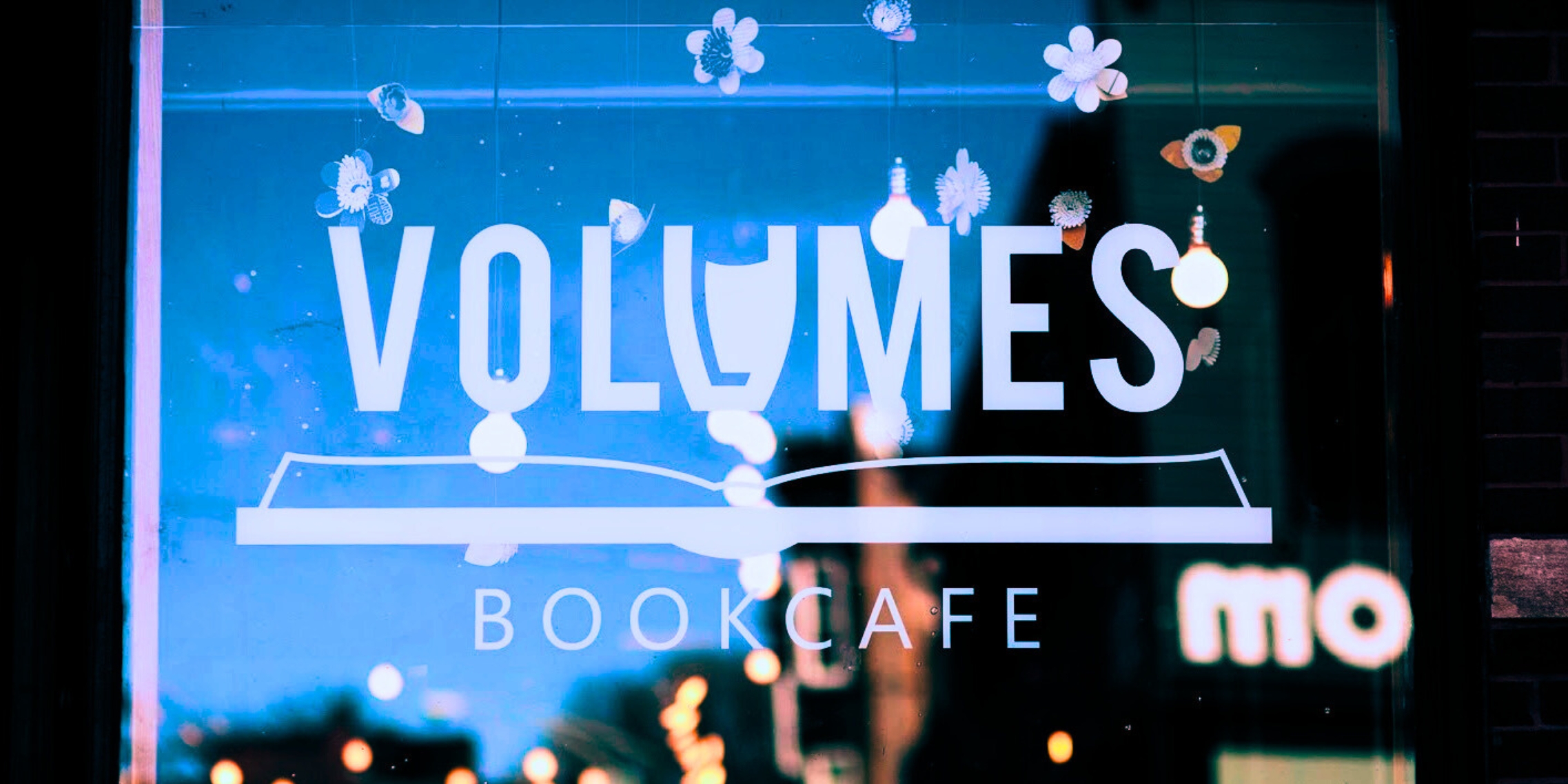
I’m on my way to a reading when I get the call from my mother letting me know that my uncle passed away. The news isn’t unexpected. In the past few months, his worsening condition made a stranger of the man who first taught me how to love reading. 2025 was a year of grief, and the early days of 2026 are no different. But because every proper goodbye needs its rejoinder, it feels only right to sit with the loss in a bookstore, celebrating Volumes Bookcafe at their final event.
It’s an unusually warm January night in Chicago and even hotter inside. The room is packed with seats and people carefully maneuvering through the crowd with their drinks and appetizers. The invite to the Author Farewell Event described it as “a night of stories, poems, toasts, and more,” featuring a long list of Chicago authors Volumes has hosted since the store opened in 2016.
A number of them, including Rebecca Makkai, Megan Stielstra, Julia Fine, and Ben Tanzer, are people I’ve come to call friends after years of readings like this. What you must know about our community—which you’ll quickly learn when you spend enough time in spaces like this—is that Chicago is the most intimate big city in the world. We show up, whether it’s an open mic or a debut author’s launch party or our street corner when ICE agents try to make their rounds. When I step inside tonight and share hugs and hellos, it feels like coming home.
What’s different today, however, is the mood. There’s a heaviness in the room, a balance between mourning and bittersweet joy that everyone’s hesitant to unsettle. When I ask people how their holidays were, many respond with a measured “just fine” before mentioning a wave of the flu in the family, a funeral, or the weight of the world in general. I take my seat next to an older woman and long-time resident of Wicker Park. “I don’t know what I’m going to do without Volumes in the neighborhood,” she says. In the few minutes before the event starts, we trade other independent bookstores we love, but agree that there’s no replacing a place you can walk to. A place run by your neighbor. A place where you’re seen.
*
In the store’s announcement post about their closing on Instagram, authors and readers alike shared paragraphs of heartbreak and stories about how much the bookstore has meant to them. What followed the immediate grief was largely anger. Rebecca and Kimberly George, sisters and owners of Volumes Bookcafe, were clear that their sales had dropped between 20 and 30 percent since Barnes & Noble opened a year ago, just two blocks from their store, causing them to go months without pay and dip into their retirement and savings to keep the business afloat. Many people noted how deep this loss was for Wicker Park and criticized Barnes & Noble for choosing to open in a neighborhood with such a defined independent bookstore culture.
I measure a full-fledged bookstore by its discoveries, its hand-written recommendation note cards, and the checkouts that turn into runaway conversations about what we’re reading and what’s going on in the neighborhood that week.
Chicago is a great literary city, and Wicker Park is pivotal to that reputation and history. First a destination for wealthy Germans and Scandinavians in the post-fire era and then a diverse, working-class neighborhood in the 1930s, Wicker Park was home to artist Henry Darger (author of the 15,000-page novel In the Realms of the Unreal) and Nelson Algren, who wrote about the area across multiple books, including his National Book Award-winning The Man with the Golden Arm.
In the early 1990s, Wicker Park’s art scene exploded. The famous used bookstore Myopic Books and indie and zine champion Quimby’s Bookstore both opened, and Robert Boone launched Young Chicago Authors, where a new generation of poets like Chance the Rapper, Eve L. Ewing, Nate Marshall, Jamila Woods, and more got their start. Volumes Bookcafe was a perfect fit for this community of artists and art-lovers, hosting thousands of readings, panels, and events during its ten-year run.
But gentrification followed. In 2024, Barnes & Noble opened at the busy intersection of Damen, Milwaukee, and North in the historic and opulent Noel State Bank building. Before that, the building had been a viral sensation for housing a Walgreens with a “Vitamin Vault” and original bank lockboxes used as product displays. Before that, it was the community bank for Wicker Park residents, including Nelson Algren.
One of the first speakers on this night is Mary Wisniewski, an award-winning journalist and author of Algren: A Life. Wisniewski talks about finding Algren’s original bank notes during her research. From there, she tells the story of how she visited the Barnes & Noble recently and discovered that there was no Algren on their shelves. When she told the manager and reminded him how important he is to this neighborhood and city, she was given an 800-number to call to recommend a title. “I still haven’t received an answer,” she says.
The crowd laughs and groans along to Wisniewski’s story, but I doubt anyone is surprised. It’s inevitable that corporate bookselling will either miss or ignore some of the intricacies of the community they’re trying to sell to. Today, Barnes & Noble is owned by the private equity firm Elliott Investment Management, so it goes without saying that the chain is committed first and foremost to drive profit. The message is simple: Shelf what sells, and who cares about influence if Algren can’t move enough copies.
Though I’m not oblivious to how capitalism works, I am a deeply sentimental person, and as readers continue to step up to the mic, I’m reminded that we can’t chart the value of an independent bookstore in financials alone. After reading a poem, Julia Fine turns to the George sisters and says “Chicago has a great literary community in general, but there’s something really special about this store and how warm and welcome you have always made us feel as authors, as readers, as just people on the street passing by.” Alison Hammer reads from her debut novel You and Me and Us to close the loop on her launch event at Volumes that had to go virtual in April 2020. Everyone on stage talks about how Volumes is a part of their personal and professional story.
I learned who I wanted to be as a writer and person in independent bookstores. Bookstores were where I went to feel less alone, where I first met the writers I admired.
Every time Rebecca George stands up to introduce the next speaker, I can see how the night is washing over her. She moves between laughter and tears, which at times stop her mid sentence. The crowd, too, is emotional. Sniffles punctuate the silence in the room whenever a speaker hugs the sisters, and when author Christie Tate leads a game of “Guess the famous last line in the book,” the crowd comes alive like the most competitive trivia night you’ve ever seen.
In her opening remarks, Rebecca George references all the milestones they’ve helped celebrate with their customers, including 15 engagements, two weddings, and kids taking their first steps and saying their first words. She points out a couple in attendance who met at the store’s speed dating event and got engaged there last month, and the crowd goes wild.
With every tear turned smile turned sob, it truly feels like a celebration of life.
*
When I returned home to Chicago after years away, I learned who I wanted to be as a writer and person in independent bookstores. Bookstores were where I went to feel less alone, where I first met the writers I admired. Volumes Bookcafe for many years was our home for the Chicago Review of Books Awards, where we honored the year for our literary community and often descended into conversations about how damn proud we are to be Chicagoans.
But one of my favorite memories at Volumes was an event with John Freeman and Stuart Dybek. After Dybek read from a new, unpublished set of poems, he and Freeman looked into the crowd and asked “What are you doing here?” It was Sandra Cisneros, who was in town for the weekend and wanted to say hi. For about ten minutes, the three old friends had an impromptu catch up, as I stared in awe at the two legendary Chicago writers who first taught me how beautiful it is to write about my home.
In an interview with the Daily Mail, Barnes & Noble CEO James Daunt argued that Volumes wasn’t a true bookstore. “We do not have a café in our bookstore and do not run events within it,” he said. “Volumes Bookcafe is not a full-fledged bookstore… it is a café with a very limited selection of books in the rear.”
The comment is both frustrating and inaccurate, but it also raises the question: What constitutes a “full-fledged” bookstore? Is it just the number of books that sit on your shelves? The question is pressing, because next year Barnes & Noble plans to open more locations across Chicago, including downtown just a mile from Exile in Bookville (which has the best curation in a bookstore I’ve ever seen) and in Hyde Park blocks away from the famed Seminary Co-op and the Black woman-owned bookstore Call & Response.
When Rebecca Makkai takes the mic, she notes that Volumes has sold more than 250,000 new books during its tenure, and explains how these books have traveled to every corner of the world and have been shared, discussed, and handed down to future generations. That, she says, is true timelessness.
Instead, I measure a full-fledged bookstore by its discoveries, its hand-written recommendation note cards, and the checkouts that turn into runaway conversations about what we’re reading and what’s going on in the neighborhood that week. I measure the number of book clubs, drag story times, salons, union organizing sessions, whistle kit-making gatherings, and book launches where the author says “I always dreamed of one day seeing my book here.”
What we lose when our independent bookstores close is our community.
Before his reading, Bill Ayers—writer, professor, political activist and co-founder of the Weather Underground, and all-around Chicago icon—addresses the crowd: “We need to support gatherings like this because we need authentic, free spaces where we can meet authentically and exchange ideas and celebrate the freedom to think, the freedom to interrogate the world.”
When the event ends, many people linger. It’s the most Midwestern thing we can possibly do. We idle, chit-chat, and delay the inevitable.
I text my mother that I’ll call her in the morning to discuss my uncle’s funeral plans. I don’t have it in me to talk. I want to sit in my feelings on my drive home, that familiar elated soaring in my chest after a night with my community as well as something new. A lingering, nagging numbness of leaving, of driving further and further north on Lake Shore Drive. So I say it aloud to myself and the lake:
I’m so goddamn tired of goodbyes.

Michael Welch
Michael Welch is the Editor-In-Chief of the Chicago Review of Books. His work won the 2024 Salamander Magazine Fiction Prize among other awards and has appeared in Electric Lit, Los Angeles Review of Books, Scientific American, Prairie Schooner, North American Review, and elsewhere. He is also the editor of the upcoming anthology On An Inland Sea: Writing The Great Lakes, forthcoming from Belt Publishing in March 2026.