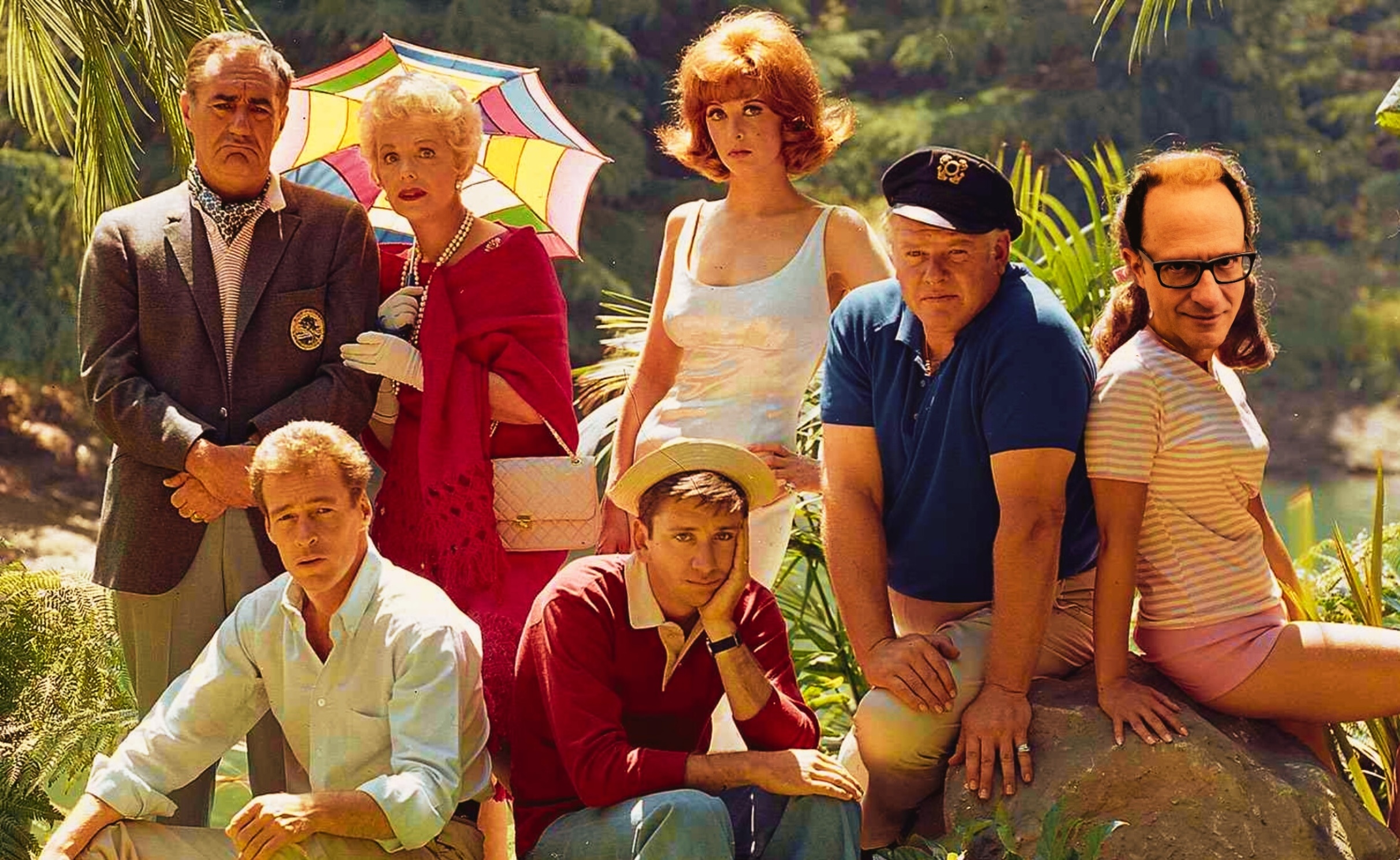
What Wayne Koestenbaum Learned From Gilligan’s Island (And Why He Will Never Finish Reading Marx’s Capital)
The Author of My Lover, the Rabbi Takes the Lit Hub Questionnaire
Wayne Koestenbaum’s new novel, My Lover, the Rabbi, is out now from FSG, so we asked him a few questions about writing, reading, and whatever else was on his mind. As ever, Koestenbaum did not disappoint.
*
Which non-literary piece of culture—film, TV show, painting, song—could you not imagine your life without
From Gilligan’s Island, the TV show, I learned how to be bumbling and small while receiving the protection of an older, bigger man, who nonetheless was exasperated with me and only barely countenanced my presence. I learned the importance of bucket hats, their shapelessness, their lack of command. I learned that professors wore cardigans. I learned that professors were unkempt but desirable. I learned about the existence of Mary Ann, a category.
I’m a Mary Ann, but I also have always wished to be surrounded by Mary Anns. I learned about Mary Ann’s smallness and beauty. I learned about Mary Ann’s adjacency to the starlet Tina Louise. I learned about Tina Louise, which is to say I learned about glamour and being adrift. I learned about breathlessness and candor, about helplessness and secret strength. I learned about saying “Lovey,” I learned about languid fashionplates and exiles. I learned about ensembles—how people not related to each other could form comic support-groups. I learned about isolation. I learned about plot limitations. I learned about predictability and its relation to cuddling. I learned about being rejected by Skipper and about longing for Skipper, even though Skipper wasn’t entirely worth my yearning.
If you weren’t a writer, what would you do instead?
I’d find other outlets for my fantasies. I’d become a lay psychoanalyst. My clients would be artists. I’d open an eccentric wine shop, with poetry readings and striptease parties. I’d become the resident “lounge singer/pianist” at a local club, in an easy-to-please locale, where my Sprechstimme would not offend. I’d start a film studio, like Fassbinder or Warhol, but even more shoestring. I’d become a parfumier, inventing imperishable scents tied to specific scenes in Charlotte Rampling films. I’d become a fashion commentator, working the offbeat galas and showrooms. I’d teach photography to children. I’d start an international book club, via Zoom, with sponsorship from Revlon, but Revlon would have no control of my reading list. I’d start a small press for experimental erotic fiction and poetry. I’d open an art gallery in Marseille. I’d be a TV talk-show host. I’d become an action painter or a drip-painter. I’d screenprint an exit from doldrums and malaise. I’d work in a bookshop. The bookshop would also sell my perfumes.
Name a classic you feel guilty about never having read?
I’ve never read all of Marx’s Capital. I’ve never even tried. Every time I contemplate this task, I reason that capitalism has already overtaken us, late dismal states of capitalism or post-capitalism, and I can’t remedy the damage by reading Capital. I’ve read The Interpretation of Dreams several times, but there is micturation and ejaculation in The Interpretation of Dreams. Is there ejaculation in Capital? Must there be ejaculation in Capital to sustain my interest? There is no ejaculation in Don Quixote, and I finished reading Don Quixote without complaint. There is no ejaculation in Middlemarch, and I’ve read Middlemarch three times. There’s not much micturation in classic literature, except, of course, in the works of the Marquis de Sade.
In Pierre Guyotat’s novels and autobiographical fantasias I am certain that micturation appears, but when I read Guyotat, I’m not focusing on micturation. I’m concentrating on the “beat sheet” and on the syntax. If you join my international book club I will explain to you what a “beat sheet” is and why a “beat sheet” is a useful symbol for literary production. If you join my club I will explain why “literary production” is a practical term for pointing to aspects of reading and writing that make you want to soar into a more utopian form of embodiment. “Embodiment” is doubtless a big part of Marx’s Capital. And maybe micturation makes a cameo appearance.
What is your favorite way to procrastinate when you are meant to be writing?
Many are the methods I employ to avoid writing. Washing dishes. Taking out the garbage. Flossing, even if I’ve already flossed. Scraping my tongue with a tongue-scraper. Doing ten minutes of yoga. Looking online for brightly colored summer shirts from Mr. Turk. Googling junior-high-school classmates I haven’t seen in half a century. Googling my teachers to see if they are alive or dead. I avoid writing by watching interviews with the soprano Anna Moffo on Youtube, such as the 1990 interview she gave on German TV. I watched that interview while avoiding writing this paragraph: she is wearing a red dress that flares out, like a chrysanthemum’s organized and profuse army of petals.
I disobey this edict; I always use my dreams.
I avoid writing by watching interviews with Liza Minnelli on Youtube, such as the brief impromptu interview she gave while in a limo. A stranger outside her vehicle asks her if she still can sing, and she says you bet I can, and the busybody outside the car asks can you still still high notes, and Liza says of course I can sing high notes, and she begins belting “Day-O,” the “banana boat song” made famous by Harry Belafonte. Dozens of times I have watched this short segment of Liza belting “Day-O.” I watch this snippet to learn about resilience and beauty, not merely to avoid writing.
Another video I’ve been recently watching to procrastinate is the interview that Anna Wintour and Chloe Malle gave to Jessica Testa of the New York Times. I repeatedly linger on the moment when Wintour says, “Jessica, to be perfectly clear, Vogue has a very healthy budget.” I don’t have a very healthy budget, but I always strive to be perfectly clear.
What’s the best or worst writing advice you’ve ever received?
A fiction-writing teacher told our undergraduate class not to write about our dreams. Many writing teachers would agree. I disobey this edict; I always use my dreams. Dreams have the power to take me to Anna Wintour’s office, where she is discussing Pierre Guyotat’s early practice of the “beat-sheet.” Dreams take you to Liza Minnelli’s limo, where she is singing “Depuis le jour,” an aria from Charpentier’s opera Louise. Liza is giving voice lessons to Anna Moffo, who recorded “Depuis le jour” in the early 1970s.
In the dream, Moffo rebukes Minnelli for being condescending. That’s when Anna Wintour steps in, to moderate, waving Guyotat’s “beat sheet,” or a facsimile, in the faces of Moffo and Minnelli. The Vogue editor is trying to teaching these two singers the importance of writing directly from your fantasies, and of inscribing these fantasies onto sheets of paper that you tuck into your underwear. But then the dream deviates, and takes me to the set of Gilligan’s Island, where Bob Denver, who originally played the part of Gilligan, has been replaced by a bearded intellectual who looks like Karl Marx combined with Cesar Romero, who played the Joker on the original Batman TV show.
But why, in the dream, is Cesar Romero moving toward me with the alluring ferocity of Anne Francis, the star of Honey West? I want to tell Anne Francis that she and Tina Louise should do a two-woman show in my wine shop, which I’m opening soon in Ridgewood. The shop will double as a cabaret. Then you, dear reader, enter the dream. You start tickling me, and I beg you to stop. The seminar I’m teaching on Marx’s Capital and Eliot’s Middlemarch is scheduled to meet in a half hour, and I haven’t finished reading these mammoth texts. What will I tell my demanding, impatient, easily distracted students, who enrolled in the course because they dreamt it was a seminar on “Day-O,” a whole semester of analysis devoted to the Belafonte/Minnelli intersection, a charmed and fathomless crux?
__________________________________

My Lover, the Rabbi by Wayne Koestenbaum is available from Farrar, Straus and Giroux.

Wayne Koestenbaum
Wayne Koestenbaum is a Distinguished Professor of English, French, and comparative literature at the CUNY Graduate Center. His many books span poetry, essay collections, biography, and fiction; he is also an accomplished playwright and the librettist for the opera adaptation of his book Jackie Under My Skin. The recipient of a Whiting Writers' Award and a Guggenheim Fellowship, he has also been a finalist for a National Book Critics Circle Award. His essays and poems have been published in The New Yorker, The Paris Review, London Review of Books, and many other publications. A widely shown painter, he released his first album of piano and voice in 2017. He lives in New York.