What If There Could Be... Good Art Friends?
A Conversation with Grant Ginder and Lillian Li
What does it mean to be writer friends? Are you coworkers, colleagues, drinking buddies, frenemies, pen pals, or somehow all of the above?
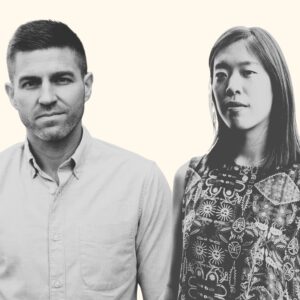
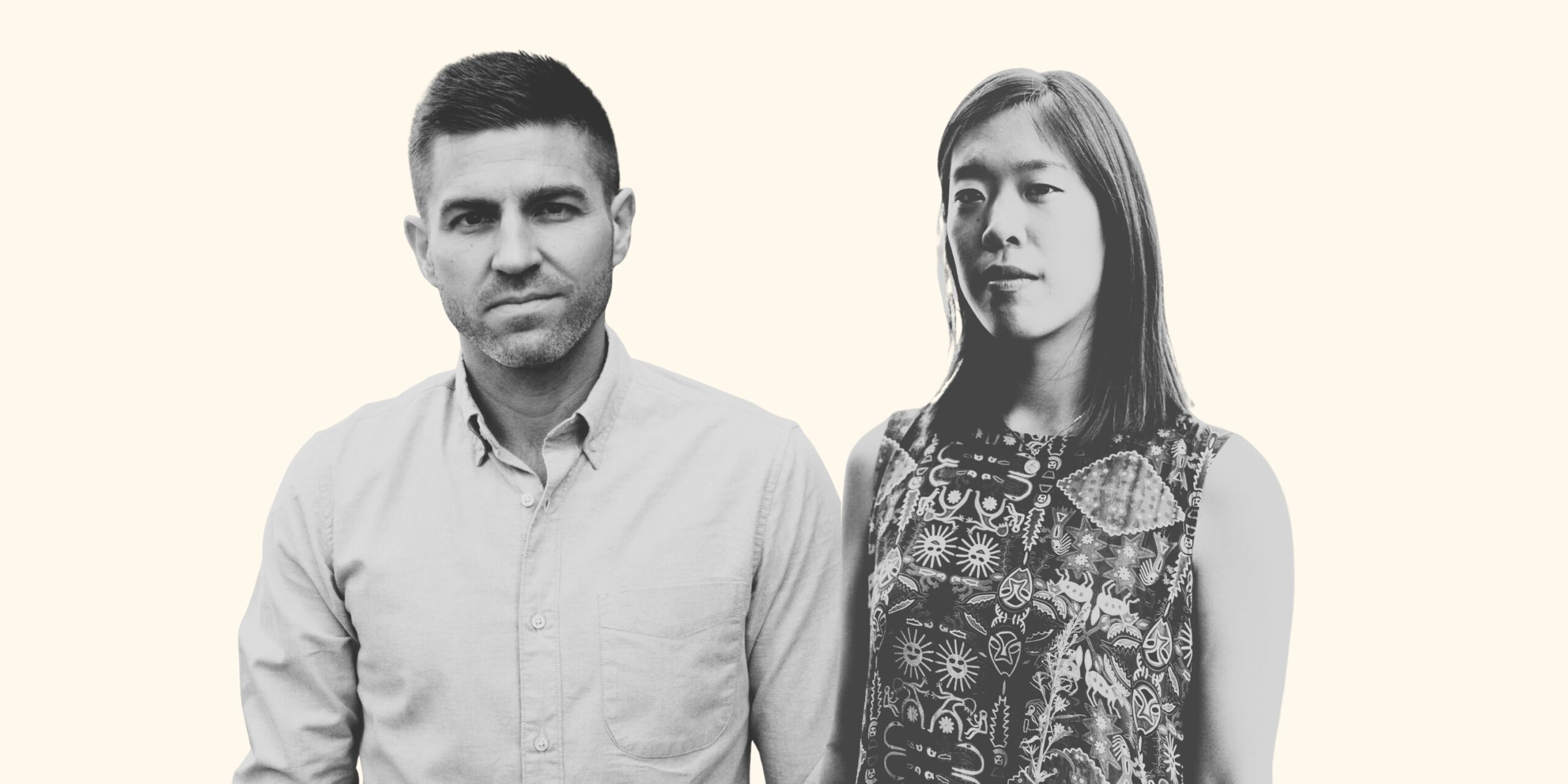
Grant Ginder and Lillian Li met in 2018 at a joint reading in Providence, Rhode Island. Ginder was promoting his third book, and Li her first. Then, by the magic of production schedules, they had their books come out on the same day eight years later. Both books (So Old, So Young and Bad Asians) are about the evolution of a friend group from post-grad to adulthood, and the way we can’t help but compare ourselves to the people we love most. Their conversation is proof that old friends are like a time capsule, at the center of which we find ourselves.
*
Lillian Li: It’s wild that eight years have passed since the last time we overlapped on the book promotion circuit! My husband makes fun of me for calling people my “writer friends,” but I feel like it deserves a special category. Our work is so isolated 99% of the time, and then suddenly we have to promote our books, which is basically asking a bunch of maladjusted personality types to become extroverted salespeople. It can make you feel totally lost at sea.
All to say that when we first met at that Rhode Island reading—I was promoting my first book; you were promoting your third—I felt like you were my life raft. And eight years later, at that trade show where we were paired up for a “speed dating” event that required us to pitch our books for over an hour…seeing your name next to mine was honestly the only thing that made me feel like I could do the event and even enjoy it.
Like your amazing book So Old, So Young—where we follow your six friends across five parties and get a brief but intimate look into how their lives have changed in the intervening years—I was surprised by how deep we were able to get in the few hours we had to reunite.
And in terms of what drew me to writing about friendship itself, in many ways I think the relationships we have with our long-time friends end up being more complicated than the relationships we have with our romantic partners.
What is it about stressful parties that get people to bond so quickly? And what drew you to writing about friendships over time, versus any other type of relationship?
Grant Ginder: Has it actually been eight years since we first overlapped on the book promotion circuit? That’s insane, because it feels like yesterday that I was listening to you read from Number One Chinese Restaurant in Rhode Island (which is a state that I will forever associate with listening to you read from Number One Chinese Restaurant), and basically an hour ago that we were doing that speed-dating-with-booksellers thing in Indianapolis! You’re right that the moments that we’ve spent together made us bond in a crazy-fast way—and I couldn’t be happier about that. And as you point out, parties are like that, too: they act as shared experiences that, the more you talk about them, the more they become mythologized (sort of like our speed dating in Indianapolis!).
I think that’s what drew me to them as a setting for So Old, So Young—the larger-than-life role that they plan in the narratives of friend groups. And in terms of what drew me to writing about friendship itself, in many ways I think the relationships we have with our long-time friends end up being more complicated than the relationships we have with our romantic partners. These are people who have known so many different versions of us, and who have had to tolerate us (or not) as we move between those versions.
With Bad Asians you expertly hit on a lot of these themes too—specifically what happens when the foundations of those friendships start to crumble under the weight of external expectations (friend break-ups: OOF). What’s fascinating to me is that we’re roughly the same age, and we both seem hyper drawn to these kinds of relationships. What is it about Millennials and friendship, Lillian!? As a generation, is it, like, the only thing we have left to believe in?
LL: You’re so right that it feels like our generation has centered friendship in a way that previous ones didn’t (although the show Friends was created by Baby Boomers), and also I feel like this time that we’re in has been undoing a lot of the beliefs we used to hold around friendship, such as friends being a secondary relationship, after spouses and family. I wonder if we’re flocking to friends because we’ve become disillusioned with relying on our lovers and family to fulfill us. There are all these articles of women buying houses together after their husbands die, or friends going in on a plot of land in Italy. But I feel like there’s an inevitable idealization of friendship that these stories create, as if friendships aren’t just as messy (and sometimes more so) than romantic or familial relationships.
I just learned about an acquaintance who tried to live with friends—they bought a mansion together and all moved in with their families—only to find out one of their friends had a secret gun! And they found out because that friend pulled the gun on a visitor! That’s obviously a sensational story, but it’s one that highlights how any time we open ourselves up to other people, there are risks and rewards.
We may even be less prepared to deal with these friend problems because there’s not a lot of guidance or conversation out there. Like where’s the therapist I can go to when my friend and I are in conflict? So often, we end up relying on our other friends to help mediate, which opens a whole other can of worms. I loved in your book how you showed the delicate ecosystem of the friend group, and how as soon as one person is unwilling to play their part in smoothing over a conflict, the entire group falls to pieces.
I wanted to show how small unintentional slights and misunderstandings could grow into unspoken resentments, particularly as the friends’ lives and priorities shifted.
How did you figure out the dynamics of your friend group, and more importantly, how did you decide what would be their kill switch?
GG: Excuse me? A gun? I’m going to have to keep this story in mind when my husband (once again) says that he wants to buy a plot of land upstate and build a small commune on it where we can live with all of (you guessed it!) our friends. And yes! It’s so tricky to mediate problems with friends through other friends because then those friends start talking about problems they have with you and it’s like…oh, shit.
In terms of So Old, So Young, I wanted to show how small unintentional slights and misunderstandings could grow into unspoken resentments, particularly as the friends’ lives and priorities shifted. To that end, I knew that the kill switch couldn’t (and shouldn’t) be something big and dramatic, because most of the time in real life it never is. Rather, it’s something small—lying about why you can’t go to dinner, for example—that’s allowed to fester and metastasize into a cancer that accounts for every other wrong that has ever been perpetrated in the friendship.
One thing that I love about Bad Asians is that it plays with all the stuff we’ve been talking about here—friendship, family and systems failing us, long simmering resentments—in the context of the early days of social media, YouTube, and internet virality. Without giving too much away, the characters in your novel find themselves in the unenviable position of being Internet Famous. What made you want to explore that? And what role do you see social media playing in how we construct (and deconstruct) our friendships?
LL: That’s such a good point about how it’s often a small pebble that upsets an entire mountain of resentments! And then when you retell the story to other people, you have to be like, ‘Okay so it’s not just that they did X, it’s that they ALWAYS do X, even when five years ago…’ By the end, you’re just the meme of Charlie Day surrounded by red string.
Maybe that’s why friendship breakups are so hard to talk about, and also feel like such an indictment of one’s character because it’s rarely just one thing you or they did, and it becomes about an intrinsic personality “flaw” instead.
The Internet fame that my characters are forced into also revolves around this idea of being reduced to the worst version of yourself. Basically, they end up in a viral video before viral videos were even a thing. And because no one had any idea at the time of how permanent and public the Internet really was, my characters are totally unguarded on camera because they cannot conceptualize anyone being interested in watching them. So imagine the venting sessions you have about your friends being recorded and watched by millions of strangers, and you’ll get a sense of why this was a particularly terrible way to be known on the Internet.
Jealousy, as with all emotions, is rarely one-note, and I think that jealousy can be felt and conveyed lovingly.
I wanted to capture this time of innocence, as well as the way we evolved to be savvier and more calculated about how we’re perceived online, because I think it mirrors our own journeys into adulthood. That’s also what’s so captivating to me about childhood friendships because these are the people who saw the totally unmasked version of you, in some senses the “real” you.
You also touch on this idea of how people change, but also don’t change, as they grow older, and how the friends growing up alongside you can become a way to measure your own growth (or lack thereof). I love the way you capture how these friends inevitably compare themselves to one another because it felt so true to life—do you think friendships are inherently competitive?
GG: Can you imagine what you would have done if you were in your characters’ position in 2008, back when—as you said—we didn’t really have any idea about how permanent and public the Internet really is? Because you’re right—the Internet (and social media in particular, I think) does reduce us down to the worst versions of ourselves; while it promised to do the opposite. The Internet was supposed to be an incredibly expansive tool for expression and connection and instead it’s turned us into a bunch of tropes and cringey memes.
And when it comes to competition, I think the Internet and social media have made things a million times worse, especially when it comes to friends. To your point, no matter how hard we try I think it’s natural and inevitable that we compare ourselves to the people around us, particularly as we get older. We look at other people’s jobs, their houses, their partners, their kids, and we think “okay, where do I stack up?” I’m not saying it’s healthy, only that it’s natural. My characters do it in So Old, So Young; yours do too in Bad Asians. The reductive power of the Internet has put those comparisons under a magnifying glass, and have made them inescapable: you can’t open up Instagram without seeing someone’s fabulous vacation. And even though we know it’s all a façade—that we’re only getting the Greatest Hits of someone’s life—the incessant nature of it tricks you into believing everyone is somehow doing it better than you.
All of which I guess leads me to a question that I’ve been wrestling with myself and would love your thoughts on: What is fiction’s role, if any, in helping us to confront the current hellscape that our characters, but also us are living in?
LL: I have blocked people on Instagram for this very reason because I can get so jealous sometimes it feels like my skin is burning. There’s an amazing Alexander Chee line in his book Edinburgh: “Envy is like, the skin you’re in burns. And the salve is someone else’s skin.”
And this gets into your excellent question that should also be the topic of someone’s creative writing PhD, but my best stab at it is that the moment I read Chee’s line, it was like instant burn relief, and a decade later, it continues to soothe me. Not because it’s a solution to the feeling, but because it is such a perfect articulation of it. Having the words to describe these difficult, complicated, and downright petty parts of the human experience can release the hold they have on us. I think about how stigma is wrapped in silence, that what is unspeakable becomes synonymous with what is shameful. But sometimes there’s nothing shameful about an experience; we just don’t have the words. Once we do, the shame lifts, and we can even connect with other people also experiencing the same thing through this new language.
I think fiction can also examine these feelings from every angle. Jealousy, as with all emotions, is rarely one-note, and I think that jealousy can be felt and conveyed lovingly. I remember being in the MFA when one of our classmates got a story in the New Yorker, and we were all talking about it very politely, like, ‘Oh, how exciting for them! I can’t wait to read it.’ And then one of our classmates comes into the conversation and hears the news, and the first thing he says is, ‘God, I’m so jealous!’ By the way, this guy has a wonderful Southern accent, so imagine that when you’re reading that line again.
As soon as he said it, it was like Spartacus. We were all declaring how jealous we were! It felt like the best compliment we could have given this writer. In acknowledging how badly we all wanted to get into the New Yorker, we were also recognizing what an enormous accomplishment this writer had achieved.
GG: That Chee line is incredible, and for the exact reason that you articulated: it puts into words an uncomfortable, private feeling that I’m convinced every single one of us has felt. And I think that you’re spot-on about that being one of the primary functions of fiction—it is able to transform into language all of the messy, petty, glorious dysfunction that makes us human. It’s why when I hear readers complaining about unlikable characters I want to shake them and tell them to look in the closest mirror. What would happen if they transcribed all their most intimate thoughts onto a page? I suspect they wouldn’t be wholly likeable either.
BUT, I also suspect they wouldn’t be wholly unlikeable! Because as you point out. no emotion—and no person, for that matter—is ever one note; we contain multitudes, and etc. That’s why I love the story of your MFA classmate proclaiming his jealousy in his wonderful Southern drawl and the rest of you erupting into a cathartic volcano of writerly envy! Because envy is painful, but it’s also human, and to allow ourselves to feel it means we’re allowing ourselves to be connected to everyone who has ever felt envy before.

Lillian Li
Lillian Li is the author of Number One Chinese Restaurant, which was long-listed for the Women’s Prize for Fiction and the Center for Fiction First Novel Prize. Her work has been featured in The New York Times, Granta, and Travel + Leisure. She is from the DC metro area and lives in Ann Arbor, Michigan.