What Happens When You Show Your Parents Your Debut Novel?
Mary Berman on Letting Herself Be Vulnerable While Conquering Her Greatest Fear
I gave my book to my partner before I gave it to my parents, figuring it was better to conquer one gut-churning fear at a time. I refused to watch him read it, but I was aware when he reached the scene where the protagonist meets a figure sculptor with a buzz cut. “It’s not you,” I said quickly, with hauteur and also panic.
“What? I know it’s not me. It’s a novel.”
I relaxed very slightly. After all, most of the character’s details do not match my partner’s real life. For example, he does not live in a shack in the woods like a hermit. But then he reached the scene where my protagonist visits her apartment in West Philadelphia and said, “Is this my apartment?”
“…Yeah.”
I felt that I had done my loved ones a disservice. And worst of all, I also felt that I had done it in service of The Work, and if I had the choice, I would do it over again.
My partner flipped dubiously back to the first chapter, the one with the mother’s injured knee. (My own mother has a bad knee.) “Does your mom know this is in here?”
“It’s not about her,” I insisted. “Or you. My real mom doesn’t have dementia. My real dad isn’t dead. My mom’s not old.”
My partner very generously did not say, Methinks the lady doth protest too much.
Meanwhile I was warming to my topic. “And my parents don’t treat me like that. They don’t treat each other like that.”
“I know. I’m just saying. You might want to warn them. Obviously this sculptor character isn’t me, and the mom and dad aren’t them…but reading these details feels kind of weird. You might want to give them a heads up.”
*
Here was my fear, specifically:
I was not really afraid that my parents would read the book and think it was literally them. I was afraid, rather, that they would worry that other people—various family friends, cousins, aunts—would make that mistake. That they would feel I had slandered them in a public forum. That, as a consequence, they would stop speaking to me.
I was also afraid I would deserve it.
I felt that I had done my loved ones a disservice. And worst of all, I also felt that I had done it in service of The Work, and if I had the choice, I would do it over again.
*
I don’t know if I can convey how terrified I was of showing the book to my parents. I felt like I was cracking my ribcage open and handing them my bloody, squishy heart. And I was convinced they would turn away from it in disgust, because literally who would not do that when handed a squishball leaking blood.
On the day that I decided to give them the book, I was scheduled to spend the full day with them. We would eat breakfast in my childhood kitchen, and my mother and I would go to Wegmans and to Mass, and then I’d watch a movie with my dad on the L-shaped sofa with a dent where the cat liked to sit.
I wrestled through breakfast, the books burning a hole in my backpack. I tried to act normal as my mother drove us to Wegmans. But back at the house, walking down the driveway to unload groceries from the car, I texted my partner with rocks in my chest: I don’t think I can do it.
Then I had a full-body flashback to being seven years old, crouched on the high-diving board at the pool. I had climbed the ten-foot ladder and inched to the end of the board and looked down at the flat green water and stopped. I stayed frozen so long that the lifeguard yelled at me to come down. I backed away. My dad, on the deck, shouted, “Aw, come on!” I crawled all the way back to the top of the ladder, and I watched as the kid at the bottom stepped aside to let me down, and then I bolted to the end of the board and jumped.
I walked back to the top of my parents’ driveway and took the books out of my backpack and said, “I have something for you.”
*
I made them read the acknowledgements first. I wanted them to know I had thanked them before anyone else.
I told them, over and over, as they read the acknowledgements and kvelled, that I hated doing this, that it was actually—and I had deeply considered this—the most vulnerable I had ever felt in my life, that if they did hate me after reading the book—and they were entitled to!—to please be kind to me, because handing out something I had written felt like pushing needles into the pincushion of my skin. They hugged me. My mother opened the book to the first line—“In January I looked at my mother and thought, ‘Someone should kill her,’”—and then to a random line in the middle—“‘I know, Mommy,’ I say. ‘I’m sorry.’” She laughed, delighted.
I told her, half-joking, “When you read this book, just remember: I know, Mommy! I’m sorry!”
*
My partner was right. The book did make my mother feel weird. She told me so. She read it very slowly for the first week or two. She had to keep putting it down.
Everything I was afraid they would say to me, everything I had convinced myself they would feel, the ways I was certain I would destroy the relationships that had always kept me alive—none of it had ever been true.
But when I said to her, “I feel like a criminal. The book isn’t about you, or Dad, or Morgan, but I feel like I stole from you to write it,” she replied, “You’re not a criminal, and you didn’t steal. You’re writing how you perceived these things. It’s your own experience, not anyone else’s.”
This was so thoroughly what I had wanted her to say to me that I had not even been able to imagine her saying it.
And as time passed—as my parents read more and more of the book, and continued not to disown me—I realized that I had made it all up. Everything I was afraid they would say to me, everything I had convinced myself they would feel, the ways I was certain I would destroy the relationships that had always kept me alive—none of it had ever been true.
The author Heather Havrilesky has said:
The more you want something, the more punishing your mind will be about it. That’s why, when it comes to things you really love and care deeply about, you have to be exceedingly kind and gentle with yourself every time you approach that task or challenge. Engaging with what you love will make you feel energized and less alone, but you have to dare to return to it regularly in spite of your huge fears and doubts.
All my life, since the age of three, I had wanted to publish a book. And now that I had achieved it—had actually dug my little claws into what I wanted most—my mind had found a way to punish me for it, to convince me that it was a bad thing. It wasn’t.
I also learned, in the end, to be vulnerable with the people I love. To trust that even in my moments of shame and horror, they will love me back enough to see me clearly. And I learned that they—like my protagonist’s family!—will always love me, no matter what.
I just hope I can remember that when I write the next one.
______________________________
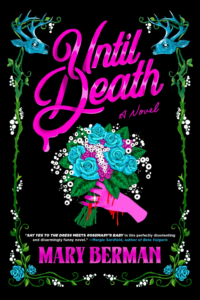
Until Death by Mary Berman is available from Little, Brown and Company, an imprint of Hachette Book Group.
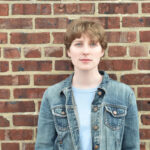
Mary Berman
Mary Berman is a Philadelphia-based writer. She earned her MFA in creative writing from the University of Mississippi, where she was a Graduate Excellence Fellow, and she also holds a BA in writing seminars from Johns Hopkins University. Her short works have been published in Cicada, PseudoPod, Fireside Magazine, and elsewhere. Until Death is her debut novel.