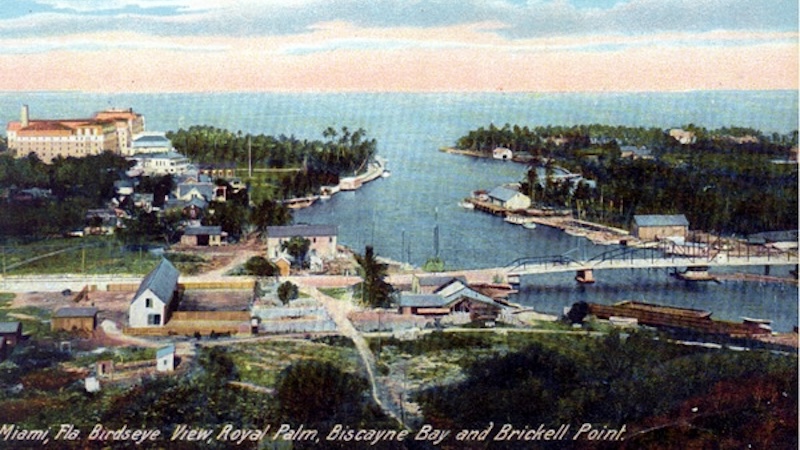
Chelsea Rathburn on the Unexpected Beauty of the “Research Dead-End”
What Failed Poetry Can Teach Us
This first appeared in Lit Hub’s Craft of Writing newsletter—sign up here.
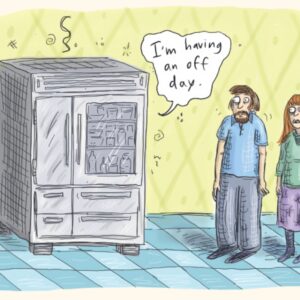
Earlier this summer, our geriatric air conditioner stopped working, bringing an abrupt end to a few years of never-quite-cold-enough temperatures and bafflingly-high electric bills. Our HVAC guy broke the bad news: the system required a total replacement, plus re-insulation of our attic, plus ductwork for an addition that had inexplicably never been connected to the central AC. That ductwork needed a way to travel from our crawl space to the attic, which is how I found myself dragging coats, boxes, and bags from the hall closet into the guest room and sorting through papers I hadn’t seen since the pandemic.
Buried under old bills and lesson plans were the earliest notes for the project that would eventually become my fourth poetry collection. Called Broken Houses, the book broadly considers the house as both physical structure and metaphor, source of both shelter and anxiety. Like many Americans, I grew up always worried about money, afraid my family was one calamity away from “losing the house.” And like an unfortunate number of Americans, we did lose our house—or at least most of its contents—though the cause was a natural versus financial disaster in the form of a category 5 hurricane. Writing the collection was a way for me to make sense of my own relationship to home, money, and social class while telling larger stories of erasure and dispossession.
As I flipped through the pages of early research and possible poem subjects and titles, I was surprised to find little about houses and everything about the making of my hometown. While many of the poems in Broken Houses are set in Miami, where my father and I both grew up, the book’s earliest conception was explicitly about the settlement of the city. The legal pads and sticky notes I found were circa-2019 relics from the project when it was titled Magic Cities. I had wanted to play on the nickname bestowed upon Miami by early promoters as well as call to the magical realms of childhood, and I envisioned poems that would use the language of historical documents and advertisements to explore the gap between Miami’s poorest and most affluent citizens. (If you think this sounds a bit like language for a tenure file or a grant application, you’re not wrong, but these were ideas that genuinely interested me.)
There was just one problem: the poems weren’t cooperating. The more I dove into the writings of Florida naturalist Charles Torrey Simpson or the exact filming locations of Miami Vice, the more I studied the Miami Memoirs of early mayor John Sewell or the ads in the East Coast Homeseeker, a newspaper published by Henry Flagler’s railroad to promote real estate development, the more my notebooks expanded and my folder of finished drafts stayed the same, that is, close to empty.
Meanwhile, whenever I traveled to South Florida to see my parents, I visited the sites of early settlements, making observations and even more lists along the way.
“I’m on the guided tour through the hammock of Charles Deering’s estate, and the naturalist is telling us about ‘tourist trees’—the ones whose barks peel like sunburned visitors—the script of every South Florida tour,” one notebook page reads, “and the group is getting smaller and smaller as people realize the trail is long and the mosquitoes are biting even in January.” Also: “berries that relieve constipation, berries that relieve diarrhea.”
Elsewhere I write, “I’m trying to imagine what this looked like when my family arrived here—”
That sentence is the thread connecting the two iterations of the project. My family. Both books—the one I initially planned and the one I actually wrote—grew out of my discovery as an adult that my paternal ancestors numbered among Miami’s early pioneers. In a city that was endlessly reinventing itself, I had always felt transient and disconnected. It was surprising to learn that my father’s people were buried in the historic city cemetery alongside men whose names became the names of schools and parks. More puzzling, my great-great-grandfather was the first superintendent of the streets and a member of Miami’s 1906 city council, yet two generations later, his descendants were living in trailer parks and robbing banks. I wanted to understand what had gone wrong in his family, and I thought that looking at the city writ large was the way to do so.
I like to tell my students that our failed poems teach us to write the ones that we see through to their final drafts.
Looking at those early notes, I’m embarrassed to admit how many hours I spent researching the Florida pineapple industry and the dredge, which appear all over the notebooks and nowhere in the actual book, but I eventually admitted that the project was at a standstill. I worried that centering the book on Miami’s settlement would be retelling the “official” (that is, white) version of the city’s history, and I worried that, having moved away with no prospects of moving back, I didn’t have the right to tell any version of the history, official or unofficial.
What would happen, I wondered, if I stopped looking at those pioneers and politicians and looked instead at the disenfranchised, at the people left out of my own family history? What if I admitted to myself that my claims on middle class respectability were tenuous at best, and inside me was the scared little girl terrified of losing the roof above her head?
Instead of trawling through public archives, I returned to private ones, starting with a family history book my grandmother had compiled for her children. It contained lies, contradictions, and omissions, particularly about her brief first marriage and my father’s placement in family services. After finding my father’s entry in the 1950 Census, I identified the location of the California foster home where he spent several years as a child and the identities of the couple who took him in. That small story gave me a research avenue in which I had an emotional rather than an intellectual stake.
Over time, I expanded my conception of the book to include threats to home (natural disasters, neglect, pest infestations, ghosts) as well as the possibilities for upward mobility that real estate represented for my parents, who used to take me trespassing through homes under construction. Broken Houses took shape, and with enough time, I managed to push those awkward, years-long false starts out of my mind altogether until the night I sat sweating on the guest room floor, putting papers and notes in piles.
I like to tell my students that our failed poems teach us to write the ones that we see through to their final drafts. Facing the gap between my sketches and what I delivered showed me that I sometimes practice what I teach. Looking at those messy, abandoned legal pads, I realized that while I was looking at the notes for a very different book, it was one that engaged with archives, history and art in similar ways to the finished collection, just with different archives, different histories and different works of art. It’s as if in those notebooks I provided myself a blueprint for the book’s process rather than its content.
Joan Didion writes in “On Keeping a Notebook” that “we are well advised to keep on nodding terms with the people we used to be, whether we find them attractive company or not.” My mistake wasn’t in pursuing all of those seeming research dead-ends, but in thinking of them as dead-ends, shoving the notebooks into a cluttered closet when the building materials should have had a prominent place on my bookshelf.
In a final cosmic joke, our HVAC installer arrived the next morning and asked to look in our kitchen pantry. He’d been rethinking the ductwork and decided that the hall closet was too far away from the ceiling where the new AC vent needed to go.
____________________________________
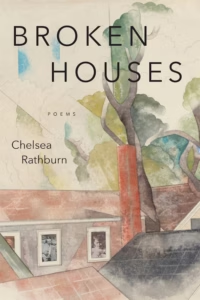
Broken Houses by Chelsea Rathburn is available via Louisiana State University Press.
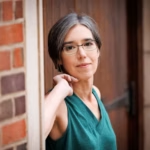
Chelsea Rathburn
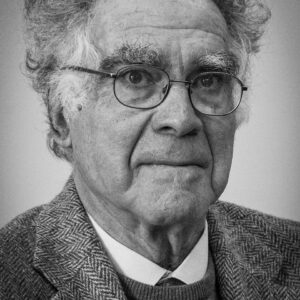
Chelsea Rathburn is the author of four poetry collections, most recently Broken Houses and Still Life with Mother and Knife. Raised in Miami, she now lives in Macon, Georgia, and teaches at Mercer University. Since 2019, she has served as the Poet Laureate of Georgia.