What Does Beatlemania Have to Teach Us About Pop Culture Today?
Samira Ahmed (US) and Samira Ahmed (UK) Discuss the British Samira’s New Book on A Hard Day’s Night
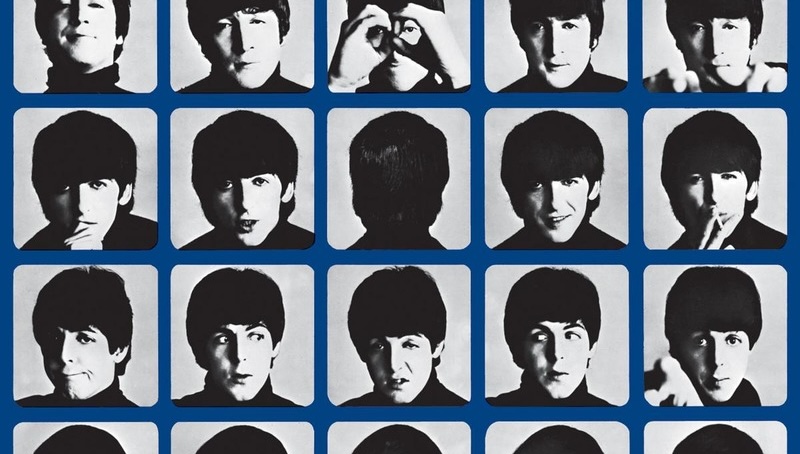
This conversation between two authors who happen to share the same name: BBC and Channel 4 broadcaster Samira Ahmed, whose A Hard Day’s Night in Bloomsbury’s BFI Film Classics series just released this month in the US/Canada, and Little, Brown’s bestselling author Samira Ahmed. They spoke about books and pop culture, The Beatles, and more.
*
Samira Ahmed, US: Your brilliant A Hard Days Night that examines the impact of the Beatles’ effervescent first film. Can you talk a little about what compelled you to write this book with this specific focus?
Samira Ahmed, UK: My head has been full of the Beatles since I was 11 and discovered them through their films, which my big brother taped off BBC TV in 1979 onto our Betamax video. In 2023 I discovered the earliest complete concert recording of the band made by a student at a private boys’ boarding school—Stowe—in 1963. And the way I told the story on my Radio 4 show Front Row of that concert—its mix of class politics, social change, and the role of TV and audio technology—really connected with listeners, who weren’t necessarily Beatles fans. Who isn’t fascinated by the 60s?
So I thought this film deserves that kind of all-round viewing. Once you start looking you see there are black and Asian teenagers in the audience, the adult women around the Beatles capture how fast women’s careers and freedoms are developing. How the film makes Britain look like the most exciting place to be in the world. Plus how delightful to realize that the film was created by immigrants—mainly American born director Richard Lester. So all these ideas are fizzing through the book.
Great artists still want to make the best work they can and with luck it connects with the human soul and lives long after its business imperative is forgotten.
Of course America has its own unique relationship with the Fab Four. And like me, you were far too young to have ever known them before they broke up. So I wondered what your experiences of pop idols was, and how far as a writer of YA fiction, you feel the same energies run through young fans today?
SA, US: The Beatles were big in my household, too! I would often catch my mom humming a Beatles songs while cooking. Of course, it wasn’t until I was older that I understood how the power of pop culture was evidenced in that small moment, how “And I Love Her,” (one of my mom’s faves from Hard Day’s Night) travelled from England to India and found its way to my childhood kitchen in Batavia, Illinois in the 1970s, to this mirror moment with you.
It’s interesting to think about pop culture as a Gen Xer—we lived before the age of social media (a blessing, truly) and in the time when monocultural events wielded more power in the zeitgeist than they do now. I was one of the new wave (another British invasion!) and alternative rock kids so with the advent of MTV it felt like an incredible time to be alive. The subversive edge to a lot of that music bled into the rise of the Brat Pack/teen movies and their soundtracks that defined so much of youth culture at that time—Modern English was on the Valley Girl soundtrack, the Psychedelic Furs inspired the John Hughes screenplay for Pretty in Pink with their song of the same name. And, I’ll go ahead and confess that between War and the Unforgettable Fire, I developed a hard crush on Bono—yes, there were U2 posters on my bedroom walls.
Art is singular, a creation of the artist, their history, the time they’re living in, a collection of choices, one leading to the next.
As a young adult writer, I’ve had the privilege of meeting so many of my Gen Z readers whether during school visits or on book tours and I’m amazed by their cultural awareness and also their nostalgia for a time they never lived in—but in a way, that is also why you and I listen to the Beatles now even though we are too young (far too young!) to remember them.
SA, UK: My mum’s favorite Beatle was Ringo and my paternal Grandmother’s was Paul; I love the idea of this sweet elderly widow from Hyderabad who didn’t speak English having a favorite Beatle. And I am so delighted to think of the impact the Beatles had in introducing Western audiences to Indian culture. Knowing the Beatles loved Ravi Shankar made me appreciate my parents’ culture more than I might have, growing up in Britain, where children of immigrants are often so desperate to fit in. But at least Britain had a historic connection to India, which made it easier. What was it like for you growing up in the US? I feel it’s a subject you explore so beautifully in your books.
SA, US: My mom’s favorite Beatle was Paul, though she did note that George seemed to have the closest connection to India. I can’t tell you how many times I heard about the Beatles learning to play sitar!
We were the first Indian family to move to our small town—my parents were interviewed for the newspaper, which completely blows my mind. In the 70s and 80s especially, there was a very strong push in America to assimilate. Urdu was my first language and when I started nursery school (age 3) in Batavia, I would write my name with English letters but from right to left like Urdu script. My teacher thought it was a learning disability until my mom explained to her that I was mixing my two languages and that it would likely resolve itself. Of course, the school strongly suggested to my parents that we only speak English in the home so I could “catch up” with my peers. There was no sense of the benefit of speaking multiple languages. Of course, some of that shifted in the 90s and early aughts, but with America’s swing to the far right, we’re seeing another horrifying wave of xenophobia and a populist fear (stoked by politicians) of non-English language speakers and any element of culture deemed to be “subversive” or “anti-American” or “pornographic.”
In some ways, it seems quite similar to those political anxieties you mention regarding teen fandoms of the 60s. I’m fascinated by the idea that fandom could be used as a force to divert teens from social activism.
I think it’s always important to interrogate the liminal space between art and commerce. In your research and your work, how have you seen that relationship change. I mean, A Hard Day’s Night was produced to make money and to help sell an album, so how did it maintain the purity that we sometimes associate with the Beatles? Is it the same as, say, Taylor Swift putting out a movie of her Eras tour?
SA, UK: It’s one of the fascinating things I learned researching AHDN—the fact that as you say, it was a far better film than it needed to be. But isn’t that true of so much art? It’s commissioned for a patron—whether it’s the Borgias or the Pope or United Artists but great artists still want to make the best work they can and with luck it connects with the human soul and lives long after its business imperative is forgotten. That’s a powerful thought.
The biggest issue is control. The Beatles have still never got total control of their song copyrights. Taylor Swift has been through her own battles to regain control of her mastertapes, but ultimately triumphed. That’s thrilling and I think it’s great to see more artists do that. The principal of the Brit School, who taught Olivia Dean and Adele—tells all budding musicians not to give their work away for free. And their success shows there is a way to still thrive. It may be harder but it’s still possible.
SA, UK: How is it for writers in the US? With all we’re learning through court cases about how AI companies are ruthlessly feeding copyright material into their large language models it feels like there’s a real backlash and a choice to be made about saying no or being swept along on a tide of AI slop.
SA, US: In so many ways, AHDN was ahead of its time, wasn’t it? It captured a kind of effervescence that opened doors for other musicians and artists. Art is singular, a creation of the artist, their history, the time they’re living in, a collection of choices, one leading to the next. One of the things I love most about writing is that every story is a conversation with the reader. That’s why the Beatles can still speak to us today—in a dialogue that is new again with every listener, songs that reach through time and remind us that we are not alone, that the butterfly-inducing feelings of first crushes are real, that nostalgia and regret are part of the human condition, that sadness and joy and longing and giddiness in love and curiosity connect us and give meaning to our wild and precious lives. There’s no AI, no algorithm that can ever do that.
SA, UK: We cover stories about AI and artists/creatives every week on Front Row it feels. Baroness Beeban Kidron—film director and Member of the House of Lords—led an outstanding campaign to try to get politicians to understand why they needed to enforce regulation rather than allow big tech companies to grab everything for free. Sir Paul McCartney was among the figureheads of that campaign. I love that these established names understand what’s at stake and continue to fight for fairness. But it’s a really worrying time. I do take a lot of comfort in seeing how so many Gen Zs are embracing analogue and non-internet tech: reading physical books, texting on non-smart phones, playing vinyl records, choosing to seek out real world experiences away from screens. They were brought up within the bubble of the internet and they want out. As you say, it’s the real emotional joy of falling in love with a band like the Beatles and their music, their personalities, that no AI will ever be able to replace.
*
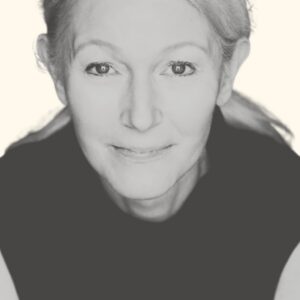
Samira Ahmed—the British one—is an award-winning journalist and broadcaster. She presents the BBC’s flagship culture show Front Row on Radio 4 and Newswatch on BBC1, and co-hosts the vintage television podcast Through The Square Window. In 2023 Samira made headlines round the world when she uncovered the earliest complete concert recording by the Beatles in the UK—at Stowe School in 1963. A Hard Day’s Night (BFI British Film Classics) is her first book.
Samira Ahmed—the American one—is the bestselling and award-winning author of numerous titles for young people including, Love Hate & Other Filters, Internment, Hollow Fires, This Book Won’t Burn and The Singular Life of Aria Patel, as well as a Ms. Marvel comic book mini-series and the upcoming novel-in-verse, It Begins with the End. Her poetry, essays, and short stories have appeared in various publications and anthologies including the New York Times, Take the Mic, Color Outside the Lines, Vampires Never Get Old and A Universe of Wishes. Samira serves on the national board of Authors Against Book Bans. And when she’s not writing, reading, or fighting censorship, you can find her on her quest for the perfect pastry.

Samira Ahmed and Samira Ahmed
Samira Ahmed—the British one—is an award-winning journalist and broadcaster. She presents the BBC’s flagship culture show Front Row on Radio 4 and Newswatch on BBC1, and co-hosts the vintage television podcast Through The Square Window. In 2023 Samira made headlines round the world when she uncovered the earliest complete concert recording by the Beatles in the UK—at Stowe School in 1963. A Hard Day’s Night (BFI British Film Classics) is her first book.
Samira Ahmed—the American one—is the bestselling and award-winning author of numerous titles for young people including, Love Hate & Other Filters, Internment, Hollow Fires, This Book Won’t Burn and The Singular Life of Aria Patel, as well as a Ms. Marvel comic book mini-series and the upcoming novel-in-verse, It Begins with the End. Her poetry, essays, and short stories have appeared in various publications and anthologies including the New York Times, Take the Mic, Color Outside the Lines, Vampires Never Get Old and A Universe of Wishes. Samira serves on the national board of Authors Against Book Bans. And when she’s not writing, reading, or fighting censorship, you can find her on her quest for the perfect pastry.