Trailblazer or Panderer? Inside the Life and Career of Black Comedian Stepin Fetchit
Geoff Bennett on the Evolving Role of Black Comedy in Hollywood
They gathered downtown at the Civic Club in lower Manhattan—bright, ambitious, and determined to chart a new course for Black art and identity. Among them were Jean Toomer, Langston Hughes, Countee Cullen, and Alain Locke, all emerging as literary lions poised to reshape American letters. The invitation came from sociologist Charles S. Johnson, the Urban League’s national director of research and investigations and editor of its influential magazine, Opportunity. That evening in March 1924 would come to be known as the spark that lit the Harlem Renaissance.
On the heels of World War I, this group of thinkers felt that they could use the arts and literature as tools to fight American racism by depicting more complete, more progressive portraits of Black life than the stereotypical Sambos, Mammies, and Uncle Toms.
Locke wrote an influential book entitled The New Negro in which he argued that Blacks had moved far beyond Mammy and Sambo as they flocked to the cities of the North and Midwest and became more sophisticated and urbane. However, most of white America had little interest in this emerging artistic movement in Harlem. America was still feasting on the simplistic, offensive characterizations of Black life shown in minstrel joke books and, for the better educated, magazines like Judge and College Humor.
*
While Black writers and artists looked to Harlem as a source of optimism and inspiration, whites saw Harlem and other centers of urban Black life as alluring quarters for their more licentious desires. “They rushed to see and hear African-American musicians, mimicked black dances, and glorified black style while, in private, they retained their disdainful view of Negroes,” Watkins writes. “Even as they violently suppressed black efforts to advance in education and employment, and exercise their lawful rights, whites turned to the black community as a model for their rebellion against puritanical rural values.”
In his lazy buffoon character, Fetchit would reflect the Black community’s long-standing struggle with Black participation in Hollywood and the intoxicating power and destructiveness of Black imagery in film.
As the Roaring Twenties roared on, speakeasies and nightclubs popped up across Lenox Avenue and Seventh Avenue in Harlem—many of them owned by mobsters and, despite their location in the heart of Black New York, all of them exclusively reserved for whites, except for the service staff and the performers onstage.
As noted by Watkins, “These clubs generally indulged the white stereotype of blacks as natural primitives.”
While the nation continued to search for ways to amuse itself, American popular entertainment was subsumed by two inventions that changed everything: talking films and radio. For Black performers, it was a struggle trying to break into these new spaces. Initially, efforts to put Blacks on-screen were aided by the claims of Black filmmaker and promoter Bill Foster, who said that Black voices were “recorded with better fidelity than white” and were a better fit than whites for sound pictures. That notion circulated throughout the film industry, aided by the discovery that the voices of many of the white silent film stars were too weak for talking pictures.
Ironically, Hollywood responded by producing a rash of films featuring whites in blackface—most famously Al Jolson in 1927’s The Jazz Singer, the film credited with launching the sound era. There were many all-Black musical shorts and feature productions; two of the most noteworthy were the full-length 1929 films Hallelujah! and Hearts in Dixie. While Hearts in Dixie was filled with the typical nonsense such as dancing pickaninnies, the movie did introduce a performer who would become one of the most famous and ultimately controversial Black comedians in the country: Stepin Fetchit.
In his lazy buffoon character, Fetchit would reflect the Black community’s long-standing struggle with Black participation in Hollywood and the intoxicating power and destructiveness of Black imagery in film. This struggle really commenced with D. W. Griffith’s groundbreaking 1915 Birth of a Nation, which mesmerized the country with its glorification of the Ku Klux Klan and devastatingly offensive portrayal of Blacks. So powerful was the film that it led to violence and rioting in dozens of cities across the country, resulting in hundreds of deaths.
Hollywood had no interest in presenting balanced portrayals of Black life. The Black characters that appeared on-screen closely resembled the clownish stereotypes popularized by the minstrels. If they wanted to continue working, Black performers had no choice but to play the role. Their frustration is apparent in a letter Langston Hughes wrote to fellow Harlem Renaissance writer Arna Bontemps, complaining about the seductiveness of Hollywood. Hughes had been asked to write for trite Hollywood productions like Sol Lesser’s 1939 film Way Down South.
“The bad things I do are the only things that ever make me any money,” he writes. “Never take a Hollywood job.”
“Hollywood is our bête noir,” Hughes would later write. “It is America’s (and the world’s) most popular art….Yet, shamelessly and to all the world since its inception, Hollywood has spread in exaggerated form every ugly and ridiculous stereotype of the deep South’s conception of Negro character.”
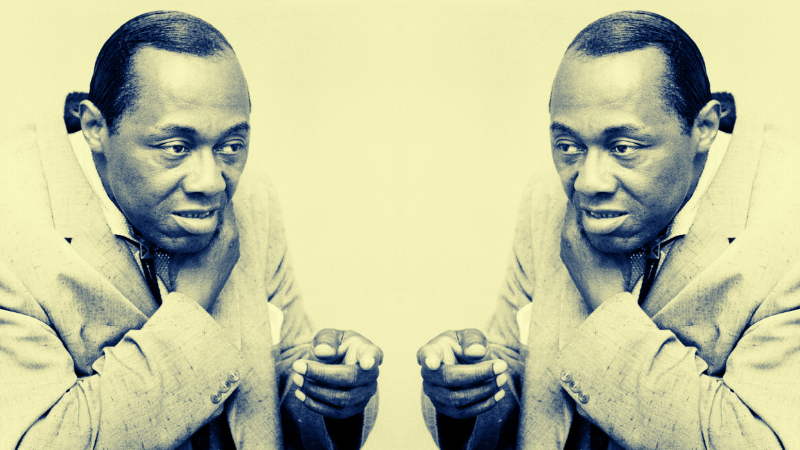
Born Lincoln Theodore Monroe Andrew Perry (his father launched his comic career by naming him after four US presidents) in Key West, Florida, on May 30, 1902, Stepin Fetchit was the nation’s first Black movie star. Fetchit perfected the act of the slow-witted, slowfooted, lazy coon so well that his name became synonymous with embarrassing Black stereotypes. He actually dubbed himself “the Laziest Man in the World,” bringing to the screen intact the coon caricature he had already honed onstage.
“On stage, he would come shuffling out, scratching his head, looking for all the world as if he were utterly confused and lost,” Watkins writes in On the Real Side. “Mouth agape, eyes half closed, shoulders slumped, he would embark on his practically incoherent monologue—usually in a whining monotone that had little meaning beyond the visual impression of confusion it conveyed. Then, suddenly, he would begin a controlled dance routine that amazed his audience; as he danced, his facial expressions changed subtly, the half-closed lids lifting, the eyes widening momentarily to reveal the spark of enthusiasm and arrogance that his simpleton mask concealed. Without this contrast, Fetchit frequently moved beyond that thin line that separates the humorous from the pathetic. On the screen, the contrast was often absent.”
What distinguished Fetchit from many of his contemporaries was his gift for self-promotion. He encouraged the myth that he couldn’t read or write to enhance his coon image—and also cleverly to discourage directors from giving him an actual script, leaving him much more control over what his characters said in the films. He played up his absentmindedness and indolence, dropping items in the gossip columns and newsclips that furthered the image—helped by the publicity machine at Fox Pictures. His slow-footed gait was so indelible that people questioned whether he was even capable of breaking into a run.
Commentators noted that shoeshine boys and busboys began to imitate Fetchit’s notorious walk in the real-world streets. News reports gleefully described his six houses, his sixteen Chinese servants, his lavish parties, his $2,000 cashmere suits, and his twelve cars—one of which was a champagne-pink Cadillac with his name splashed across the side in neon lights. These antics made him even more famous, though they obviously put a target on his back, as they embarrassed many middle-class Blacks.
Fetchit made his first major screen appearance in the 1929 film Hearts in Dixie, the first full-length, all-Black movie produced in Hollywood. Playing alongside Clarence Muse, who portrays a tenant farmer, Fetchit was cast as the clichéd buffoon, lazy and happy-go-lucky. His performance stood out from the hardworking fieldhands around him because of his clever wordplay and his impressive dance moves.
Fetchit benefitted greatly from the period in Hollywood that Donald Bogle called the “Age of the Negro Servant.” Bogle links the predominance of servants on-screen in the 1930s to the Great Depression.
“In the movies, as in the streets, it was a time when the only people without job worries were the maids, the butlers, the bootblacks, the bus boys, the elevator men, the cooks, and the custodians,” Bogle writes in Toms, Coons, Mulattoes, Mammies, & Bucks. “The Black servants of the Hollywood films of the 1930s met the demands of their times….As they delivered their wisecracks or acted the fool, the servants were a marvelous relief from the harsh financial realities of the day….They were always ready to lend a helping hand when times were tough.”
Nobody was better positioned to take advantage of this Hollywood obsession with servants than Fetchit, whose characterizations exuded “servant” with every fiber of his being. He was the best known and most successful Black actor working in Hollywood in the early 1930s, appearing in forty-four films between 1927 and 1939. He was the first Black actor to earn a million dollars. Special scenes were often written into movies just for him.
The tension between highbrow and lowbrow comedy, and what is deemed acceptable by image-conscious Black middle-class audiences, continues to ignite fierce debate—nearly a century after Stepin Fetchit first appeared on-screen.
As the 1930s progressed, Fetchit’s appearances in films like 1934’s Stand Up and Cheer, with Shirley Temple, became predictable and embarrassing for all who watched. By the late ’30s, both movie audiences and studio execs weren’t much interested in Fetchit. Black people had grown so disturbed by his characters that they publicly voiced their protests over his work. As a result, his influence inside Fox Studio waned considerably, particularly after Will Rogers died in a plane crash in 1935. Walter White, executive secretary of the NAACP, lobbied the film studios in 1942 to stop portraying Blacks in demeaning, stereotypical roles, specifically citing Fetchit.
But Fetchit fought back. Trying to save his career, he attacked civil rights leaders for attacking him. “Me and the civil rights movement don’t get along,” he said during a radio interview, going on to accuse civil rights leaders of having “un-American interests.” Bizarrely, Fetchit reappeared in the mid-1960s as part of Muhammad Ali’s entourage. But any chance of a comeback was shut down when CBS broadcast a program in July 1968 as part of its Of Black America series that focused on the harm Fetchit had done to the image of African Americans.
Fetchit filed a lawsuit against CBS three years later, stating that the program “pretended to relieve racial tension through education and understanding by slurring an entire generation of Negro Americans as inept” and seeking $3 million for malice, invasion of privacy, and defamation of character.
“It was Step who elevated the Negro to the dignity of a Hollywood star,” he claimed. “I made the Negro a first-class citizen all over the world…somebody it was all right to associate with. I opened all the theaters.”
His lawsuit didn’t go anywhere. After a couple of film appearances in the 1970s, Fetchit suffered a debilitating stroke in 1976; he died in 1985.
In his review of Mel Watkins’s 2005 biography Stepin Fetchit: The Life and Times of Lincoln Perry, critic Armond White posed provocative questions that still resonate for Black artists today—questions about the boundaries and responsibilities of Black art. The tension between highbrow and lowbrow comedy, and what is deemed acceptable by image-conscious Black middle-class audiences, continues to ignite fierce debate—nearly a century after Stepin Fetchit first appeared on-screen.
“Given the contemporary success of black performers and innumerable hip-hop artists who flirt with shameless, disreputable images, Stepin Fetchit’s legacy—from popular figure to pariah—takes on new importance,” White wrote. “Should African-American performers be accountable to political correctness? To what degree should they worry that their antics shape the self-image of young African-Americans? Should they follow any standard other than their own conscience? Should they have a conscience?”
Watkins contends that Fetchit’s career was a “microcosm” of the Black experience in America during the first half of the twentieth century—giving white people a handy way of delineating the American Dream by offering a group who served as its opposite, thus giving form to the dream. As long as you were doing better than Blacks, the dream remained a possibility for you.
__________________________________
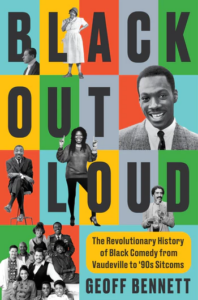
From Black Out Loud: The Revolutionary History of Black Comedy from Vaudeville to ’90s Sitcoms by Geoff Bennett. Copyright © 2026. Available from Harper, an imprint of HarperCollins Publishers.

Geoff Bennett
Geoff Bennett is the co-anchor and co-managing editor of PBS NewsHour and serves as a contributor to NBC News. A Peabody Award-winning journalist, he has reported on national politics at the highest levels—covering the White House and six presidential election cycles—while conducting exclusive interviews with cultural icons, world leaders, and groundbreaking artists. His work bridges politics and culture, offering clear-eyed insight into the forces that shape American life. He lives in the Washington, DC, area with his wife and their son.