This Week in Literary History: Voltaire Returns to Paris from Exile and 300 People Come to Visit
A Legend Comes Home
This first appeared in Lit Hub’s Literary History newsletter—sign up here.
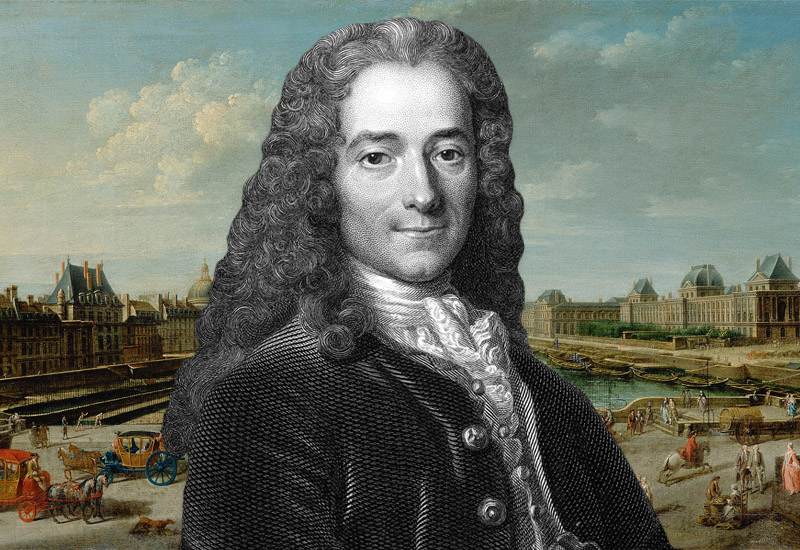
On February 10, 1778, the prolific writer and philosopher Voltaire, born Francois-Marie Arouet, returned to Paris after 28 years of exile.
Voltaire was famous for his satirical poetry and witty criticisms of the Catholic Church and the French government, not to mention his commitment to the values of freedom of expression and basic civil liberties. (He wrote plays, novels, essays, and other nonfiction in addition to his poetry; if you are of a certain age you probably read Candide in school.)
For obvious reasons, his writing often put him on the wrong side of the authorities, landing him in prison multiple times, including in 1717, when he was arrested for publishing La Henriade, a poem that suggested the French regent was having an incestuous relationship with his daughter. Voltaire spent eleven months in the Bastille, and it wouldn’t be the last time. By 1734, under fire for his scandalous Lettres Philosophiques—which celebrated the British monarchy as more tolerant than the French—he was forced to flee Paris to the countryside, where he lived for years with his mistress, the Marquise du Châtelet, until her death in 1749. In 1750, he abandoned France for Berlin, before settling in Geneva in 1755.
In February 1778, the 83-year-old Voltaire finally returned to Paris, the city where he’d been born, to see the opening of his play Irène. The day after his return, he was swarmed with over 300 fawning visitors, with even more to come in the following days, including Benjamin Franklin, who brought his grandson to see the great writer.
Voltaire died only a few months later, in May 1778. As the story goes, when a priest attending his deathbed urged him, in his final moments, to renounce Satan, Voltaire quipped, “Now is not the time for making new enemies.”