







This Week in Literary History: Sinclair Lewis Wins the Nobel Prize in Literature
The First Writer from the United States to Do So
This first appeared in Lit Hub’s Literary History newsletter—sign up here.
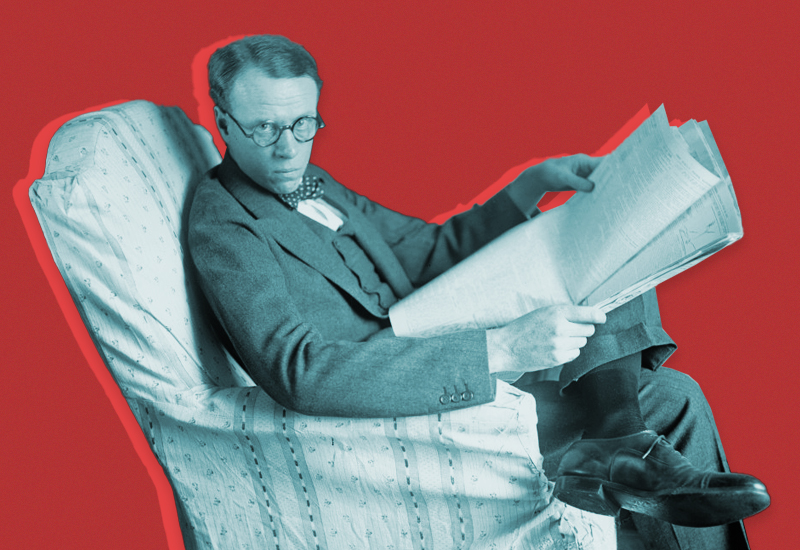
On November 5, 1930, Sinclair Lewis was awarded the Nobel Prize in Literature “for his vigorous and graphic art of description and for his ability to create, with wit and humor, new types of characters.”
Lewis, the first person from the United States to win, used his Nobel Prize lecture to criticize the lack of American literary infrastructure, or as he put it, to be “a little impolite regarding certain institutions and persons of my own greatly beloved land.”
“In America,” he went on, “most of us—not readers alone but even writers—are still afraid of any literature which is not a glorification of everything American, a glorification of our faults as well as our virtues.
To be not only a best seller in America but to be really beloved, a novelist must assert that all American men are tall, handsome, rich, honest, and powerful at golf; that all country towns are filled with neighbors who do nothing from day to day save go about being kind to one another; that although American girls may be wild, they change always into perfect wives and mothers; and that, geographically, America is composed solely of New York, which is inhabited entirely by millionaires; of the West, which keeps unchanged all the boisterous heroism of 1870; and of the South, where everyone lives on a plantation perpetually glossy with moonlight and scented with magnolias.
He expressed his admiration for many of his fellow American writers: Theodore Drieser, who “more than any other man, marching alone, usually unappreciated, often hated, has cleared the trail from Victorian and Howellsian timidity and gentility in American fiction to honesty and boldness and passion of life”; Eugene O’Neill, who “has done nothing much in American drama save to transform it utterly, in ten or twelve years, from a false world of neat and competent trickery to a world of splendor and fear and greatness”; as well as Willa Cather, Henry Mencken, Sherwood Anderson, Upton Sinclair, and Ernest Hemingway (who would indeed win the Nobel 24 years later), among others, all of whom, he said, might have won the prize instead of himself, and about which all of whom the American critics would have their complaints.
But Lewis explained that the American writer was “oppressed … by the feeling that what he creates does not matter, that he is expected by his readers to be only a decorator or a clown,” a fact made worse by the lack of institutional support, and decried “the divorce in America of intellectual life from all authentic standards of importance and reality.” Sounds familiar!
Still, in the end, he professed that he had, “for the future of American literature, every hope and every eager belief. We are coming out, I believe, of the stuffiness of safe, sane, and incredibly dull provincialism.” Again, Lewis cited Hemingway, along with Thomas Wolfe, John Dos Passos, and William Faulkner, among others, who sought, he said, to bring to America “a literature worthy of her vastness.” Well, we’re still working on it.