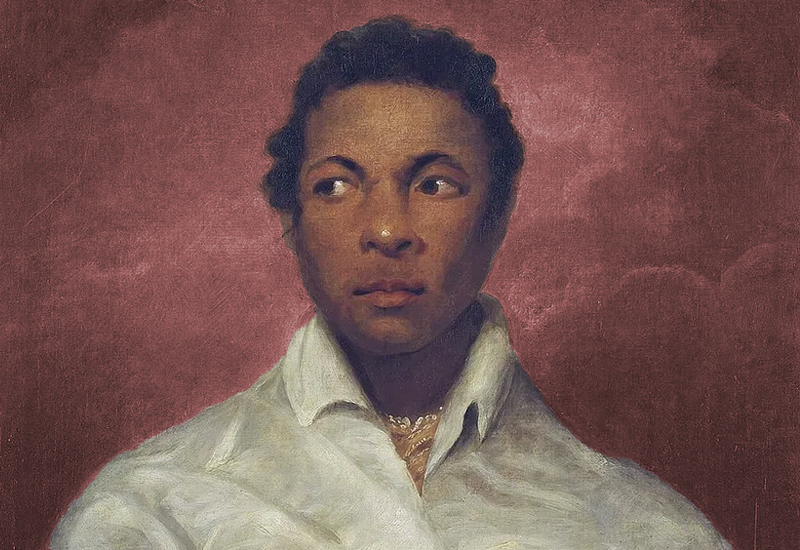
This Week in Literary History: Ira Aldridge Debuts as Othello on the London Stage
A Literary Trailblazer
This first appeared in Lit Hub’s Literary History newsletter—sign up here.
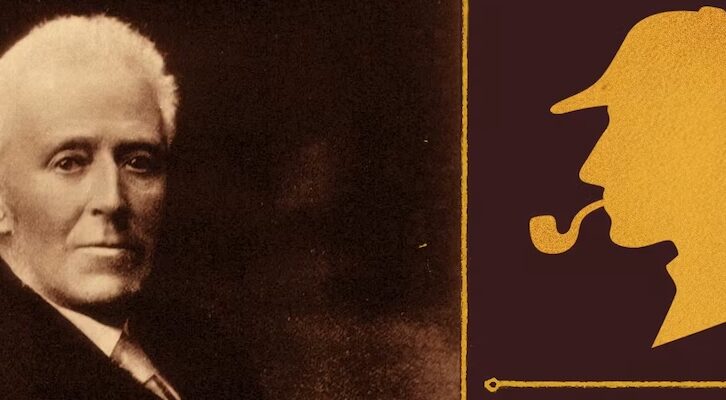
When Ira Aldridge was a teenager, he fell in love with the theatre. But he was a Black kid born in Manhattan in 1807, which meant that his options were limited. He began his career as part of the African Grove Theatre, the country’s first all-Black theatre company, but its productions were, predictably, mocked, harassed, and attacked by angry white detractors. Aldridge himself wound up in fistfights in the streets.
Happily, Aldridge found an alternative: he made his way to England, and in May 1825, when he was just 17 years old, he debuted as Othello in at the Royalty Theatre, “a low-profile establishment in the East End,” making him one of the first professional Black actors to play a Shakespeare character on a London stage. Reviews were mixed, writes Alex Ross. “A critic chided this ‘Gentleman of Colour lately arrived from America’ for his unreliable delivery of the text, but concluded that ‘his death was certainly one of the finest physical representations of bodily anguish we ever witnessed.’”
That fall, Aldridge performed at the Royal Coburg Theatre—a step up—as Oroonoko in an adaptation of Aphra Behn’s novel. After that, Aldridge began appearing regularly, using his difference to fuel his fame—he took on the name “The African Tragedian” and claimed to be descended from Senegalese royalty—but frequently undermining the racist expectations of his audiences, who “left with a chastened appreciation of black virtuosity,” as the scholar Bernth Lindfors put it.
But in 1833, the celebrated British actor Edmund Kean collapsed on stage at Covent Garden, where he was playing Othello, and died soon after. Aldridge was offered the role for the rest of its run, but the press immediately undertook a racist smear campaign against him. “The Figaro in London launched a breathtakingly vile campaign,” writes Ross, “promising to inflict on Aldridge ‘such a chastisement as must drive him from the stage he has dishonoured, and force him to find in the capacity of footman or street-sweeper, that level for which his colour appears to have rendered him peculiarly qualified.’” He only appeared twice in the role before the show was closed.
Loathed by the London press, Aldridge went on tour, where his career blossomed—“in Ireland, among other places, he became a full-on star, his popularity only heightened by stories of Londoners’ disdain,” Ross writes. He played Macbeth, Shylock, and Lear, and accumulated fame, acclaim, and wealth for his efforts. When he finally returned to London in the early 1860s, he bought himself a house in an affluent suburb (on Hamlet Road) and became a naturalized citizen in 1863. He was planning a triumphant return tour in America when he died, in 1867, but remains a legend on both sides of the Atlantic.