This Week in Literary History: Hugo Grotius Escapes Prison in a Book Chest
Perks of Being a Reader
This first appeared in Lit Hub’s Literary History newsletter—sign up here.
The Dutch philosopher, poet, and playwright Hugo Grotius—also known as Hugo de Groot—is now considered one of the fathers of international law, but (shortly) before that, he was a child prodigy. He entered Leiden University at eleven, was awarded a law degree at fifteen, and published his first book—a scholarly examination of the writer Martianus Capella—at sixteen. At eighteen, he was appointed the official historiographer of Holland. Suffice it to say, the man always liked books.
But as a humanist, he eventually found himself on the wrong side of a religious and political dispute within the church, and on August 29, 1618, the orthodox Calvinists made their move. Grotius was arrested, and subsequently sentenced to life imprisonment in Loevestein Castle, in Gelderland.
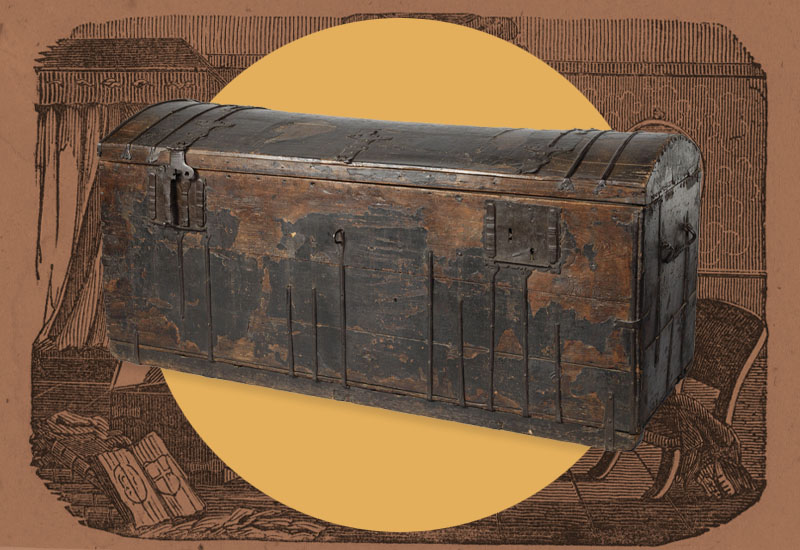
There, naturally, he spent his time reading. New books were delivered to him periodically in a large chest, sent by his wife, Maria van Reigersberch. Each time a new shipment arrived, the guards would check the chest, to make sure that there were only books within. But they never found any contraband, only boring old books, and after a while, they got a bit lazy. They stopped checking quite so often. So on March 22, 1621, following his wife’s instructions, Grotius managed to smuggle himself out of Loevestein Castle in the book chest, masquerading as, well, a box full of books. He escaped to Paris, where his family was eventually allowed to join him, and continued his work—most notably writing his most famous work, De jure belli ac pacis (On the Law of War and Peace).
These days, book chest in question is either held at the Rijksmuseum in Amsterdam or the Museum Prinsenhof in Delft, or at Loevestein Castle itself, depending on who you ask.