It was decent of Rothman to bring me an extra blanket and down pillow. You’ll be happy to know that I am as comfortable as one can be away from their own bed. The hospice is small and modest, run by a group of French nuns, built in 1827 as a respite for weary pilgrims on their way to Jerusalem. I can see them disembarking from a ship named the Belle Nazarene at the Jaffa port. Fierce sunlight bleaching the stones of the old city, blinding the passengers as porters in white kaffiyehs and djellabas stack their portmanteaus on donkey carts. Whenever I look at the garden, I imagine those God-fearing folk who traveled more than a thousand miles by sea to reach the holy land, sitting in the shade of a banyan tree, nibbling on brioche and oranges before their journey to the sacred city, where they will walk through the Via Dolorosa in the footsteps of Jesus, then march outside the gates to Golgotha and stand in the place where he was crucified.
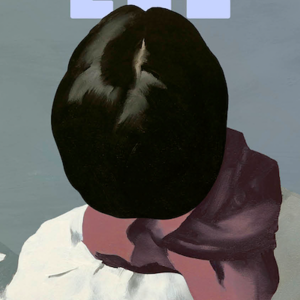
The Sisters wear black floor-length habits and veils that smell of lilacs and ammonia cleaner. Framed in wimples, they look like daisies, but when they’re in the dim corridors, their heads appear to float off their necks. They rarely smile, and when they speak, it’s often in a reverent whisper, as though God is walking alongside them, listening to their every word. I have to lean in to hear them or ask them to repeat themselves, which annoys them, I think, though they don’t show it except in the slight pursing of their lips. Still, Rothman was right to insist on bringing me here instead of one of the big, modern hospitals where I might have been recognized. The hospice is more like a sanitarium, a European spa our parents might have frequented before the war. We’re close enough to the sea so that at dawn when I lie in my narrow bed, I can hear the waves break along the fortress wall and the fishing boats bob against the docks. Some mornings I can even smell the fishermen’s haul, their nets full of St Peter’s fish and shrimp, the air tangy with salt.
There is a school next door, the Collège des Frères. From my window I can see the statue of Saint Joseph perched like a guardian angel on the roof of their building. I like to peek into the courtyard below, where the boys have their morning recess. They play baseball, much like the children in Riverside Park do on Saturday and Sunday afternoons. I listen for when the bat strikes the ball. If the angle is right, there’s a resounding crack like the sound of a car that’s backfired. Crows burst from the Aleppo pines, and for a moment they are a Rorschach inkblot come to life.
The boys are so young, Max. At the end of recess, they charge to the stone fountain in the center of the courtyard and wash their hands and feet before returning to the classroom. It’s a wondrous sight, those boys tearing off their shoes and socks with such abandon, their feet slender as fish, splashing and cavorting. When they leave, the courtyard retracts into silence, and between beams of sunlight, shadows bloom. A monk in brown robes patrols the grounds, searching for laggards and strays behind the Ionic columns. When he finds one, he lifts him up by the ear and drags the child back inside. I have to clamp a hand over my mouth to stop myself from shouting at him to let the boy go.
Did I mention this room was once a nun’s cell? There’s a picture of Jesus on the wall. He gazes up at heaven as if to say, Is this really what you had in mind? At first, I found his presence in the room impossible. It’s enough that on every wall and in every corner of the hospice there are crucifixes and large paintings of him. In some he is blond; in others he is brunette. In all, he’s half naked, beset by nails and thorns, the agony and ecstasy of his sacrifice and martyrdom on full display. He hovers between life and death, and the confluence of these driving forces results in an almost unbearable intimacy. I try to explain this to Dr. S and ask, Am I expected to live with this all-suffering man-god in my room? Learn to accept where you are, he admonishes, and stop dwelling on things you cannot change.
I took down the picture of Jesus. A few hours later the nuns found him in my closet and nailed him to the wall. I’ve kept him there ever since. What choice do I have? Now he is my companion in all things. Each morning I bare my ancient body to him, and he kindly pretends not to notice the decrepitude.
*
Rothman tells me you’re worried my condition may be permanent. Be assured I suffer only from a slight nervous exhaustion. No more than a bad case of jet lag. You know what a poor sleeper I am, even in the best of circumstances. Remember the hotel we stayed in during our performance of Ansky’s play in Los Angeles? I couldn’t fall asleep there either, no matter how comfortable the beds were. And there was that business with the young woman, you know the one I mean, Miss Polka Dots, who came backstage every night insisting you had invited her there. How you looked at me, your face red as a schoolboy’s caught with his fly open. I don’t know how I got through the run of the play. The window in our hotel room didn’t open, and all I could see was the parking lot. Not even a shrub to relieve the eye. In the distance, smoke rose from out of the hills like they were sacrificing goats up there. At night when we returned from the theater and you fell into bed exhausted, I stayed awake listening to a child cry in the next room, calling to her mother. All night long she keened Mama, Mama, finally stopping just as the sun rose over the brown hills.
I promise you there is no need for concern. So, I get the occasional headache. That’s all it is. Though sometimes there is a sharp pain that travels from the hinge of my jaw to the back of my neck, but I’m sure there is a simple explanation for it. As for the underwater trapped-like-Houdini feeling, well, you more than anyone know how sensitive I am. Honestly, there’s nothing to worry about. The sensation that I straddle two worlds—the world of nothing and the world of everything—and that I am nischt ahin, nischt aher, neither here nor there, will soon pass. Besides, it isn’t the first time my mind wades into the past like a fish that has slipped its net.
Did you ask Rothman to take a photograph of me holding up the front page of the newspaper like some nebach who’s been kidnapped? Really Max, it’s demoralizing and unfair. All right, so it’s difficult for me to determine what day it is, but I know it’s March because the cyclamen are in bloom, and I know it’s 1998 because I left New York in December. The Sisters deliberately keep that information from us. There are no calendars. We do not see a newspaper. The radio is never on, though I often hear someone playing the piano in the sunroom. The same piece again and again. The entire facility is infused with this music. A Chopin nocturne, I think, though I could be wrong. A Chopin nocturne haunts us.
__________________________________
From The World Between by Zeeva Bukai. Used with permission of the publisher, Delphinium Books. Copyright © 2026 by Zeeva Bukai. All rights reserved