The Turk and The Whore, America’s First Reality TV Couple (c. 1630)
Alan Mikhail on the Early Origins of the American Family Who Settled in What We Now Know as New York
Before there was a place called New York, there was Anthony the Turk. Thought to be a Muslim born in Morocco, he possessed more wealth and property than any other non-Native person in the vicinity of what is today New York Harbor. In fact, he lived there for decades in the seventeenth century, longer than virtually any other man of his generation. In contrast to the Puritans who founded the Massachusetts Bay Colony at approximately the same time, very little is known about Anthony the Turk, who remains barely a footnote, if mentioned at all, in histories of America’s origins. But what we do know is that Anthony and his wife, Grietje, emerged from lives of piracy and prostitution an ocean away to forge a life in New Netherland, New York’s first European colony and the only Dutch colony in North America.
Their story presents a very different tale of the American family, not English or Native, Black or white, European or Christian, immigrant or refugee. Its coarseness and tawdriness, framed by a life of seventeenth-century asperity, reads far more realistically and with more nuance than the mainstream ideas we have inherited to explain American beginnings.
These newcomers emerge as the true American family. Neither Puritans nor puritan, they were a young couple of decidedly hybrid origins who found each other and, proverbially, made it here. In our twenty-first century, one must banish the stale image manufactured in the nineteenth century of the Pilgrims in black with fancy hats gathered around a table to “celebrate” with Native peoples.
Instead, appreciate that Anthony and Grietje had their own so-called family values. On the rough edge of an unconquered Native continent, they were a couple with even rougher edges, in between racial and national categories, settlers who put down roots in a tiny, fledgling colony nestled between Massachusetts and Virginia that would last but forty years before being subsumed by what we now know as New York.
Colonial authorities regularly questioned their character, scruples, and business practices; Grietje and Anthony returned the favor.
The story that has been cited in previous historical accounts begins with Anthony’s strangeness as a free Muslim in colonial America. He was, we are told, the son of a Dutch convert to Islam who had settled in Morocco. Jan Jansen, captured on the swells of the Atlantic by Muslim pirates, left behind a wife and four daughters in his native Haarlem. Initially imprisoned in a dank cell in North Africa, he won his freedom by converting to Islam (“turning Turk,” as Europeans called it), adopting the Muslim name Murat Reis, and establishing himself in the Moroccan coastal town of Salé to ply the ocean’s waters for prizes and booty, raiding as far north as Iceland and Ireland.
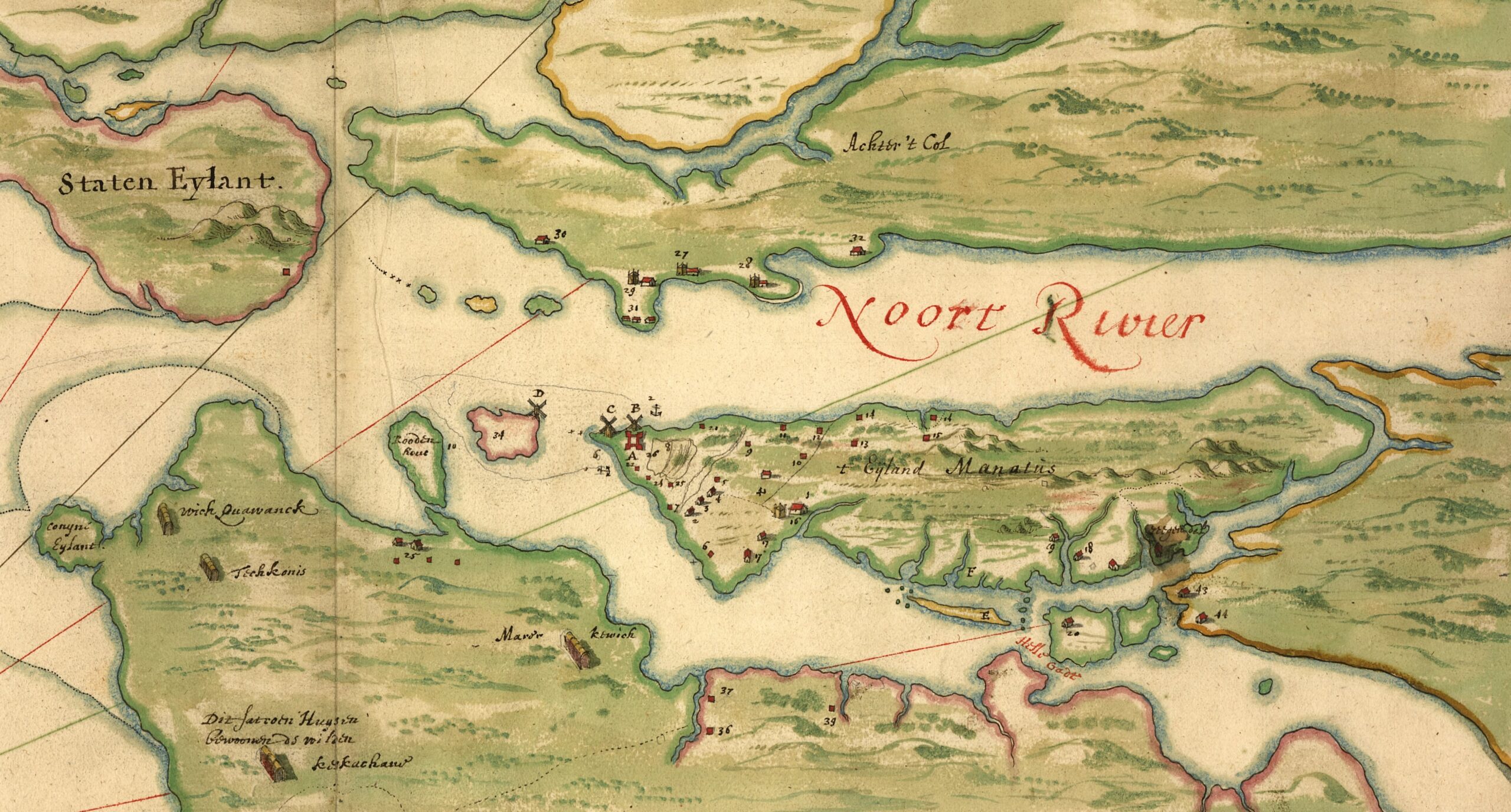
He married a Muslim woman, and together they had a son they named Anthony, who joined the family business, attacking ships sailing in and out of the Mediterranean. As the account goes, one of his maritime adventures landed him in Amsterdam, where he met and then married a barmaid—and occasional sex worker—named Grietje Reyniers, who, desperate for work, had migrated from Germany. They soon left Amsterdam, one of the early modern world’s richest cities, for a place in Native America called Lenapehoking, a portion of which had only recently been acquired by the Dutch and renamed New Netherland.
The flotsam-and-jetsam nature of their 1630s coming to America remains a far more typical origin story than what those who cherish tidy arrival stories might want to believe. In this embryonic North American colony, Grietje and Anthony Jansen van Salee (that is, Anthony Jansen from the Moroccan port of Salé), as he was now commonly known, or Anthony the Turk as some called him, were raucous to say the least. They brawled with their neighbors. They fought with the colony’s minister and his wife, as well as with many in the imperial government. Most of what we know of the brash couple comes from the many court cases from this period that involved them. Colonial authorities regularly questioned their character, scruples, and business practices; Grietje and Anthony returned the favor.
These relatively limited records from New Netherland consist mostly of what others said about them. They unfailingly and confidently depicted Anthony as a Muslim—always referring to him as hailing from Morocco or being a Turk or a Mauhammetan—even after he and Grietje married in the Dutch Reformed Church, baptized one of their daughters, and otherwise participated in the life of their Christian community. Like Anthony’s purported Muslim identity, the charge of Grietje’s early sex work forever branded her in New Netherland.
Still others claim them as colorful exemplars of the kind of “burlesque” history of New Netherland imagined by Washington Irving in the nineteenth century.
The “Turk” and the “whore” were eventually exiled from the New Amsterdam colony, shunted from one island to a long island across the water. They lived out most of the rest of their days with their four daughters in the place the Dutch called Breuckelen, waging war on Native Americans and defending their territories from English encroachment. They gained expansive properties as some of the first non-Native people on what became Long Island. In the process, their fortunes rose and their daughters married well, with descendants who include President Warren G. Harding and the socially impeccable Vanderbilt family.
Myths invariably feed on time. The more of it they have, the bigger the exaggerations and untruths. Like so many historical myths, this swashbuckling tale of pirates, court accusations, and gossip, which frames the rags-to-riches emergence of this American family, is rife with historical fiction. As it turns out, Anthony was not the son of the Dutch convert to Islam Jan Jansen. In fact, no action in his life ever evidenced an adherence to Islam. The only religion he ever manifested was Christianity. Even as Grietje has consistently been disparaged as a whore, her life reveals a long history of resilience and resistance.
The conundrum before us then is how and why a Christian, who became known as a Muslim, and a German barmaid and occasional sex worker established themselves as one of the founding families of New York City. To answer this question requires us to cut through a tangled thicket of inherited ideas about colonial America, reexamining the remains of Anthony’s and Grietje’s irreverent lives, understanding Dutch colonial society as it related to the early mod-ern Atlantic world, and navigating the historical shoals that pitted Islam against Christendom.
The real story of Anthony and Grietje speaks to many American ideals—that down and out people from vastly different places could come to a new place to escape the shackles of Europe and ultimately make a better life. Even more specifically, the story of Anthony and Grietje’s New York before it became New York embodies much of what would become the city’s mythos as a place of reinvention and recreation, where immigrants changed names and religions and forged bonds across ethnic and racial lines. The couple have often been viewed as if they were stock characters in a pastiche of New York that was already cosmopolitan and pluralistic, an inchoate city that was tolerant and diverse, a place skeptical of power yet craving it.
Still others claim them as colorful exemplars of the kind of “burlesque” history of New Netherland imagined by Washington Irving in the nineteenth century. The couple were indeed salty, swarthy, and sexual, hardly members of the embroidered, straitlaced society that would come to define Edith Wharton’s Gilded Age characters over two centuries later, even as, ironically, some of their descendants were of this Whartonesque upper-crust world. Muslim Americans too have claimed the couple as ancestors, forging a lineage in America that stretches back before the formation of the United States, an alluring story of American origins, belonging, and place within a national story that has largely rejected them.
Anthony’s shapeshifting identity allows for an even deeper lesson as well.
Historians now take for granted that the establishment and rise of New Netherland, New England, and other American colonies only make sense in the context of the wider Atlantic world of global European wars between the Netherlands, England, Spain, and other powers; the transatlantic slave trade; and the displacement of Native Americans. Most have generally missed, however, how Europe’s multiple engagements with the Muslim world also crossed the Atlantic and had a formative role in colonial America.
Ironically, it is Anthony, a man who was perceived as Muslim but was not, who offers us the chance to grasp this wider multireligious history of North America. His story becomes a history of ideas about Muslims, not of actual Muslims. America made his Islam and then obsessed over it, offering us a rare and important view of the intersections between colonial America, Christian Europe, and Islam.
Anthony’s shapeshifting identity allows for an even deeper lesson as well. All of us, no matter our race, gender, religion, ethnicity, sexuality, class, or any other status, at times feel misunderstood, misrecognized, out of place, left out, othered. Grietje and Anthony embody this feeling. Being outside of rigid categories, not beholden to dominant attributes, can be alienating. It can also be liberating. It allows one to borrow and combine freely, to sidestep social or familial expectation, to learn from different people. The couple’s story has been misconstrued, or just missed, in part because they do not fit neatly in most of the inherited categories of American history.
Standing on the fringes of the traditional American story and astride cultural and religious fault lines, one can now appreciate that Anthony and Grietje won, surviving the colony as two of its most successful colonists, with extensive landholdings and lineages enduring to the present. Born of the violence of colonialism, the dispossession and enslavement that defined early America, their story offers a version of American history we have not glimpsed in the city upon a hill or in the march of manifest destiny, not in the years 1619 or 1776. It is in the exemplary singularity of their story that we find a profound resemblance to us and the power to grasp the histories of the Americans we have become.
__________________________________
Newcomers: The Story of Anthony and Grietje and the Founding of New York by Alan Mikhail is available from Liveright.

Alan Mikhail
Alan Mikhail is the Chace Family Professor of History and chair of the Department of History at Yale University. He is the author of four previous books and editor of another.