The Tortoise in the Tree: A Yoruba Folktale
Báyò Akómoláfé Explores the Intersection of Philosophy and Fable
In our familiar songs, grace is amazing, comely, beautiful, and acceptable. I think otherwise, as do our histories of encountering the foreign, the stranger. Because grace forces new considerations, reformulates positionalities, and disrupts familiar modes of thinking. In other words: grace is necessarily monstrous.
Grace is out of the question, beside the point, and unwieldy. Grace is awkward, ugly, messy, the irrupted tensions within an exhausted moral system.
If grace were to show up on our streets, we’d lock it up because it would spoil the business of the day. And yet, therein—in its uncomeliness and monstrosity—lies its promise. The thing to do, when grace comes piercing through, is to risk touching it, to risk welcoming it into our homes, to risk washing its feet.
Grace forces new considerations, reformulates positionalities, and disrupts familiar modes of thinking. In other words: grace is necessarily monstrous.
Somewhere in the curdled middle of accompanying this stranger called grace, we might find a prior generosity, an unpronounceable hope, a sudden opening in the wooden closures of the stolen night, a gift tucked between the repulsive scales of the dragon we refused to slay.
*
I will tell you a story now.
At first the gods pitied the tortoise, known in Yoruba folklore as Ijapa, when he rudely declared before their divine council that he could know “everything” there was to know about the world. They pitied him as the ocean pities a little frothing wave wanting to be as big as the ocean. They rolled their eyes, smacked their lips, and hissed. And not even in the polite way that our parents taught us to hide our disgust from its object. But then their pity slowly metastasized into a creeping worry as the redoubtable reptile stood his ground. Nothing they did or said to wean the rocking head of the tortoise from its destructive confidence could move him. Resigning themselves to their failure, they sent him on his way, urging him to try his luck.
True to form, Ijapa swung into action. He purchased for himself a gourd with a slender neck and a fat belly, tied a string to the thing, and left his home on an adventure to articulate his final theory of everything.
And so began Tortoise’s quest to know everything once and for all. He met with Lion and asked her about her roar. How she did it. How she made it tremble and stretch out into the forest. When she opened her mouth to demonstrate the ferociousness of her pride, he took the information from the air with his magic and stuffed it into his gourd. Before the day was done, Tortoise had interviewed Tiger, Giraffe, Hippo, Man, Tree, Mountain, River, Sky, Moon, Sun, and Star. Each one donated a piece of its wisdom to Tortoise’s gourd, which the old trickster promptly secured with his buckskin and string.
When a week of four days was over, Tortoise knew everything. His gourd simmered, glowed, and trembled with a strange engorgement. Believing himself to now be the wisest of all creatures, Tortoise decided to hide his invaluable treasure away from prying eyes and jealous gods. He chose the Iroko tree, proud and tall, for the assignment. “I will climb to the height of this tree,” said Tortoise to himself, “and camouflage my gourd amongst its rich foliage.”
Wrapping his limbs a fraction of the way around the stubborn trunk of the tree, Tortoise’s final lap soon proved more difficult than he had anticipated. No matter how hard he tried to get a grip, the tree resisted his abbreviated embrace. Nevertheless, the intoxication of the glowing gourd, hanging on his chest by a string, did not dim or grow faint. His eyes, swirling with the arousal for his beloved, were red with passion. He had traveled the entire cosmos in a week. Now at the foot of a mere tree, he was not to be stopped by a few muscular disadvantages—he, the conqueror of Thought itself!
In a bush nearby, the grasshopper—often considered the stupidest of all animals—watched Ijapa and his gourd. He wasn’t bothered at first. There were better things to do than to watch the old fool fall flat on his face again and again. But it is often the case that when wisdom becomes too full of itself, it needs the intervention of the stupid to release it from the tyranny of its presumptions.
So, Grasshopper hopped out to the Tortoise, startling him. “My friend!” Grasshopper bellowed. “What is it you are up to?” Irritated by such a disreputable interruption, Tortoise grunted his disapproval. “Say what you want, trifling, and be on your way. This is none of your business.”
Perhaps wisdom itself was a thorn in the flesh, the cautionary finger-wag of a world that could not be known by one name.
Grasshopper seemed to be in thought for a while, and then he smiled. “I am sorry to bother you, wise friend. You see, I have been watching you try to climb this tree.” He began to hop away. “Why don’t you put the gourd around your back? See if that helps.” And without further ado, Grasshopper skipped away.
The realization hit Tortoise harder than the time Elephant had slapped him away from a bowl of porridge at Hippo’s house. Or the time he had leapt from the clouds—at a gathering hosted strictly for the birds—towards a small heap of sharp objects gathered on the ground.
Grasshopper’s stupidity was equal to his archival mastery!
Of what use was it to own all knowledge when the merest of beings had won in a battle of wits? Perhaps there was no such thing as a final approximation of the world. Perhaps the idea of the world as a stable containment of pieces of insights that could be captured and fully controlled was itself a limited modality that excluded and obscured the promiscuously deep relationality implied in any act of knowing. Perhaps there was no stable content to be gained—and Grasshopper’s stupidity, the dissonant quality of his happy-go-lucky ways, was wise in relation to his rigid attempts at containment. Perhaps wisdom itself was a thorn in the flesh, the cautionary finger-wag of a world that could not be known by one name.
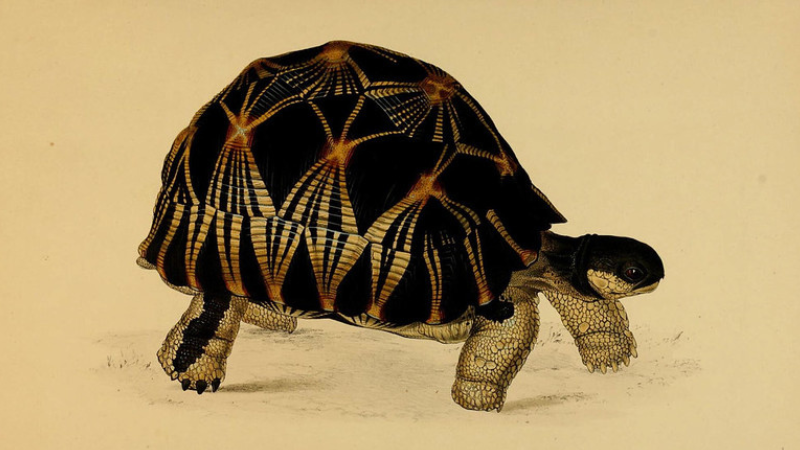
Tortoise was already halfway up the tree, the gourd resting on his geometric shell, when he began to ponder the irony of his folly. When he reached the top of the Iroko tree, the clouds and the stars collected each other in a spiral in the heavens, heralding the irresistible arrival of the gods, who had come to see the end of Tortoise’s ritual. With his head hung low, Tortoise unsheathed the string from the neck of the gourd and tossed away the skin that held everything together. In small melodic morsels of light, like fireflies floating in procession, the gourd’s contents floated back into the world.
__________________________________

From Selah: A Báyò Akómoláfé Reader by Báyò Akómoláfé. Copyright © 2026. Available from Ayin Press.

Báyò Akómoláfé
Báyò Akómoláfé, PhD, rooted with the Yoruba people in a more-than-human world, is the father to Alethea Aanya and Kyah Jayden Abayomi and the grateful life-partner to EJ, as well as a son and a brother. A widely celebrated international speaker, posthumanist thinker, poet, teacher, self-styled “trans-public” intellectual, and essayist, he is the author of two books: These Wilds Beyond Our Fences: Letters to My Daughter on Humanity’s Search for Home and We Will Tell Our Own Story: The Lions of Africa Speak! (with Professors Molefi Kete Asante and Augustine Nwoye). Akómoláfé is the visionary founder of the Emergence Network, a planet-wide networking project and inquiry at the edges of the Anthropocene that seeks to convene new kinds of responsivities, sensuous solidarities, and experimental practices for a posthumanist parapolitics. Akómoláfé currently lectures at Pacifica Graduate Institute in California, and was recently appointed the Hubert Humphrey Distinguished Professor of American Studies at Macalester College in Minnesota (beginning in fall 2025). He is also the inaugural Global Senior Fellow of the Othering & Belonging Institute at the University of California (Berkeley); the inaugural W. E. B. Du Bois Scholar in Residence for Trans-Public Intellectualism at the Schumacher Center for a New Economics; and the inaugural Scholar in Residence for the Aspen Institute. Akómoláfé lives between Chennai, India and Great Barrington, Massachusetts with his family. He considers Brazil to be his spiritual home.