The Secret Agents of the Cold War Who Claimed Land and Power
Alfred W. McCoy on the “Men on the Spot”
Responsible for Colonial Expansion
Historians of the British Empire have frequently used the term “man on the spot” as a helpful device for explaining the seemingly inexplicable increase of its colonial territory. Despite Victorian England’s formal policy of “non-expansion,” its empire grew relentlessly to cover a full quarter of the earth’s surface by 1918, often through the efforts of individual adventurers or imperial viceroys—men operating almost alone on “turbulent frontiers.”
At moments of its expansion into new terrain, the British Empire invested certain individuals with the extraordinary power to change circumstances “on the spot”—thus, creating famed historical figures who merged person with place to become “Gordon of Khartoum,” Cecil Rhodes of “Rhodesia,” and Lawrence of Arabia.
In 1839, the traveler James Brooke sailed his yacht into Kuching harbor on Borneo’s north coast and soon became “the White Rajah” of Sarawak, forming a private British colony that survived for over a century. In Africa, Charles Gordon met a heroic death in 1885 as “Gordon of Khartoum,” inspiring the British conquest of Sudan. Four years later, the “diamond king” Cecil Rhodes dispatched seven hundred mercenaries armed with Maxim machine guns that cut down thousands of Matabele fighters, subduing a vast territory that he dubbed Rhodesia (now Zambia and Zimbabwe).
In West Africa, the legendary Frederick Lugard conquered all of Northern Nigeria in just three years and parlayed that success into becoming the first governor-general of the unified British colony, remaining “imperious and stubborn, and constantly, like the true ‘man on the spot,’” relying “on distance from London . . . to allow him to have his way.”
Just as colonial expansion had fostered the first men on the spot, so decolonization created a new generation of such empowered historical actors.
As British influence expanded across the Middle East during and after World War I, a junior officer named T. E. Lawrence was given a free hand to organize an Arab revolt against the Ottoman Empire, and later—along with a rare woman on the spot, Gertrude Bell—helped his comrade in arms, Prince Faisal, become the first ruler of the Kingdom of Iraq, a British client state.
Other such adventurers included “the wayward but brilliant” Arnold Wilson, who found himself administering the whole of Mesopotamia at the age of thirty-four, and Major Edward Noel, “who romped through Kurdish areas . . . reportedly inflating the expectations of its people as rapidly as Lord Curzon, the Acting Foreign Secretary, could dampen them.”
When the world order experienced another major transition driven by the decline of the British Empire after World War II, a new generation of imperial agents would play a similarly seminal role during the Cold War. As decolonization transformed fading colonial empires into a hundred new nations, rival superpowers dispatched covert operatives, latter-day men on the spot, to win over those emerging states by any means necessary. Just as colonial expansion had fostered the first men on the spot, so decolonization created a new generation of such empowered historical actors.
In the nineteenth century, travel to remote frontiers beyond the reach of telegraph had insulated Britain’s men on the spot from London’s authority, conceding them the freedom to seize new territory. Now, in an age of instant communications, their Cold War counterparts could nonetheless disappear into a covert netherworld, loosening Washington’s controls and freeing them to plot coups, mobilize armies, and install governments.
These ambitious, cunning, and often amoral Cold War operatives were usually marginal or even inconsequential figures at home. But at evanescent moments of geopolitical rupture, when a veritable power vacuum opened in the world order, such otherwise obscure figures could gain sufficient autonomy, often amplified by loose orders and limited oversight, to exercise an outsized influence on the historical process.
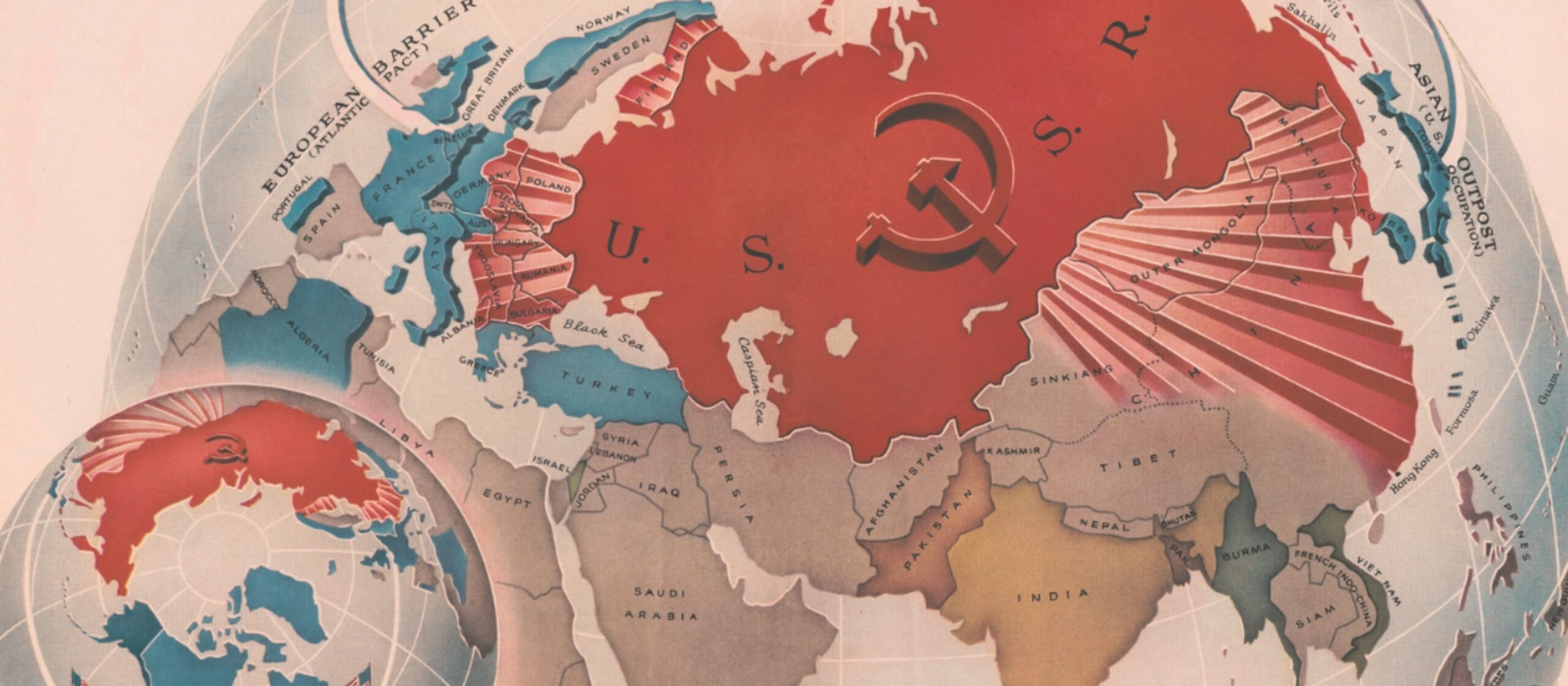
During the Cold War’s frequent crises, some two dozen of these men on the spot turned up in cities scattered across five continents—Athens, Jakarta, Manila, Saigon, Vientiane, Tehran, Kinshasha, Luanda, Paris, and even Washington, DC. By plotting clandestine operations to bring a contested terrain within their respective spheres, these secret agents could overcome their inherent inconsequence as individual historical actors to effect consequential historical change.
If, by contrast, their empire was receding, these efforts, no matter how skilled, could not stem that ebbing tide.
If we weave their wispy biographical threads into a historical tapestry known as “prosopography,” or collective biography, among the thirty men on the spot identified in this account, nineteen were born between 1908 and 1927, and almost all of them fought in World War II, thus forming a distinct generation that emerged battle-hardened for the extraordinary demands of a clandestine career. Reflecting the global reach of American hegemony, as well as the way the bureaucratic style of Soviet espionage precluded such individual initiative, eighteen of these thirty operatives were Americans. Another four were French, four were British, and the remaining four were from diverse backgrounds (Chilean, Cuban, Dutch, and Vietnamese).
By their numbers, diversity, and evanescence, these men were not Friedrich Hegel’s “world-historical individuals” like Julius Caesar or Napoleon Bonaparte. As a young man in 1806, the philosopher Hegel saw Napoleon riding out for reconnaissance on the eve of battle against Prussia and called him a “world soul on horseback” who “reaches out over the world and masters it.” Twenty years later in his Philosophy of History an aging Hegel argued that such world-historical figures were “agents of . . . a step in the progress of the universal Spirit” toward freedom. Finding the “kernel” of historical change ready to burst forth from its shell, they released it, just as Julius Caesar’s many conquests “fulfilled the necessary historical destiny of Rome and the world.”
When these figures finished serving history, however, “they fall off like empty hulls from the kernel. They die early like Alexander, they are murdered like Caesar, transported to Saint Helena like Napoleon.” Thus, the author of this impersonal, even mechanistic view of history still found a place for the individual actor, if only for the greatest of them.
Instead of shaping history’s grand design, our more modest men on the spot maneuvered at its margins, exploiting imperial transitions to nudge a nation in the desired direction, which was rarely, if ever, the path of progress toward Hegel’s greater good. When infused with the power of a rising hegemon, those men were capable of actions that expanded their empire’s ambit.
If, by contrast, their empire was receding, these efforts, no matter how skilled, could not stem that ebbing tide. Lacking anything akin to the grandeur of Caesar, Napoleon, or even Henry Kissinger, their lives were marked by ordinariness, even obscurity—yet they still experienced fleeting moments at the epicenter of historical change.
As a foreign operative dropped deus ex machina into an alien society, the man on the spot needed local allies to use as an Archimedean lever to lift their society in the desired direction.
During the Cold War’s first decades, the CIA’s version of these men on the spot produced a succession of seemingly stunning covert victories that created a pantheon of putative American heroes. Presidential grandson Kermit Roosevelt Jr. conducted a daring coup that secured Iran’s oil industry for the West. Simultaneously, as the French retreated in defeat from South Vietnam, the “Quiet American” Edward Lansdale preempted a communist takeover by installing a pro-American leader in Saigon.
A decade later, Lansdale’s CIA comrade Lucien Conein fomented a coup to kill that same president, inadvertently plunging Saigon into a sustained political crisis that precipitated American military intervention. On another continent, CIA station chief Larry Devlin formed a pliable if kleptocratic regime out of the chaos in postcolonial Congo. In the Cold War’s final phase, CIA officer John Stockwell went from commanding the Agency’s clandestine intervention in Angola to becoming his country’s foremost critic of covert operations.
By acting as what one US president called “the guy on the ground,” these individual CIA operatives had both the adaptability and local knowledge to carry out their covert missions with consistent success—in contrast with recurring debacles by the Agency’s bureaucracy, whether in Cuba, Indonesia, or South Vietnam.
While American agents, armed with the peerless power of their country’s global hegemony and countless millions in cash, were the most successful, they were by no means alone in this shadowy interstice of international politics. Only a month after Indonesia won independence from the Netherlands in 1949, Dutch operative Raymond “the Turk” Westerling launched an abortive plot to slaughter the new nation’s cabinet and bring Indonesia back within Amsterdam’s ambit.
As superpower rivalry over Southeast Asia intensified in the 1960s, British psywar expert Norman Reddaway disseminated sordidly skillful propaganda that facilitated the Indonesian military’s slaughter of a million suspected subversives, thereby destroying that country’s massive communist party. In wartime Saigon, communist spy Pham Xuan An used his cover as a Time magazine reporter for espionage seminal to a succession of US defeats during the Vietnam War. In Angola, the Cuban revolutionary Jorge Risquet spent several years coordinating Cuban and Soviet support for the country’s Marxist government fighting, and defeating, a formidable tandem of CIA cash and South African firepower.
That experience left me with an indelible lesson about the overweening willpower that carried otherwise ordinary men to such heights, or depths, of achievement.
As a foreign operative dropped deus ex machina into an alien society, the man on the spot needed local allies to use as an Archimedean lever to lift their society in the desired direction. Embodying the power of an empire, such agents could readily attract influential locals. Indeed, it was their role as political brokers between those local allies and a far-off imperial metropole that gave them a certain autonomy of action, arguably their defining attribute as historical actors. Although celebrated as heroes in the capitals of empire, their covert manipulations could disrupt a subject society’s delicate political balance, plunging an entire people into long years of political instability.
These men on the spot not only acted but interacted within that intelligence interstice called the covert netherworld in ways that often had profound consequences for their clandestine missions. In his struggle to win South Vietnam for Washington in the 1950s, CIA operative Edward Lansdale had to best his French counterpart Antoine Savani at every turn. Not only did Lansdale secure Saigon for the United States, but in doing so he gave a local asset, Pham Xuan An, training that allowed him to become such a skilled communist spy, much to Washington’s later detriment.
Through his writings about the French colonial war in Algeria, their man on the spot Roger Trinquier shaped US counterinsurgency strategy in the Vietnam War, particularly for the CIA. And the French spymaster Jacques Foccart’s maneuvers to eliminate an African opponent through a brilliantly executed aircraft hijacking inadvertently allowed the CIA to consolidate its control over Congo’s government.
When all that work was done and the contested territory won, the bureaucrats of empire, diplomats and soldiers, arrived to staff that new imperial outpost, leaving the once-omnipotent agent with only an old man’s tales to tell. And, oh my heavens, did they tell tales. Their dozens of sometimes turgid memoirs—all of which I have dutifully read and cited in the chapters below—are usually so self-exculpatory or self-celebratory that they provide historians little more than some useful anecdotes.
Fortuitously for this project, earlier research gave me some personal insight into the character of those covert operatives. A trip to Paris allowed me an evening with the most memorable of them, Colonel Roger Trinquier. As a paratrooper in the French colonial army, he was famed for his ruthless logic about the imperative of using torture against insurgents, whether in Algeria or wherever they might appear.
On the surface, our three-hour interview was a polite chat. But subliminally he somehow cast an aura of dominance that slowly drained my self-confidence, even though I was seated comfortably, sipping tea, taking notes until I stumbled out of his apartment, utterly exhausted. That experience left me with an indelible lesson about the overweening willpower that carried otherwise ordinary men to such heights, or depths, of achievement.
Not only do their stories serve to humanize a Cold War history often told in terms of impersonal factors like nuclear arsenals or diplomatic ententes, but their clandestine careers also provide a thread of narrative tension that will carry this account of that global conflict from chapter to chapter to a dramatic denouement.
But perhaps most importantly, following these men into their clandestine shadowlands reminds us that empire, and the clash of empires that was the Cold War, was and remains a dirty business. Watching General Pinochet’s man on the spot, the American assassin Michael Vernon Townley, murder some of Chile’s finest leaders shows that the allure of espionage was largely a fiction, a cinematic fabrication.
Indeed, the covert interventions so central to the Cold War, which these men embodied, relied on some of the cruelest instruments in the tool kit of modern statecraft—assassination, coup d’état, mass murder, psychological manipulation, surrogate warfare, torture, and terror. So it was for the old Cold War, and so it may yet be for the new Cold War that now seems to be following in its wake.
__________________________________
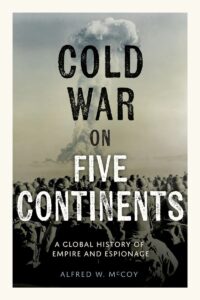
From Cold War on Five Continents: A Global History of Empire and Espionage. Used with the permission of the publisher, Haymarket Books. Copyright © 2026 by Alfred W. McCoy

Alfred McCoy
Alfred McCoy holds the Harrington Chair in History at the University of Wisconsin-Madison. His 2009 book Policing America’s Empire won the Kahin Prize from the Association for Asian Studies. In 2012, Yale University awarded him the Wilbur Cross Medal for work as “one of the world’s leading historians of Southeast Asia and an expert on . . . international political surveillance.”