The Scent of Rebellion: How Cannabis Became the Drug of Choice For the Counterculture
Jeremy Narby on the Intersection of Music and Marijuana, From Jazz Icons to Rock Stars
In 1927, twenty-six-year-old American jazz musician Louis Armstrong smoked cannabis for the first time. He was backstage at a Chicago music club when a white musician named Mezz Mezzrow lit a reefer, took a few puffs, and passed it to him. At the time, cannabis was still legal in Illinois. “I had myself a ball,” Armstrong later recalled. From then on, he openly praised the plant’s benefits, viewing it as a “medicine” comparable to the wild herbs his mother fed him as a child in New Orleans. “It’s an assistant, a friend, a nice cheap drunk if you want to call it that, very good for asthma, relaxes your nerves.”
In the months following this initial experience, Armstrong began smoking cannabis before his concerts and recording sessions. In 1928, he recorded an instrumental piece called “Muggles,” a slang term for cannabis. The music evoked the way instruments sounded under the influence of the drug. This recording is considered one of the earliest in jazz history to feature musical improvisation.
The main result of treating musicians as outlaws was to enhance the rebellious allure of their music and of the plant they smoked.
In 1931, Armstrong moved to California, where he played almost every night at a music club in Hollywood. However, California law prohibited cannabis. One evening, during the intermission of one of Armstrong’s concerts, the police arrested him and a fellow musician after catching them smoking a joint in the parking lot behind the club. Facing a six-month prison sentence for possessing a half-smoked marijuana cigarette, Armstrong spent nine days in the downtown Los Angeles city jail while awaiting trial. Meanwhile, the club’s owner and Armstrong’s manager hired “a whole gang of lawyers,” as Armstrong put it. On the day of the trial, the judge granted him a suspended sentence on the condition that he leave the state. Armstrong took a train back to Chicago, where his fans gave him a triumphant welcome. The arrest for smoking cannabis seemed only to increase his popularity.
Armstrong did not enjoy this initial encounter with the law, but it did not dampen his enthusiasm for cannabis. He continued to smoke and share it with other musicians, often praising its benefits and offering advice. He once told pianist Harry Gibson, “I like blowin’ on gage [smoking cannabis] a lot better than booze. But remember, man, it ain’t the reefer or the liquor that’s playing jazz. It’s you, just feeling a lot better listening to it.”
Armstrong found that cannabis not only put him in the right mood for playing music but also helped him cope with the daily indignities of racial segregation, which limited where Black Americans could walk, talk, drink, rest, or eat in certain parts of the United States. Armstrong once told white music producer John Hammond, who disapproved of cannabis: “It relaxes you, makes you forget all the bad things that happen to a Negro.”
During the 1930s, several other Black American jazz musicians celebrated cannabis by composing and performing “reefer songs.” Examples include Cab Calloway’s “Reefer Man,” Ella Fitzgerald and Chick Webb’s “When I Get Low, I Get High,” and Curtis Jones’s “Reefer Hound Blues.” After the passage of the Marihuana Tax Act of 1937, which effectively criminalized cannabis use across the country, the Federal Bureau of Narcotics began targeting jazz musicians who used cannabis. Here, too, the main result of treating musicians as outlaws was to enhance the rebellious allure of their music and of the plant they smoked.
*
The growing international popularity of American jazz music contributed to the spread of cannabis. In Nigeria, a British colony and protectorate with no previously known usage of the plant, West African soldiers returning from service in India after the Second World War brought cannabis back with them, and young Nigerians took to smoking it in the music clubs of Lagos. They initially considered it a glamorous foreign drug associated with Black American music and jazz clubs.
As a plant, Cannabis was not indigenous to West Africa, but during the early 1950s, people in Nigeria found that it grew profusely in the region’s lush soils and tropical climate. Cannabis soon became a cheap and locally produced crop and intoxicant, which some Nigerians took to exporting and selling for many times its local price, especially in the United Kingdom. Enterprising individuals used cargo ships that called at the port of Lagos to smuggle Nigerian-grown cannabis out of the country, often hidden in luggage or parcels. Throughout this period, colonial authorities in Nigeria disregarded the drug’s consumption and production, and British customs authorities paid little attention to individual cannabis smugglers.
The first mention of illegal cannabis use in the UK dates back to the 1930s when a British newspaper reported that “a ‘reefer’ or dope habit” was spreading among jazz musicians in the clubs of London. The number of cannabis users surged after the passage of a law in 1948 allowing people from across the British Empire to migrate to the UK, some of whom brought with them the custom of smoking the drug. During the 1950s, most of the cannabis consumed in the UK was smuggled in on cargo boats from Burma, Nigeria, and Lebanon—and some of it ended up in the music clubs of London.
In the late 1950s, a young Nigerian named Fela Kuti was studying at the Trinity College of Music in London when he first smoked cannabis in one of the city’s jazz clubs. Inspired by the likes of Louis Armstrong and James Brown, Fela Kuti would go on to fuse West African music with American blues, jazz, and funk to create Afrobeat. He would also become Nigeria’s most ardent proponent of cannabis.
By 1960, imported cannabis had become easy to find in many parts of the UK. According to musician John Lennon: “People were smoking marijuana in Liverpool when we were still kids, though I wasn’t too aware of it at that period. All these black guys were from Jamaica, or their parents were, and there was a lot of marijuana around. The Beatnik thing had just happened. Some guy was showing us pot in Liverpool in 1960, with twigs in it. And we smoked it and didn’t know what it was.” British authorities passed strict laws against cannabis use in 1928 in compliance with the Second Opium Convention but did not show a genuine interest in enforcing them before the early 1960s.
As long as most cannabis use was limited to migrant communities, British police paid little attention to it. But in 1961, the Metropolitan Police of London noted for the first time that sizable numbers of native Britons had taken to smoking cannabis. According to one report: “Of the white users of the drug, they are mainly in their late teens or early twenties and are of the type frequenting jazz clubs and coffee bars of the West End. The most dangerous trend is the interest shown by irresponsible young white people of both sexes in this drug.”
According to historian James Mills, cannabis attracted working-class and middle-class youths eager to challenge Britain’s established order because it had a symbolic meaning. Unlike alcohol and tobacco, the traditional stimulants of the British, cannabis was associated more with the people who had been the subjects of the British Empire. British youths therefore regarded cannabis as “the drug of the ‘colonized’ rather than the ‘colonizer.’ At a time when the Empire was in rapid decline and the politics of imperialism were being rejected, to smoke cannabis and to refuse alcohol meant to identify with the oppressed of Britain’s past and to dismiss the cultural and political relations of the old order. In this context, consuming the drug became a political act to be staged publicly, not simply a matter of taste that shaped private habits.”
In 1962, British authorities began instructing police officers to look out for cannabis users. Predictably, the number of convictions soared. In 1964, for the first time, British police arrested more “white” than “colored” people for cannabis infractions—these were the only two racial categories used in official statistics at the time. British authorities also passed stricter cannabis laws, as recommended by the UN’s Single Convention on Narcotic Drugs. The UK’s Dangerous Drugs Act of 1965 introduced new offenses relative to cannabis, including cultivating the plant and allowing the drug’s use on one’s premises. The revised law maintained heavy penalties for all cannabis infractions, including possessing small amounts of the drug. In one case, a person described as a “working-class black man” from Jamaica was arrested in London in 1965 in possession of three grams of cannabis and sentenced to thirty months in prison, which he served in full.
People who used cannabis harmed no one except perhaps themselves, which made them seem inoffensive compared to most other criminals.
British authorities also began targeting famous white musicians suspected of smoking the drug. In early 1967, the police raided the home of Keith Richards, the guitarist of the Rolling Stones, and arrested him after finding a small amount of cannabis in the possession of one of his guests. Richards faced up to ten years in prison for allowing his premises to be used “for the purpose of cannabis smoking.” He stood trial and faced a judge and a prosecutor who expressed disdain for his “decadent” lifestyle. The jury found Richards guilty, and the judge sentenced him to one year in prison.
However, Richards had hired one of Britain’s most reputed and expensive lawyers, who appealed the sentence, arguing that the prosecution had failed to prove that anyone had, in fact, smoked cannabis on his client’s premises. Richards spent twenty-four hours in prison and was released on bail. One month later, the judges of the Court of Appeal agreed that evidence was lacking and overturned the conviction and sentence. They ruled that Richards could not be convicted of “knowingly permitting” what the prosecution had failed to prove ever happened in the first place.
The contrast between what a rich and famous white person and a working-class black person can expect from justice and the law is often stark; in the case of Keith Richards, having the means to hire a good lawyer made a big difference.
Richards subsequently recognized that the judge who sentenced him to spend a year in prison for a cannabis infraction “managed to turn me into some folk hero overnight.” As a plant prohibited by national and international laws, Cannabis tended to impart an aura of cool rebelliousness to its users. In the 1960s, consuming cannabis was a crime in most countries—but a victimless crime, meaning an illegal act involving only the perpetrator or occurring among consenting adults. People who used cannabis harmed no one except perhaps themselves, which made them seem inoffensive compared to most other criminals, at least in the eyes of some, mainly young, people.
As for the British authorities, they continued targeting and arresting prominent musicians for cannabis possession, including Brian Jones, John Lennon, Yoko Ono, and George Harrison, usually releasing them within hours with a fine and a reprimand—and the guarantee that photographs of them emerging from police custody would be splashed across the nation’s newspapers the following day. Many less fortunate Britons were sentenced to prison on similar charges, and by the end of the 1960s, the imprisonment of young people for cannabis infractions had become “one of Britain’s most urgent social problems.”
__________________________________
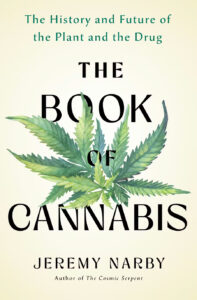
From The Book of Cannabis: The History and Future of the Plant and the Drug by Jeremy Narby. Copyright © 2026. Available from St. Martin’s Press, an imprint of St. Martin’s Publishing Group.

Jeremy Narby
Jeremy Narby, Ph.D., studied history at the University of Kent and earned a doctorate in anthropology from Stanford University. Since 1990, he has coordinated projects supporting Amazonian communities through the Swiss NGO Nouvelle Planète, focusing on land rights, bilingual education, and sustainable forestry. He is the author of The Cosmic Serpent: DNA and the Origins of Knowledge (1998) and Intelligence in Nature: An Inquiry into Knowledge (2005), and co-editor with Francis Huxley of Shamans Through Time: 500 Years on the Path to Knowledge (2001). His most recent work, co-authored with Rafael Chanchari Pizuri, is Plant Teachers: Tobacco and Ayahuasca (2021).