The Repugnance of Human Extinction: Why Our Survival Matters
Partha Dasgupta Considers the Personal and Ethical Value of Combatting Climate Change
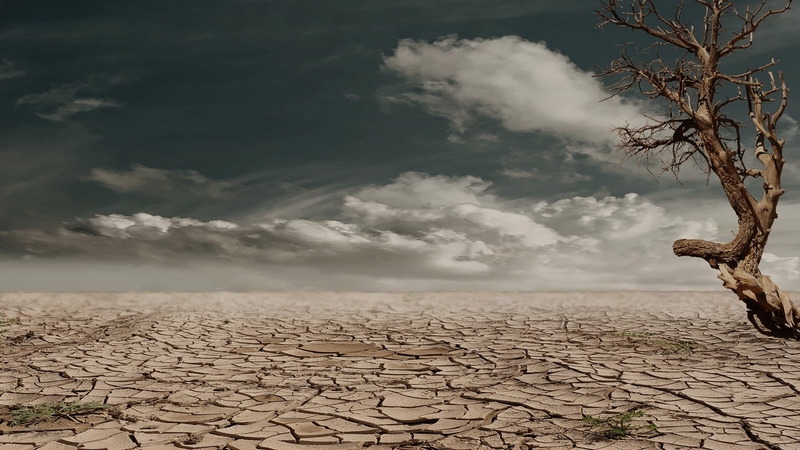
Runaway carbon emissions and biodiversity loss are interfering so much with the workings of the biosphere that humanity now faces a problem it did not face in the past: a human-created possibility of our collective extinction. Death is inevitable for every person. While each death is a loss, we mostly accept its inevitability. The possibility of human extinction, in contrast, is so alien to our sensibilities that we do not yet have an accepted vocabulary in which to deliberate it. We realize that the loss would be all the lives that could have existed but would now not be lived; the unsettled vocabulary concerns the way we should evaluate that loss.
Risks of extinction, such as the kind of event that led to the fifth extinction some 66 million years ago (known as exogenous risks ), are probabilistically inevitable; we are not responsible for them. In contrast, we would be responsible for the risks of extinction that would be avoided if only we were to change our behavior. That is why extinction risks that our actions give rise to have greater moral gravity than those over which we have no control.
Climate change and biodiversity loss, which both heighten the risk of extinction, are two such examples. Emitting even a billion tons of carbon into the atmosphere today raises the risk of extinction, even if ever so slightly, and the rate at which our activities are causing species to become extinct adds to that risk.
Public goods aren’t the only objects of ethical significance. Our values and practices are significant too.
But there is something cold and impersonal about assessing the moral gravity of human extinction in terms of the loss of wellbeing of all who would then not exist. We feel we need a reason closer to home, one that speaks to our emotions. In The Fate of the Earth, his deep meditation on the significance of a possible nuclear holocaust, the writer Jonathan Schell described the dilemma thus:
It is of the essence of the human condition that we are born, live for a while, and then die…But although the untimely death of everyone in the world would in itself be an unimaginably huge loss, it would bring with it a separate, distinct loss that would be in a sense even huger—the cancellation of all future generations of human beings.
Schell’s book was originally published as a three-part essay in the New Yorker in 1981, at the height of the Cold War. Schell was a writer, not a professional philosopher, but he made not one false move in philosophical reasoning in the crucial middle chapter, “Second Death.” Utilitarianism measures the loss from the Second Death in terms of the wellbeing of all who would not exist on account of human extinction. Schell, however, made a different move, which could be read as internalizing wellbeing across the generations. He wrote of the loss each of us alive today would suffer if we were to discover that there will be no one after we are gone, and he attributed the loss not to any attachment that we may have to humanity writ large, but to a devaluation of our own lives. And he used the artist and his art to make the point:
There is no doubt that art, which breaks into the crusted and hardened patterns of thought and feeling in the present as though it were the prow of the future, is in radically altered circumstances if the future is placed in doubt. The ground on which the artist stands when he turns to his work has grown unsteady beneath his feet.
Schell spoke of the artist, but he could have made the same case for all who create ideas and objects. Future people add value to the creators’ lives by making their creations durable. An artist may regard his work to be far more important than parenting, but he is helped by the presumption that there will be future generations to bestow durability upon it.
The examples Schell pointed to were works of art and discoveries in the sciences. Those creations are public goods, but most of us don’t have the talent to produce them. Confining attention to public goods is not only limiting, but it also raises an ethical dilemma: suppose we were all indifferent to having children and stared only at the prospective costs of raising them. We would free ride our responsibility to help repopulate the world by having none, and the artist would be mistaken in his assumption that there will be future people to give durability to his work.
Nevertheless, the direction Schell was pointing to is exactly right. Public goods aren’t the only objects of ethical significance. Our values and practices are significant too. Many are private, even confined to the family, and it is important to us that they are passed down to our children, and by them to their children, into an indefinite future. Procreation is a means of making our values and practices durable. We imbue our children with values we cherish and teach them the practices we believe are right not merely because we think it is good for them, but also because we desire to see our values and practices survive.
The mistake is to see ecological preservation as matters of personal and political morality. They are at least as much a matter of personal and political ethics.
Those values and practices are not public goods. On the contrary, we cherish them because they are intimate. They are stories we tell our children of our own joys, sorrows and discomfiture, of their grandparents’ foibles, and we instruct them on the family rituals we ourselves inherited from our parents. We may have modified the rituals, but we didn’t invent them from scratch. Our descendants do something supremely important for us: they add value to our lives that our own mortality would otherwise deprive them of.
The springs that motivate humankind to assume parenthood are deep and abiding. Their genetic basis explains the motivation but doesn’t justify it. Justification is to be found elsewhere. Our children provide us with a means of self-transcendence, the widest avenue open to us of living through time, not merely in time. Mortality threatens to render the achievements of our life as transitory, and this threat is removed by procreation. The ability to leave descendants enables us to invest in projects that will not cease to have value once we are gone, projects that justify life rather than merely serve it. Not all have held this view.
Alexander Herzen’s famous remark, that human development is a kind of chronological unfairness because those who live later profit from the labour of their predecessors without paying the same price, reflects an extreme form of alienation, as does Kant’s anxiety that earlier generations should carry their burdens only for the sake of the later ones, that only the last should have the good fortune to dwell in the completed building. As they saw it, we can do something for posterity, but it can do nothing for us. This, as we have seen, is a deep misconception.
The motivation we are identifying here transmutes from the individual to the collective. Every generation is a trustee of a wide range of assets, be they cultural or moral, produced or natural, it has inherited from the past. Looking backward, it acknowledges an implicit understanding with the previous generation of receiving the capital in return for its transmission, modified suitably in the light of changing circumstances and increasing knowledge.
Looking forward, it offers an implicit proposal to the next generation of bequeathing its stocks of assets, that they in turn may be modified suitably by it and then passed on to the following generation. This perspective is not at odds with the conception of wellbeing across the generations. In our account of ethics in a world moving through time, each generation would be moved to internalize the potential wellbeing of its descendants. Our descendants are not us, but they are not outside us either.
Schell’s reflections point also to the intrinsic value of Nature. It’s a mistake to seek justification for the preservation of ecological diversity, or more narrowly the protection of species, solely on instrumental grounds; that is on grounds that we know they are useful to us or may prove useful to our descendants. As we have seen, such arguments have a role, but they are not sufficient. Nor can the argument rely on the welfare of the members of such species (it does not account for the special role that species preservation plays in the argument), or on the “rights” of animals.
A full justification bases itself as well on how we see ourselves, on what our informed desires are. In examining our values and thus our lives, we are led to ask whether the destruction of an entire species-habitat for some immediate gratification is something that we can live with comfortably. The idea of intergenerational exchange is embedded in the perspective of eternity, but the mistake is to see ecological preservation as matters of personal and political morality. They are at least as much a matter of personal and political ethics.
__________________________________
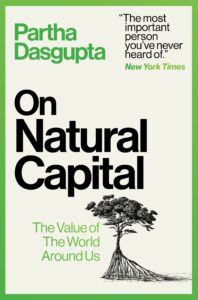
Excerpted from the book On Natural Capital: The Value of the World Around Us by Partha Dasgupta. Provided courtesy of Mariner Books, an imprint of HarperCollins Publishers. Copyright © 2026. Reprinted by permission.

Partha Dasgupta
Sir Partha Dasgupta is the Frank Ramsey Professor Emeritus of Economics at the University of Cambridge, and a fellow of St John’s College, Cambridge. Previously, he taught at the London School of Economics and Stanford University. His research has covered development economics, the economics of technological change, population, social capital and ecological economics. In 2021 he was awarded the Kew International Medal of the Royal Botanic Gardens Kew and in 2023 was appointed Knight Grand Cross of the Order of the British Empire for "services to economics and the natural environment." In February 2024 he won The Frontiers of Knowledge Award.