The “outstandingly original scholar” Lyndal Roper has won the 2026 Holberg Prize.
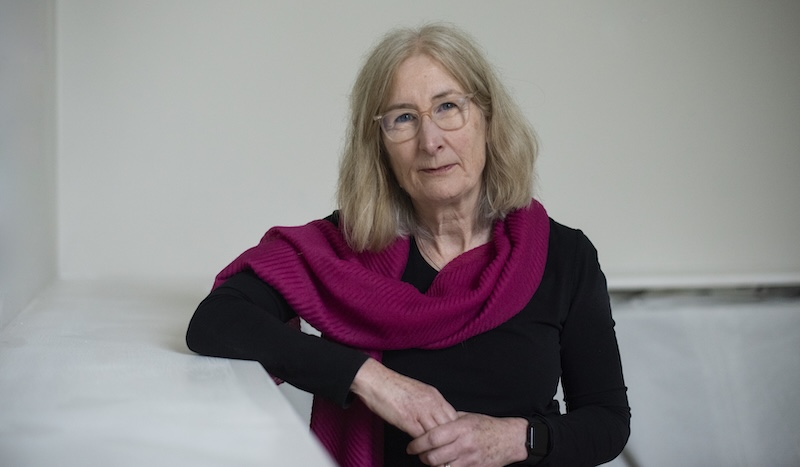
Today, in a ceremony at the University Aula in the Norwegian city of Bergen, the Holberg Prize announced Lyndal Roper, a scholar of early European history and the Regius Chair of History at the University of Oxford emeritus, as its 2026 Laureate.
The Holberg Prize, which includes a purse of NOK 6,000,000 (about $630,000) is awarded annually to “a scholar who has made outstanding contributions to research in the humanities, social sciences, law or theology,” and who has “had a decisive influence on international research.”
Roper, whose work, the prize materials note, has “reshaped understandings of both witch persecutions, the German Peasants’ War (1524–1525), and the life and thought of Martin Luther, illuminating how gender, the body, psyche and power operated in social and religious conflicts of the sixteenth century,” is an internationally recognized scholar, whom the Holberg Committee Chair, Professor Ann Phoenix describes as “an outstandingly original historian.”
“Over the course of my career, I’ve been trying to do history from below,” Roper said in a brief interview conducted by the prize organizers, “that is, I wanted a history that would include the voices of ordinary people, of all kinds, colors and classes, and of women in particular. I wanted new historical narratives that were not about great men and giant events.”
“Here I think my experience of being a mother made me realize how important what can’t be put into words is, and how communication doesn’t always need language,” she went on. “And I wanted gender to be front and center of the kind of history we write. I wanted to bring people’s bodily experiences into history, and I wanted to think about people’s unconscious motivations too.”
Asked about the state and future of the humanities as a career path, in the same interview, Roper called their study “crucial,” especially as AI becomes ever more prevalent. “Above all the study of the humanities makes you interrogate the relationship between evidence and argument,” she explained.
If we don’t have this skill, we can’t critically question the answers AI seems to produce. We need people who can think critically, philosophers and thinkers who can point out logical flaws, who can see how far the evidence does support a claim, or how our conceptualizations shape our thinking, who can ask the meta questions. And we need people who have imagination, who can create works of art, and who are original, for creativity and beauty are also part of logical thinking. AI is great at doing synthesis and drawing together the material it has, but we have to be able to question syntheses and inherited narratives, so as to generate new knowledge—and to see the biases that underlie so many apparently authoritative syntheses. And I believe that, especially in the age of AI, we need to bring mind and body together, because unlike AI we are embodied beings, and I see this as a major new direction for history and the humanities as we explore how exercise can make us think more creatively. (This is why I’m currently engaged in developing a series of workshops that do this.) Creativity and original thought are what will be needed in the future, and they also enable us all to live an intellectually engaged and creative life, whatever field we enter.
Author photo by John Cairns.