The Magic of a Slow-Burn Romance
Laura Vogt Recommends Jane Austen, Charles Frazier, Erin Morgenstern, and More
Let me share a love story with you, the one between me and the slow burn. I’m obsessed with longing and will be until I die. Sex doesn’t keep us flipping pages—anticipation does. Tension, longing, that one sizzling moment when their fingers almost brush. It’s countercultural. In a world of instant gratification, slow burns transform desire into something genuine, reminding us to pause—to notice.
And when I say slow burn, I mean slow. I’m from the old guard: leads shouldn’t even kiss until season nine. There’s something agonizingly beautiful in waiting—in longing, in steadfast desire. I wonder, have we forgotten the joy of relishing?
Being unrushed, savoring—how sexy is that? If someone waits for you; if they are worth your endurance. An unhurried romance reminds us that intimacy takes time. Love is built on patience, empathy, the quiet act of noticing. Slow burns stretch time, even for a moment, in a world that rarely lets us pause.
For a slow burn to work, it must be earned. Chemistry a texture in the air, every glance charged, the anticipation almost unbearable. Longing becomes the story’s hinge, and when the payoff finally comes, it’s transformative. In case it’s not obvious, I write slow burns. My debut In the Great Quiet is a standalone. But reader, if it were a trilogy, they wouldn’t kiss until book two. Book three, if my editor let me.
In celebration of the slow burn of spring finally arriving, here are some of my favorite in literature—from Regency romance to magical realism. Epic historical fiction, dark academia, and the quirkiest 90s throwback, each novel showcasing a different facet of the slow burn trope. Grab your coffee and pull a blanket across your lap. I’ve some slow burns worth savoring to share with you.
*
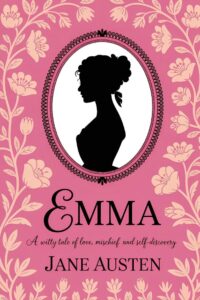
Jane Austen, Emma (1815)
If you need a fix after Bridgerton, I’ve got you. You thought I would recommend Pride and Prejudice or Persuasion, right? And, sure, those both spectacularly showcase longing. Austen is the queen of the slow burn. Not only in romance, but in the gradual development of character, relationships, and prose. You must wait—but an Austen book is always worth it.
Emma follows a matchmaker as she wanders the picturesque English countryside. Emma meddles with the romantic life of her entire village—while completely misunderstanding her own romance. In Pride and Prejudice, we have Darcy’s confession of love at 55%, while in Emma we’re on the edge of our seats wondering until the last chapters. Emma is a slow burn of misrecognition. We’re biting our nails, turning those pages. The brilliance of Emma is that she herself is the obstacle—she’s so busy arranging other people’s happiness that she nearly misses her own.

Gabriel Garcia Marquez, Love in the Time of Cholera (1985)
Gabriel Garcia Marquez’s Love in the Time of Cholera confronts the limits of patience. Florentino Ariza falls passionately in love with Fermina Daza—but she marries another. Over the next five decades, Florentino waits for Fermina, sustaining his devotion by writing her hundreds of letters. His longing swells beyond love into obsession.
Marquez’s saga joins Dickens’ Great Expectations and Calvino’s The Baron in the Trees, books in which unrequited love stretches the width of the narrative. The boundaries blur between obsession, romantic delusion, and love. Love in the Time of Cholera questions the virtue of patience. It’s a story about waiting. Marquez grapples with what remains after decades: does steadfast longing make a god of love or hollow it out.
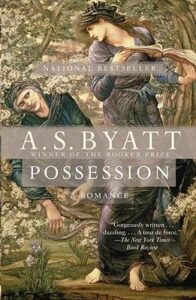
A.S. Byatt, Possession: A Romance (1990)
Okay, so I’m going to vault up onto my soap box for just a minute. We’re all chattering about Donna Tartt’s The Secret History as the original dark academia. But what about A. S. Byatt’s Possession: A Romance? It was published two years earlier.
In Possession, longing is mirrored between two timelines. After discovering secret letters between two Victorian poets, academics Roland and Maud set out to untangle a literary mystery. Their feelings develop quietly, the burn paired with intellectual restraint, their romance remaining unresolved until far into the novel. Byatt layers in invented history and poetry, creating a wholly original and spellbinding novel. Possession is the slow burn for readers who love literary puzzles and buried desire.
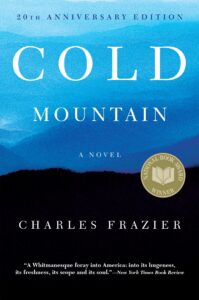
Charles Frazier, Cold Mountain (1997)
Charles Frazier’s Cold Mountain is an aching, tender slow burn shaped by absence. Frazier’s epic follows wounded Civil War soldier Inman as he journeys across the Appalachian wilderness to return to his beloved, Ada. Their brief courtship echoes across the novel, the story marked by the memory of a love barely begun.
Cold Mountain’s romance functions because of the separation by war. Frazier’s prose unfolds gracefully. One page may describe shoelaces, but you’re actually shown the nuances of character, setting, and mood—the smallest observation revealing something enormous about memory, grief, or love. Cold Mountain exquisitely captures longing with a quiet gravity.
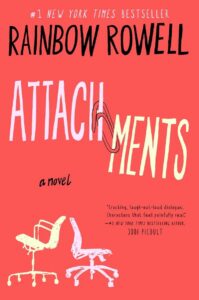
Rainbow Rowell, Attachments (2011)
But what if you fell in love before first sight? In Rainbow Rowell’s Attachments, Lincoln monitors company emails—and begins to fall for Beth, a woman he has never met. Attachments is an epistolary novel with You’ve Got Mail vibes and late 1990s nostalgia.
Rowell’s voice is so authentic it feels like eavesdropping on a best friend. The burn is patient, with the characters rarely speaking in person until the last pages: intimacy builds before the characters even meet. Attachments is charming and hilarious—your new favorite comfort read.
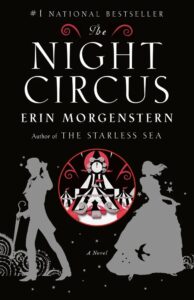
Erin Morgenstern, The Night Circus (2011)
Let’s talk about the slow burn in fantasy. Erin Morgenstern’s The Night Circus bridges literary fiction and lush, accessible fantasy. The story follows rival illusionists Celia and Marco in a magical, traveling Victorian circus. Le Cirque des Rêves appears without warning at night: black-and-white tents, fantastical menageries, a lyrical magic.
In The Night Circus, the slow burn is built by rivalry. As Celia and Marco fall in love over the decades, they become intertwined in a high-stakes, deadly competition. Their romance emerges alongside the dreamlike atmosphere of the mysterious circus, their illusions becoming a way to communicate with each other. The Night Circus ignites magical realism and rivals-to-lovers alongside a satisfying romance.
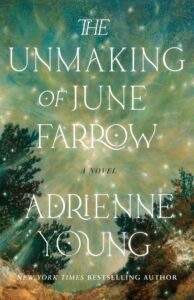
Adrienne Young, The Unmaking of June Farrow (2023)
In Adrienne Young’s The Unmaking of June Farrow love stretches through time itself. June Farrow, on a quest to solve her mother’s disappearance, travels back to 1951 through a mysterious door. There she meets Eamon Stone and untangles the complexities of memory and choice. The love story is braided across ages, where every choice reshapes the future.
The slow burn functions as a time-crossed romance and asks questions about fate, memory, and generational curses. Young deftly tugs readers into an atmospheric novel perfect for spring book clubs.
In a culture obsessed with speed, I hope you are able to pause. Slow burns remind us that some things are meant to unfold gradually. Waiting is the point. If your days feel a bit too fast, your life a bit too full, one of these unhurried romances may be the literary antidote to today’s instant gratification.
__________________________________
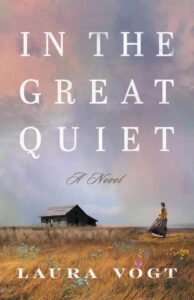
In the Great Quiet by Laura Vogt is available from Lake Union Publishing.

Laura Vogt
I'm Laura. I love to tell stories. I love what's wild and beautiful. My debut novel IN THE GREAT QUIET (Lake Union 2026) is a sweeping, atmospheric story in the tradition of COLD MOUNTAIN and THE FOUR WINDS. It's inspired by the true story of my grandmother's grandmother, following a tenacious pioneer's race into the great unknown.