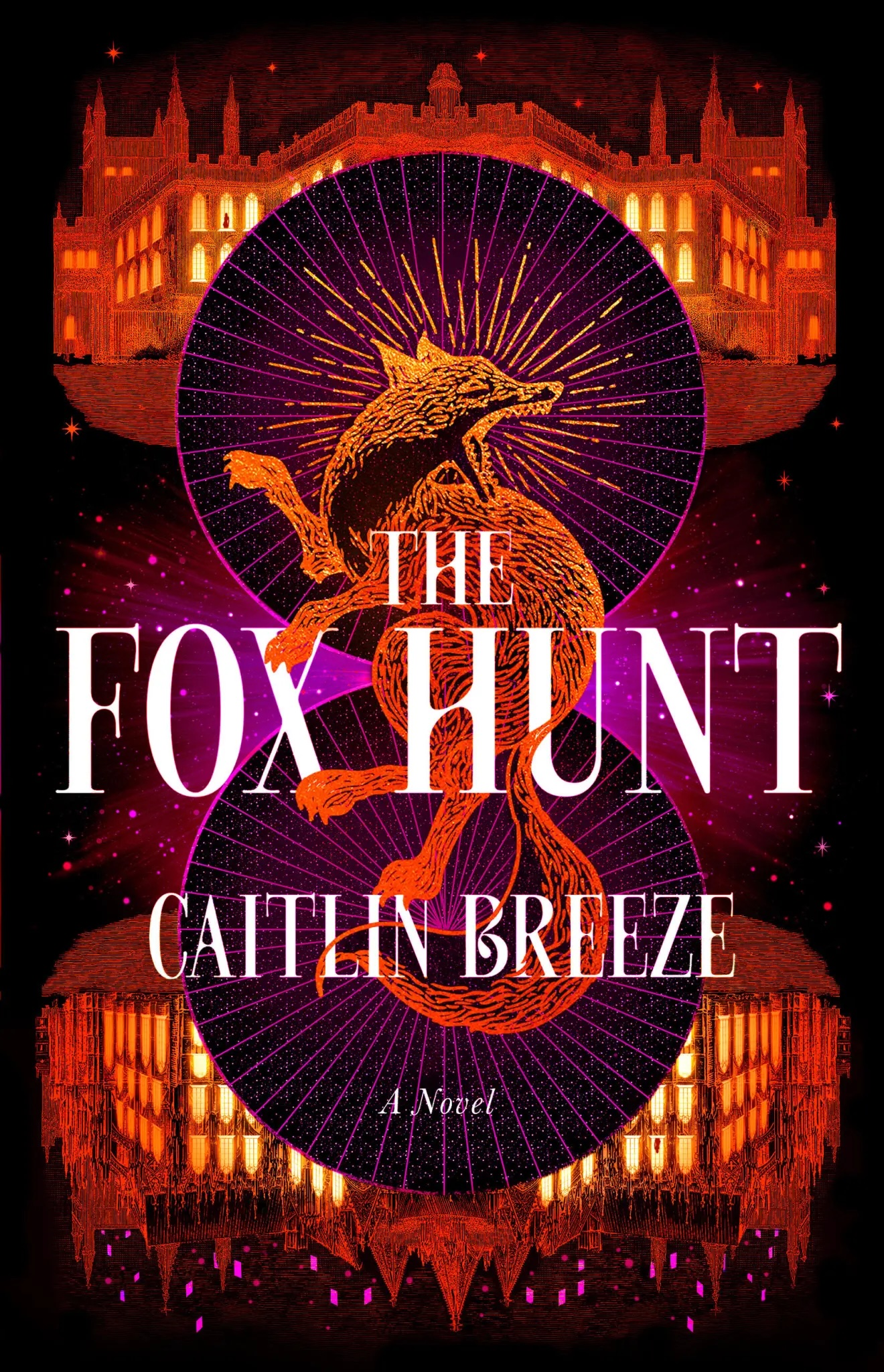
The Fox Hunt
Caitlin Breeze
There had never been such a flood. Not in living memory, at least. It came up silently. A dark tide clawed from the river, finger by finger, into the sleeping city. Under the cold gaze of the hunter’s moon, it eased past the windows of students and academics, porters and librarians. It brushed their tangled dreams, lapping higher.
In the span of one nightfall, the waters claimed the University. At sunset, the cobblestones had rattled with book-laden bicycles. The medieval mouths of the great college gates had gaped wide to welcome their gowned undergraduates and threadbare lecturers, to cradle the ancient dons tottering to their places at High Table. Bells rang out from myriad spires, and evensong silvered the air around Gabriel Tower.
By morning, all was drowned. Slick black ropes of water fingered the college foundations. Ankle-deep, knee-deep, waist-deep. Beneath its touch, gold stone weathered green. In the gray dawn, rows of bicycles bobbed at their moorings, as though lifted by ghostly hands. The straight march of the High Street turned wavering and sly.
And then the rain started.
It would become the tale of decades. The students passing precious paintings up to safety, bracing against waters that curled around hips and thighs. The lectures canceled, the tutorials postponed. In Persian-carpeted studies, professors settled in with their decanters. Underpaid lecturers huddled closer to their space heaters, submerging themselves deeper in Aramaic love poetry to stave off thoughts of the damp. The few cars that attempted to drive through the flood sputtered and died, bonnet-deep in swirling pondweed. Wading the streets was a task for only the bravest or the most desperate. For three days, the tourists had to stay out. The students had to stay in.
And in their absence, the other lives in the city rejoiced.
As the waters triumphed, dark fish swam up the steps of the Senate House. A shifting sheet of pewter covered the formal gardens, where eels wrestled in ecstatic knots among the drowning rosebushes. Spiders danced in the vaulted stone cathedral of St. Dunstan’s College.
Then, on the third day, the flood receded. The river drew back its reaches from the modern outskirts first. Within a few hours, even the water at the ancient heart of the city stood less than knee-deep. The mortal world began its inevitable process of reclaiming and forgetting. Waterlogged college gates were pushed open again. An army of college servants swept river silt from the courtyards.
And high in Gabriel Tower, Emma Curran woke from a troubled nap with a start. Mist had laid moist fingers on her windowpane, clouding the city outside. She listened for the sound that had woken her and heard nothing. But something had changed. She was sure of it. It took her a moment to realize.
The rain had finally stopped.
She had listened to it through the three long days of her confinement. So long, the tapping water had begun to sound like whispers beyond the windowpane. They had seeped into her dreams. She rubbed at the window with her sleeve and peered out. At last, a few gleams of paving stone showed through the murk in the lane below. After three days of nothing but deep black currents, it felt like an omen of good luck, just for her. She laid aside the work on her lap and stretched limbs grown stiff from hours curled into the window seat.
A jolt pierced her heart. The rain was gone, and so was her last excuse. If she was going, it was nearly time. Everything she needed had been laid out on her bed in the morning, just in case. With hands she couldn’t stop from shaking a little, she buttoned the crisp shirt, smoothed out one last imaginary crease in her good trousers. The chime of her phone distracted her for a moment only. Barely pausing to read the message, she dashed off a reply and went back to muttering under her breath. She’d memorized the facts. Only the opening still troubled her. Some people introduced themselves so easily. As though talking about themselves wasn’t an insurmountable obstacle.
Her eyes strayed back to her phone. With a groan, she dropped the half-packed bag on her bed. Slipping from the room, she tapped on the door next to hers. They were the only two on the floor: Gabriel College had only recently converted the tower’s crumbling cells into accommodations. It was not a popular option, thanks to the deafening cycle of bells from the belfry above. The monks who had first built Gabriel College had been dead six centuries, but still the bell tower rang out the joyful and thunderous pattern of their days, matins to compline. But for two second-year students who cared more about being close to the dining hall than the sanctity of sleep, the rooms were perfect.
“Come in.”
Emma pushed open the door without ceremony.
Nat’s bedroom was a collage of old film posters and flyers for upcoming plays. While the desk was buried under enough layers of books to qualify as an archaeological site, the area around the state-of-the-art sound system on the opposite wall was spotless. It was best not to consider how far the contents of that wall outstripped the value of her student loans, she’d found. Before the University, Emma had never imagined anyone her age with their own cinema-grade sound system. That had changed the day she’d arrived at Gabriel, a year earlier, when she’d seen fifteen unloaded with the new freshers from tasteful Range Rovers and Tesla SUVs.
The figure stretched on the bed grinned at her. Emma looked at the phone in his hand and sighed.
“Can it be?” Nat Oluwole threw his head back, gesturing to the heavens. “Can my own Emma Curran be abandoning me?”
He was the best boy alive, but he did like to declaim.
“I’m sorry,” Emma said, but there was a smile in it. There always was when Nat decided to make her laugh. “I really don’t want to let you down.”
“Now that sounds likely,” he said gravely. “You, the most faithful friend in history, a letdown? Well, of course. I mean, who would not have spent their last gods-given, lecture-free day pricking holes in their fingers to make me a costume — for no other reason than I mentioned it last week — and all for a party they now refuse to go to?”
“I tried to explain in my message. Nat, surely you can see? I won’t know anyone, I don’t know how to act at these things, and I’ll go home feeling terrible about myself.”
Nat shook his head. “I mention a party, and you start wailing like it’s the last act of Tosca. But I make you hot-glue bottlecaps to a sleeping bag all night long — ”
Emma’s brow crinkled. “I really didn’t mean to set off the fire alarm. I hope that lecturer above was all right. The burnt smell definitely reached his floor. And the alarm was so loud — ”
“It was barely three a.m.,” Nat went on with a dismissive flap of his hand. “And he chose to live in a bell tower. He’ll be fine. But you, treasure among friends? You’ve glued and stitched away, and not complained or even questioned my sanity — ”
“When you said this costume was for a party, I thought it was one of your theatre parties,” Emma said. “I’ve done much madder things for those. Like when you had me sew you up in an actual shroud for the Macbeth cast party last year? You had to get the director to guide you around by the hand all night, to stop you tripping over chairs.”
“I,” said Nat with lofty dignity, “was the ghost of Banquo. You logical minds cannot understand the exigencies of art. Or parties.”
“We logical minds are also covered in glue burns from last night’s ‘exigencies of art.’ And we are not going to the party. There will be too many people, and I’m tired, and — ” Emma flopped onto the bed. Nat shifted to make room. “That’s what I wanted to talk to you about. I sent you that message, and then of course I started worrying that you’d hate me — ”
“Which I don’t,” Nat interposed.
“And that you’d be angry with me — ”
“Which I never have been.”
“ — because it was lovely of you to invite me. But I actually have something else this afternoon. And I don’t know how late I’ll be.”
Nat propped himself up on one arm. “Do tell.”
“It’s — it’s the Colefax-Lee Foundation program. The interviews are today.”
Nat whistled. “Big stuff. Are you sure they’ll be happening, though? Flood, and all that?”
“The waters are going down.” Emma bounced, her body athrill with excitement again. “And it’s not far. I have to try.”
“Going down is not gone.”
“Oh, I don’t need to worry about that. Look — ”
Emma dashed from the room. The sound of rubbery squeaking and a few choice profanities emerged from her bedroom. A few moments later, she pushed open Nat’s door and stood framed in the doorway in all her glory.
“Good God,” Nat said blankly.
A pair of voluminous, violently green rubber waders enclosed Emma from toe to chest. “I kept them from that time at the field station in Senegal.” She beamed. “I thought they might come in handy if I ever wanted to do a survey of the caddis fly larvae in the river here. A colleague of my mother’s in the US is writing a paper on how they might be linked to otter populations. Wouldn’t it be amazing to actually find out if the same is true here?”
“Indeed,” Nat agreed weakly. “Just what anyone would think. Now, take the hideous things off.”
Emma wriggled obediently out of the offending articles. “Anyway, they’re perfect for today. I’ll be as dry as can be. Oh!” She dashed from the room a second time. “How could I forget? It’s finished. Your costume.” She dropped her armful of fabric into Nat’s lap. Her friend let out a joyful squawk she was sure he would die rather than let his theatre friends hear. “I hope you make an excellent caterpillar,” Emma laughed.
“I will,” said Nat, with absolute confidence.
“And I hope you impress whoever all this is meant for.”
“It’s no one. Nothing. Just a friend.” His neck had flushed bright red.
Emma fought a smile. She wasn’t sure which boy had attracted Nat’s attention this time. His many loves were legend. Unlike Emma, who dated seldom and with a scientist’s detachment, Nat had a way of truly believing every time that at last, this one was true love.
“Lewis Carroll would be proud,” her friend was muttering now, spinning in front of the mirror with the costume draped over his long form. The interminable hours she’d spent in the window seat — listening to the rain and sewing the hundreds of legs — had been worth it. He looked spectacular.
“But, Emma — ”
Nat had stopped twirling.
“After the interviews. You could still come to the party, right? It won’t matter if you’re late. Just throw on that blue dress you have, and I’ll say you’re Alice in Wonderland. To go with me. It’ll be fun. They’ll love you.”
Emma pulled a face.
“Em — ” The caterpillar hugged her around the shoulders. “You’re one of my favorite people. Truly. But you need more friends than just me. Let the world get to know you. You might be surprised.”
Emma shook her head and busied herself with picking up her waders. “I don’t know if I’ll feel like it.”
“I’m not going to press you if you don’t want to go. You know that. And I love this newfound firmness.” He raised one eyebrow at her, a trick she’d never been able to copy. “It suits you. I’m just tickled that, after all of the idiotic requests I’ve seen you give in to, this party is the one that broke the, er” — Nat eyed her long frame and grinned — “giraffe’s back?”
Emma reached out and swatted him, without any real heat. “Giraffe yourself.”
Then, as an afterthought: “It suits me?”
“Yes, Emma.” Nat could go from theatrical to sincere in the time it took for Emma’s voice to wobble. “And so does your height, for that matter.”
Emma rolled her eyes at that.
“Go on.” He grinned, herding her out of his room. “Go get the millionaire funding of your dreams. And see how you feel afterward.”
Firm. Emma found herself repeating the word in her head. Firm.
It did suit her.
__________________________________
From The Fox Hunt by Caitlin Breeze. Used with permission of the publisher, Little, Brown and Company. Copyright © 2026.

Lit Hub Excerpts
An excerpt every day, brought to you by Literary Hub.