The Authors Guild is allowing more writers to certify their books are AI-free.
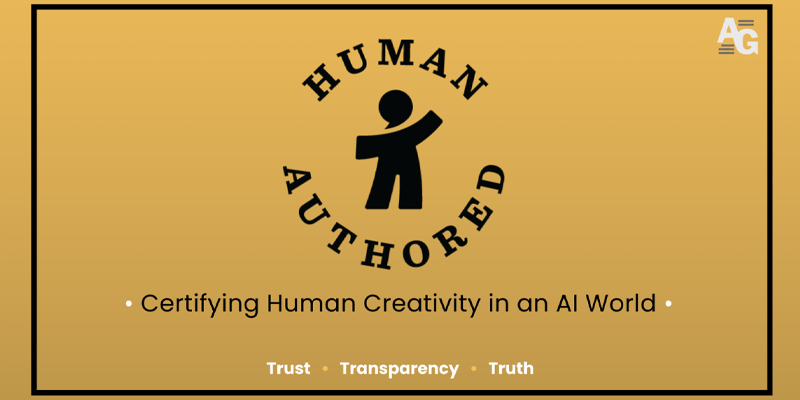
The Authors Guild is expanding its Human Authored certification program to allow publishers and non-Guild members certify that their work is untainted by AI, according to the Guild and Publishers Weekly.
The program, which aims to “distinguish human creativity in an increasingly AI world,” started in January 2025 but has until now been limited to Guild members. The program allows authors to verify that their books are written completely by a human and not generated by software, and then gives them a trademarked seal to signal that the book is human authored. The service is free for Guild members, but non-members can now pay for the service for books published in the U.S., and publishers can buy batches of certifications. Since last year, over 3,000 authors have used the program to certify 5,000 titles, according to Authors Guild CEO Mary Rasenberger.
The program works by having authors register at authorsguild.org/human, and then submit their work for third party verification and then sign a licensing agreement. The fee for non-members is $10 per title, and is open to print and e-books that are published or unpublished.
The Guild’s CEO Rasenberger sees the program as a way to protect authors against “AI-generated spam titles flooding the various platforms,” especially in the absence of any legal or industry-wide push to demarcate AI writing.
“It’s our firm belief that reading is about human connection,” Rasenberger said, “and readers want books that are written by humans and not computers.”
There are some exceptions for AI, though. AI-powered spelling and grammar tools, which seems to be most of them these days, will not invalidate a book. More worrying is that using AI software for “tables of contents, indexes, research, brainstorming, or outlining does not disqualify a title.” These carve outs are a little disappointing, which seem to be a concession to publishing executives and managers who are more bullish on forcing this technology into publication workflows.
For authors, a trusted label that helps quickly distinguish a book as something that isn’t slop is going to be more and more important. I would love to see that same attention to paid to holding the line against encroaching slop in the rest of publishing. I hear from enough publishing workers that they’re under pressure to incorporate these LLM tools and have limited abilities to push back, so it’s a shame to see a place like the Authors Guild concede to that pressure too.
I understand that these things are slippery and that this technology is becoming pervasively entrenched in ways that are hard to fully divorce from. But drawing a more definitive line in the sand, even just as a demonstration of values, would be a vital counterweight to these heavy corporate influences. There are limits to what individual publishing workers or unions are able to demand and abstain from in the workplace, which is exactly why we need places like the Guild to speak up.
Image from authorsguild.org

James Folta
James Folta is a writer and the managing editor of Points in Case. He co-writes the weekly Newsletter of Humorous Writing. More at www.jamesfolta.com or at jfolta[at]lithub[dot]com.