
The Anxiety (and Relief) of Diagnosis
Alexandra Sifferlin on the Road to Diagnosing Illness and Disease
Stories of diagnoses are not clean and tidy, even if the diagnosis itself is profoundly meaningful. Diagnosis is an answer, but it’s not always a comforting one. And the meaning it has for different people, even different members of the same family, can be mixed.
“When Emily got sick, I was a mess,” said Jim Brackett. His daughter Emily suddenly began throwing up after car rides or spinning in the yard when she turned five years old. At first he and Emily’s mother, Beth, thought it was intense motion sickness. But soon Emily was having regular stomach pain and headaches. Her face began to look as if one side were tilting, and she was struggling to balance. One day she was shrieking from the pain in her head, and her parents took her to the hospital. But doctors couldn’t figure out what was wrong with her—it wasn’t an infection or a diagnosis like cancer. Emily saw multiple doctors and received few answers. “I was a worrier. But this experience drove it right out of me because you can’t function as a worrier,” said Jim.
Jim learned how to compartmentalize his feelings to survive amid the uncertainty of what was ailing his daughter. “I got better and better at sort of turning off the emotions and just taking the facts and the information and trying to parse it,” he said.
In 2015, when Emily was ten years old, she was accepted into the Undiagnosed Diseases Program. Her parents had been seeking a diagnosis for five years before reaching the NIH, where the team discovered her diagnosis within just a few months.
Sometimes the journey to diagnosis is so emotionally excruciating that people call off the effort for a long period of time or even altogether.
When Jim learned the NIH was ready to share a diagnosis for Emily with the family, he didn’t react the way he expected to. “I got anxiety before the diagnosis,” he said. “You learn to live with the uncertainty, and you could go in there and learn that she has two years left in her life and we can’t do anything.” Beth felt somewhat differently. “To know is so much better than not knowing,” she said. “Because we didn’t know how the disease was going to progress, or what the endpoint would be.”
Emily was diagnosed with a type of hemophagocytic lymphohistiocytosis, or HLH, a rare condition in which some of her white blood cells were building up inside her organs and damaging them. While Beth felt comfort in finally having a diagnosis, Jim had little emotional reaction in the moment. The numbness remained even when he was told that his daughter’s condition would likely improve with a stem cell transplant—his fear of a terminal diagnosis could be assuaged.
“I didn’t actually feel all that happy or relieved or unhappy or extra worried,” he remembered. “You get a new set of circumstances to process.”
He started to think about the risks of the transplant and tried to prepare himself for the possibility it could go horribly wrong. It wasn’t until about a full year after his daughter’s transplant was deemed a success and many of her symptoms had subsided that he let himself feel positive again.
Sometimes the journey to diagnosis is so emotionally excruciating that people call off the effort for a long period of time or even altogether. Camilo Toro, the neurologist who diagnosed Mark Houppert, said the UDP often sees patients who are in their thirties but have been having symptoms since they were infants. “Their parents pursued everything under the sun to find a diagnosis and eventually they burn out and say, ‘Okay, it’s not going to happen. We are not going to have a diagnosis and we’re not going to know,’” he explained.
But families frequently decide to pick up the process again years later when having diagnosis holds new meaning. “The biggest motivation that there are siblings,” said Dr. Toro, and these siblings are at an age when they are considering having children of their own, and the family would like to understand any medical risks for their future children or grandchildren.
If a health problem is completely random and isolated, meaning the rest of the family is free from risk, the news can be relieving, if complicated. “It’s a bittersweet experience because it’s terrible news for the patient, in a way, but it is wonderful news to the family,” said Dr. Toro. “It gives peace of mind to understand that the risk of recurrence for the new family is low and can be further defined.”
If the risk turns out to be very high, the knowledge can still be useful. Families can make decisions for their future based on facts rather than fear alone. Two common reasons parents give for wanting a diagnosis for their child is help with care and treatment and to know about the future. Without a diagnosis, people are unsure about how a condition might progress over time, and this can be a great source of anguish for both patients and their families. Having a diagnosis also helps patients and families find others with their condition, and lean on one another for support or advocacy.
If a patient’s doctor can’t name their illness, then everyone else in a patient’s life, including insurance and disability providers, as well as their friends and family, might think there isn’t one.
Fatemeh remembers the first time she realized something wasn’t right: She was twenty- three years old and running catch a train but couldn’t seem to will her body to hurry. Not long after, she started regularly tripping and falling over. The physicist and optics researcher continued to experience symptoms of her body seemingly unable to keep up with her, going undiagnosed for years. After defending her master’s thesis, she found herself in bed, unable to motivate herself to move. Something was clearly wrong with her muscles, but she was also deeply depressed over the lack of answers, wondering what her future could possibly look like.
When she was finally diagnosed with GNE myopathy, a progressive muscle- wasting disease, she felt at ease despite the seriousness of the diagnosis. “Somehow it was more relief,” she said. “I had the diagnosis finally. The diagnosis made me stronger.”
The American medical system is reliant on diagnostic codes. These codes are what support the medical necessity for services rendered and explain why a given treatment was performed. If patients don’t have a clear diagnosis and code, then a health care payer may deny them coverage and deem further testing and treatment unnecessary. Even if patients or a small group of medical professionals have coalesced around a potential definition of a shared disease experience, they need institutional approval for relief.
Beyond being denied acceptance into the medical system, not having a diagnosis makes it harder for a person to claim sickness. If a patient’s doctor can’t name their illness, then everyone else in a patient’s life, including insurance and disability providers, as well as their friends and family, might think there isn’t one. “I just want permission to be ill,” one woman told Sarah Nettleton, a medical sociologist in the United Kingdom, as part of her 2006 study of people with medically unexplained symptoms.
Other participants told Nettleton that they feared that unless they were seen as trying to get better, people would question whether they were truly sick. “It is difficult to convince other people; they are very disbelieving as there are no visible signs or name to the illness,” said one fifty-three-year-old woman named Angela, who was dealing with symptoms that included a lack of coordination, inability to swallow, headaches, and memory loss.
Others in the study worried about being called “a fraud,” “hysteric,” “fake,” or “hypochondriac.” Without a medical diagnosis, some of the patients internalized the doubt and told Nettleton that there were points when they personally wondered if they were experiencing something real: “There is a lurking fear—in the dark out there that I may be faking it,” one participant said. “It’s an awful moment, a really nasty moment, a total put-down when the tests don’t show anything. Despair.”
Research suggests that patients without a diagnosis are right to fear that they won’t be believed. In 2019, Charee Thompson, a professor at the University of Illinois Urbana- Champaign and a coauthor, interviewed thirty-two people about their experiences with family members who they perceived were crying wolf about health issues by falsifying or exaggerating their symptoms. One woman in the study said she thought her mother’s diabetes claims were overblown. “I think she wants attention, and she wants control,” she said. “I don’t think she has a lot of control in her relationship with my father.”
When there’s a lack of recognition or outright doubt that a person’s symptoms of disease are a real, diagnosable illness, there’s a great opportunity for people in these communities to seek validation elsewhere. This can mean they are more vulnerable to being scammed or taken advantage of. People with undiagnosed illnesses can be easy targets for therapies that don’t actually treat the cause of the medical problems and can put their health at risk. Poor experiences with mainstream medicine can make it more likely that people will try approaches with little science behind them, sometimes with dangerous results.
For example, colloidal silver, once used for wound treatment before antibiotics, became available and is sometimes marketed as a remedy for chronic Lyme disease, despite the fact that silver can accumulate in tissues and cause serious side effects. Both the Food and Drug Administration and the Federal Trade Commission have gone after companies that make misleading claims about the supplement as a treatment for Covid-19.
But even people with conditions that are not especially rare can find themselves facing medical doubt. While diagnostic odysseys may seem like something reserved for unusual or rare conditions, many people with more common illnesses also face extended periods without answers. A long journey to diagnosis doesn’t always begin with something complex. Sometimes it begins with something ordinary that no one bothered to take seriously.
__________________________________
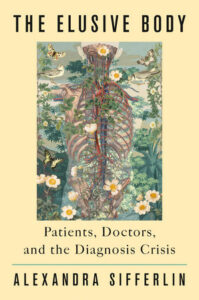
From The Elusive Body by Alexandra Sifferlin, published by Viking, an imprint of Penguin Publishing Group, a division of Penguin Random House, LLC. Copyright © 2026 by Alexandra Sifferlin.

Alexandra Sifferlin
Alexandra Sifferlin is an editor leading health and science coverage for The New York Times Opinion desk. She is a former deputy editor of the health publication Elemental, and staff writer at Time, where she covered medicine and public health. Sifferlin lives with her family in Brooklyn, NY.