The Annotated Nightstand: What Zefyr Lisowski is Reading Now, and Next
Featuring Dorothy Allison, Aria Aber, Cameron Awkward-Rich, and More
As I mentioned in my last post this month, December can be a fraught time of year. Forget Seasonal Affective Disorder or being around unhinged family members, I’m talking about the Season of the Lists—the lists that lay out the “best of the year” books that often repeat (sometimes warranted, others [sorry] not so much). What I do at this column and we like to do generally at Lit Hub is take a closer look at the work that deserves more attention, our own personal “best of” list. My last post was about Marci Vogel’s poetry/intervention/translation/hybrid/study Xeno Glossia, and for this next one I’m looking at a book of essays. Any number of books could have taken this second slot, including Jennifer Kabat’s Nightshining: A Memoir in Four Floods, Susanna Kwan’s Awake in the Floating City, Amy Gerstler’s Is This My Final Form?, Aja Gabel’s Lightbreakers.
Zefyr Lisowski is a poet who (full disclosure) I worked with to edit her Lambda Award-winning collection Girl Work. While Girl Work attends to many concerns, a recurring one was the origins of The Ring, which looms large as one of the most terrifying horror films according to those brave enough to watch it. While the image of the girl-villain, Samara, feral and wet, climbing out of a television, is the lingering horrifying image in our cultural imagination, Lisowski adeptly points to the more violent horrors of the story. Predominantly: how we treat people whose bodies don’t fit into tight social norms (in the original novel the girl is intersex)—and how we treat little girls.
Lisowski’s punchy new essay collection, Uncanny Valley Girls, homes in on the horror genre and its grander implications. That horror lays bare society’s most primal fears is not a hot take, yet the way Lisowski approaches films like Pet Sematary, Scream, and Antichrist feels fresh and alive. During an event hosted by Johanna Hedva, Hedva adeptly describes Lisowski’s ethos in conjunction with the classic horror trope “the call is coming from inside the house,” saying to Lisowski: “You’re the kind of person who would pick up the phone and ask who are you?”
In Uncanny Valley Girls, Lisowski casts her scrupulous eye on the protagonists and “monsters” alike to discern beyond the inevitable emotional manipulation of the film’s plot defined by its adrenaline-laden intensity. She dissects what these films tell us about larger thinking regarding femininity, class, race, illness, or deviance/otherness writ large, yet also invites humane ways to attend to their villains—or, at the very least, ask what got them there in the first place. (Poignantly, Lisowski notes that Samara in The Ring doesn’t start harming people until she herself is murdered as a child.)
Woven into this already textured brocade are threads from the real world. Actual deaths that lead to ghost stories and infamy, sure, but predominantly the details of Lisowski’s life. “The need to watch violent horror movies, I suspect, is the preponderance of violence already in life,” she writes. She describes the grief of her father’s death, being born in the shadow of a sister who died at nineteen. Her growing up queer and sick in North Carolina, gnawing on her loneliness.
As an example, one essay forges connections between Saw and US troops’ torture of Iraqis. This is alongside a fraught childhood crush—a friend in a military family who first exposed Lisowski to the particularly brutal films of the Final Destination ilk. “On screen, arteries gushed open and ligaments bent back until they snapped like wishbones,” she writes. The writing, like most horror movies themselves, is embodied. Nipples prick in water, hands hum to touch under sheets. As much as this is a book about horror and loss, it’s also a book about erotics, expressions of care, and community.
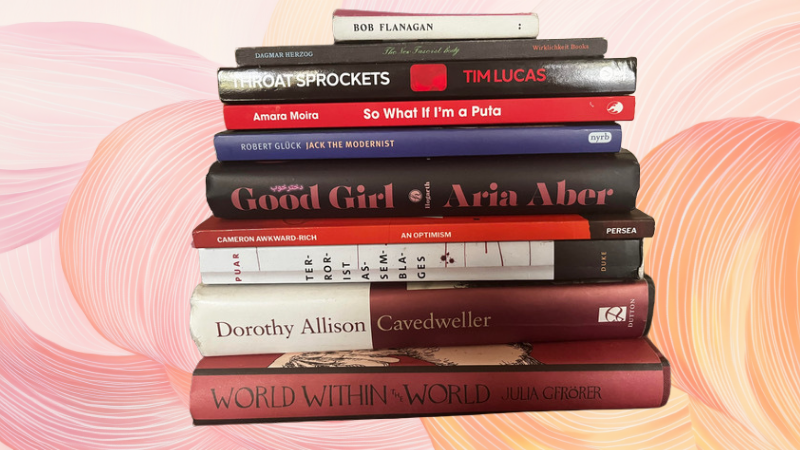
Lisowski writes about her to-read pile: “I read around themes, and I’ve recently been doing a deep dive into writing about intimacy. I find the New Narrative writers especially adroit at writing sex, and loved the NYRB reissue of Margery Kempe a few years ago, so I’m excited to dive into Glück’s earlier Jack the Modernist. Along this same line is Tim Lucas’ Throat Sprockets, an artifact of the weird, horny, body horror/splatterpunk 90s. Similarly twining intimacy and relationality is Bob Flanagan’s luminous and also recently reissued Fuck Journal—a chronicle of every time he and his life partner and dom, Sheree Rose, had sex for a year that’s somehow also one of the most romantic things I’ve read in quite a while. Beyond that is the usual mix of fiction (new and old), poetry, comics, and writing that attempts to make sense of this current moment. Ultimately, all these works are about our myriad intimacies and the political constraints around those, too, which seems especially urgent in these particular times.”
*
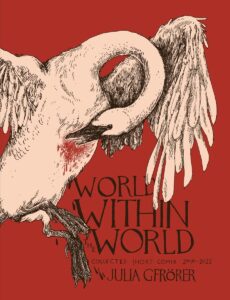
Julia Gfrörer, World Within the World: Collected Short Comix 2010-2022
In an interview with Shaenon Garrity at Publishers Weekly (which gave this collection a starred review), Gfrörer says, “If I tell you my friend hurt my feelings, that doesn’t mean a lot. But if I tell you I slammed my hand in a car door, that’s visceral. That’s how I approach horror, as part of the human experience. Pain and fear are inevitable in life, even though maybe getting stalked by a ghost is not.”
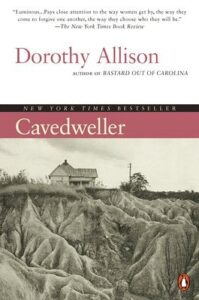
Dorothy Allison, Cavedweller
“The defining motifs of [the protagonist] Delia Byrd’s family are poverty, religion and violence,” writes Valerie Sayers in the 1998 review at the New York Times, “The novel travels from the early 1980’s to the present (Ronald Reagan’s voice echoes on the radio)…Allison’s home turf is one on which white Southerners battle the results of severe emotional repression, a repression linked—though never simplistically—to fundamentalist faith and economic reality.”
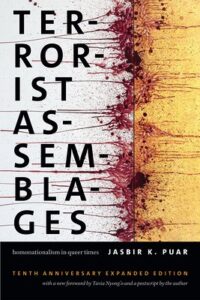
Jasbir Puar, Terrorist Assemblages: Homonationalism in Queer Times
The amazing scholar Lauren Berlant (RIP) says of Terrorist Assemblages: “I could not stop reading this outraged, meticulous, passionate, and brilliantly visioned book. Jasbir K. Puar’s analysis of the neoliberal, imperial, sexual, and racist present reaches into the U.S. academy and multiple transnational publics and is critical of them all, even when she has solidarity with them. It’s been a long time since I read something so smart and so thorough in its storytelling.”
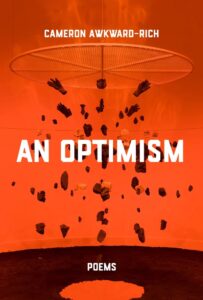
Cameron Awkward-Rich, An Optimism
In her glowing review at Arc, Stephanie Burt writes of An Optimism: “Awkward-Rich’s new book of poems (some in verse, some in prose, some with photographs) takes up his discursive interests along with his poet’s ear. It’s his strongest, because it brings those gifts together. It weaves modern lyric goals together with explicit arguments.”
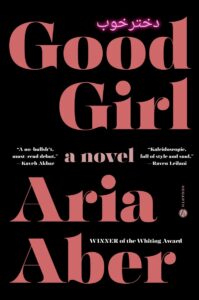
Aria Aber, Good Girl
“Aber has written not just a ‘Millennial Novel’ about the coming-of-age of a young, ambitious artist,” writes Leah Abrams at the Los Angeles Review of Books, “but also what we might more precisely call a ‘modern passing novel’: a Künstlerroman in which the protagonist obscures her identity to pursue aesthetic dreams, walking a tightrope of her own interwoven lies as she goes.” (Check out Aber’s “Annotated Nightstand” pile here.)
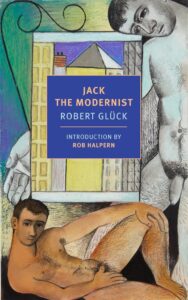
Robert Glück, Jack the Modernist
Lucy Ives says, “Glück is an extraordinary philosopher of ethics, aesthetics, and the English sentence—a thinker of the originality of William James, with the formal range of his brother Henry. This republication is cause for celebration not only because Jack the Modernist is an utter joy to read, but because it calls our attention to an era-defining artist and public intellectual in our midst.”
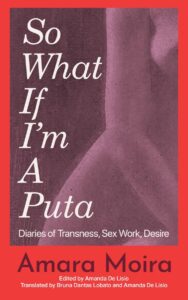
Amara Moira, So What If I’m a Puta: Diaries of Transness, Sex Work, Desire (tr. Bruna Dantas Lobato & Amanda De Lisio)
“So What If I’m a Puta, originally published on author Amara Moira’s popular blog of the same name, consists of 44 crônicas that wryly portray her experiences as a trans sex worker in Brazil,” states the jacket copy of this collection. “In a brazen, funny, and at times heartbreaking voice, Moira explores the political and personal textures of her encounters with the men who buy sex from her, and the complex reality of her labor of a sort of love.”
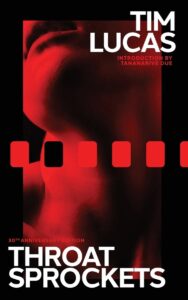
Tim Lucas, Throat Sprockets
Kirkus says Tim Lucas’ 1994 novel “puts poetic bite into seemingly banal material about one man’s sexual fetish: the exposed female throat.” After the protagonist’s wife rebuffs him, “Our boy then begins his lonely quest for a willing new partner who shares his obsession. He encounters Emma, who makes ceramics shaped like necks and becomes a kind of alter ego: ‘A stranger cuts through your life as a kindred shadow,’ muses Lucas about the new relationship.”
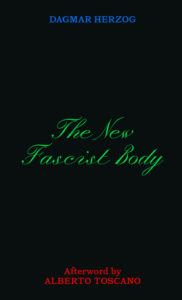
Dagmar Herzog, The New Fascist Body
In an excerpt published in e-flux Journal, Herzog writes, “Globally and locally, we are no longer living “after fascism,” but—all of a sudden—in the midst of it again. Yet once more, we are seeing how racisms of various kinds give some people a heightened sense of self-worth, how sexual minorities are ridiculed and denigrated, how the hard-won right to self-determination in matters of reproduction is again being contested, and how shrill campaigns of indignation are stirring up emotions. At the same time, a delight in violating taboos is spreading.”
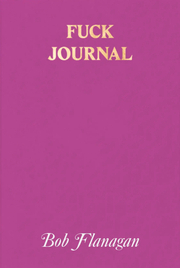
Bob Flanagan, Fuck Journal
I hesitate to quote two jacket copies in one post, but this one just takes the cake. “Fuck Journal chronicles Flanagan’s liaisons with his beloved romantic and artistic partner Sheree Rose over the course of a year. Composed at Rose’s prompting and anticipating Flanagan’s extraordinary Pain Journal, the volume is so direct in its account of the couple’s conjugal life that the Indian authorities tossed its original print run into the ocean before the books could ship from Chennai to New York. By luck, 300 copies which had traveled with the editors to the US remained in circulation: an origin story that chimes with Flanagan’s aura of irreverence.”
Diana Arterian
Diana Arterian is the author of the recent poetry collection Agrippina the Younger (Northwestern UP, 2025) and editor and co-translator of Smoke Drifts (World Poetry Books, 2025), a collection of Nadia Anjuman's poetry. A Poetry Editor at Noemi Press, Diana has received fellowships from the Banff Centre, Millay Arts, and Yaddo. She writes “The Annotated Nightstand” column at Lit Hub and lives in Los Angeles.