The Annotated Nightstand: What Daniyal Mueenuddin Is Reading Now, and Next
Featuring James Joyce, Susan Orlean, Lauren Groff, and More
The 1970s seems defined by bawdiness, revolution, drugs, and flamboyance. These adjectives threw up a big tent, and much of the world crowded in. In some countries, their recent liberation from imperial rule (The Philippines, Iran, Morocco, among others), tinged the era with eagerness for a future defined by independence. Hardly a generation after the partition, an independent Pakistan was one such nation. In ’70s, it was at a crossroads. It held its first democratic elections after years of military rule. There were also crackdowns and coups and the Bangladesh Liberation War, the India-Pakistan War.
Despite the turmoil, there was hope about the future of the country—a sea change that suggested a newness and potential. The decade brought the creation of a populist political party. The infusion of hippie culture from the West—Pakistan was of course part of the famous “hippie trail,” influencing hippies themselves, an infinite loop—cultivated a blend of counterculture, radical student action, and leftist goals for the younger generation of urban middle class. Drinking, flamboyance, and film- and music-making bloomed.
Much of Daniyal Mueenuddin’s This Is Where the Serpent Lives—one of Lit Hub’s most anticipated books of the year—understandably lingers on this era. He takes us from the rural Punjab region to Dartmouth’s college campus to the bustling city of Lahore to give us in-depth portraits of Pakistani youth of different classes trying to find their footing.
Throughout the novel, Mueenuddin weaves through the lives of the affluent and those who work for them. Each are characters trying to find their path, whether to claim the sexual liberty enjoyed at an American college or as a young servant earning the trust of a wealthy family only to potentially exploit it. No matter their financial situation, these characters are circumscribed by their situations (class, responsibilities, families) and desire more—or something else entirely. They were often thrown into circumstances by their parents (abandoned, shipped to the US for college) or social structures (class, gender).
Like anywhere, the division between the wealthy and poor makes for starkly different realities. This Is Where the Serpent Lives begins here: a young boy abandoned at a tea stall. The stall’s owner gives him the name of a Sufi mystic, Bayazid (or Yazid), and Yazid is “paid in food and treated unsentimentally but fairly, hardly any use at first, then gradually indispensable.” These last two clauses often apply to those who work and hold important positions for the elite. The whole novel seems to whirl around that fact. Class difference is everywhere in these pages, at times as explicit as a servant changing the shoes of a man who sits passively during the task, to the perpetual passive voice (“the fire was lit”) implying the labor of the many for the few.
One of the wealthy, Rustom, is sent to U.S. for his education and returns to tend to his family farm where he fumbles with escalating intrusions from thuggish neighbors. “[W]hat happened to college days and marching for justice in South Africa and in solidarity with ship workers in Poland?” he asks himself. Within six months, Rustom ends up letting hired thugs of his own who exact their own violence, “becoming just like the other landlords.” At one point, Rustom’s cousin, who has handily maintained his family wealth, gives him advice: “In Pakistan, every problem is a lock, to that lock is a single key. Your job is to find that key.”
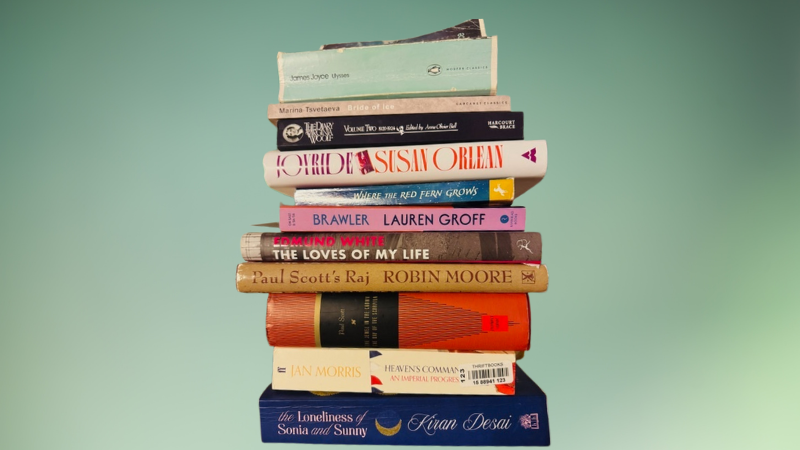
Mueenuddin gave us a little morsel for each book in his to-read pile!
He writes:
I read many books at once, as writers often do—picking up whatever suits the moment. Of the books in this pile: Ulysses is there because I’m constantly reading it, it’s my little pleasure whenever I need a laugh or to be diverted—flip it open and see where I land.
The Tsvetaeva is something I’ve been reading over the years, then found this in my Oslo bookstore and have been rereading and finding much to capture me.
Where the Red Fern Grows was one of my favorites as a boy, and I’m now reading it to my own children, who are engrossed and each night beg me to keep going.
The Orlean is so wonderful—I’ve just begun—I’ll read anything she writes, and this is certainly as good as her other work, intimate and funny and so well written.
The Paul Scott and the Robin Moore are there because my next book is set in Pakistan in the 1950s and 60s, so I’m reading about how other writers have approached that setting and time. Scott does it so well, though he spent only a few years in India—he really gets it, and I’d like to learn from him. The Jan Morris is brilliant popular history—and these volumes—there are three, about the British in India—are full of wonderful anecdotes, some of which I will perhaps steal!
And Kiran Desai’s book is for pure pleasure—to see what she’s done now.
For the Woolf—she’s so smart about being a writer, how to live that life—the diaries are a master class.
And Lauren Groff—she does short stories as well as anyone going—I study her method to help me refine my own stories.
*
James Joyce, Ulysses
A couple of years ago Lit Hub published an excerpt of a 1922 review of Ulysses by Edmund Wilson in the New Republic. Wilson writes, in part, “[T]hough exercising a severe selection which makes the book a technical triumph, Mr. Joyce manages to give the effect of unedited human minds, drifting aimlessly along from one triviality to another, confused and diverted by memory, by sensation and by inhibition. It is, in short, perhaps the most faithful X-ray ever taken of the ordinary human consciousness.”

Marina Tsvetaeva, Bride of Ice (tr. Elaine Feinstein)
The jacket copy for this poetry collection reads, “Marina Tsvetaeva is among the great European poets of the twentieth century. With Anna Akhmatova, Boris Pasternak and Osip Mandelstam, she retained her humanity and integrity through Russia’s ‘terrible years’ of the Great Terror. Even in her long, tragic exile, her roots were in Russia and the great tradition of Russian poetry. Her voice lives in part because it remains alert to her past, and to cultures, especially French, where she spent her exile.”

Ed. Anne Olivier Bell, The Diary of Virginia Woolf: Volume Two 1920-1924
“For me, then, Woolf fell into that subsection of writers whose minor works or private writings I preferred to the major ones,” writes Geoff Dyer at The Paris Review. Dyer gives his epic tale of trying to acquire all five volumes of Bell’s editorial efforts, writing, “It is possible, as you don’t need me to tell you, to buy almost any book on the internet, however long it’s been out of print. But doing that robs life of one of the things that gives it purpose.”
Susan Orlean, Joyride
Orlean recently shared her to-read pile for us! I wrote there, “Through the pages of Joyride, Orlean describes how she adeptly elbowed her way into writing gigs armed with little more than palpable curiosity, sheer will, and certainty of her future as a writer. After a humble start post-college, like any good journalist, Orlean knew to keep chasing opportunities to see what she might catch.”
Wilson Rawls, Where the Red Fern Grows
Like many millennials (I would think), is a buried-yet-potent artifact as a book that would make teachers cry—and, possibly for the first time, some kids too! (Middle school, man). Just reading the synopsis opened some deep door in my brain. Per Kirkus, “A boy’s passion for a hunting dog drives ten year old Billy Colman to unremitting labor to earn enough to buy the pair he wants and after two years he is able to have Grandpa send away for Dan and Little Ann.”
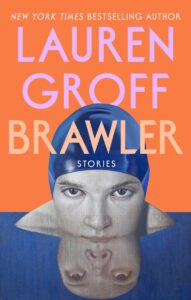
Lauren Groff, Brawler
In an interview at the New Yorker, Groff explains her experiences swimming the origins for the titular story in this collection and its protagonist, Sara: “for years I’d wanted to write about the animal ecstasy of athletics, the moment when a well-trained body in motion briefly becomes transcendent…I like Sara and am afraid for her, so I put her in a place that feels protective, at my favorite pool, the outdoor Olympic-distance municipal pool near my house in Florida, where I sometimes swim laps at dawn.”
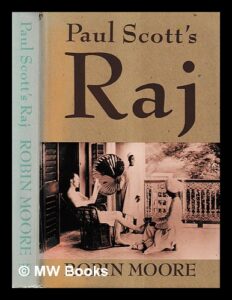
Robin Moore, Paul Scott’s Raj
Julian Symons writes at the London Review of Books that Paul Scott’s Raj “is a very useful addition to [Scott’s] biography in showing the thoroughness and intensity of Scott’s research. He dug and dug into the origins and background of the Indian National Army, even though, as he said, it was ‘relatively marginal’ to his work, tried desperately hard to discern and convey the relationships between Indians and British, and dredged past and present history, while insisting that his was not a historian’s view.”
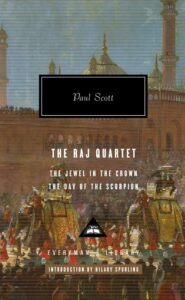
Paul Scott, The Jewel in the Crown / The Day of the Scorpion
The subject of the previous book. These are part of Scott’s epic The Raj Quartet. Webster Scott writes in his 1975 New York Times review, “[Scott] is a psychologist of event. His novels are a spectacular explosion of history set off within the lives of a dozen or so Britons and Indians on the edges of vast change. Colonialism is coming apart. A functioning system slowly loses motion and breaks down. If you want to know where the political world we now live in began, Scott’s novels are a place to start.”
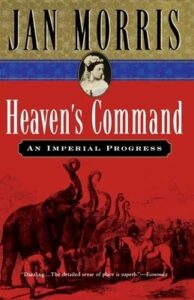
Jan Morris, Heaven’s Command: An Imperial Progress
Morris’ writing makes her stand out, but so does the fact she came out as transgender and underwent gender-affirming surgery in the 1960s—an undeniable trailblazer. Tim Adams writes in The Guardian, “Written with all Morris’s characteristic brio it is a compulsive exploration of patriotism, of manly endeavour, which ends in elegiac retreat and submission. Morris began the books as James and ended them as Jan.”
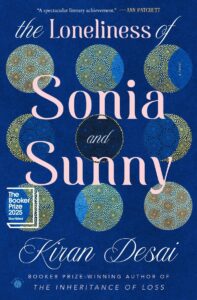
Kiran Desai, The Loneliness of Sonia and Sunny
This is the recent novel by Desai, the winner of the 2006 Booker Prize for The Inheritance of Loss. Dinah Birch writes in the Times Literary Supplement how these novels rhyme, “In both, much of the action takes place in the decaying houses and dilapidated institutions of the colonial past, where ageing Indians cling to the remnants of wealth and status, dependent on wearied domestic servants who have been with them for decades…Admirers of Inheritance can be assured that the sensuous intensity of Desai’s language has not diminished over the past two decades. She is the same writer; yet this is not the same novel.”

Diana Arterian
Diana Arterian is the author of the recent poetry collection Agrippina the Younger (Northwestern UP, 2025) and editor and co-translator of Smoke Drifts (World Poetry Books, 2025), a collection of Nadia Anjuman's poetry. A Poetry Editor at Noemi Press, Diana has received fellowships from the Banff Centre, Millay Arts, and Yaddo. She writes “The Annotated Nightstand” column at Lit Hub and lives in Los Angeles.