The Annotated Nightstand: What Bianca Stone is Reading Now, and Next
Featuring Jacques Lacan, Simone Weil, and Paul Celan
For years, Bianca Stone has worked tirelessly to enshrine the writings and memory of her grandmother, Ruth Stone. Ruth was a poet who earned her laurels, including the National Book Award and the Vermont Poet Laureateship. Of course, accolades or no, the danger of fading from public memory is real. Since Ruth’s death, Stone makes a concerted effort to reference her legacy. She edited the recent The Essential Ruth Stone. Alongside her husband Benjamin Pease—and others—Stone has refurbished her grandmother’s house, making it a vibrant hub for readings, workshops, retreats, and letterpress work. The house, located in the small town of Goshen, is an official state landmark and Ruth Stone’s final resting place.
Bianca Stone is a powerful poetic force herself, and has arguably taken up the mantle of her grandmother as she is the sitting Poet Laureate of Vermont, the only grandmother/granddaughter state poet laureateship I know of. (To read more about the younger Stone’s work in conjunction with her grandmother, I recommend this essay at the Poetry Foundation.) Stone’s latest collection, The Near and Distant World, is her fourth and on the Lit Hub list of Most Anticipated Poetry for the year.
Like a musician putting out another record that hums with a greater maturity but still delivering in the way we know and love, The Near and Distant World is an exciting new addition to Stone’s oeuvre. The poems restlessly stalk the existential—the stakes and intensity in these poems don’t let up. Through image after image, a cascade of memories, visions, dreams, and references, Stone illustrates the many ways humans hope to locate life’s meaning. “Let them run me through / with the wooden javelin of truth,” she writes.
One prose poem “Black Sunflower” is a kind of poetic “Paint It Black.” The speaker peers into a cup of espresso and is met with her own sunflower-like eye, thrown into darkness. Stone writes, “I’m weary of being in charge of misery. I give some of it to you to decipher.” The black sunflower returns now and then in the book as a talisman of the world’s depressive colorlessness, the allure of mortality. Skulls and eyeless masks and vultures all live comfortably here. “Who is it down there?” she asks, likely standing at her grandmother’s grave. “In the softening box, your discarded limbs, / the unstrung toy with ruthless hair.”
Yet alongside these mordant concerns are also the vital power of poetry, the lush and profound images of nature. The latter can place for meaning, understanding the self—or at least provoke reflection. These natural images are often the most pulsing in the collection: “the wrecked husks of milkweed pods, their purses pulled inside out” and “the raw embryotic field mice thoughts / birthed in the junk drawer their eyes licked open.” As for poetry, Stone’s obsession is palpable. In response to a random question (“What’s poetry like?”) Stone gives as description: “the immortal freak / of language you haunt and hunt / which is the original state of language you’re trying to get back to from within”
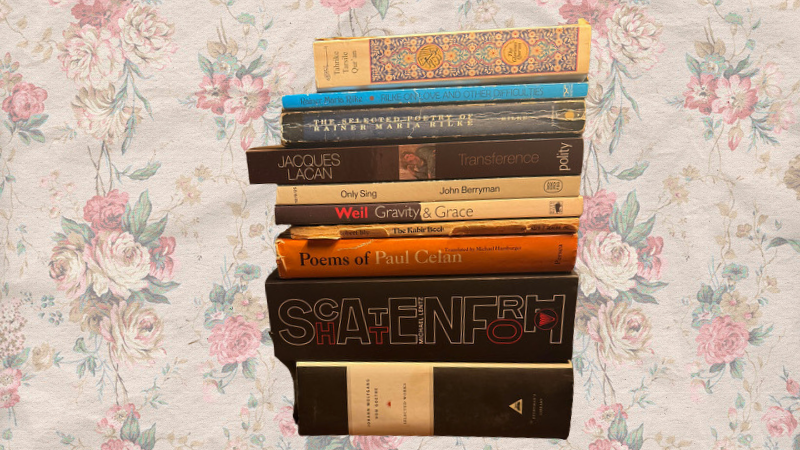
You know it’s a good to-read pile when you start trying to ferret out copies from your local bookstores and libraries. (And 10 points from this Romanophile for that fabulous ashtray). Stone tells us: “What is the thread that moves through the heart of each of these books? In the ones I know well, and keep close, and the ones I have only just cracked and struggle to widen—each utilizes language to contour what cannot be fully disclosed. What cannot be settled, and cannot be gazed upon directly, somehow this is an issue of the relational; this is a life-work, a call, maps, attempts to dis-cover, move-with, speak-to, sing, with pray; play.”
*
The Qur’an
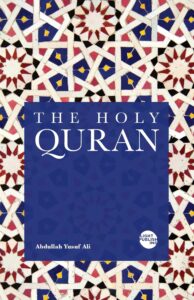
How to annotate the holy text for the largest religion on the globe? What comes to mind is a recent quotation from Justin Marozzi on enslavement and the major religions: “While Christians professed equality before God, Jews offered reduced penalties for adultery with slaves and Romans prohibited slave prostitution, only the Quran did all three.” Of all the gorgeous editions of the Qur’an that exist (truly, these artist scribes give the Christian illuminated texts a run for their money), nothing touches the “Blue Qur’an”—an absolutely stunning manuscript from the 9th or 10th century, with gilded lettering on dark indigo parchment. Take a peek.
Rainer Maria Rilke, Rilke on Love and Other Difficulties (ed. & tr. John J.L. Mood)
Like many, Rilke is a kind of holy godfather to Stone, a poet she turns to and references often. The jacket copy for this collection states: “John J. L. Mood has assembled a collection of Rilke’s strongest work, presenting commentary along with the selections. Mood links into an essay passages from letters that show Rilke’s profound understanding of men and women and his ardent spirituality, rooted in the senses.”
Rainer Maria Rilke, The Selected Poems of Rainer Maria Rilke (ed. & tr. Stephen Mitchell)
This iconic translation—The Chicago Tribune dubbed it “perhaps the most beautiful group of poetic translations this century has produced”—apparently began when Mitchell studied abroad in Paris when a love interest introduced him to Letters to a Young Poet in French. The two became lovers. Mitchell learned German to read Rilke. After a couple years, the lovers broke up and Mitchell went on to become the translator we know and love. Gary Gach at Publishers Weekly writes after the publication of Selected Poems, citing Mitchell, “Sending his Rilke to the woman who’d introduced him to the German poet’s work 18 years ago ‘was a marvelous fulfillment.’”
Jacques Lacan, Transference: The Seminar of Jacques Lacan, Book VIII (tr. Bruce Fink)
Lacan was of course the French psychoanalyst operating in the shadow of Big Papa Freud. This work is one of Lacan’s annual lectures that he gave for twenty-eight years. We often think of “transference” as when, essentially, the patient develops feelings for their analyst. For Lacan, tldr, it’s largely about earnest speech acts and how those effect the listener. (As an aside, I love that on the psychoanalysis page on Wikipedia the top photo is of Freud’s couch—also this diagram of libidinal energy. Makes total sense.)
John Berryman, Only Sing: 152 Uncollected Dream Songs (ed. Shane McCrae)
Publishers Weekly’s starred review states, “This brilliant collection of previously unpublished poems from Berryman’s Dream Songs cycle is proof, as Shane McCrae writes in the introduction, that he ‘understood his epic to be complete, but he did not believe that its completeness could have only one form.’…It’s extraordinary to reencounter that voice—at once comic, tragic, and heartbreaking—across the span of these poems, many of which achieve the heights of those that established Berryman’s stellar reputation.”
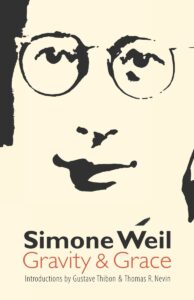
Simone Weil, Gravity & Grace (tr. Arthur Wills)
Hooray for a criticism artifact! John Cogley writes in this 1952 New York Times review, “Paradox is the language of mysticism, and Simone Weil employs it with telling effect. ‘Purity is the power to contemplate defilement.’ Again, ‘You could not be born to a better period than the present, when we have lost everything.’ These few quotes may give some idea of the spirit and exalted religious tone of ‘Gravity and Grace.’” He also calls Weil “the forbidding intellectual.” Something for us all to strive for.
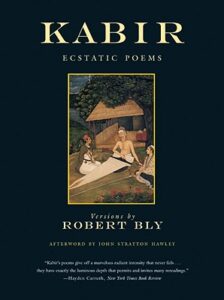
Kabir, Ecstatic Poems (tr. Robert Bly)
Kabir is a mystic poet of the 14th century who endorsed the reality of divinity in all things and the obliteration of the ego. These devotional poems were originally in Sadhukkadi, a medieval Indian dialect, and Bhojpuri—they were composed by Kabir speaking. These bāņīs (utterances) endure because they were recited for centuries, across land and generations, before being written down in the 17th century. Scholars will likely fight forever about which are “authentic” to Kabir. That they are a creation of many over time, to me, makes them a more potent piece of literature.
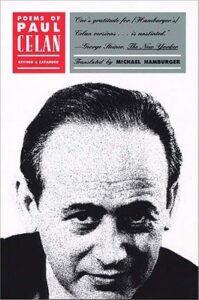
Paul Celan, The Poems of Paul Celan (tr. Michael Hamburger)
The late poet Reginald Shepherd wrote on his blog in 2007 about “difficult poetry” and Celan, stating, “Despite and by means of their difficulty, Celan’s poems seek, desperately and perhaps hopelessly, communication, contact, connection, even if not in the here and now: as he writes in the poem ‘Threadsuns’ (Fadensonnen), ‘there are/still songs to sing beyond/humankind.’ There is almost always a “you” to whom his poems are directed…The message may not reach anyone, and if it does, it may not be apprehended, comprehended. But the possibility, the likelihood even, of failure makes more acute the will to attempt contact, to try to make a connection.”
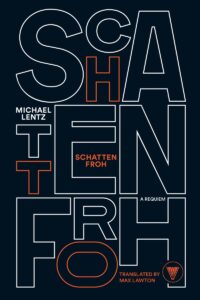
Michael Lentz, Schattenfroh (tr. Max Lawton)
All critics tremble before doorstop books—forget cents-per-word written, what about cents-per-page read? Schattenfroh clocks in at just over 1000 pages. (I would humbly hide my head under a pillow.) So deep bows to Josh Billings at LARB for his taking on a review, where he writes the novel “is a book whose traditional generic markers—characters, setting, plot—all shift constantly, disorienting us so reliably that we begin to suspect one of its main projects is to make us question what ‘reading a novel’ actually means.”
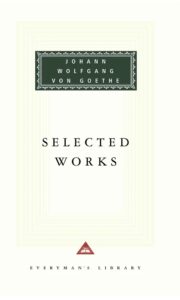
Johann Wolfgang von Goethe, Selected Works (tr. W. H. Auden, Louise Bogan, David Constantine, Barker Fairley, and Elizabeth Mayer)
This book contains Sorrows of Young Werther, Elective Affinities, Faust, and Italian Journey. “Goethe’s greatness is singular: it is difficult to think of any parallel to his achievement,” Nicholas Boyle writes in his introduction to the volume. “At every stage of a long and inwardly turbulent life he rediscovered, or reinvented, himself through his writing, and yet he never significantly repeated himself. For each of the ages of man, which he experienced in his own person, he found a new poetry.”

Diana Arterian
Diana Arterian is the author of the recent poetry collection Agrippina the Younger (Northwestern UP, 2025) and editor and co-translator of Smoke Drifts (World Poetry Books, 2025), a collection of Nadia Anjuman's poetry. A Poetry Editor at Noemi Press, Diana has received fellowships from the Banff Centre, Millay Arts, and Yaddo. She writes “The Annotated Nightstand” column at Lit Hub and lives in Los Angeles.