The 10 Best Book Reviews of 2025
“Everyone is enticed into this orgy of analysis, to feast and gorge on information, to go a little mad in the process.”
While researching the Little Review archives for my book, A Danger to the Minds of Young Girls, I stumbled across an all-time banger of an opening line in Jane Heap’s review of Sherwood Anderson’s Windy McPherson’s Son: “Here is another man who hasn’t written the great American novel.”
When I spoke with dozens of book critics for an essay earlier this year, many of them told me that writing the very first sentence is the hardest part of their craft. “If I don’t hook them with those first three paragraphs, it’s over,” Ron Charles told me. “No one is going to trudge through your review like your mom might.”
This year’s list of the best book reviews is a testament to great openers that establish an irresistible hook, a unique voice, or a good sense of humor.
Brought to you by Book Marks, Lit Hub’s home for book reviews.
*
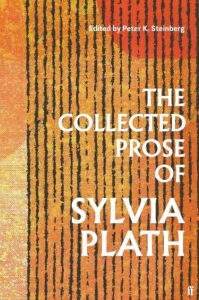
Patricia Lockwood is always a pleasure to read, but this review is a particularly good example of how good book reviews are works of creative nonfiction as varied and adventurous as a personal essay. Special thanks to Caroline Casey for putting it on my radar.
A series of haphazard walking errands led to me wandering downtown, lugging a tub of CBD gummies, a multipack of ultra-absorbent tampons and a 10 lb biography of Sylvia Plath. That seemed correct, a spontaneous piece of performance art. I had heard Heather Clark, the author of Red Comet: The Short Life and Blazing Art of Sylvia Plath,speak at a conference on biography the previous spring. I thought then that she seemed too normal for the task. I chafed against the setting down of the facts, as if they could yet be changed. Now, having cast my eye across the charred landscape of Plath-Hughes scholarship, it seems about time for something normal.
–Patricia Lockwood on Peter K. Steinberg’s The Collected Prose of Sylvia Plath (London Review of Books)
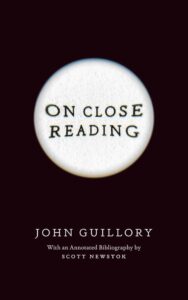
Dan Sinykin is one of the most interesting and knowledgeable people writing about books today, and this review is no exception.
I was an English major in college, but I didn’t like it. I didn’t understand why I should pay to study literature when I knew how to read and could do so more happily on my own time. Like many others, I majored in English for the creative-writing workshops; I thought I would be a famous novelist or, barring that, a notable philosopher. But I failed at fiction, and reading Wittgenstein’s Philosophical Investigations cured me of my hopes in that field. I next tried outdoor education, permaculture farming, and journalism. By 26, I was in a PhD program for… English. Fairly quickly, I developed a reputation, a friend told me, for being bad at close reading.
–Dan Sinykin on John Guillory’s On Close Reading (The Nation)
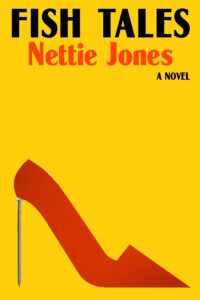
Namwali Serpell surprises me every time I read her work. Sometimes it’s the style, sometimes it’s the structure, but her voice is always unmistakably clear and engaging.
Oh, honey. It simply crushes them. I have been teaching literature to college students, most of them younger than me, for over twenty years. And whether they’re trying to write stories or write about them, there comes a time every semester when I have to break it to them. That idea you have? That inspired reading? That formal innovation? It isn’t new. (Even the notion that it isn’t new isn’t new: “There is nothing new under the sun” comes from Ecclesiastes.)
–Namwali Serpell on Nettie Jones’s Fish Tales (New York Review of Books)
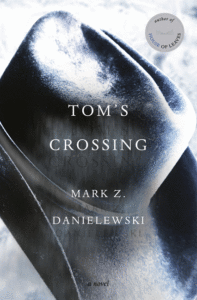
I know a lot of people, including book critics, who loved Tom’s Crossing, but this roasty intro from LeClair is a masterclass in metaphor and precision.
In the beginning of Big Fiction, there were encyclopedic novels and mega-novels and then maximal novels. With Mark Z. Danielewski’s newest, the 1,232-page Tom’s Crossing, we have the supermax, a term most commonly used to describe huge prisons with no escape, no variety of existence, and few relations with the outside world. Prison critics call supermax facilities, with their frequent solitary confinement, excessively inhumane. Like the long novels of the 1970s and 1980s that I wrote about in my 1989 book The Art of Excess: Mastery in Contemporary American Fiction, Danielewski’s supermax is excessive but very different from those earlier works. The excesses of Gravity’s Rainbow(1973), J R (1975), The Public Burning (1977), and the four others I discussed were generally caused by a hypertrophy of some innovative literary technique, such as Brechtian alienation effects in the epic theater of Gravity’s Rainbow. Rather than innovative, the excess of Tom’s Crossing is retrograde, a hypertrophy of specificity in traditional narrative and realist style.
–Tom LeClair on Mark Z. Danielewski’s Tom’s Crossing (Los Angeles Review of Books)
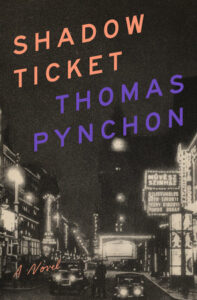
I was looking forward to seeing a Power Critic tackle Pynchon’s latest (and final?) novel, and the always-sharp Parul Sehgal did not disappoint (unlike Pynchon).
In the course of ordinary events, a novelist expects, however grudgingly, to compete with rivals, even acolytes. But to discover yourself outpaced by a reality that bears an uncanny resemblance to your own fiction seems to be a particularly painful indignity to bear, a kind of spiritual ransacking.
Pity Thomas Pynchon. Beginning with the cult novels V. (1963), The Crying of Lot 49 (1966) and Gravity’s Rainbow(1973), he unleashed a vision of America that now feels all too familiar—a world swathed in conspiracy and trawled by self-appointed sleuths parsing every passing signal and sign, their paths lit by the bright beam of their own righteousness. Everyone is enticed into this orgy of analysis, to feast and gorge on information, to go a little mad in the process.
–Parul Sehgal on Thomas Pynchon’s Shadow Ticket (The New York Times Book Review)
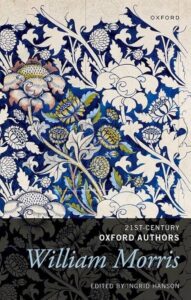
I wish more outlets published longform criticism like this deeply researched and thoughtful piece by Michael Ledger-Lomas, which runs more than 4,000 words but sprints by, quick as a borzoi.
Dante Gabriel Rossetti could always cheer himself up by belittling William Morris. At the top of a letter to Jane Morris in 1868, he scribbled a crest for ‘The Bard and Petty Tradesman’ in which Morris, plucking a lyre beneath a laurel tree, is back-to-back with his double, who is leaning over his shop counter. Sending up Morris as a hypocrite, intoning odes when he wasn’t flogging knick-knacks, was part of Rossetti’s campaign to seduce Jane. But it is fair to say that Morris’s relationship with literature was ambivalent. He read voraciously but fitfully, often preferring shlock from railway stalls to the Great Books he claimed to revere. After becoming a socialist, he snapped at friends that poetry was now ‘unimportant work’. He was embarrassed when a comrade introduced him to a policeman as ‘the author of The Earthly Paradise’—his most celebrated work. No: he was just ‘a shopkeeper, carrying on business in Oxford Street’.
–Michael Ledger-Lomas on Ingrid Hanson’s William Morris: Selected Writings (London Review of Books)
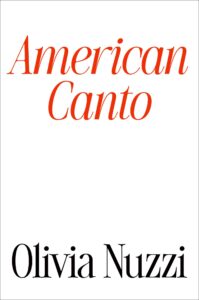
One of the most dependable features of the media ecosystem over the last 10 years is that Scaachi Koul will always, always make me laugh.
Are blond white women OK? I am, notoriously, brunette, but even I have started to notice that blond white women are in such varied states of disarray. This summer, Sydney Sweeney seemed to tank her career (and then doubled down) with a poorly placed denim ad that was, incredibly, about white supremacy. Meanwhile, Karoline Leavitt, the White House press secretary, can’t get her boss to stop talking about her hot, thin mouth while she ignores her nephew’s mother’s deportation. And today, Olivia Nuzzi’s greatly anticipated (at least, if you ask any other journalists about it; most of us are unemployed anyway) memoir, American Canto, finally arrived. Intended to reveal the truth behind headlines from last year, the book is purportedly about her affair with then–presidential candidate and now head of the U.S. Department of Health and Human Services Robert F. Kennedy Jr. In reality, it’s mostly about how compelling Nuzzi thinks it is to be a blond white woman in journalism.
–Scaachi Khoul on Olivia Nuzzi’s American Canto (Slate)
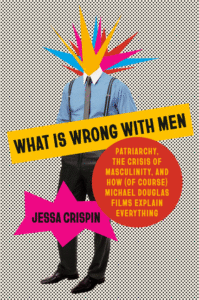
Alexandra Jacobs once told me that the difference between a well-written review and a fantastic review is “courage,” and she consistently embodies that virtue in her work at The New York Times with honest and direct perspectives.
Michael Douglas is one of the last actors who could “open” a movie, back when movies were something that opened and shut firmly rather than flowing and receding into a general pool of content. He is an original nepo baby: a sapling carved after his mighty oak father, Kirk, down to the indentation on their chins. And to the author Jessa Crispin, he is a symbol of how everything started to go terribly wrong for men in our time.
–Alexandra Jacobs on Jessa Crispin’s What Is Wrong With Men (The New York Times)
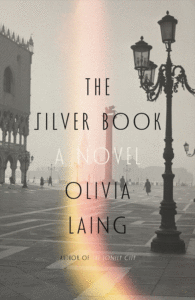
I love short novels, but it is very hard to review them well. Sara Batkie does a great job capturing the essence of Laing’s dazzling and somewhat slippery work of fiction.
On November 2nd, 1975, world-renowned filmmaker and poet Pier Paolo Pasolini was found murdered in Ostia, Italy. His body had been subjected to disfiguring violence—not just beaten but run over repeatedly with his own car and partially burned—and many suspected a Mafia-style revenge killing. Beloved and detested in equal measure for his uncompromisingly Marxist politics and the taboo subject matter he tackled, including homosexual desire, he’d recently completed work on Salò, or the 120 Days of Sodom; its extreme content would become an endurance test for cinephiles. Though 17-year-old Pino Pelosi was convicted of the crime in 1976, he eventually recanted and there’s long been speculation that Pasolini’s death was linked to rolls of film from Salò that were rumored to be stolen.
–Sara Batkie on Olivia Laing’s The Silver Book (Chicago Review of Books)
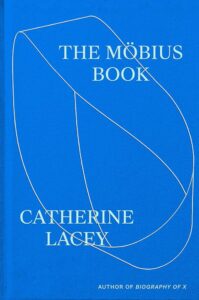
I love reading about the ways critics are personally impacted by the books they read, and Sophie Kemp’s nightmares in the wake of Catherine Lacey’s latest novel are a poignant example.
The night after I finished reading The Möbius Book, I woke up from a terrible dream. In this dream I had been shrunk back to twenty-three years old, back to a uniquely terrible relationship with a man. He began to argue with me, this man, on account of the fact that he no longer enjoyed my company. I can no longer remember the details of it. I had not dreamed about this man in, I think, a year. I spent the whole day thinking about it afterward: Why now? When I was so happy and newly in love? And then it started to swirl together in my mind. It was the book. The book that I had been so dismissive of while I was reading it. This nightmare from my past was because of The Möbius Book.
–Sophie Kemp on Catherine Lacey’s The Möbius Book (Bookforum)

Adam Morgan
Adam Morgan is a culture journalist and critic who lives near Chapel Hill, North Carolina. His writing regularly appears in Esquire, and has also been published in The Paris Review, Scientific American, Los Angeles Times, The Guardian, and more. He spent a decade in Chicago, during which time he founded the Chicago Review of Books and covered the city’s arts and culture for Chicago magazine and the Chicago Reader.