Tales From Ground Zero of Europe’s Heroin Epidemic
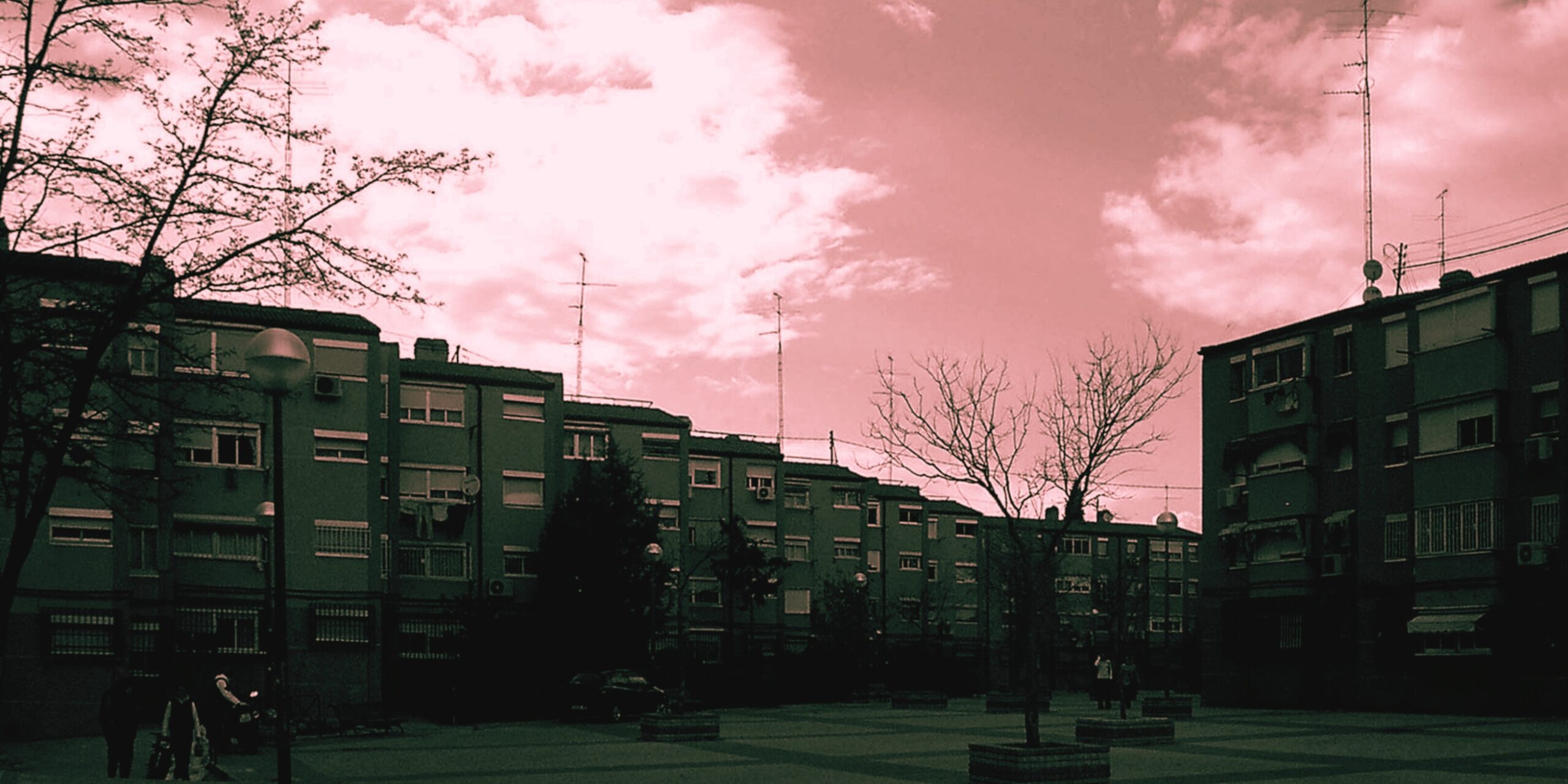
Jonathan Tepper on Growing Up in the Neighborhood of San Blas, Madrid
The crowd was frozen in awe. Raúl was dressed as the devil and the men were his demons. They threw Lindsay on the ground and kicked him in the stomach and back as a throng of more than a hundred huddled nearby outside the Torre del Campo bar. I stood by with my brothers; we were transfixed. We knew it was a play, but it looked as real as any fight I had seen on the streets.
The skit was Cadenas, Chains, and it was wildly popular. Lindsay played a carefree youth who loved fútbol. He looked innocent, and the skit was believable. Raúl and the men dressed in ghoulish black tempted him with alcohol. Lindsay bit the forbidden fruit and drank. For this he got a small chain on his arm. The demons of drugs tempted him with cigarettes, and he liked them. He got another chain. Again, Raúl and the demons tempted him with hashish, and he enjoyed it, too. This time he got a larger chain on his leg. Like the chavales of San Blas, he slipped from one drug to the next; when the demons offered a syringe, he took it. This time, a chain choked his neck. Lindsay staggered around, shackled by heroin.
When Lindsay was on heroin, Raúl and the demons knocked him over and mercilessly kicked him in the ribs. Our men were unpredictable, and Lindsay thought perhaps they took too much pleasure in the realism and their roles.
Every time the men performed it, the crowds swelled. It spoke to the kids and the men in the neighbourhood because they had seen it and often lived it.
Raúl spoke to the crowd, “The most beautiful story anyone can tell is the story of your own life. What do you want to tell with your life? Do you want to live a life of fear and shame, or get off drugs and come with us and live a life of love and hope?”
As the skit was ending, an old, short housewife arrived in time to see Lindsay shoot up. She had missed the first half of the skit and stood on her tiptoes trying to peer over the shoulders of the crowd.
“What’s he doing? Is he shooting up?”
“Yeah, he’s shooting up,” I told her.
Her face contorted. “What’s the neighbourhood coming to? Young people gathering around to watch other young people shoot up …” As she left, she muttered to herself, “This place has gone to hell.”
After the play, David, Peter and I walked through the crowd to hand out our leaflets. This time, though, the scary skeleton was gone. We had Raúl’s testimony of change.
While we did our work, Raúl stood out in front of the mass of people who had gathered and shared with them the story of how he had been a yonki and got off drugs. I would have been embarrassed with so many eyes watching, but Raúl said it was easy.
Raúl spoke to the crowd, “The most beautiful story anyone can tell is the story of your own life. What do you want to tell with your life? Do you want to live a life of fear and shame, or get off drugs and come with us and live a life of love and hope?”
After he finished, he called out to people by name and invited them to follow him to Betel’s Friday night meeting. When he spoke, people followed.
Raúl was odd, but everyone followed him because he made you feel special to him. He had inside jokes with everyone. He had a high-pitched cackle that started and stopped abruptly. Whenever I got into trouble, he asked, “¿Jonny, dónde están mis pistolas?”—Jonny, where are my guns?
I did not know where he got the phrase. My father said perhaps it was Hidden Guns, a Western starring John Carradine. Raúl himself could not remember. Often it was the oddity and obscurity of his jokes—so obscure that often even he had no idea where the punchlines came from or what they meant—that made them all the more ridiculous.
Raúl was solid, his hands meaty and strong, his fingernails curved and trimmed. His reddish cheeks had the scent of aftershave. His arms were thick as branches extending from his trunk, and when my brothers and I spotted him before church services, we tried to climb him. I held on to his arms and pulled myself up. Sometimes he would let me sit on his shoulders, but Timothy was his favourite to carry. Timothy delighted in looking down imperiously at David, Peter and me. He looked like a village boy who had tamed a wild elephant.
No matter how hard I struck him, he laughed—and never had a bruise to show for any of my punches.
We elbowed and punched each other to be the closest to him. Raúl grinned and told us to punch him. At first, I refused to fall into a trap. Manolo Majara would fight with us and then tell my parents we were misbehaving.
“Come on, punch my arm. I promise I won’t hit you back. Punch as hard as you can,” he said, rolling up the sleeve of his T-shirt.
I clenched my fist and threw a punch that landed on his shoulder.
“That was pathetic. Try again.”
I drew my arm back and held my breath and hit him as hard as I could.
“Jonny, you insult me.” No one but Raúl called me Jonny. “Don’t throw papers at me. I’m invincible, and you know it.”
No matter how hard I struck him, he laughed—and never had a bruise to show for any of my punches.
He smiled broadly, “Let it be a lesson. Don’t get into fights. There’s always someone stronger than you.”
I felt relieved that Raúl was on our side.
My father showed no fear around the Gypsy camp or when people put guns or knives in his face. But one night he came home from Lindsay’s apartment shaken. A deranged yonki named Lucio had threatened my father. The man ran for the kitchen and grabbed a knife, but Raúl put himself between the knife and my father. Raúl wrestled Lucio to the ground. He held Lucio by the neck with one arm and with the other squeezed his wrist so hard Lucio dropped the knife.
My father quoted from John 15:13: “Greater love hath no man than this, that a man lay down his life for his friends.” The verse was nice, but the way I saw it, from that day we knew Raúl would take a knife for us. That was the highest thing you could say about a friend in San Blas.
David, Peter, Timothy and I were like dogs: we could sniff out timidity. We bullied our Sunday school teacher Ramón, who was too afraid to punish us. Ramón came from the Basque country and was as about out of place as we were. He had been a yonki, but he was so soft-spoken and his Spanish so proper, I wouldn’t have guessed he did heroin by talking to him. We knew all the Bible stories already from our breakfast and dinner devotionals. David and Goliath were a given, but even Bildad the Shuhite and Zophar the Naamathite were too easy for us. Any half-intelligent child should know they were characters from the book of Job. Obviously. In that book God tests his servant Job and makes him lose everything. God could be a bit of a bully too sometimes.
But Raúl was different. When I got out of my seat during a lesson, he picked me up off the ground, holding my elbows, and put me back in my chair.
“Cuidado o cobras. Careful or you’re gonna get it.”
That Friday, for the first time, my parents let us spend the weekend with Raúl and the men out at the farm in Barajas.
Most of the food had passed its sell-by date, but no one cared. Good company could make even a simple meal a feast.
My mother had helped us pack for the weekend. After the Friday night meeting, all of us boys were going except Timothy. He was only four, and that was too young for my parents to let him spend a weekend out on the farmhouse.
“I wanna go. Why can’t I go?” Timothy cried. “It’s not fair. Why do I always have to stay home?”
My mother hugged him. “When you’re a few years older, you’ll go. It will come sooner than you think.”
Raúl bent over, put his hands on Timmy’s shoulders and looked him in the eye, “When you’re old enough, you can come out and stay with me.”
“Promise?”
“I promise.”
The men piled into their dilapidated vans. They were so beaten up we had to push them to get them moving. Raúl sat in the passenger seat by the driver. Peter, David and I fought, but I won and got to sit with Raúl. The old vans rattled with every vibration of the motor, and the air smelled of diesel fumes. The noise was so loud that talking was impossible. Raúl and I glanced over at each other and smiled at the din of the engine.
Two men had stayed at the farmhouse to cook dinner for everyone. Music spilled out from the kitchen as an old stereo player cranked out “Para mi rey”, a Christian Gypsy song in Spanish. “No hay rey como tu, cambiaste mi lamento en baile.”—There is no king like you, you changed my mourning into dancing. David, Peter and I offered to help to get closer to the food, but the cooks chased us away within seconds.
Once dinner was ready and the men had set the tables, Raúl gathered everyone into the dining room and waited for absolute silence.
“Lord, bless this food and the hands that prepared it. Please pour out your love over everyone in this house and touch everyone’s hearts today. Make us more like you every day. In your blessed name, Amen.”
The moment he finished, the room erupted with the clanging of men serving food. Then they dipped their heads into the plates, almost inhaling the food. We ate a simple salad, and large plates of tortilla española and strips of chorizo. For dessert we ate flanes that Betel received as donations from supermarkets. Most of the food had passed its sell-by date, but no one cared. Good company could make even a simple meal a feast.
The dinner was noisy, the air filled with the men’s yells for more food. Gluttony may have been one of the seven sins, but it was better than shooting up.
I asked Juan Carlos El Rubio, who was sitting next to me, why he entered Betel.
“I didn’t even want to get off drugs. I was shooting up in an abandoned car with two friends by Carretera de Vicálvaro. They spent the night in the car, and when I came back the next morning, some kids had set fire to it. My friends were burned to death in their sleep. I don’t want to die. That’s why I’m here.”
I knew people shot up in the cars behind our apartment, but I had not imagined they were ovens that could cook people to death.
After dinner, Raúl gave us sheets and towels, and we followed him back to the large rooms filled with bunk beds. The floors smelled of bleach, but a ripe smell of men’s bodies filled the air. I so often felt like a grown-up, smarter than everyone else, but I didn’t even know what it was like to live among adults. I hoped I would not grow old and stink like that one day.
In our room, Raúl knelt and helped make our beds for us. After we had changed into our pyjamas, he said a brief prayer: “Dear Lord, bless these children with a good night’s sleep. Help them grow up to be kind, noble and wise. Protect them and guide them. In your name, Amen.”
He tucked each of us in before he turned the lights out.
I listened to the men hollering and laughing in the living room and dozed off. Throughout the night the loud, booming snores from the men startled me, but I fell asleep again when I overcame my fear.
When Raúl woke us, the stark light of day cast long shadows against the walls. He gave us towels and told us we should use the showers before the rush to use the bathroom began. By the time I got out, a line had formed for the showers.
At eight in the morning, the men gathered around in the dining hall for breakfast. I sat next to Luis Mendoza, who was short and had curly hair; when he smiled, he pursed his lips to hide his few unfortunate teeth. Luis dumped mountains of sugar into his café con leche. He dunked his cookies and ate them soggy. We talked about Real Madrid and their season; it was the failsafe opener for any conversation.
We wanted to be like the men, but Raúl would only let us have hot chocolate like the yonkis going cold turkey. He said we were rowdy enough without caffeine. As I drank my chocolate, I waited for Raúl to not pay attention to his glass so I could have a sip of coffee, but he swatted away my hand.
At the end of the table, Faris, an Iranian refugee who had ended up on drugs, stroked a glass of tea. He had prepared it himself with roots and leaves he had collected from the fields.
Raúl pointed and spoke loud enough for Faris to hear him, “He thinks it’ll make him trip out, but he doesn’t need the tea for that. He’s already nuts.” Faris laughed as he caressed his tea.
The men nodded as he spoke. His message was simple and unadorned, and they listened.
After breakfast, the men moved all the chairs and tables out of the way. Everyone sat in a circle waiting for the devotional. Some of the newer men draped themselves in blankets, even though it was summer, and held mop buckets between their legs. They lurched forward as if they were going to vomit, but nothing came out. Raúl sang boldly, but off key, and the men joined in.
When Raúl gave the devotional message, he spoke simple y llanamente, simply and candidly, in a way the men would understand. His speech was eloquent because it was heartfelt, vigorous and direct. Only two years earlier I had seen him in my living room with track marks on his arms and the sharp stench of gin. As he spoke, you knew why his friends from the streets of San Blas followed him into Betel.
“I’m going to keep this short. Open your Bibles to First Corinthians chapter one. Let’s read the passage together.”
The men did not know the order of the books in the Bible, and my brothers and I helped them find First Corinthians. At last we put our home devotionals to good use.
“Some of you think we’re a bit nuts or perhaps a strange sect. I get it. For years, I thought God was a bully only here to beat us when we disobey. But that isn’t God’s love.” Raúl began reading:
God hath chosen the foolish things of the world to confound the wise; and God hath chosen the weak things of the world to confound the things which are mighty.
All the men on the farm were young. I had met old alcoholics, but never old heroin addicts.
He offered his thoughts on the text. “Do you know what is wise in the world? It’s being the toughest. But it doesn’t matter to God. What matters is becoming the kindest, the most loving. That takes guts.”
“I want you to know that it doesn’t matter who you are or what you’ve done. You might be sick or weak. You’re important. You might be the least educated junkie in the world, but God loves you. You might be a criminal, but you can put it behind you.”
The men nodded as he spoke. His message was simple and unadorned, and they listened.
“We do not measure our love by what we do for those who are stronger than us. Jesus came to heal the weak and the suffering. He said, ‘Truly I say unto you, As you have done it unto one of the least of these my brethren, you have done it unto me.’”
When Raúl had finished speaking and closed the devotion with a prayer, the men divided up the jobs for the day. David, Peter and I helped them sweep and mop the house and pull the weeds in the garden. We worked around the house all morning until lunchtime. The men knew how to eat. The cooks had prepared a giant paella with a simple message written in thin red pepper slices in the centre: DIOS ES AMOR—God is love.
Before the meal, Raúl thanked God for his many blessings. Almost every head bowed, but as I peeked around the room, I saw the new men exchanging glances and snickering while he prayed. Not everyone shared our religion.
Growing up in a religious home was like being a goldfish; the invisible walls of my family and beliefs had been my world. In the bowl you think the water is all there is, and everything outside is blurry. Some drink and join, but to others the fishbowl of religion will always be small and alien.
Was it the fear of dying alone that made the men put up with too many aleluyas for breakfast and Christian messages in their paella? Was it death that made people believe?
All the men on the farm were young. I had met old alcoholics, but never old heroin addicts. Some died quickly overdosing; others died slowly from things like hepatitis C. Yonkis who mixed alcohol with heroin were more likely to throw up, sometimes choking on their vomit in their sleep. I had seen others overdosed in the ditches by the Gypsy camp, and I told myself that they were frozen in a deep dream.
After lunch we had a siesta because a workday was never complete without one. Then came our favourite part of the day: fútbol.
The men headed over to an empty field, and David, Peter and I ran ahead, kicking the ball as we yelled to Raúl to hurry. Raúl had taught us dribbling tricks and how to hit a header from a corner shot.
“¡Joder, me cago en la hostia!” I had kicked the ball too far into a ditch.
“What’d you say, Jonny?”
“Joder, me cago en la hostia.’
“You know what it means?”
“Of course I do,” I said, running after the ball.
“Come back here! Right now!”
I grabbed the ball, put it under my arm and ran back.
He glared at me. “Well, if you say you do, what does it mean then?”
“I … I …”
“I can’t hear you. Speak up!”
“I dunno.”
“Jonny,” he said, grabbing my shoulders and lifting me off the ground. He stared at me, “It means ‘fuck,’ which is a curse word, ‘I shit in the host,’ and that’s the body of Christ in the communion. You’re not a parrot. You can’t go around repeating everything you hear on the streets. Colleja! Bend your neck. Assume the position.”
He gave collejas to the men in the centre every time they cursed. If there was one thing I hated, it was collejas.
He put me back down, and I tilted my head, exposing the back of my neck. With his thick hand he slapped hard. I felt its sting and tried not to cry like a weak kid.
“That’ll teach you. Don’t you ever say that again. Now, let’s play some fútbol.”
The colleja taught me an important lesson: I needed to learn my curse words better.
I knew many curse words, but my parents knew almost none, as the men and women did not use foul language around ministers.
One visiting missionary preached that God wanted our spirits to be free like a butterfly. My father was translating and used the word marica, queer, instead of mariposa, butterfly. And the preacher pranced around the stage. The congregation roared with laughter. The preacher felt he was connecting, so he repeated it again and again, which only led to cackles and hoots. I was mortified, but couldn’t contain my laughter. God wants us to float like fairies, he repeated. No one had the heart to correct my father, and the preacher sashayed around the stage until some yonkis were laughing so hard they had to leave the service.
Those were the perils of being a missionary and learning another language.
With thirty men in the programme, we had enough to put together two fútbol teams. Not everyone could play flat out. Some men were could barely get themselves out of bed, and one guy named Miguel Jambrina was so thin that the men joked he would break if they ran into him. But no one kept him off the field; the game had to be played.
The men split into teams, and David joined in as well. Peter and I stood at the sidelines, watching the action, begging to be let on the field, but Raúl had ruled we were too young.
I closed my eyes, felt the wind on my face and hoped the summer would never end.
Midway through the game, an addict held his hand to his eye.
“Stop! Stop running!” Raúl yelled, “Manuel El Vasco’s eyeball has fallen out. Be still and help look.”
“Not again! Can’t he go a day without losing his eyeball?”
Manuel had come from the Basque country, and he had been knifed in the eye on the streets years earlier. His glass eye never stayed in its place, falling out at the most inopportune moments. When he travelled on the subway, dishevelled and tired, he would fall asleep, but only one eyelid closed fully, and the glass eye continued to stare at his fellow passengers.
“Help search for it. The sooner we find it, the sooner we play.”
Raúl held the ball and leaned over, scouring the ground, sifting through the pebbles for the missing eyeball. After a few minutes of searching, we found an eyeball that looked like it had come from a costume shop. Manuel El Vasco thanked us and went back to the bathroom to wash it off.
After the game everyone was sweaty and covered with dust, and we changed into our bathing suits to join Raúl and the men in the pool. It was small, only reaching Raúl’s shoulders, but it was deep enough for baptisms and for us to dive in.
Lolo, a young addict, kept a pet ferret he took with him into the pool. The creature was a splendid swimmer. It tucked its front paws under its chin, poked its nose out of the water, and paddled with its hind legs, using its tail as a rudder, gliding through the water until it struggled, and Lolo pulled it out.
After breakfast on Sunday morning, David, Peter and I got into the vans to head to the Betel church service where we would see Timothy again. Perhaps my parents would let us bring him along next time.
Jambri and Manuel El Vasco stayed behind at Barajas. They had come down with a fever overnight. I did not know how they could be sick when they’d looked fine on Saturday night.
As we drove back to San Blas, the steering wheel vibrated from the clattering of the engine’s pistons. Gusts roared in through the windows. I closed my eyes, felt the wind on my face and hoped the summer would never end.
A few months later, my father drove his fire-engine-red van and stopped by the fútbol field as we played. The Betel leaders had piled in, and they were all heading to the hospital. My father said Luis Mendoza was sick with pneumonia. Beyond his poor teeth, he was thin, and did not look too good even on the farm.
“Can I come along?”
“Hospitals are not for children. I’ll see you at dinner,” my father said.
Hospitals remained a mystery to me. My father had taught us that if you ate well, exercised and looked after yourself, sickness and death would be a distant danger that should cause us no fear. My brothers and I had never been seriously ill, nor had we broken a single bone. We were lucky. I hadn’t set foot in a hospital since my birth.
I wasn’t sure why they were not a place for kids. Were nurses always in a hurry and did doctors run around barking orders like they did on TV? Did the patients’ rooms look like the ones in Betel, with bunk beds, or were they spacious like hotel rooms with a television and room service? I’d have to ask Dad when he returned.
That night at dinner, my father was subdued, and it wasn’t just that he was lost in thought, thinking of St Augustine or C. S. Lewis, as usual.
“What’s wrong, Dad?”
My father recounted his visit to the hospital ward. It was overflowing with AIDS patients, all suffering from the dry pneumonia Luis had, tuberculosis, and a variety of opportunistic diseases I had never even heard of.
When my father reached Luis’s floor, family members stood out in the hallway, afraid to enter the rooms, fearful their relatives might transmit the virus. Their horror was partly watching their son suffer, and another measure was the embarrassment of having a son with AIDS.
People were deathly afraid of AIDS in Spain and even in the US. In 1984, two years earlier, Ryan White had been barred from attending school in Kokomo, Indiana after contracting the disease from a blood transfusion due to his haemophilia. Ryan and his family were shunned by the community. It took over a year and court fights for him to be able to attend school. It didn’t matter what doctors or experts said. The disease afflicted homosexuals, Haitians, haemophiliacs and heroin addicts. Having the virus was like being a leper.
My father gave Luis a hug when they saw him, because it was the simple acts of love that matter, not any grand heroics, he said.
Luis was dressed in his hospital pyjamas; his pained breathing fogged his mask while the oxygen canister gurgled and whirred. He coughed and struggled to breathe.
My father said Luis was approaching eternity and the arms of God. But even the certainty of heaven did not quiet my father’s worry.
“If there is one case in Betel, there are many more,” my father said. “They’ve all shared needles.”
For AIDS, the average incubation period was over five years. All the junkies could appear perfectly happy with no symptoms and be HIV+. Everyone could have the virus.
Luis died a few weeks later. I did not get to go to the funeral. Funerals were like hospitals; they were not for kids. And I hated being a kid. Why was the world a conspiracy to keep me as an innocent child for ever? They wanted to keep me an ignorant child because they didn’t like the world of adults. But I had read books and encyclopedias and knew how the world worked.
I felt sorry for Luis with no more tomorrows to look forward to. The idea of his death struck a strange chord with me, as he was the first person I knew who had died. I did not know him well, but he probably left a hole in someone’s life. He was someone’s son and brother. He had played fútbol in the fields by my street and shot up by my house. He was gone. And he was going to miss next season’s Real Madrid games, too.
__________________________________
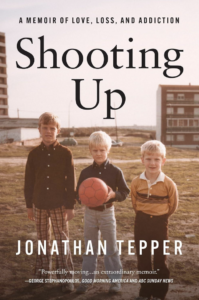
From Shooting Up. Used with the permission of the publisher, Infinite Books. Copyright © 2026 by Jonathan Tepper

Jonathan Tepper
Jonathan Tepper is the author of several acclaimed financial books, including The Myth of Capitalism. A Rhodes Scholar, he earned degrees in History and Economics from the University of North Carolina at Chapel Hill and an MLitt from the University of Oxford. Born in the U.S. and raised in Mexico as a young child, Jonathan came of age in Madrid's San Blas neighborhood, where his parents ran one of the country's first drug rehabilitation centers. Shooting Up is his first memoir, offering a deeply personal view of life at the intersection of faith, addiction, and resilience. He and his wife Stacey have a two-year-old who is a human hurricane of curiosity and keeps them busy. Jonathan returns to Madrid as often as he can.