Sonya Walger on Writing a Multifaceted Novel of Marriage and Adultery
“Marriage is, to my mind, the ability to contain two conflicting narratives and hold them in tension.”
I am terrible with facts. I make up dates. I search for names and forget details. I conflate events because I don’t retain them and because at some level, I think that this is the way things ought to have happened even if they didn’t. I pronounce everything with a certainty I rarely feel. As long as the gist remains intact and the story is served, anything goes. My reverence for feelings is precise, forensic even, but for me facts are malleable things, little blobs of cold clay waiting to be warmed up and shaped.
This is a bone of contention between me and my husband, who is a screenwriter. He is fastidious as a surgeon, meticulous. He extracts his stories with a scalpel. I am rough-hewn, leaving boulders for others to trip over. We are both storytellers, by nature and by profession and it makes for real frustration when the narrative we each wish to relay is entirely at odds with the other’s. Somehow, we resolve it; we defer, sometimes graciously, sometimes less so, but rarely without comment. Marriage is, to my mind, the ability to contain two conflicting narratives and hold them in tension. When a marriage fails, it is, perhaps, because the narratives can no longer co-exist. It is because two people are no longer telling the same story.
I think of my books like I think of my dreams, flickering glimpses of the secret play that is my inner life.
Most of my favorite books are about marriage. Anna Karenina, Madame Bovary, Portrait of a Lady, A Simple Passion, The Awakening, Crossroads, Revolutionary Road, to name but a few. I re-read them all, and many others, as I wrote Wifehouse. I cannot seem to get enough of the minute withdrawals and rapprochements that take place on this stage. But a story about marriage alone rarely satisfies. We need a third person to turn a spotlight on the couple and the agreements they have made in the dark for so long. It is not that adultery in itself is so riveting—it is as banal as evil—but there is a reason that the novel lends itself over and over to the theme.
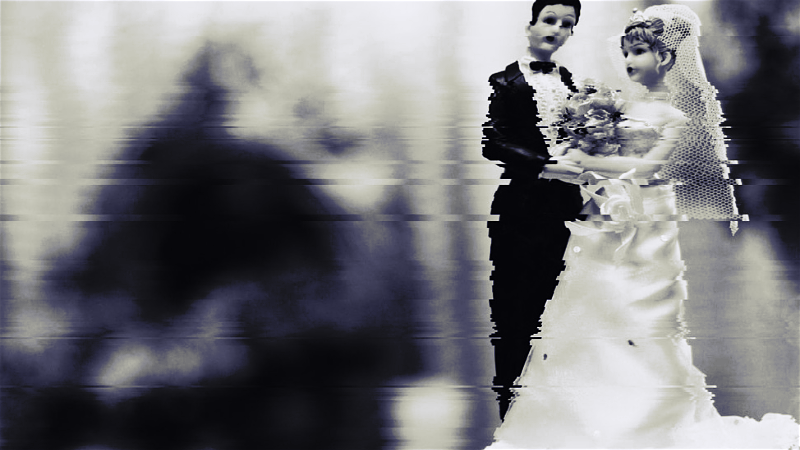
The introduction of the stranger becomes the means by which the original participants see themselves more clearly. Not necessarily more accurately, but with a lucidity that may have evaded them till now. A book about adultery is really a way of writing about marriage but with stakes, as they say in the film industry. The third adds not only a complication, the tension of the forbidden, but a new voice to be reckoned with, a new story to shed light on the one we have been observing. The initial story is transformed by the presence of this third; now the participants must integrate a new narrative about who they were, and who they now have become.
When I set out to write Wifehouse, I wanted to explore the breakdown of a marriage and what happens when multiple stories about the same event collide. Who gets to tell the story is, to me, one of the most interesting and provocative questions in any dynamic, particularly a family one. My children fall over each other to recount events from the same party. They parcel elements between them (“you tell the balloons, I tell the cake”) in the spirit of fairness but even these precautions don’t mitigate the fury that the ensuing rewrites, amendments and contradictions provoke. How then, should adults participating in that most highwire of acts, a marriage enacted over many years, coincide in their versions of what has happened to them? Only the novel, with its linearity, with its multiplicity, with its inherent democracy, allows for everyone to take their turn to speak.
I have spent my adult life working as an actress. With a few notable exceptions, I have spent most of my career staring hungrily at the juicier roles (mostly the men’s), wishing they were mine. The joy of novel-writing is that all the roles are mine. I get to play everyone. It never occurred to me to write Wifehouse from only Annie’s point of view because to limit myself to playing ‘the wife’ would have been to willingly submit to the shackles I have spent my career trying to shake off. Wifehouse is a mirror: Annie’s own longing to be rid of the roles in which she has found herself unwittingly cast is matched by my own longing to play all the parts.
Fiction is the invitation to participate in experiences that are not your own; it takes you outside the familiar. It is inherently transgressive.
My first novel, Lion (NYRB, 2025) is about a man who left his family. Over and over. This man was my father. It was strangely cathartic to imagine the world as he saw it, revelatory even. It invited a compassion I had not known I lacked. I was deep into the second draft of Wifehouse before I realized that in writing about a woman readying to leave her family, I was unconsciously righting the balance, trying on for size the feminine side of an experience I had spent years trying to understand from the male perspective.
A friend and early reader asked me if the book was a fantasy of mine. Apart from the fact that I think every mother at some point leaning over the sink idles with the fantasy, however fleeting, of leaving everything behind, this book is neither an exorcism nor an exhortation. I think of my books like I think of my dreams, flickering glimpses of the secret play that is my inner life.
Fiction is the invitation to participate in experiences that are not your own; it takes you outside the familiar. It is inherently transgressive. It asks you to consider another way of seeing things while still leaving you embedded in your current situation. Fiction is inherently adulterous. In writing Wifehouse, I became everyone. I am the husband, the wife, the lover, the best friend, the daughter, the son. My hope is, after reading Wifehouse, that you are too.
__________________________________
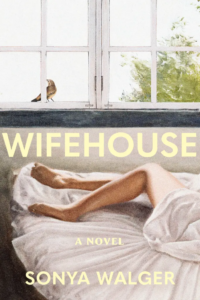
Wifehouse by Sonya Walger is available from Union Square and Co., an imprint of Hachette Book Group.

Sonya Walger
Sonya Walger is an award-winning actress, best known for her role as Penny Widmore on Lost and Molly Cobb in the first three seasons of Apple TV+’s For All Mankind. She studied English Literature at Christ Church, Oxford and was the host of the literary podcast, Bookish. Her first book, Lion, a semiautobiographical novel was published by New York Review Books in February 2025.