Some Perfect Exact Words: On the Real Legacy of Elizabeth Wurtzel
Matthew Zipf Considers the Mesmerizing Immediacy of the Author's Work
“Talent is the ability to mesmerize people when you are nowhere near.”
–Elizabeth Wurtzel
*Article continues after advertisement
In 2007, when Elizabeth Wurtzel was about to graduate from Yale Law School, the New York Times reported: “In January, a new alumna will grace [Yale’s] ranks, one whose attempted suicide, drug use, self-mutilation and indiscriminate sex have made her famous.” It was the kind of sentence that could make a reader appreciate Gawker, where the misogyny at least had the virtue of openness (“some self-obsessed cokehead slut”), as opposed to the more genteel, but substantively equivalent variety at the Times.
It is hard, certainly, to find a male writer earning his second Ivy League degree described in similar terms—but that is getting sidetracked. The point is, the Times got it wrong. Sex, drugs, and self-harm might bring you notoriety, but they will not get your literary debut translated into Lithuanian and Japanese. The reporter should have read Wurtzel’s second book, titled Bitch: In Praise of Difficult Women, in which she articulated the perennial frustration of seeing “women of real talent who are only identified by their pathologies.”
In her career, Wurtzel wrote three real books, along with a pamphlet praising American copyright law, a collection of advice for women, and a bunch of articles that her executors should have gathered into a volume by now. The first work of hers that I ever read was something that she got roundly mocked for, a 2013 article that ran online as “Elizabeth Wurtzel Confronts Her One-Night Stand of a Life.” It was, for better or worse, the apotheosis of a byline.
Wurtzel was so much the subject and selling point of the things she wrote that her name had to be in the title. She talked in that essay about everything that had gone wrong in her life, starting with her parents’ divorce and continuing through her total inability to save money or plan for the future. It must have been frustrating to know Wurtzel in real life, because what the essay suggests is that she saw all of her choices pretty clearly, but only half-regretted them, at most, and did not really think that she could change. After the article came out, PageSix.com reported: “Online critics are calling the piece ‘incoherent,’ ‘inane,’ and ‘an eloquent coke rant.’”
But it was not incoherent. It was great:
My parents were divorced, my mother had many part-time jobs over the years to support us, and I grew up in HUD housing, first in the West Nineties and then not far from Lincoln Center. I went to private school on scholarship and worked extremely hard because I wanted to grow up and not live near rodent-infested playgrounds, where we clung to the handlebars crossing the horizontal ladders to keep our toes from touching rats. I don’t know what made me believe that writing was going to solve my problems, since all anyone ever told me was that no one made money that way. But I knew that no one did not include me.
That passage compresses a whole childhood into a few clauses, and then seals it in an image of ambition born: the girl clinging to stay in the air. And the last sentence, with its double-negative construction, tells us immediately, permanently, who this person is: I knew that no one did not include me.
With the publication of Prozac Nation in 1994, Wurtzel proved that she was, in fact, an exception. She became an icon for her generation. She also became the icon for a new strain of narcissistic, self-indulgent confessional writing that we have lived with ever since. Her book launched a hundred other books, or at least book proposals, by writers who thought that all they had to do was pour their hearts out on the page. They had, unfortunately, misunderstood the lesson of Wurtzel’s success. The dominant value in her work was never self-expression. It was talent.
“That’s what people don’t understand,” she said during an episode of the Longform podcast in 2013. “Just because you have a story to tell doesn’t mean you should be telling it. It’s got to be well written. The whole point is that you should know how to write. It’s not your gift to give the world just because you have a pen or you have a computer or you have a typewriter or whatever.” She quoted Oscar Wilde to that effect in her second book: “All bad poetry is sincere.” In case anyone had missed the point, she quoted the same line again in her next book.
Part of what raised and transformed Wurtzel’s own sincerity into art was her strong sense of literary values. Even among the writers she loved, she made distinctions, kept things in proportion: “Plath is a far more gifted, refined and elegant poet than Sexton.” She described the feminist manifestoes of the 1970s as “ridiculous” compared to “the clean, well-reasoned works of literature” produced by Mary Wollstonecraft, Virginia Woolf, and Charlotte Perkins Gilman. When Harvard put Wurtzel on the list of alumni in literature, next to T. S. Eliot and John Ashbery, she had the good sense to wonder if there had not been a mix-up.
Her taste tended toward the democratic and the commercial, sometimes excessively so. She placed her faith in the market, which after all had been good to her. In Creatocracy, her rambling, nationalistic pamphlet on copyright law, she argued that if something is truly good, then it will also be popular. And if it is popular, then the money will come. The nation’s Founders had seen to it when they included copyright in the Constitution. As Gordon Wood wrote in The Creation of the American Republic, and as Wurtzel quoted: “In a republican system only talent would matter.” She put it bluntly to an audience at the Strand: “You know you’re talented because you’re paid.”
Readers, especially all of us depressives, felt close to her. If closeness is not a New Critical term, it is still one of the main reasons that we come to books.
She could be astonishingly philistine, and then take up the mantle of defending culture. In a debate over Irish versus American Jewish literature, she ranked Roth, Mailer, and Bellow above Joyce and Yeats. She preferred Scorsese to Antonioni. She tore an employee at Blockbuster apart when a store in Florida didn’t have Sweet Smell of Success—after which she spent “several days just snorting lines and thinking about the ignorant masses,” before finally sending a check to AFI’s project to preserve old films. She liked American movies and American bands. Hollywood was the “greatest artist ever,” pop culture “the thing I love the most.” The canon she used was limited, but she worked seriously within those limits. She studied the bands she loved, quoted them in her books, and took lessons from the directness of song. She regarded language, in poetry and in music, with reverence. “Expression is a miracle,” she wrote. “There are some perfect exact words.”
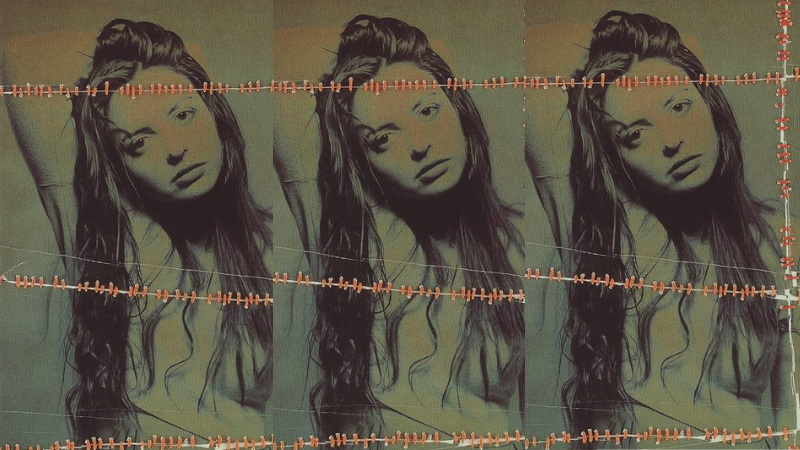
The fact that Wurtzel’s picture appears on the front cover of every book she wrote makes sense. She was coming to us as the lead singer of a punk band. The book would be the album. She was going to get our attention, compete with movies and music, and “make it very noisy.” The relationship people have with her brings to mind singers rather than writers: a certain kind of celebrity interest, fascination, and glamor. And a certain kind of love. Readers, especially all of us depressives, felt close to her. If closeness is not a New Critical term, it is still one of the main reasons that we come to books. We are not always looking for the highest art. Wurtzel put it nicely when she compared Bruce Springsteen and Bob Dylan. It didn’t matter that Dylan was the better lyricist. Wurtzel still loved Springsteen more, because “he is among us in a way that Dylan is forever separate.” Springsteen made himself “present and close, which is, in itself, a talent.”
I find myself, in search of that closeness, returning to Wurtzel’s interviews as often as I do to her writing. The primary joy, in either case, is her immediate presence. I have replayed her Longform interview tens of times. Her attitude, her personality, are right there. “God, what if I were a pushover?” she told the interviewer at one point, explaining how she had to fight for Prozac Nation to be sold as a memoir instead of as a novel. “Imagine. I mean, most people are pushovers. I think about that.”
She regarded language, in poetry and in music, with reverence. “Expression is a miracle,” she wrote. “There are some perfect exact words.”
Nietzsche read Montaigne to pull himself out of a gloom, and found comfort in Emerson as well. I love those authors and have gotten help from each of them at various times in my life. But in the end, what I want, when I’m down, is not a steeling passage of Montaigne but some outrageous friend who will come along and say, Let’s go out, get into a little trouble, and then maybe we’ll feel better, even if we know we won’t, at least not much better and not for that long. I do not always want Emerson saying: “The force of character is cumulative. All the foregone days of virtue work their health into this.”
I have thought about Emerson’s sentences ever since reading them in college. I know they are true. But if you are spending your days depressed in bed, eating Haribo, it might not help to know that those days are adding up and permanently forming your character. It may serve you better to hear from Wurtzel, who will tell you that you can skip your responsibilities and stay under the covers, because if something really matters, she trusted that “it will show up in my bedroom, preferably with a California red.” And for that, six years after her death, she is still mesmerizing, and still near.

Matthew Zipf
Matthew Zipf is a Ph.D. candidate in the Committee on Social Thought at the University of Chicago. He is writing a dissertation on Renata Adler's work in law and literature. His essays have appeared in Liberties, The Threepenny Review, The American Scholar, and other literary magazines.